
Loading...
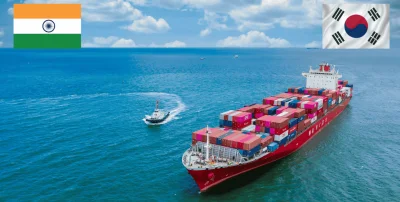
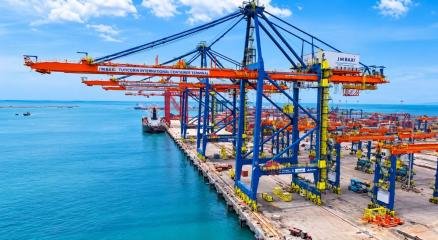
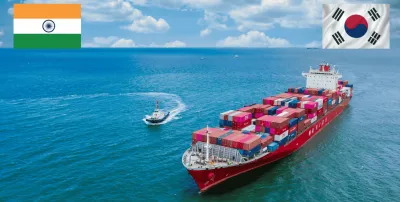
The Indian government’s ambitious push to boost the domestic shipbuilding industry, announced in the Union Budget, is already drawing international interest, with South Korea stepping forward to collaborate on key initiatives. The Korea Marine Equipment Association (KOMEA), a Seoul-based non-profit under South Korea’s Ministry of Industry, Trade and Energy, has offered its support to Indian shipyards for joint vessel design and construction, modernisation of shipyard production facilities, and technology transfer to enhance manufacturing processes, according to multiple sources.
KOMEA, which represents major Korean shipbuilding and ship repair enterprises—including HD Hyundai Heavy Industries, Hanwa Ocean (formerly Daewoo Shipbuilding and Marine Engineering), and Samsung Heavy Industries—has formally pledged to provide highly qualified specialists for on-site education and training. The association also aims to develop joint educational programs, supply industrial equipment for modernising Indian shipyards, facilitate technology transfer, and support the localisation of marine equipment and spare parts.
Founded in 1980, KOMEA has been instrumental in promoting South Korean marine equipment manufacturers globally and currently has a membership base of 304 entities involved in shipbuilding, design, and repair. The association operates in eight countries, including China, Japan, Singapore, the United States, Greece, Saudi Arabia, Brazil, and Russia. With plans to expand its footprint in India, KOMEA sees the country as a strategic partner in advancing shipbuilding capabilities under a bilateral cooperation framework.
“Building strong cooperative relationships between South Korean entities and Indian shipyards could significantly contribute to the growth of the shipbuilding industry in both nations,” a KOMEA official stated. “With over four decades of experience, KOMEA and its members can provide effective solutions to challenges in the shipbuilding sector within a short timeframe.”
The Union Budget, presented by Finance Minister Nirmala Sitharaman, earmarked ₹25,000 crore for the Maritime Development Fund (MDF) and introduced a revamped shipbuilding financial assistance policy to counter cost disadvantages. Additional measures include credit incentives for shipbreaking at Indian yards to promote a circular economy and granting infrastructure status to large ships above a specified size. The government also announced plans to develop shipbuilding clusters with enhanced infrastructure, skilling initiatives, and technological advancements to strengthen the industry’s ecosystem.
A significant boost for shipbuilders came with the extension of the exemption from Basic Customs Duty (BCD) on raw materials, components, consumables, and parts used in ship manufacturing. This exemption, originally set to expire, will now be extended for another ten years from April 1, 2025.
Ahead of the budget announcement, high-level delegations from the Ministry of Ports, Shipping, and Waterways, along with representatives from the private shipbuilding sector, visited leading shipyards in South Korea and Japan. These visits were aimed at forging partnerships and leveraging global expertise to strengthen India’s shipbuilding industry. With South Korea now expressing formal interest in collaboration, the stage is set for India to accelerate its shipbuilding ambitions and emerge as a formidable player in the global maritime sector.
Source: ET Infra
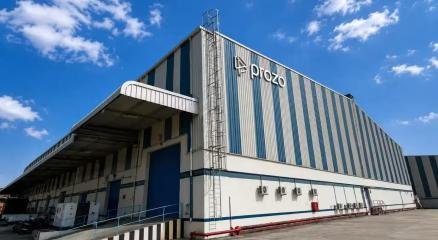
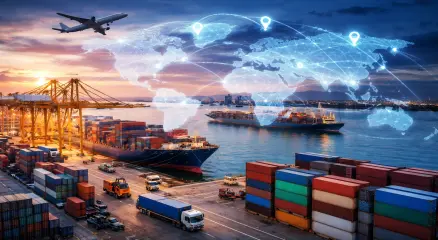
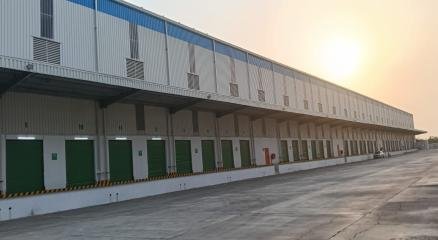
Prozo, recorded 50% Year-on-Year (YoY) growth in FY26 compared with FY25, extending its Compound Annual Growth Rate (CAGR) to 62% since 2022. The company’s logistics business has scaled to more than ₹125 crore in annual recurring revenue (ARR), while its multi-client fulfilment network has expanded to over 1.5 million sq ft across India. The company also reported eight consecutive quarters of EBITDA positivity and four consecutive quarters of profit before tax (PBT) positivity, reflecting its continued focus on scaling operations alongside financial discipline. Serving brands across FMCG, apparel, beauty and personal care, home and kitchen, industrial products and other consumer categories, Prozo addresses the growing complexity of omnichannel supply chains. As businesses expand across Direct-to-Consumer (D2C), marketplaces, general trade, modern trade and emerging commerce channels, managing distributed inventory, multiple fulfilment locations and varying service-level commitments has become increasingly demanding. To address these requirements, Prozo operates through a combination of Third-Party Logistics (3PL) and Fourth-Party Logistics (4PL) models. Under its 3PL model, the company leases facilities, invests in infrastructure and directly manages warehouse operations. Its 4PL model works with regional warehouse and logistics operators, with Prozo providing technology, operational oversight and Control Tower capabilities. Depending on client requirements, the model can also accommodate existing technology systems. The full-stack supply chain solutions provider serving omnichannel brands currently operates more than 10 4PL fulfilment centres covering over 2 lakh sq ft Brands including Traya, Plix and SolarSquare use the network to access fulfilment capabilities across markets. Over the next three years, the company aims to build a network of more than 1,000 warehouses by combining its 3PL and 4PL footprint, with a particular focus on extending coverage into tier II and III markets. The model is designed to give brands wider geographic reach without requiring them to independently establish and manage extensive warehouse networks. Technology underpins the company’s distributed operating model. ProWMS supports warehouse and fulfilment execution, while ProShip manages transportation workflows across D2C, B2B and other freight movements. The platform integrates with leading marketplaces, order management system (OMS) platforms and enterprise applications, including Unicommerce, EasyEcom, Vinculum and SAP, consolidating operational information across channels and partners. Above these execution systems, Prozo’s Control Tower provides end-to-end visibility, service-level agreement (SLA) governance, exception management and operational oversight across locations, sales channels and logistics partners. This layer becomes particularly important as demand patterns shift, inventory is spread across multiple locations and fulfilment commitments differ across marketplaces, D2C and traditional retail channels. Dr Ashvini Jakhar, Founder and CEO of Prozo, said the company had evolved from a warehousing business into an integrated supply chain platform spanning fulfilment, logistics and technology. He highlighted the need for brands to combine access to distributed infrastructure with network-wide visibility and operational control as they expand across geographies and sales channels. Prozo’s next phase of growth will focus on expanding its physical network, strengthening execution technology and deepening its Control Tower capabilities. By combining distributed fulfilment infrastructure with integrated digital oversight, the company aims to help brands enter new markets, manage increasing operational complexity and maintain greater flexibility and control as their businesses scale.


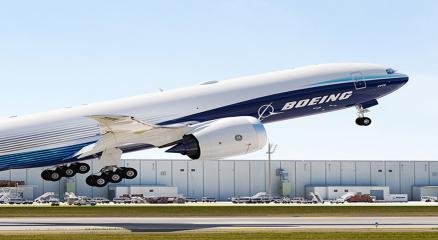
Singapore Airlines is set to strengthen its presence at Munich Airport with the addition of three new weekly services from the 2026 winter schedule, increasing total flights between Munich and Singapore from seven to ten per week. The expanded schedule will introduce evening departures on Mondays, Wednesdays and Fridays, complementing the airline’s existing daily daytime operations and offering enhanced overnight connectivity between Europe and Asia-Pacific markets. The move is expected to improve onward connections through Singapore to major destinations including Bangkok, Bali, Jakarta, Ho Chi Minh City, Australia and New Zealand, while also enhancing schedule flexibility for both business and leisure travellers. As part of its joint venture partnership with the Lufthansa Group under the Star Alliance framework, Singapore Airlines and Lufthansa Group carriers will collectively offer 17 weekly services between Munich and Singapore. Commenting on the development, Oliver Dersch said the expansion reinforces Munich’s position as a premium European aviation hub while providing passengers with greater connectivity across the Asia-Pacific region. With the revised winter schedule, Singapore Airlines will operate a combined 24 weekly direct flights connecting Frankfurt and Munich with Singapore, further deepening its footprint in the German market and supporting growing long-haul travel demand between Europe and Asia.

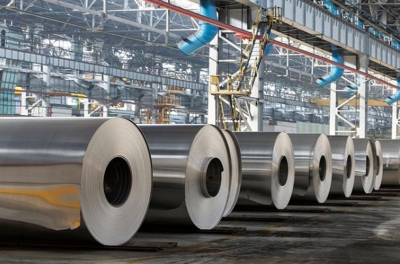
Tata Steel has become the first Indian company to develop pipes specifically designed for transporting hydrogen, marking a major milestone in the country's transition to clean energy. The company’s hydrogen-compliant API X65 pipes were processed at its Khopoli plant using steel produced at its Kalinganagar facility, meeting all critical requirements for safe and efficient hydrogen transportation. By managing the entire production chain—from designing and manufacturing hot-rolled steel to fabricating the pipes—Tata Steel has reinforced its expertise in building essential energy infrastructure. This achievement builds on its 2024 milestone when it became the first Indian steel manufacturer to produce hot-rolled steel for gaseous hydrogen transportation. The hydrogen qualification tests for these newly developed pipes were conducted at RINA-CSM S.p.A in Italy, a globally recognised agency for hydrogen-related testing and certification. The pipes have successfully undergone tests for transporting 100 percent pure gaseous hydrogen at high pressures of up to 100 bar, positioning Tata Steel as a key player in supporting the evolving hydrogen economy. Prabhat Kumar, Vice-President - Marketing & Sales (Flat Products) at Tata Steel, underscored the company’s commitment to innovation in steel manufacturing. "Tata Steel has always been at the forefront of developing advanced steel grades. The successful testing of these ERW pipes highlights our ability to support the energy sector. We are proud to contribute to India’s National Hydrogen Mission, which is a key part of the country’s clean energy transition," he said. He further added that Tata Steel is well-positioned to meet both domestic and global demand for specialised steel pipes used in hydrogen transportation. India’s National Hydrogen Mission aims to produce at least 5 million metric tonnes (MMT) of Green Hydrogen annually by 2030, with the potential to reach 10 MMT per annum to meet export demands. Achieving this ambitious target requires substantial investment in hydrogen generation and transportation infrastructure, including the development of hydrogen-compatible steel pipelines. With the demand for hydrogen-compliant steel expected to rise from 2026-27, industry projections indicate a total requirement of 350,000 tonnes of specialised steel over the next five to seven years. While multiple methods exist for transporting hydrogen, steel pipelines remain one of the most cost-effective solutions for large-scale distribution, ensuring efficiency and safety in India's evolving clean energy landscape.