Loading...
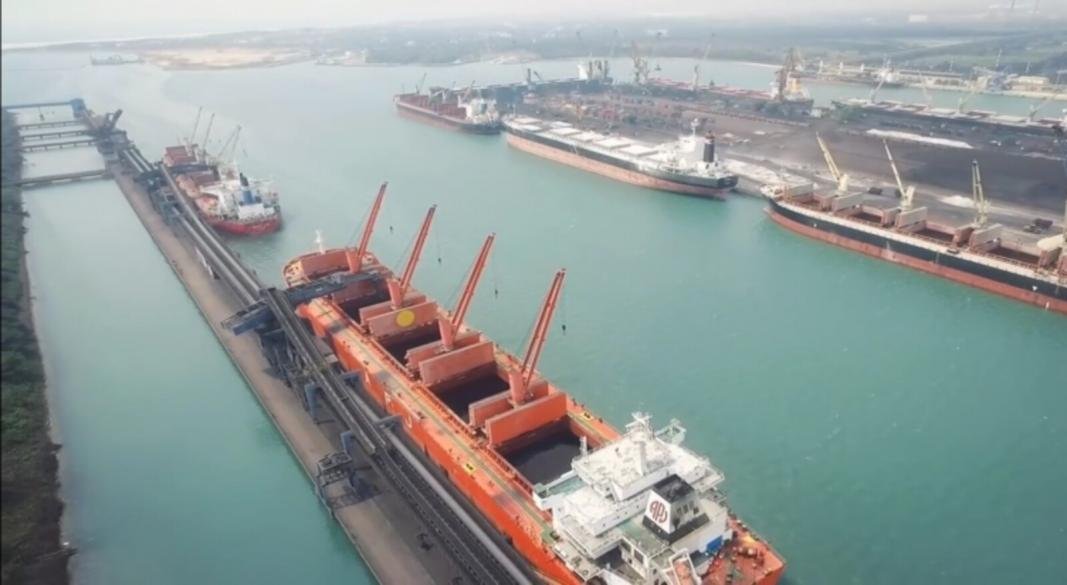
Paradip Port Authority (PPA) has constructed the 500-metre-long Atharabanki Bridge at a cost of ₹24.89 crore to strengthen road connectivity and facilitate smoother cargo transportation in the Paradip Port region.
The three-lane bridge is expected to ease traffic congestion, improve the movement of commercial vehicles and enhance connectivity between the port and the surrounding road network. The development is particularly significant given that nearly 3,000 trucks move through Paradip Port every day.
Three-Lane Bridge to Ease Traffic Congestion:
The newly constructed Atharabanki Bridge replaces an ageing two-lane structure that faced capacity constraints amid rising transportation demand. Its expanded configuration is designed to accommodate increased traffic volumes and improve access for trucks and other vehicles involved in port-related operations.
The upgraded infrastructure is expected to support more efficient cargo movement, reduce potential delays and improve road access for transport operators, logistics providers and other stakeholders associated with the port.
Key Features of the Atharabanki Bridge:
The project incorporates several features aimed at improving connectivity and functionality:
Dedicated pedestrian pathways provide designated space for people on foot, while the pipeline corridor accommodates infrastructure requirements associated with pipelines.
Boost to Port Logistics and Regional Connectivity:
As a major maritime gateway on India's eastern coast, Paradip Port plays an important role in cargo transportation and trade. Efficient road connectivity is essential to ensuring the smooth movement of goods between port facilities and the wider transportation network.
The Atharabanki Bridge is expected to strengthen this vital link by improving traffic flow and supporting the movement of cargo-carrying vehicles. Better connectivity could also help reduce transportation delays, improve logistics efficiency and enhance the reliability of port-related operations.
Beyond its immediate benefits for port traffic, the bridge is expected to improve regional accessibility and support economic activity in the Paradip area.
Infrastructure Investment to Support Future Growth:
The construction of the Atharabanki Bridge highlights the importance of developing supporting infrastructure to meet the evolving demands of ports, trade and logistics. As cargo volumes and road transportation requirements increase, investments in bridges and connectivity corridors are essential to strengthening supply-chain efficiency.
By upgrading the existing two-lane crossing to a modern three-lane structure, Paradip Port Authority has taken a step towards improving the port's supporting infrastructure. The project is expected to contribute to smoother cargo movement, stronger regional connectivity and improved efficiency across India's maritime logistics network.
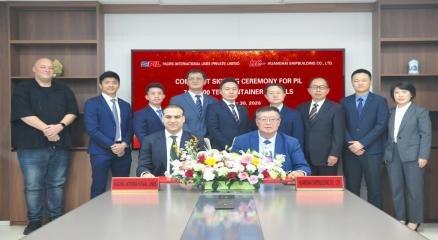
Pacific International Lines (PIL) has placed an order for seven 1,400-TEU container vessels with China’s Huanghai Shipbuilding, as part of its ongoing fleet renewal and expansion programme. The new vessels are expected to strengthen PIL’s network capabilities and operational efficiency, particularly across its Intra-Asia and Pacific Islands services. Designed to serve the requirements of these regional markets, the ships will measure 172 metres in length and 25 metres in width, with dimensions customised to maximise vessel size while retaining the flexibility to connect smaller ports with key transhipment hubs across PIL’s network. The methanol-ready vessels will also support the company’s decarbonisation strategy, enabling the potential adoption of lower-emission fuels as availability and supporting infrastructure develop. “Investing in these new feeder vessels will strengthen our capabilities and capacity across the Intra-Asia and Pacific Islands network. These ships, equipped with energy-saving technologies and designed to be methanol-ready, will further optimise our operations while supporting our goal of net zero emissions by 2050,” said Lars Kastrup, CEO of PIL. He added that the vessels will incorporate modern technological features and digital capabilities to support more efficient operations and performance monitoring, helping PIL provide customers with wider services and sustainable shipping solutions. The ships will feature energy-saving technologies, including pre-swirl vanes and propeller boss cap fins, designed to improve propulsion efficiency and reduce fuel consumption. Enhanced cargo safety systems will include fixed fire water monitors and cargo hold water spray systems to strengthen onboard firefighting capabilities. The vessels are scheduled for delivery between 2029 and 2030. PIL selected Huanghai Shipbuilding for its technical capabilities, experience and ability to meet the company’s requirements for quality, efficiency and delivery.

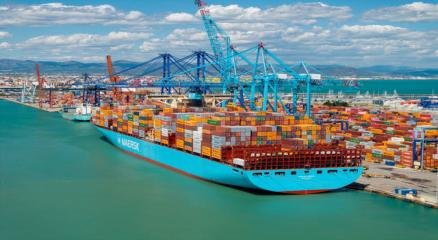
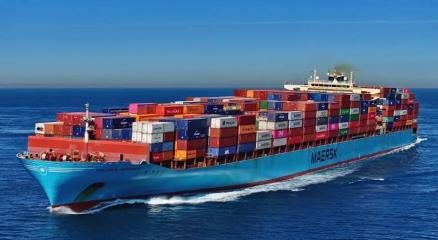
Maersk and Hapag-Lloyd are shifting their joint India-Europe container service back to the Suez Canal and Red Sea corridor, replacing the longer route around the Cape of Good Hope. Announced on November 2, 2026, the move is expected to reduce transit times for cargo moving between India and Europe, subject to regional security conditions. Operating under the Gemini Cooperation, the service is designated ME1 by Maersk and Indian Ocean Service (IOS) by Hapag-Lloyd. The revised routing marks another step in the carriers’ gradual return to the Suez corridor following disruptions that prompted vessels to divert around southern Africa. According to Maersk, the first westbound sailing on the revised route will be Atlanta Express, voyage 644W, departing Salalah, Oman, on November 4. The first eastbound sailing will be Savannah Express, voyage 644E, departing Tangier, Morocco, with Maersk listing November 13 as the scheduled date. The updated port rotation is Mundra–Nhava Sheva–Salalah–Suez Canal–Tangier–Rotterdam–Wilhelmshaven–Hamburg–London–Algeciras–Tangier–Suez Canal–Salalah–Mundra. The revised schedule retains Mundra and Nhava Sheva as the service’s Indian port calls, while maintaining connections to major European trade gateways, including Rotterdam, Hamburg, Wilhelmshaven, London and Algeciras. The route will use the Suez Canal in both directions, avoiding the extended voyage around the Cape of Good Hope. The return to the Suez route is expected to improve transit efficiency for Indian exporters and importers shipping goods to European markets. A shorter maritime route can support better shipment planning, inventory management and supply chain coordination, particularly for businesses dependent on predictable international container schedules. However, Maersk has not specified the number of days that will be saved or published revised port-to-port transit times. Shippers are advised to confirm updated schedules with their respective carriers before finalising shipment plans. The carriers have emphasised that the routing decision remains dependent on the security situation in the Red Sea and surrounding waters. Both companies will continue monitoring regional developments, with the safety of crews, vessels and cargo remaining their priority. However, the change applies specifically to the ME1/IOS service and does not mean that all Gemini Cooperation services have returned to the Suez Canal. The move underscores the importance of the Suez Canal as a strategic maritime corridor connecting Asia and Europe. If security conditions remain stable, the revised routing could help improve transit efficiency and strengthen connectivity across the India-Europe container trade. 𝐒𝐭𝐚𝐲 𝐓𝐮𝐧𝐞𝐝 𝐭𝐨 CARGOCONNECT 𝐟𝐨𝐫 𝐥𝐚𝐭𝐞𝐬𝐭 𝐮𝐩𝐝𝐚𝐭𝐞𝐬!

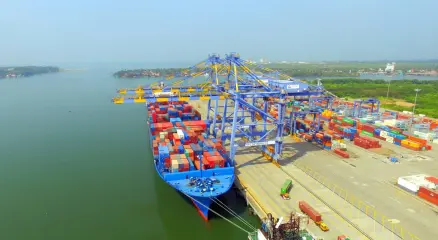

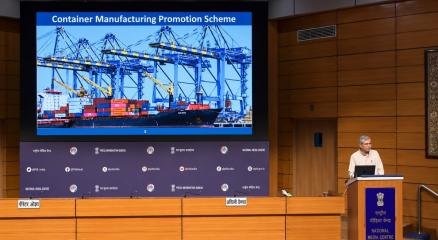
The Union Cabinet has approved the ₹10,000 crore Container Manufacturing Promotion Scheme (CMPS), aimed at establishing a globally competitive container manufacturing ecosystem in India, reducing import dependence and strengthening maritime and logistics supply chains. Announced in the Union Budget 2026–27, the scheme will run from FY 2027–28 to FY 2039–40. The initiative seeks to increase India's annual domestic container manufacturing capacity nearly tenfold, from approximately 70,000 twenty-foot equivalent units (TEUs) to 7.5 lakh TEUs. It will support both the establishment of new manufacturing facilities and the expansion of existing units, creating a stronger domestic base for shipping containers used in international trade. The scheme has four key components covering production costs, capital investment, testing infrastructure and land leasing support. The largest allocation, ₹8,891 crore, is earmarked for Operational Expenditure Assistance (OEA), which will provide financial support for eligible containers manufactured to global shipping standards and sold by approved manufacturers. The assistance is intended to bridge the cost gap between domestically produced containers and competing imports. Interest Subvention Assistance has been allocated ₹859 crore to provide a 3% annual interest subsidy on eligible term loans taken for setting up greenfield manufacturing facilities or expanding existing capacity. The scheme also provides ₹150 crore for testing and certification infrastructure, including specialised facilities for dynamic longitudinal impact testing. A further ₹100 crore has been earmarked for management, monitoring and capacity-building activities. Land-leasing support at major ports is another component. The scheme is expected to create around 3,000 direct jobs and more than 50,000 indirect employment opportunities. It could also stimulate demand across ancillary industries, including specialised steel, corner castings, wooden flooring and paints, supporting the development of a broader domestic manufacturing ecosystem. For India's logistics and export sectors, expanding local container production could diversify equipment sourcing and improve supply-chain resilience amid global shipping disruptions. A stronger domestic industry could also position India as a potential export hub for quality shipping containers. However, the long-term impact will depend on manufacturers' ability to meet international quality standards, achieve competitive production costs and secure sustained demand from shipping lines and other container users. Successful implementation could strengthen India's position in global maritime trade while supporting the government's broader Make in India ambitions. 𝐒𝐭𝐚𝐲 𝐓𝐮𝐧𝐞𝐝 𝐭𝐨 CARGOCONNECT 𝐟𝐨𝐫 𝐥𝐚𝐭𝐞𝐬𝐭 𝐮𝐩𝐝𝐚𝐭𝐞𝐬!