
Loading...
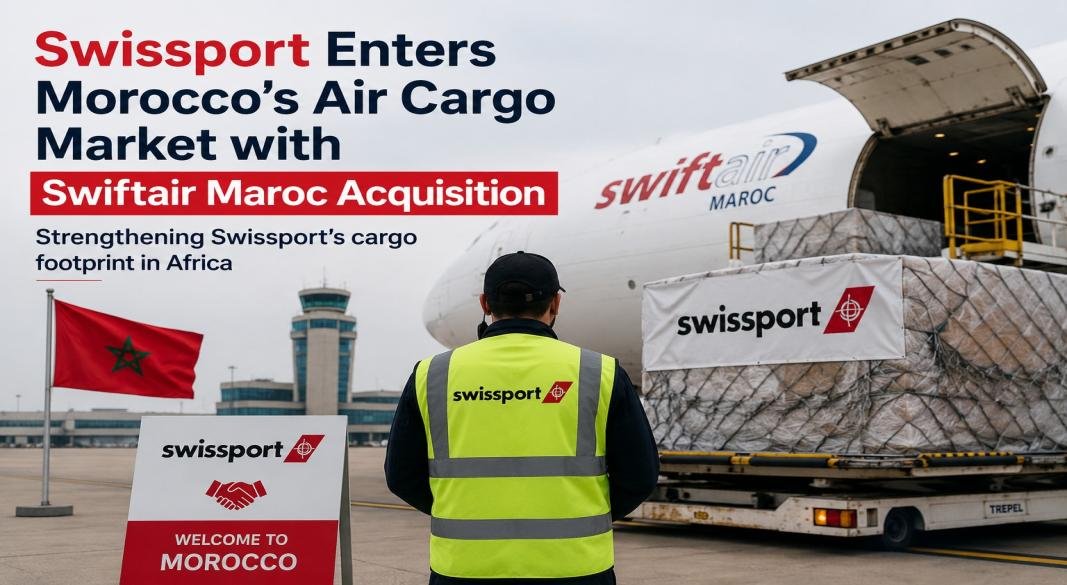
Swissport International has signed a binding agreement to acquire Swiftair Maroc, marking its formal entry into Morocco’s growing air cargo market and strengthening its strategic presence across Africa.
The acquisition gives Swissport access to operations at Mohammed V International Airport, Morocco’s primary air freight gateway, which handles nearly 95 percent of the country’s total air cargo volumes. The move aligns with Swissport’s broader strategy to expand its global cargo handling business in high-growth logistics markets.
Swiftair Maroc operates a 3,700-square-metre airside cargo warehouse equipped with temperature-controlled infrastructure, including dedicated cold rooms for pharmaceutical shipments and perishable goods. The facility is expected to strengthen Swissport’s capabilities in handling specialised cargo segments such as healthcare logistics, fresh produce, and time-sensitive exports.
Warwick Brady, President and CEO of Swissport International, described Morocco as a fast-growing logistics and trade hub connecting Europe, Africa, and the Americas. He noted that the acquisition supports the company’s long-term objective of accelerating growth in its global cargo operations while enhancing service capabilities for international customers.
Industry observers view the acquisition as strategically timed, given Morocco’s rising importance in global supply chains. The country has seen steady growth in export-driven industries such as automotive manufacturing, aerospace, agriculture, and textiles. Casablanca, in particular, has emerged as a critical logistics gateway for North and West Africa, supported by increasing trade flows and investment in airport infrastructure.
The deal also strengthens Swissport’s existing footprint in Morocco. Through its local operations, the company already provides ground handling services at 16 airports across the country, along with executive aviation services in Casablanca, Marrakesh, and Tangier. Swissport also operates airport lounges under its Aspire brand at multiple Moroccan airports.
For Swiftair, the transaction is part of a broader corporate strategy to streamline operations and focus on core business activities. Salvador Moreno, Founder and CEO of Swiftair, said the company was confident Swissport would support the next phase of growth for Swiftair Maroc while maintaining strong collaboration between the two businesses.
The acquisition reflects a wider trend of global aviation and logistics companies investing in specialised cargo infrastructure and emerging regional hubs to meet growing demand for efficient, temperature-sensitive, and cross-border supply chain solutions. As air cargo volumes continue to evolve globally, Morocco’s strategic location and expanding export economy are likely to attract further international logistics investment in the coming years.
𝐒𝐭𝐚𝐲 𝐓𝐮𝐧𝐞𝐝 𝐭𝐨 https://cargoconnect.co.in/ 𝐟𝐨𝐫 𝐥𝐚𝐭𝐞𝐬𝐭 𝐮𝐩𝐝𝐚𝐭𝐞𝐬!
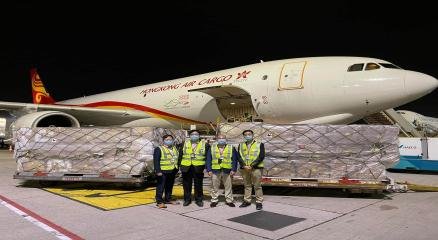
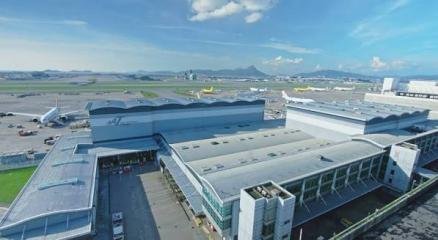
Hong Kong International Airport (HKIA) recorded a 6.3% year-on-year increase in cargo throughput in September 2026, handling approximately 433,000 tonnes of freight as a sharp rise in transshipments and stronger import volumes supported its recovery. The growth followed year-on-year declines in July and August, highlighting renewed momentum at one of the world’s major air cargo hubs. According to provisional traffic statistics released by Airport Authority Hong Kong (AAHK), transshipment volumes surged 26.9% year-on-year, while imports increased 9.2%. Southeast Asia and the Chinese mainland were the principal contributors to the expansion, offsetting weaker cargo flows on European trade lanes. Inbound freight recorded stronger growth than outbound shipments during the month. Unloaded cargo rose 14.6% year-on-year to approximately 126,000 tonnes, while loaded cargo increased 3.2% to around 306,000 tonnes. Cargo-related flight movements also climbed 3.9% to 6,515, compared with 6,270 in September 2025. The decline in European cargo volumes was attributed partly to the European Union’s removal of the customs duty exemption for low-value consignments in July 2026. The policy change has affected the movement of low-value e-commerce shipments into Europe, creating additional pressure on relevant trade flows. Despite fluctuations in monthly performance, HKIA maintained positive growth over the longer term. During January–September 2026, the airport handled approximately 3.78 million tonnes of cargo, marking a 3.1% increase compared with the corresponding period last year. For the financial year beginning in April, throughput reached 2.576 million tonnes, up 3% year-on-year. On a rolling 12-month basis, cargo volumes increased 3.3% to 5.18 million tonnes, while cargo flight movements rose 2.1% to 79,715. The September performance underscores the importance of intra-Asian trade and transshipment activity in sustaining Hong Kong’s air freight network. With stronger cargo flows from mainland China and Southeast Asia compensating for softness in Europe, HKIA’s latest figures reflect shifting trade patterns across the global air cargo market. 𝐒𝐭𝐚𝐲 𝐓𝐮𝐧𝐞𝐝 𝐭𝐨 CARGOCONNECT 𝐟𝐨𝐫 𝐥𝐚𝐭𝐞𝐬𝐭 𝐮𝐩𝐝𝐚𝐭𝐞𝐬!
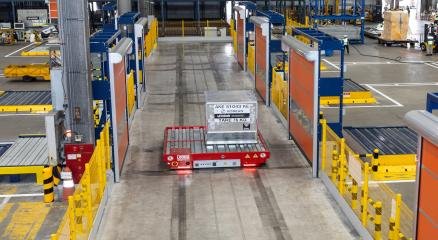



Milwaukee Mitchell International Airport (MKE) has completed a new air cargo centre in partnership with real estate developer Crow Holdings, marking a significant addition to Wisconsin’s freight and logistics infrastructure. The facility will strengthen regional cargo operations and improve access to domestic and international freight markets. Located at the MKE Regional Business Park on the former site of the 440th Airlift Wing, the 337,000-square-foot facility is designed to accommodate up to five Boeing 747-400 aircraft simultaneously. Construction began in February 2025, following years of planning and collaboration between the airport and Crow Holdings. The development is intended to provide manufacturers, distributors and logistics providers with additional air freight capacity and a more direct route to global shipping networks. A key objective of the project is to offer businesses in southeastern Wisconsin an alternative to routing freight through airports in neighbouring Illinois, particularly Chicago-area gateways that can experience congestion, delays and higher operating costs. By expanding cargo infrastructure closer to regional manufacturing and distribution centres, MKE aims to support more predictable freight movements and improve supply chain efficiency. The airport’s location along the Interstate 94 corridor also provides access to trucking networks serving Wisconsin and the wider Midwest. Its existing airfield capabilities, road connectivity and potential for further cargo development could help attract additional cargo operators and strengthen links between air freight and road transport. The project represents an investment of approximately $80 million and forms part of a public-private partnership between Milwaukee Mitchell International Airport and Crow Holdings. Alongside the cargo facility, the broader development includes improvements to adjacent taxiways to support wide-body freighter operations, as well as a new Milwaukee County Highway Maintenance Facility. These infrastructure enhancements are expected to improve accessibility for cargo aircraft and support the region’s transportation requirements. The new centre is also expected to generate recurring revenue for the airport. Projections indicate annual aircraft landing fees of more than $1.3 million, in addition to over $1 million in ground lease rents and fees. The development is expected to create employment opportunities, attract new business and contribute to economic growth across Wisconsin. For the regional logistics industry, the facility provides an opportunity to expand air freight capacity while offering shippers another gateway for moving goods across the United States and international markets. Its long-term contribution will depend on cargo operator participation, freight volumes and the development of supporting logistics services. With the completion of the new air cargo centre, the airport is strengthening its position as an alternative cargo gateway in the Midwest, supporting manufacturers and supply chain operators seeking greater flexibility, connectivity and efficiency in freight transportation. 𝐒𝐭𝐚𝐲 𝐓𝐮𝐧𝐞𝐝 𝐭𝐨 CARGOCONNECT 𝐟𝐨𝐫 𝐥𝐚𝐭𝐞𝐬𝐭 𝐮𝐩𝐝𝐚𝐭𝐞𝐬!



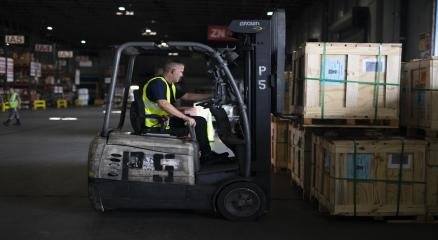
LATAM Cargo Group has introduced virtual reality (VR) technology to train warehouse personnel at its Miami International Airport (MIA) hub, strengthening its focus on operational safety, hazard prevention and efficient cargo handling. The initiative enables employees to practise high-risk operational scenarios in an immersive, digitally simulated environment without exposing themselves or others to actual workplace hazards. The programme’s initial phase will cover approximately 550 employees, including 250 forklift operators. Developed in collaboration with Academia LATAM, the LATAM Group’s internal training division, the system replicates the working environment and allows personnel to rehearse procedures that are critical to safe warehouse operations. The VR simulators incorporate scenarios across six warehouse pedestrian zones, alongside three specialised training modules for forklift drivers. Employees practise procedures involving dangerous goods segregation, cargo handling, pedestrian movement and maintaining safe separation between personnel and machinery. These exercises are designed to improve situational awareness and help workers recognise and respond to potential risks more effectively. Beyond immersive instruction, the platform records behavioural metrics, including response times during contingencies and employees’ ability to identify and mitigate hazards. These measurements can help assess training performance and provide insights into how personnel respond to safety-critical situations. By combining realistic simulations with measurable performance indicators, the programme aims to strengthen practical preparedness alongside conventional training. Daniel Leng, Chief Operating Officer (COO) at LATAM Cargo, said: “Integrating Virtual Reality at our Miami hub marks a key step in our operational safety strategy. By placing our teams in critical operational scenarios within an exact replica of their daily work environment, we significantly close the gap between classroom theory and ramp practice. This directly translates into safer and more efficient cargo handling for our customers.” The Miami deployment follows an initial implementation of VR-based onboarding training at the Fast Air warehouse in Santiago, Chile. The expansion brings a broader range of operational scenarios to one of LATAM Cargo’s important cargo hubs, extending the application of simulation-based learning beyond its initial rollout. The company is also assessing the possibility of introducing the VR training system at other strategic locations across its network, including Brazil. Hence, the initiative reflects the growing role of digital training technologies in air cargo operations, where warehouse teams must coordinate cargo movements, operate machinery and manage safety-sensitive procedures in demanding environments. By enabling employees to practise complex tasks in a controlled setting and measuring their responses, LATAM Cargo aims to reinforce workplace safety while supporting more reliable and efficient cargo-handling operations. 𝐒𝐭𝐚𝐲 𝐓𝐮𝐧𝐞𝐝 𝐭𝐨 CARGOCONNECT 𝐟𝐨𝐫 𝐥𝐚𝐭𝐞𝐬𝐭 𝐮𝐩𝐝𝐚𝐭𝐞𝐬!