
Loading...
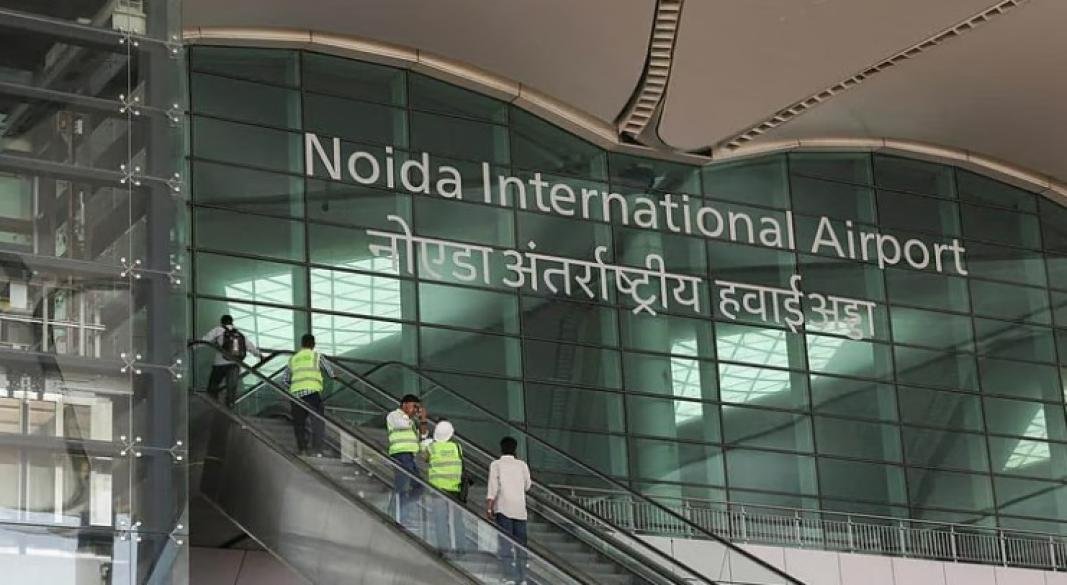
Afcom Holdings Limited has entered into a strategic partnership with Air India SATS Airport Services Pvt Ltd and Noida International Airport to enhance cargo connectivity and develop integrated freight operations in Jewar.
The tripartite collaboration is expected to accelerate the emergence of Noida International Airport (NIA) as a major logistics and cargo hub for North India. Under the agreement, Afcom will base its freighter aircraft at the airport and operate dedicated cargo services connecting key international markets.
The partnership comes at a time when India is witnessing rapid growth in air freight demand, driven by e-commerce expansion, electronics manufacturing, pharmaceuticals, and export-oriented industries. Industry experts believe the strategic location of NIA, combined with multimodal connectivity infrastructure, positions the airport to become a crucial gateway for international trade and time-sensitive cargo movement.
Afcom currently operates a fleet of Boeing 737-800 freighters serving destinations across Asia and the Middle East, including Bangkok, Yangon, Hanoi, Colombo, Malé, and Dubai. Through the collaboration, the airline aims to expand its cargo network while leveraging the airport’s developing logistics ecosystem.
As part of the agreement, the three partners will jointly identify high-potential international routes, assess cargo demand patterns, and create a long-term network development strategy. The alliance will also focus on aligning operational and infrastructure requirements to ensure efficient cargo handling and sustainable growth.
AISATS, one of India’s leading airport services and cargo handling companies, has been actively strengthening its footprint at Noida International Airport. Earlier this year, the company announced large-scale investments in cargo and logistics infrastructure at Jewar, including an integrated cargo terminal with advanced handling systems and scalable capacity for future growth.
The airport’s integrated cargo terminal is expected to play a pivotal role in supporting exporters from northern India, especially from manufacturing clusters in Uttar Pradesh, Delhi-NCR, and adjoining states. With industries increasingly seeking faster and cost-efficient logistics solutions, dedicated freighter operations from NIA could reduce dependency on existing congested metro airports.
The collaboration also aligns with broader government efforts to position Uttar Pradesh as a logistics and manufacturing powerhouse. Noida International Airport is scheduled to commence commercial operations from June 15, 2026, opening new opportunities for passenger airlines, cargo operators, and supply chain stakeholders.
For the Indian air cargo sector, the Afcom-AISATS partnership represents more than a routine commercial agreement. It signals growing confidence in emerging airport infrastructure and highlights the increasing importance of integrated logistics networks in supporting India’s trade ambitions and supply chain resilience.
𝐒𝐭𝐚𝐲 𝐓𝐮𝐧𝐞𝐝 𝐭𝐨 https://cargoconnect.co.in/ 𝐟𝐨𝐫 𝐥𝐚𝐭𝐞𝐬𝐭 𝐮𝐩𝐝𝐚𝐭𝐞𝐬!

Qatar Airways Cargo is expanding its global freight network for the Winter 2026 season, introducing dedicated freighter services from Copenhagen, New York’s John F. Kennedy International Airport (JFK) and Dallas, while establishing a direct Warsaw–Chicago connection. The additions are set to increase cargo capacity, strengthen transatlantic trade links and provide customers with improved access to global markets through the carrier’s Doha hub. The network expansion, commencing from late October and early November 2026, targets key export markets across Northern and Central Europe and the United States. By combining dedicated Boeing 777 freighters with capacity on Qatar Airways’ passenger services, the carrier aims to provide greater flexibility for a broad range of freight, including pharmaceuticals, healthcare products, aerospace components, technology, energy shipments, perishables, vehicles and oversized cargo. Strengthening Nordic and Central European Connectivity Effective 25 October, Qatar Airways Cargo will introduce a weekly Boeing 777 freighter service from Copenhagen, operating Doha–Budapest–Copenhagen–Doha. The service will provide 100 tonnes of dedicated export capacity, strengthening the carrier’s reach across Denmark and Southern Sweden. The new freighter operation will complement Qatar Airways’ 10 weekly Boeing 787 passenger services to Copenhagen, which collectively provide more than 100 tonnes of belly-hold cargo capacity in each direction per week. Through Doha, customers will gain onward connections to markets across Asia, the Middle East, the Indian Subcontinent, Africa and beyond. In Central Europe, the carrier will relaunch freighter operations to Warsaw from 26 October, adding a weekly direct connection from Warsaw to Chicago. The Boeing 777 service will operate Doha–Warsaw–Chicago–Brussels–Doha, offering Polish exporters and manufacturers additional dedicated capacity to the US market. Combined with twice-weekly freighter services to Katowice and 10 weekly wide-body passenger flights to Warsaw, the new operation will increase Qatar Airways Cargo’s total weekly capacity to and from Poland to more than 435 tonnes in each direction. Expanding Transatlantic Freight Capacity In North America, a new weekly Boeing 777 freighter service to New York JFK will commence on 1 November, operating Doha–Liège–New York–Atlanta–Liège–Doha. The service will supplement 14 weekly passenger flights to and from New York, taking the carrier’s total weekly cargo capacity on the market to more than 226 tonnes in each direction. Dallas is also gaining additional dedicated freighter capacity. Qatar Airways Cargo has recently introduced two weekly Boeing 777 freighter services operating Doha–Liège–Dallas–Doha, providing 200 tonnes of main-deck capacity into Dallas and 100 tonnes outbound. Together with 14 weekly wide-body passenger flights, the new operation will raise total weekly cargo capacity to more than 250 tonnes into Dallas and over 150 tonnes out of the city. The expanded offering is intended to strengthen trade links between Texas and markets served across the airline’s international network. Capacity for Diverse and Time-Sensitive Cargo The additional services will cater to a wide spectrum of industries, including pharmaceuticals and healthcare, aerospace, technology, energy, perishables, high-value and time-sensitive shipments, vehicles, oversized freight, and general and industrial cargo. Customers will also benefit from increased belly-hold capacity across Qatar Airways’ Winter 2026 passenger network, further broadening the options available for moving shipments across international markets. With the new routes, expanded frequencies and connectivity through Doha, Qatar Airways Cargo is strengthening its capacity offering across Europe and North America while linking customers to a global network spanning more than 160 destinations. Shipments can be booked through the carrier’s Digital Lounge portal or its omnichannel partner network.



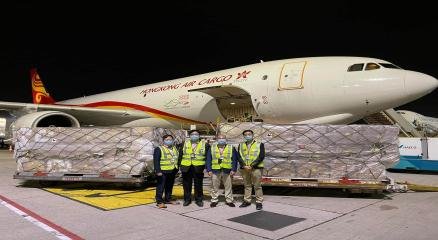
Hong Kong International Airport (HKIA) recorded a 6.3% year-on-year increase in cargo throughput in September 2026, handling approximately 433,000 tonnes of freight as a sharp rise in transshipments and stronger import volumes supported its recovery. The growth followed year-on-year declines in July and August, highlighting renewed momentum at one of the world’s major air cargo hubs. According to provisional traffic statistics released by Airport Authority Hong Kong (AAHK), transshipment volumes surged 26.9% year-on-year, while imports increased 9.2%. Southeast Asia and the Chinese mainland were the principal contributors to the expansion, offsetting weaker cargo flows on European trade lanes. Inbound freight recorded stronger growth than outbound shipments during the month. Unloaded cargo rose 14.6% year-on-year to approximately 126,000 tonnes, while loaded cargo increased 3.2% to around 306,000 tonnes. Cargo-related flight movements also climbed 3.9% to 6,515, compared with 6,270 in September 2025. The decline in European cargo volumes was attributed partly to the European Union’s removal of the customs duty exemption for low-value consignments in July 2026. The policy change has affected the movement of low-value e-commerce shipments into Europe, creating additional pressure on relevant trade flows. Despite fluctuations in monthly performance, HKIA maintained positive growth over the longer term. During January–September 2026, the airport handled approximately 3.78 million tonnes of cargo, marking a 3.1% increase compared with the corresponding period last year. For the financial year beginning in April, throughput reached 2.576 million tonnes, up 3% year-on-year. On a rolling 12-month basis, cargo volumes increased 3.3% to 5.18 million tonnes, while cargo flight movements rose 2.1% to 79,715. The September performance underscores the importance of intra-Asian trade and transshipment activity in sustaining Hong Kong’s air freight network. With stronger cargo flows from mainland China and Southeast Asia compensating for softness in Europe, HKIA’s latest figures reflect shifting trade patterns across the global air cargo market. 𝐒𝐭𝐚𝐲 𝐓𝐮𝐧𝐞𝐝 𝐭𝐨 CARGOCONNECT 𝐟𝐨𝐫 𝐥𝐚𝐭𝐞𝐬𝐭 𝐮𝐩𝐝𝐚𝐭𝐞𝐬!
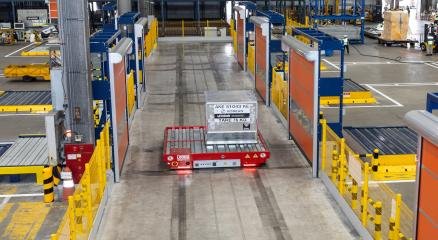



Milwaukee Mitchell International Airport (MKE) has completed a new air cargo centre in partnership with real estate developer Crow Holdings, marking a significant addition to Wisconsin’s freight and logistics infrastructure. The facility will strengthen regional cargo operations and improve access to domestic and international freight markets. Located at the MKE Regional Business Park on the former site of the 440th Airlift Wing, the 337,000-square-foot facility is designed to accommodate up to five Boeing 747-400 aircraft simultaneously. Construction began in February 2025, following years of planning and collaboration between the airport and Crow Holdings. The development is intended to provide manufacturers, distributors and logistics providers with additional air freight capacity and a more direct route to global shipping networks. A key objective of the project is to offer businesses in southeastern Wisconsin an alternative to routing freight through airports in neighbouring Illinois, particularly Chicago-area gateways that can experience congestion, delays and higher operating costs. By expanding cargo infrastructure closer to regional manufacturing and distribution centres, MKE aims to support more predictable freight movements and improve supply chain efficiency. The airport’s location along the Interstate 94 corridor also provides access to trucking networks serving Wisconsin and the wider Midwest. Its existing airfield capabilities, road connectivity and potential for further cargo development could help attract additional cargo operators and strengthen links between air freight and road transport. The project represents an investment of approximately $80 million and forms part of a public-private partnership between Milwaukee Mitchell International Airport and Crow Holdings. Alongside the cargo facility, the broader development includes improvements to adjacent taxiways to support wide-body freighter operations, as well as a new Milwaukee County Highway Maintenance Facility. These infrastructure enhancements are expected to improve accessibility for cargo aircraft and support the region’s transportation requirements. The new centre is also expected to generate recurring revenue for the airport. Projections indicate annual aircraft landing fees of more than $1.3 million, in addition to over $1 million in ground lease rents and fees. The development is expected to create employment opportunities, attract new business and contribute to economic growth across Wisconsin. For the regional logistics industry, the facility provides an opportunity to expand air freight capacity while offering shippers another gateway for moving goods across the United States and international markets. Its long-term contribution will depend on cargo operator participation, freight volumes and the development of supporting logistics services. With the completion of the new air cargo centre, the airport is strengthening its position as an alternative cargo gateway in the Midwest, supporting manufacturers and supply chain operators seeking greater flexibility, connectivity and efficiency in freight transportation. 𝐒𝐭𝐚𝐲 𝐓𝐮𝐧𝐞𝐝 𝐭𝐨 CARGOCONNECT 𝐟𝐨𝐫 𝐥𝐚𝐭𝐞𝐬𝐭 𝐮𝐩𝐝𝐚𝐭𝐞𝐬!