
Loading...
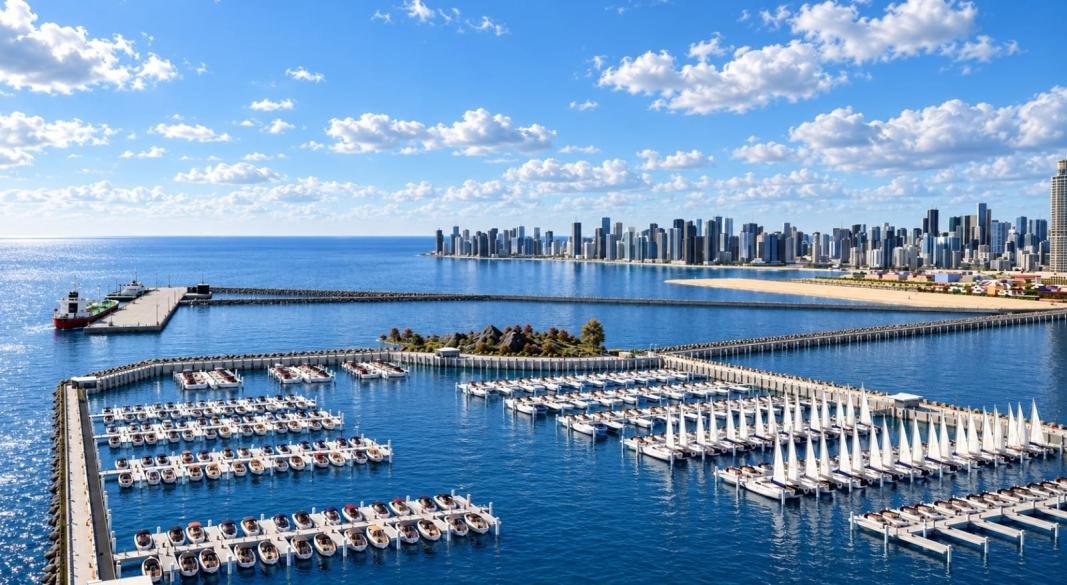
The Mumbai Port Authority (MbPA) has invited domestic and international bids for developing the Viksit Bharat Mumbai Marina, a full-service marina and integrated waterfront project at Victoria Dock in Mumbai. Estimated to cost ₹922.67 crore, the project aims to strengthen maritime tourism, yacht services and waterfront infrastructure while creating new opportunities for port-linked commercial activities.
The project will be implemented under the Design, Build, Finance, Operate and Transfer (DBFOT) model, with a concession period of 45 years. The proposed marina will cover a protected water area of 37.3 hectares and accommodate 604 yachts at full development, including 424 berths in the first phase.
Mumbai Port Authority has already commenced marine works, including a piled breakwater with an approximately 150-metre approach trestle, six piled service platforms, floating pontoons and gangways for around 424 berths, along with capital dredging. Environmental and Coastal Regulation Zone (CRZ) clearances have also been secured for the entire project area.
The selected concessionaire will develop the landside infrastructure, expand berthing capacity beyond the first phase, and operate and maintain the marina throughout the concession period before transferring the assets to the port authority.
Planned facilities include a marina terminal building, an international-standard sailing school, a yacht club, a yacht repair yard at Haji Bunder, dry-stack storage and a fuel station. The development will also feature a five-star hotel, tourism business centre, food and beverage outlets, retail zones, and dedicated space for boat shows and events.
The tender follows a single-stage, two-envelope electronic bidding process. Bidders will be evaluated on the percentage of gross revenue they propose to share with Mumbai Port Authority, with the highest revenue-share offer determining the preferred bidder. Companies can participate individually or as part of a consortium comprising up to four members.
The deadline for pre-bid queries is 28 October 2026, with pre-bid meetings scheduled for 30 October and 25 November. The final date for submitting bids is 15 December 2026.
The marina forms part of Mumbai Port Authority’s broader strategy to expand cruise tourism, harbour services and waterfront development, complementing initiatives such as the Mumbai International Cruise Terminal and the city's water taxi network. The project is expected to connect Mumbai’s maritime heritage with sailing, yacht services, hospitality and tourism while retaining port safety and operational requirements as key priorities.
𝐒𝐭𝐚𝐲 𝐓𝐮𝐧𝐞𝐝 𝐭𝐨 CARGOCONNECT 𝐟𝐨𝐫 𝐥𝐚𝐭𝐞𝐬𝐭 𝐮𝐩𝐝𝐚𝐭𝐞𝐬!
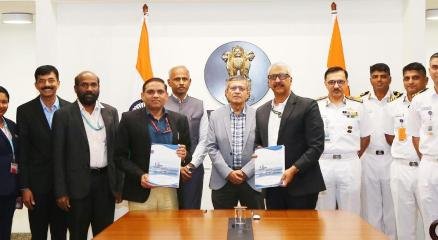
The Ministry of Defence has signed a ₹498-crore contract with Cochin Shipyard Limited (CSL) for the refit and re-powering of INS Betwa, a Brahmaputra-class guided missile frigate of the Indian Navy. The project will focus on upgrading the warship's propulsion system and combat capabilities, while strengthening India's indigenous naval ship repair and maintenance ecosystem. The contract was signed in New Delhi on November 11, 2026, in the presence of Defence Secretary and DRDO Chairman Rajesh Kumar Singh. The project involves replacing INS Betwa's existing steam-based propulsion system with a modern diesel-engine-based arrangement, marking a significant technological transformation for the 3,850-tonne warship. The propulsion upgrade will require extensive engineering and modifications to the vessel's existing machinery infrastructure. The replacement of steam-based machinery with diesel engines is expected to enhance the ship's operational effectiveness and support its continued service in the Indian Navy. In addition to the propulsion overhaul, the frigate will receive an upgraded weapon suite to strengthen its combat capabilities. Commissioned in July 2004, INS Betwa is one of three Brahmaputra-class frigates operated by the Indian Navy. The vessel has undergone significant restoration work following a major accident in December 2016, when it toppled onto its port side during undocking at Mumbai Naval Dockyard. The incident resulted in casualties and extensive damage to the warship. Following salvage and subsequent repairs, the frigate returned to operational service. The latest contract also represents another important project for CSL in India's naval modernisation programme. The shipyard has previously undertaken the re-powering and mid-life upgrade of INS Beas, another Brahmaputra-class frigate. With INS Betwa, CSL will undertake the second such steam-to-diesel propulsion conversion for the class. Strengthening Domestic Shipbuilding and MSME Participation Beyond the naval modernisation objectives, the ₹498-crore project is expected to involve more than 50 micro, small and medium enterprises (MSMEs), generating employment opportunities across India's shipbuilding and ancillary industries. The initiative is aligned with the government's Aatmanirbhar Bharat and Make in India programmes, supporting the development of domestic capabilities in complex naval engineering, ship repair, maintenance and propulsion system modernisation. The contract reinforces Cochin Shipyard's growing role in India's defence manufacturing and maritime engineering sectors. It also highlights the importance of indigenous shipyards and their supporting industrial networks in meeting the Indian Navy's long-term fleet modernisation and maintenance requirements. 𝐒𝐭𝐚𝐲 𝐭𝐮𝐧𝐞𝐝 𝐭𝐨 CARGOCONNECT 𝐟𝐨𝐫 𝐥𝐚𝐭𝐞𝐬𝐭 𝐮𝐩𝐝𝐚𝐭𝐞𝐬!
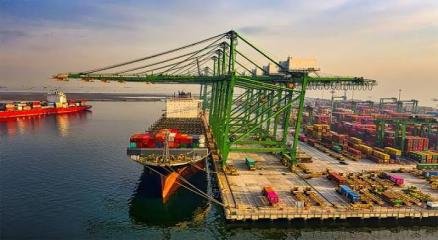
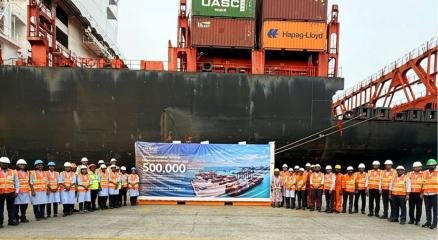
Tuticorin Container Terminal (TCT), operated by J M Baxi Ports & Logistics, has handled a cumulative 500,000 twenty-foot equivalent units (TEUs) since commencing commercial operations in September 2024. The achievement marks an important milestone in the terminal’s operational journey and reflects its growing contribution to containerised cargo movement through V.O. Chidambaranar Port in Tamil Nadu. Reaching the half-million TEU mark within approximately two years highlights the terminal’s progress in strengthening container-handling capabilities and supporting India's maritime trade infrastructure. The milestone also underscores the increasing importance of Tuticorin as a gateway for export-import (EXIM) cargo and coastal shipping along India's southeastern coastline. Inaugurated on September 16, 2024, by Union Minister for Ports, Shipping and Waterways Sarbananda Sonowal, Tuticorin International Container Terminal was developed with an investment of over ₹434 crore. The facility has an annual handling capacity of 600,000 TEUs and became the port’s third container terminal, adding significant capacity to its container-handling infrastructure. Spread across approximately 10 hectares, the terminal features a 370-metre quay and a berth with a draft of up to 14.2 metres. Its equipment infrastructure includes three rail-mounted quay cranes and nine rubber-tyred gantry (RTG) cranes to support vessel operations, container movement and yard management. The facility caters to both international and coastal cargo, with road and rail connectivity linking it to industrial and commercial centres across southern India. A notable aspect of the milestone is the contribution of the terminal's workforce, particularly women employees who are involved across operational and administrative functions, including leadership positions. The terminal has acknowledged their role in supporting its operational performance and development. It has also recognised the continued cooperation of V.O. Chidambaranar Port Authority, vessel operators, shipping lines, customers and other business partners in achieving the milestone. The terminal's hinterland extends across Tamil Nadu, Karnataka and Kerala, while its proximity to international east-west shipping routes offers access to important maritime trade corridors. With the 500,000 TEU milestone achieved, TCT is positioned to further strengthen its role in regional container logistics, facilitate EXIM trade and contribute to the expansion of India's port-led economic growth. 𝐒𝐭𝐚𝐲 𝐓𝐮𝐧𝐞𝐝 𝐭𝐨 CARGOCONNECT 𝐟𝐨𝐫 𝐥𝐚𝐭𝐞𝐬𝐭 𝐮𝐩𝐝𝐚𝐭𝐞𝐬!
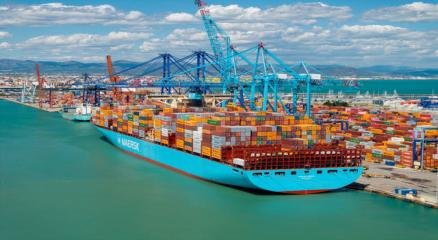
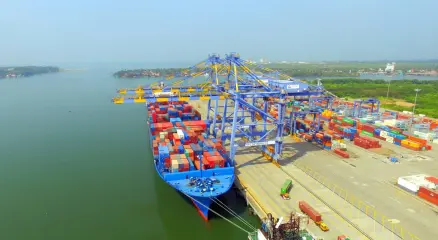
Cochin Port’s growth exceeded the sector average by 10 percentage points, highlighting its expanding role in India’s maritime trade and container logistics network. The six-month performance strengthens the port’s position as a key gateway on India’s southwest coast, connecting regional businesses with domestic and international markets. The growth momentum was reinforced by a record performance in August 2026, when DP World Cochin’s ICTT handled 97,952 twenty-foot equivalent units (TEUs), marking a 51% increase compared with August 2025. The terminal had handled 74,644 TEUs in June and 74,585 TEUs in July before volumes climbed to the August peak. Between June and August, the terminal also accommodated 51 additional, unscheduled vessel calls while maintaining regular operations. This demonstrated its ability to manage increased vessel traffic amid geopolitical disruptions affecting international shipping routes and cargo flows. The terminal’s infrastructure and operational capabilities are important to shipping lines seeking reliable cargo-handling services and connections for Indian export-import traffic. Sustaining the increase will depend on efficient vessel turnaround, cargo handling and coordination across port operations. Cochin Port’s latest performance builds on its established container-handling operations. During FY2024–25, the port handled 834,665 TEUs, compared with 754,237 TEUs in FY2023–24. Transshipment traffic reached 169,562 TEUs in FY2024–25, underlining the terminal’s role in transferring containers between vessels as well as supporting regional cargo movements. The port’s broader logistics infrastructure also contributes to its appeal. DP World has developed a Free Trade Warehousing Zone (FTWZ) at Cochin, offering storage, consolidation and distribution facilities for export-import cargo. The integration of container handling and warehousing can help businesses coordinate inventory with shipping schedules and streamline cargo movement. For exporters, importers and logistics providers, such facilities can support more coordinated supply chains by bringing essential logistics services closer to the port. However, the long-term benefits of higher container throughput will also depend on dependable shipping connections, competitive logistics costs and efficient inland cargo evacuation. Cochin Port’s 22% container throughput growth places it ahead of India’s major ports in terms of growth rate for April–September 2026. The performance highlights the growing significance of Vallarpadam in the country’s maritime logistics ecosystem. Maintaining this momentum will require continued operational efficiency, strong shipping-line partnerships and effective integration with inland transport and warehousing networks. Converting the rise in volumes into sustained business growth could further strengthen Cochin’s role in facilitating international trade and improving supply chain connectivity. 𝐒𝐭𝐚𝐲 𝐓𝐮𝐧𝐞𝐝 𝐭𝐨 CARGOCONNECT 𝐟𝐨𝐫 𝐥𝐚𝐭𝐞𝐬𝐭 𝐮𝐩𝐝𝐚𝐭𝐞𝐬!