
Loading...
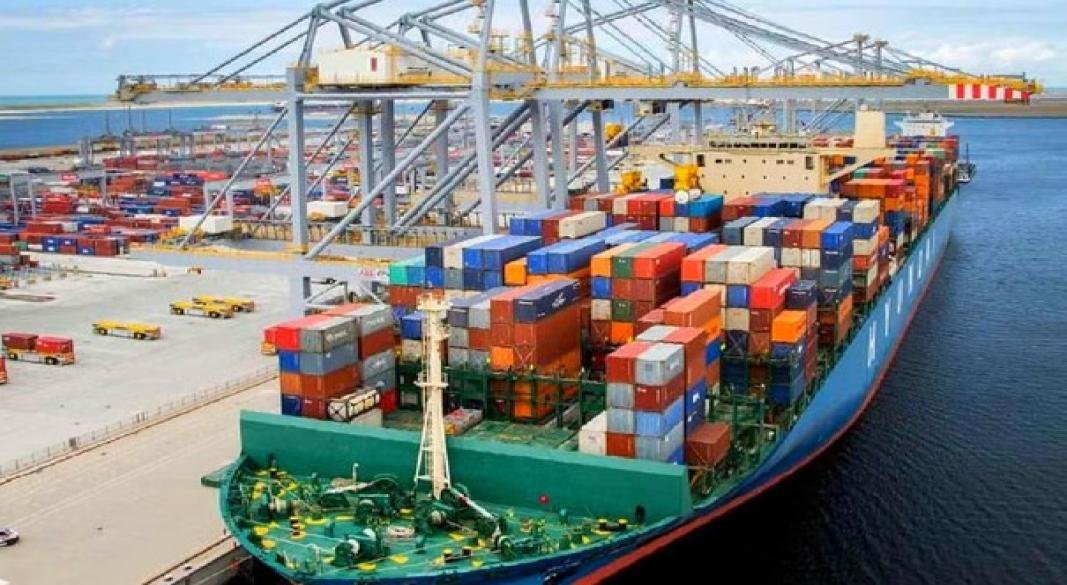
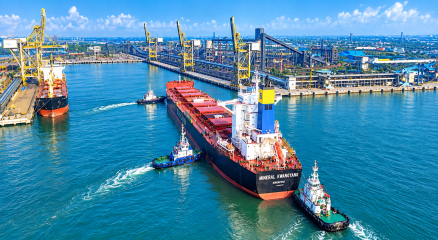
Gujarat government has introduced a shipbuilding subsidy of up to ₹50 crore for shipyards operating within the state. The initiative is designed to complement the Centre’s Shipbuilding Financial Assistance Scheme and enhance Gujarat’s position as a leading maritime and shipbuilding destination.
Under the newly announced incentive framework, shipyards can claim financial assistance equivalent to 8% of eligible project costs or ₹50 crore, whichever is lower, for the construction of small and large vessels. For specialised vessels, the subsidy has been enhanced to 10% of eligible costs, capped at ₹50 crore. The support is expected to improve project viability and encourage greater investment in domestic shipbuilding activities.
The policy aligns with India’s broader ambition of developing a globally competitive maritime industry and reducing dependence on imported vessels. By offering an additional layer of financial support, Gujarat aims to attract both private and institutional investments into shipbuilding and ship repair infrastructure. Industry stakeholders believe the move could help improve order inflows, increase production capacity, and create new employment opportunities across the maritime value chain.
Gujarat already plays a pivotal role in India’s maritime economy, supported by an extensive coastline, established port infrastructure, and a strong industrial base. The state has also been actively promoting the development of shipbuilding and repair clusters in strategic locations such as the Gulf of Kutch and Pipavav. The latest subsidy is expected to accelerate the creation of modern shipyard facilities, including dry docks, fabrication units, jetties, cranes, dredging infrastructure, and research and training centres.
The announcement comes at a time when both the central and state governments are intensifying efforts to expand India’s maritime capabilities. Recent national initiatives have focused on increasing shipbuilding capacity, enhancing technological competitiveness, and supporting long-term growth in the sector. Gujarat’s latest intervention is expected to complement these efforts while strengthening the state’s position as a preferred destination for maritime investments.
As global supply chains continue to diversify and demand for maritime assets grows, the subsidy could provide a timely boost to India’s shipbuilding industry. Analysts believe the policy will not only support local manufacturing but also contribute to the country’s ambition of emerging as a major global maritime hub in the coming decades.
𝐒𝐭𝐚𝐲 𝐓𝐮𝐧𝐞𝐝 𝐭𝐨 CARGOCONNECT 𝐟𝐨𝐫 𝐥𝐚𝐭𝐞𝐬𝐭 𝐮𝐩𝐝𝐚𝐭𝐞𝐬!
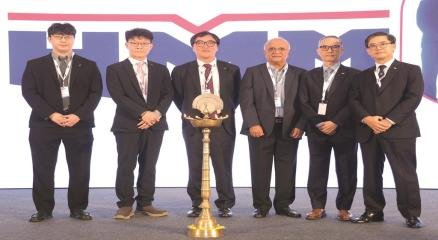
HMM India has formally launched its Gulf–India–East Africa (GIA) service, expanding direct maritime connectivity between India and key East African gateways as the carrier looks to tap growing trade opportunities. The launch was commemorated at an event in Mumbai on October 16, 2026, attended by maritime leaders, global executives and logistics industry stakeholders. The formal celebration followed the service’s inaugural vessel call, with MV HMM Cebu arriving at PSA Mumbai terminal in Nhava Sheva on September 27. Highlighting India’s growing importance in the carrier’s global strategy, Namhun Baik, Head of West Asia Trade Management at HMM Korea, thanked customers and industry partners for their continued support. “Thanks to customers and patrons, India’s role will be more important than ever, I believe. HMM is there to help in it,” he said. Baik said the GIA service reflects HMM’s continued commitment to customers across the region and its confidence in the potential of India’s expanding trade ecosystem. Daljoong Jeong, Managing Director of HMM India, underscored the importance of industry partnerships in driving the company’s growth. Calling the launch a significant milestone, he said the service would open new business opportunities for Indian exporters and importers, adding that HMM would continue to invest significantly in India. The event also brought together HMM’s international leadership, including Seunghyun Kim, Manager of West Asia Trade Management at HMM Korea, and Taehyung Kim, Managing Director of HMM’s Dubai Regional Headquarters. Both engaged with customers, shippers and logistics partners during the gathering. Presenting HMM’s operational journey in India, Nilesh Waghela, General Manager of Sales at HMM India, outlined the carrier’s established service loops, including CIX, FIL and FIM, while positioning GIA as an important addition to its service network. The GIA service follows a rotation connecting India with two major East African trade gateways: Nhava Sheva (JNPA) → Mundra → Dar es Salaam, Tanzania → Mombasa, Kenya → Nhava Sheva By linking India’s key container ports with Dar es Salaam and Mombasa, the service is intended to provide Indian exporters and importers with direct, dependable maritime connectivity to important East African markets. The launch reinforces HMM’s focus on expanding its regional network and strengthening trade links between India and East Africa, with the new service adding another connection for cargo moving between the markets.
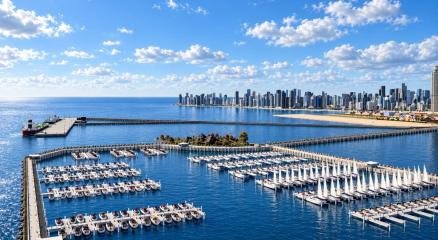
The Mumbai Port Authority (MbPA) has invited domestic and international bids for developing the Viksit Bharat Mumbai Marina, a full-service marina and integrated waterfront project at Victoria Dock in Mumbai. Estimated to cost ₹922.67 crore, the project aims to strengthen maritime tourism, yacht services and waterfront infrastructure while creating new opportunities for port-linked commercial activities. The project will be implemented under the Design, Build, Finance, Operate and Transfer (DBFOT) model, with a concession period of 45 years. The proposed marina will cover a protected water area of 37.3 hectares and accommodate 604 yachts at full development, including 424 berths in the first phase. Mumbai Port Authority has already commenced marine works, including a piled breakwater with an approximately 150-metre approach trestle, six piled service platforms, floating pontoons and gangways for around 424 berths, along with capital dredging. Environmental and Coastal Regulation Zone (CRZ) clearances have also been secured for the entire project area. The selected concessionaire will develop the landside infrastructure, expand berthing capacity beyond the first phase, and operate and maintain the marina throughout the concession period before transferring the assets to the port authority. Planned facilities include a marina terminal building, an international-standard sailing school, a yacht club, a yacht repair yard at Haji Bunder, dry-stack storage and a fuel station. The development will also feature a five-star hotel, tourism business centre, food and beverage outlets, retail zones, and dedicated space for boat shows and events. The tender follows a single-stage, two-envelope electronic bidding process. Bidders will be evaluated on the percentage of gross revenue they propose to share with Mumbai Port Authority, with the highest revenue-share offer determining the preferred bidder. Companies can participate individually or as part of a consortium comprising up to four members. The deadline for pre-bid queries is 28 October 2026, with pre-bid meetings scheduled for 30 October and 25 November. The final date for submitting bids is 15 December 2026. The marina forms part of Mumbai Port Authority’s broader strategy to expand cruise tourism, harbour services and waterfront development, complementing initiatives such as the Mumbai International Cruise Terminal and the city's water taxi network. The project is expected to connect Mumbai’s maritime heritage with sailing, yacht services, hospitality and tourism while retaining port safety and operational requirements as key priorities. 𝐒𝐭𝐚𝐲 𝐓𝐮𝐧𝐞𝐝 𝐭𝐨 CARGOCONNECT 𝐟𝐨𝐫 𝐥𝐚𝐭𝐞𝐬𝐭 𝐮𝐩𝐝𝐚𝐭𝐞𝐬!

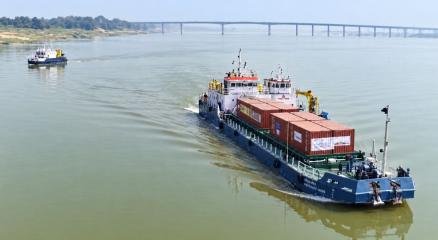
Andhra Pradesh has invited bids for a proposed ₹1,700-crore inland waterway corridor connecting Muktyala with the upcoming Machilipatnam Port to strengthen industrial freight movement and port connectivity. The project aims to establish an alternative cargo transportation route for industries in the state, reduce dependence on road freight and improve the movement of bulk commodities. The Andhra Pradesh Inland Waterways Authority (APIWA) has initiated the tendering process for the development of the corridor under the Design, Build, Finance, Operate and Transfer (DBFOT) model through a public-private partnership (PPP). The proposed 168-km route will combine an 82-km stretch along the Krishna River between Muktyala and Prakasam Barrage with the Bandar Canal section leading towards Machilipatnam Port. The initiative has received in-principal approval from the Inland Waterways Authority of India (IWAI). The project envisages upgrading the existing waterway infrastructure to accommodate cargo vessels and facilitate the movement of industrial materials, including cement, limestone and fly ash, from manufacturing clusters around Jaggayyapeta. By linking inland industrial centres with port infrastructure, the corridor is expected to improve freight efficiency and offer businesses an additional mode of transport. The Bandar Canal stretch between Prakasam Barrage in Vijayawada and Machilipatnam Port will be developed to specified navigation standards. Plans include maintaining a minimum channel depth of 1.5 metres and a bottom width of 20 metres. A navigation lock measuring 70 metres in length and 15 metres in width will be constructed at Prakasam Barrage to facilitate vessel movement. The development will also involve replacing low-level bridges that obstruct navigation with high-level structures, relocating utility lines and establishing cargo and passenger terminals. Cargo-handling infrastructure, including cranes and conveyors, will support loading and unloading operations. The selected developer will execute the project through a concession arrangement spanning 50 years, structured as an initial 30-year term with two possible 10-year extensions. Construction is expected to be completed within 36 months of the award. APIWA will facilitate statutory clearances and provide support for land acquisition. According to the tender conditions, prospective bidders must meet specified financial and infrastructure-experience requirements. Online bids are due by November 30, 2026, while technical bids are scheduled to be opened on December 7. For Andhra Pradesh, the project represents an opportunity to diversify its freight network by integrating inland waterways with industrial production centres and maritime gateways. If implemented effectively, the corridor could help ease road congestion, improve bulk-cargo logistics and strengthen Machilipatnam Port’s role in the state’s expanding trade infrastructure. 𝐒𝐭𝐚𝐲 𝐓𝐮𝐧𝐞𝐝 𝐭𝐨 CARGOCONNECT 𝐟𝐨𝐫 𝐥𝐚𝐭𝐞𝐬𝐭 𝐮𝐩𝐝𝐚𝐭𝐞𝐬!