
Loading...
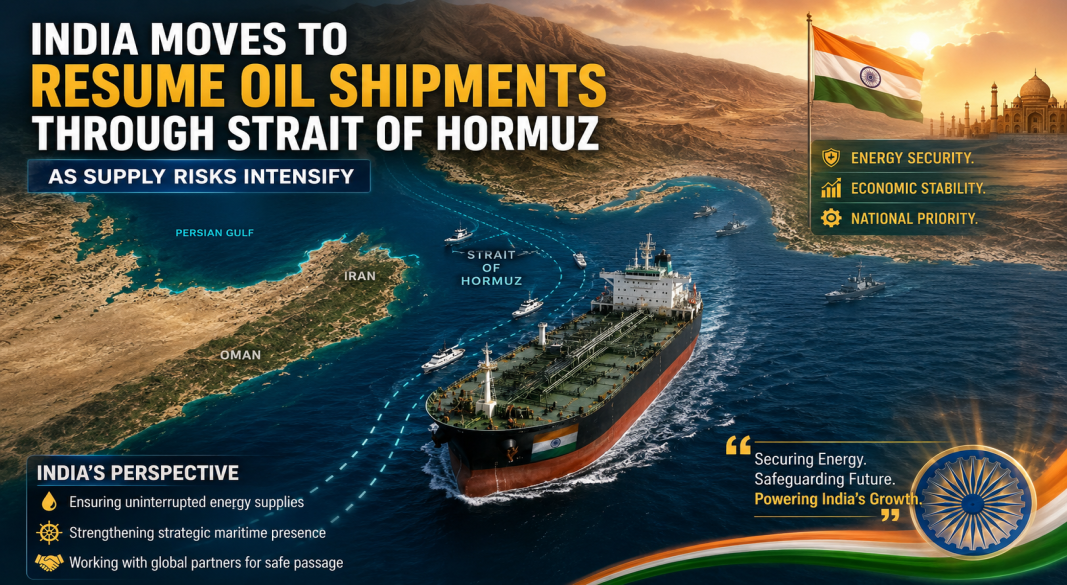
India is preparing to send oil tankers through the Strait of Hormuz to secure fresh crude cargoes from Middle Eastern suppliers, marking its first major attempt to restore direct energy flows through the strategic waterway since the regional conflict disrupted shipping operations.
According to officials familiar with the development, the operational plan has already been finalized, with tanker movement expected to begin after the government issues formal clearance. The decision reflects New Delhi’s effort to stabilize fuel supplies and avoid higher transportation costs tied to alternative sourcing routes.
The Strait of Hormuz remains one of the world’s most critical maritime trade corridors, handling a substantial share of global crude exports. Since the escalation of tensions involving Iran earlier this year, commercial shipping activity in the region has slowed sharply, creating uncertainty for energy-importing nations heavily dependent on Gulf producers.
India, the world’s third-largest oil importer, continues to rely significantly on crude supplies from Saudi Arabia, Iraq, Kuwait and the UAE. Industry estimates suggest a major portion of India’s daily crude imports typically passes through Hormuz, making any prolonged disruption a direct threat to refining operations, fuel prices and shipping costs.
To support the renewed movement of tankers, the Indian Navy has reportedly expanded its deployment in the region. Additional warships and surveillance assets have been positioned near key shipping lanes, while naval escorts are being provided to Indian-linked vessels once they clear sensitive transit zones.
The government has also strengthened maritime risk-management measures. A new insurance support mechanism has been introduced to ensure uninterrupted coverage for Indian ships and cargoes operating in high-risk waters, including the Gulf region.
Although India has increased purchases from Russia and other suppliers over recent months, officials remain concerned about logistical delays, elevated freight costs and sanctions-related complications associated with non-Gulf crude. Importing larger volumes from distant markets would lengthen voyage times and add pressure to domestic fuel economics.
The disruption has already forced several Asian economies to redraw supply-chain strategies, reroute vessels and seek alternative energy cargoes. Analysts warn that prolonged instability in the Gulf could continue to tighten tanker availability, inflate marine insurance premiums and increase volatility across global oil markets.
Follow CARGOCONNECT for more such updates.
India is preparing to send oil tankers through the Strait of Hormuz to secure fresh crude cargoes from Middle Eastern suppliers, marking its first major attempt to restore direct energy flows through the strategic waterway since the regional conflict disrupted shipping operations. According to officials familiar with the development, the operational plan has already been finalized, with tanker movement expected to begin after the government issues formal clearance. The decision reflects New Delhi’s effort to stabilize fuel supplies and avoid higher transportation costs tied to alternative sourcing routes. The Strait of Hormuz remains one of the world’s most critical maritime trade corridors, handling a substantial share of global crude exports. Since the escalation of tensions involving Iran earlier this year, commercial shipping activity in the region has slowed sharply, creating uncertainty for energy-importing nations heavily dependent on Gulf producers. India, the world’s third-largest oil importer, continues to rely significantly on crude supplies from Saudi Arabia, Iraq, Kuwait and the UAE. Industry estimates suggest a major portion of India’s daily crude imports typically passes through Hormuz, making any prolonged disruption a direct threat to refining operations, fuel prices and shipping costs. To support the renewed movement of tankers, the Indian Navy has reportedly expanded its deployment in the region. Additional warships and surveillance assets have been positioned near key shipping lanes, while naval escorts are being provided to Indian-linked vessels once they clear sensitive transit zones. The government has also strengthened maritime risk-management measures. A new insurance support mechanism has been introduced to ensure uninterrupted coverage for Indian ships and cargoes operating in high-risk waters, including the Gulf region. Although India has increased purchases from Russia and other suppliers over recent months, officials remain concerned about logistical delays, elevated freight costs and sanctions-related complications associated with non-Gulf crude. Importing larger volumes from distant markets would lengthen voyage times and add pressure to domestic fuel economics. The disruption has already forced several Asian economies to redraw supply-chain strategies, reroute vessels and seek alternative energy cargoes. Analysts warn that prolonged instability in the Gulf could continue to tighten tanker availability, inflate marine insurance premiums and increase volatility across global oil markets. Follow CARGOCONNECT for more such updates.


The Government of India has appointed Jasmeet Singh Bindra as the new Chairperson of the Visakhapatnam Port Authority (VPA), marking a significant leadership transition at one of the country’s busiest and strategically important ports. Bindra, a 1997-batch Indian Railway Traffic Service (IRTS) officer, will serve in the post for a five-year term under the Ministry of Ports, Shipping and Waterways. The appointment comes at a crucial time for India’s maritime and logistics sector, as ports are being increasingly integrated with multimodal transport corridors and national infrastructure initiatives such as PM Gati Shakti and Sagarmala. Industry observers expect Bindra’s experience in rail logistics and freight operations to strengthen port-rail connectivity and cargo movement efficiency at Visakhapatnam Port. Before assuming the new role, Bindra served as Principal Chief Operations Manager (Coordination) at South East Central Railway, Bilaspur. During his railway career, he also held senior positions including Executive Director (Traffic) in the Gati Shakti wing of the Railway Board and Divisional Railway Manager in Ranchi. His operational expertise in freight mobility, network optimisation and logistics planning is expected to support the port’s future expansion plans. Visakhapatnam Port Authority plays a critical role in handling bulk cargo, containers, coal, crude oil and fertilisers on India’s eastern coast. The port has been focusing on infrastructure modernisation, mechanisation and digital transformation to improve turnaround time and operational efficiency. The leadership transition is expected to further accelerate these initiatives, especially as India aims to enhance its maritime competitiveness and reduce logistics costs. Bindra succeeds M. Angamuthu, who had been holding additional charge of the Visakhapatnam Port Authority while serving as Chairperson of Mumbai Port Authority. The Appointments Committee of the Cabinet approved Bindra’s appointment as part of a broader reshuffle in leadership positions across key Indian ports. India is targeting a larger share in global trade and aiming to position its ports as integrated logistics hubs, reflecting the government’s continued emphasis on aligning rail, road and maritime infrastructure to create a more seamless national supply chain network. 𝐒𝐭𝐚𝐲 𝐓𝐮𝐧𝐞𝐝 𝐭𝐨 https://cargoconnect.co.in/ 𝐟𝐨𝐫 𝐥𝐚𝐭𝐞𝐬𝐭 𝐮𝐩𝐝𝐚𝐭𝐞𝐬!


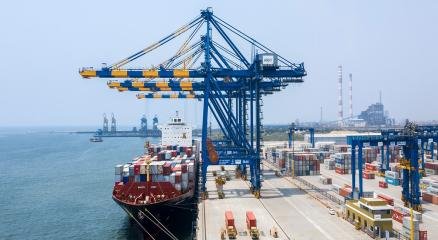
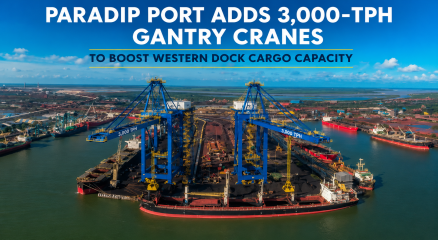
Paradip Port has received two high-capacity multi-purpose gantry cranes as part of the ongoing expansion of its Western Dock, strengthening cargo-handling infrastructure at one of India’s busiest bulk cargo gateways. The cranes arrived aboard the vessel MV RUN ZHOU at the Jindal Paradip Port Limited (JPPL) terminal in Odisha. Each crane is designed to handle up to 3,000 tonnes per hour, significantly increasing loading and unloading efficiency at the dock. Port officials expect the equipment to reduce vessel turnaround time, improve berth productivity, and support higher cargo throughput once commissioning is completed. The delivery marks a key phase in the development of the Western Dock project, which is being built to expand Paradip Port’s dry bulk handling capacity. The project, led by JPPL, includes the construction of new berths, conveyor systems, railway connectivity, and mechanised cargo infrastructure aimed at handling large-scale industrial and mineral cargo movement. The Western Dock is planned as a 25-million-tonne-per-annum cargo terminal, with the first phase targeted for operational readiness in stages. The broader project is part of ongoing efforts to modernize India’s maritime logistics infrastructure and improve cargo evacuation efficiency from eastern India’s industrial belt. Paradip Port plays a strategic role in handling coal, iron ore, limestone, fertilizer, and steel-related cargo. Industry analysts say the addition of high-capacity mechanised systems could help the port manage growing trade volumes while lowering operational delays across the supply chain. Follow CARGOCONNECT for more such updates.