
Loading...
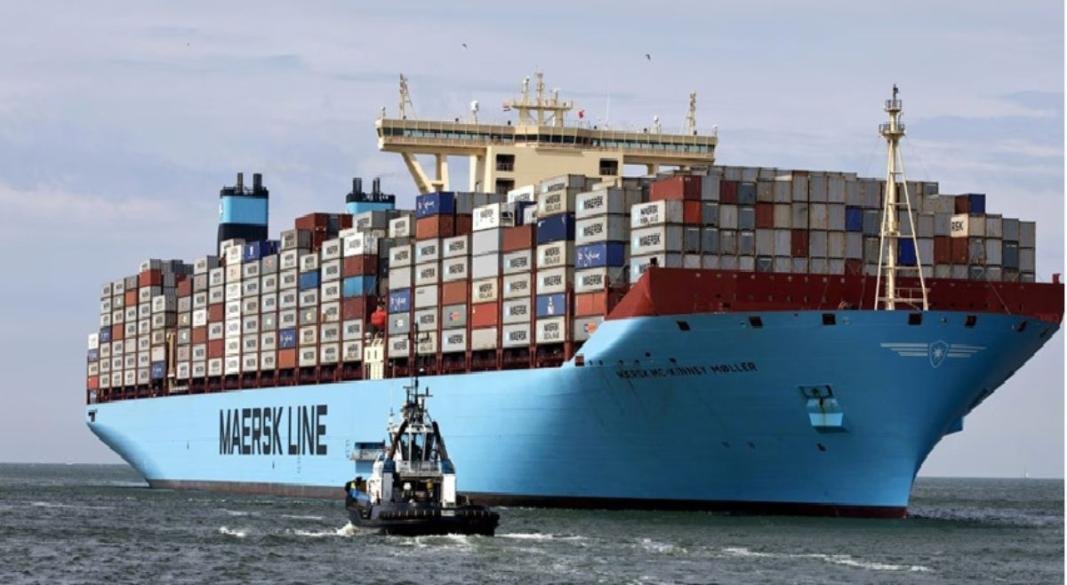
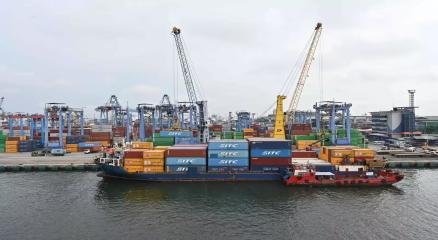
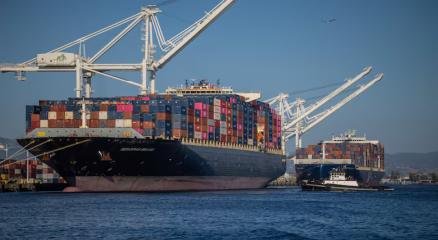
Global shipping giant A.P. Moller–Maersk has taken delivery of another methanol-capable container vessel, underscoring how rapidly the maritime industry is moving toward lower-emission fuels as environmental regulations tighten worldwide.
The new vessel, built in China, can run on both green methanol and traditional marine fuel. This gives Maersk more flexibility as ports and fuel suppliers around the world continue developing infrastructure for cleaner fuels.
The ship has a carrying capacity of around 9,000 containers and will be used on international trade routes. It is part of Maersk’s larger plan to achieve net-zero emissions by 2040.
Another reason why methanol is becoming a popular alternative fuel in the shipping industry because it is easier to store and handle compared to some other cleaner fuel options like hydrogen or liquefied natural gas (LNG). Shipping companies see dual-fuel ships as a practical way to reduce pollution while keeping operations reliable.
The latest delivery also shows how Chinese shipyards are becoming major players in building next-generation eco-friendly vessels. Many global shipping lines are now placing orders for ships that can operate on cleaner fuels as environmental regulations become stricter.
As a result he shipping industry is under increasing pressure to cut emissions. New international and European regulations are forcing shipping companies to improve fuel efficiency and lower the carbon footprint of cargo transportation.
For exporters and importers, including Indian businesses, cleaner shipping is becoming more important as global customers and regulators demand greener supply chains.
Industry experts say the shift toward alternative fuels is no longer just an experiment. Large shipping companies are now making long-term investments in greener fleets as sustainability becomes a key part of global trade.
Follow CARGOCONNECT for more such updates.

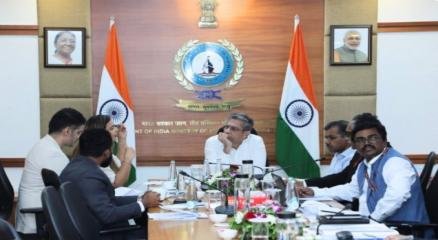
The Centre is intensifying efforts to develop the Brahmaputra River into a major inland logistics and transport corridor, with a renewed focus on cargo movement, multimodal connectivity and sustainable river infrastructure across the Northeast. Speaking at the High Powered Review Board meeting of the Brahmaputra Board in Guwahati, Union Minister for Ports, Shipping and Waterways Sarbananda Sonowal said the government is positioning the Brahmaputra as a key economic asset capable of supporting regional trade, connectivity and logistics growth. The government’s strategy centres on expanding inland water transport infrastructure along National Waterway-2 (NW-2), which connects Assam and the Northeast to Kolkata and Haldia ports through the Indo-Bangladesh Protocol Route. Officials view the corridor as a cost-effective and environmentally efficient alternative to road and rail transport for bulk and containerised cargo movement. According to the ministry, projects worth nearly ₹751 crore have already been completed in Assam, including terminals at Pandu, Dhubri and Jogighopa, along with floating jetties and upgraded shore facilities. Additional projects valued at more than ₹1,100 crore are currently under execution, covering fairway development, ship repair infrastructure, tourist jetties and a Regional Centre of Excellence in Dibrugarh. The Centre is also planning a future investment pipeline of around ₹4,800 crore for the Northeast waterways sector. Proposed developments include community jetties, cargo vessels, dredgers, cruise terminals and supporting customs and immigration infrastructure at strategic river ports. The projects are aimed at improving last-mile connectivity, reducing logistics costs and expanding cargo handling capacity in riverine regions. The Brahmaputra Board is simultaneously being restructured into a technology-driven river basin management institution, with greater use of GIS mapping, LiDAR surveys and digital monitoring systems for flood management, erosion control and navigability planning. Government officials said inland waterways are expected to play a larger role in India’s freight ecosystem as the country seeks greener logistics solutions and improved multimodal connectivity. Cargo movement on national waterways has reportedly increased from 18 million metric tonnes in 2014 to over 218 million metric tonnes in 2025-26. The Northeast has emerged as a priority region for inland waterway development under the Centre’s broader maritime and logistics expansion strategy. Recent initiatives in the region include new cargo and immigration facilities, river navigation infrastructure and plans for urban water transport systems in Assam.
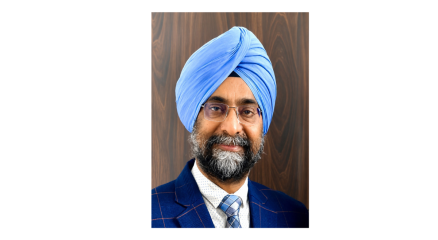

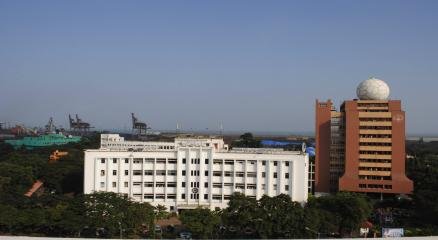
Chennai Port Authority has achieved a historic milestone by recording an all-time high cargo throughput of 57.9 million tonnes during FY 2025–26, marking a strong overall growth of 5.35 percent compared to the previous financial year. The achievement highlights the port’s resilience, operational efficiency, and strategic focus amid evolving global shipping dynamics and supply chain disruptions. The port registered robust growth across its key business verticals, reinforcing its position as one of India’s leading maritime gateways. Container handling emerged as one of the strongest growth drivers, with Chennai Port handling 1.94 million TEUs during the financial year. This represents a 6.59 percent year-on-year growth and the highest-ever container handling performance achieved by the port. The automobile segment also witnessed impressive momentum, with Chennai Port handling over two lakh cars during FY 2025–26. The segment recorded a 7.4 percent year-on-year increase, surpassing the previous year’s performance and strengthening the port’s reputation as a major automobile export hub in the country. In addition to containers and cars, Chennai Port also reported significant progress in the clean cargo segment. The port successfully attracted new clean cargo commodities such as pulses, food grains, bagged rice, and other diversified cargo categories. This strategic diversification is expected to further strengthen the port’s cargo profile and support sustainable trade growth in the coming years. Crude cargo handling also achieved record-breaking numbers, with the port handling 11.45 million tonnes of crude during FY 2025–26. The segment registered an impressive 11.17 percent year-on-year growth, making it the highest-ever crude handling performance in the port’s history. Despite uncertainties in global trade and logistical disruptions affecting shipping lines worldwide, Chennai Port maintained operational continuity and sustained its growth trajectory. The performance reflects the port’s infrastructure strength, efficient cargo management systems, and coordinated efforts between various stakeholders. Chennai Port Authority expressed gratitude to all stakeholders, port users, shipping partners, logistics operators, and associated agencies for their continued support and contribution toward achieving this milestone. The authority reiterated its commitment to building on this momentum and further strengthening Chennai Port’s role in driving India’s maritime trade and economic growth. With its strategic “4Cs” focus — Containers, Cars, Clean Cargo, and Crude — Chennai Port continues to power progress and play a crucial role in advancing India’s trade ambitions on the global stage. For more such news and updates, visit CARGOCONNECT.

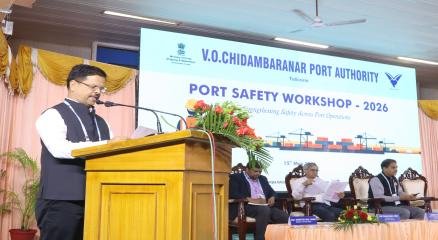
V.O. Chidambaranar Port Authority, Tuticorin, conducted the “Port Safety Workshop 2026” on 18 May 2026 under the theme “Strengthening Safety Across Port Operations”, reiterating its dedication to ensuring safe, secure, and resilient port activities. Addressing the gathering, Shri Susanta Kumar Purohit, IRSEE, Chairperson of the Port Authority, underlined the port’s ongoing focus on operational excellence, sustainable development, and reinforcing safety mechanisms across all operational domains. Shri Rajesh Soundararajan, IAS, Deputy Chairperson, presented the strategic roadmap for improving operational readiness, strengthening safety governance, and enhancing resilience throughout the port ecosystem. During the workshop, Shri Subrat Tripathy, Advisor – Strategic Management, Adani Group, shared valuable perspectives on the need for integrated safety systems, collaborative industry efforts, and proactive risk mitigation to achieve higher standards of operational performance in ports. Shri P. Raveendran, Principal Advisor, VOC Port, stressed that safety must remain a continuous and uncompromising practice to maintain a secure, efficient, and incident-free workplace across port operations. Shri Debi Prasad Dash, Principal Advisor, VOC Port, highlighted the importance of proper work briefings, compliance with safety protocols, use of personal protective equipment, and adherence to standard operating procedures to ensure safe and efficient execution of tasks while promoting vigilance, accountability, and zero tolerance towards unsafe practices. The workshop sessions focused on enhancing operational safety standards, improving preparedness measures, promoting employee wellbeing, encouraging behavioural safety practices, and ensuring strict adherence to safety regulations across port activities. As part of the programme, prizes were awarded for competitions and activities such as Debate, Quiz, Rangoli, and safety training sessions conducted to encourage wider participation and awareness among stakeholders. Shri T. Ramesh, Senior Deputy Traffic Manager, VOC Port Authority, delivered the vote of thanks. A Safety Guide was also released by the dignitaries during the event. 𝐒𝐭𝐚𝐲 𝐓𝐮𝐧𝐞𝐝 𝐭𝐨 https://cargoconnect.co.in/ 𝐟𝐨𝐫 𝐥𝐚𝐭𝐞𝐬𝐭 𝐮𝐩𝐝𝐚𝐭𝐞𝐬!