
Loading...
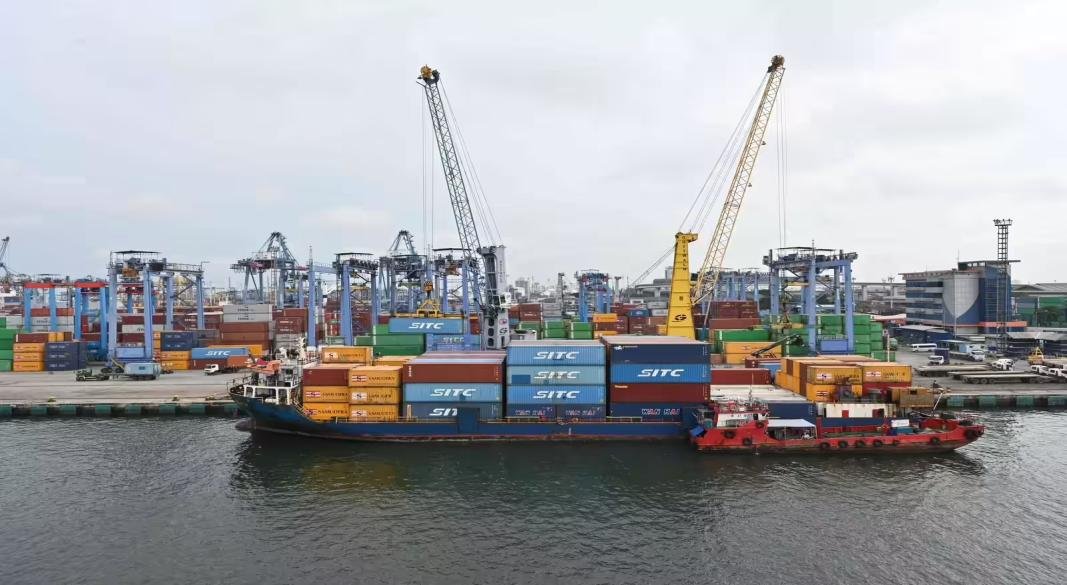
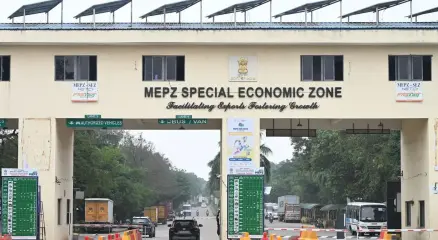
India’s Mormugao Port Authority has introduced a series of contingency measures aimed at safeguarding cargo movement and reducing disruption to exporters as geopolitical tensions in West Asia continue to strain global maritime trade routes.
The steps come amid growing instability around the Strait of Hormuz, a critical shipping corridor for crude oil, LNG, LPG, fertilizers and container cargo moving between India and Gulf nations.
Under the new measures, the port authority will prioritise berthing for vessels carrying essential commodities, including energy cargoes and fertilizers, subject to recommendations from the concerned ministries. Port users, shipping lines, stevedores and exporters have also been directed to complete documentation and pre-arrival formalities in advance to avoid operational delays.
In a separate move intended to ease financial pressure on exporters, the port authority has discontinued the earlier reimbursement-based concession mechanism for cargo bound for West Asia. Exporters eligible for waivers or concessions will now receive those benefits directly at the billing stage instead of paying full charges upfront and waiting for refunds later.
The measures were communicated through consecutive trade notices issued within a span of five days, reflecting coordinated efforts by the Ministry of Ports, Shipping and Waterways and port authorities to maintain supply chain continuity amid heightened regional uncertainty.
Industry stakeholders have raised concerns over shipping delays, rising insurance costs and route disruptions linked to the evolving security situation in the Gulf region. The Strait of Hormuz handles a significant share of global seaborne oil and LNG trade, making any disruption a major risk for energy-importing economies such as India.
To strengthen operational coordination, the port has also designated a nodal officer to address issues faced by exporters, terminal operators and shipping lines impacted by the crisis.
The latest actions by Mormugao Port underline the increasing focus among Indian ports and logistics operators on supply chain resilience as geopolitical tensions continue to affect global shipping networks.
Follow CARGOCONNECT for more such updates.

Hapag-Lloyd has launched a new initiative aimed at increasing women’s participation in maritime careers, marking a significant step toward improving gender diversity in the global shipping industry. The company’s newly introduced “Shefarer Program” seeks to create long-term career opportunities for women at sea while strengthening inclusion across onboard operations. Developed in collaboration with crewing and maritime training partners Jebsen PTC, Anglo-Eastern Ship Management (Germany) GmbH, and Marlow Navigation Co. Ltd, the program introduces a series of measures designed to attract more women into seafaring professions and support their professional growth onboard vessels. A key pillar of the initiative is talent development. Hapag-Lloyd said that at least 20 percent of all future trainee intakes will consist of female cadets. The target will also extend to the company’s international recruitment pipeline, particularly among young maritime professionals from the Philippines, one of the world’s largest seafarer talent pools. The company is also introducing designated “Shefarer vessels,” where multiple women seafarers will serve together across various functions and ranks, including cadets, engineers, officers, oilers and captains. The objective is to normalize female representation onboard and create a more inclusive work culture where women are viewed as an integral part of ship operations rather than exceptions. To improve onboard living and working conditions, Hapag-Lloyd will invest in dedicated facilities for women across all upcoming newbuild vessels entering service in the coming years. These enhancements include separate changing rooms, showers and sanitary areas aimed at supporting a safer and more comfortable environment for female crew members. Commenting on the initiative, Silke Lehmköster, Managing Director Fleet at Hapag-Lloyd, said mixed crews contribute to stronger collaboration, communication and mutual respect onboard. She added that the company aims to increase the visibility of women in maritime careers while creating sustainable pathways for professional advancement at sea. Women currently account for 5.71 percent of Hapag-Lloyd’s global crew, while four female captains are actively serving across the company’s fleet. The Shefarer Program forms part of the carrier’s broader strategy to make maritime professions more attractive to future talent and address workforce diversity challenges in the shipping sector. 𝐒𝐭𝐚𝐲 𝐓𝐮𝐧𝐞𝐝 𝐭𝐨 https://cargoconnect.co.in/ 𝐟𝐨𝐫 𝐥𝐚𝐭𝐞𝐬𝐭 𝐮𝐩𝐝𝐚𝐭𝐞𝐬!
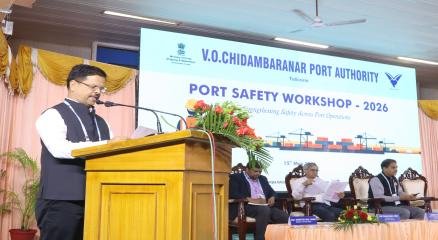
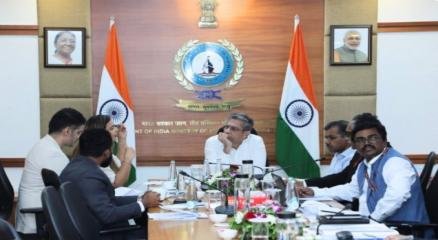
In a significant move aimed at accelerating India’s maritime transformation, the Ministry of Ports, Shipping and Waterways (MoPSW) has intensified its engagement with global and domestic shipping lines to strengthen the country’s maritime and logistics ecosystem. Shri Vijay Kumar, Secretary, MoPSW, recently held one-on-one interactions with representatives from leading shipping companies at the Directorate General of Shipping in Mumbai, reinforcing the government’s collaborative approach toward industry-led growth. The discussions focused on understanding the expansion plans of shipping operators, operational bottlenecks, infrastructure requirements, and policy-related concerns affecting business efficiency. Industry stakeholders also shared perspectives on capacity enhancement, regulatory facilitation, and measures required to improve India’s competitiveness in global shipping and trade. The consultations form part of the government’s broader strategy to position India as a leading maritime and logistics hub under the Maritime Amrit Kaal Vision 2047 and Maritime India Vision initiatives. The ministry has been consistently promoting port modernisation, digitalisation, sustainability, and multimodal logistics integration to support growing trade volumes and reduce logistics costs. Officials highlighted that India’s maritime sector is undergoing rapid transformation driven by infrastructure expansion, mechanisation, and increased private sector participation. The government has also prioritised shipbuilding, coastal shipping, inland waterways, and green maritime initiatives to enhance India’s role in the global maritime value chain. The latest stakeholder engagement reflects the ministry’s emphasis on policy facilitation through direct industry consultation. By opening dialogue with shipping lines, the government aims to address operational challenges more effectively while encouraging long-term investments across ports, shipping services, logistics infrastructure, and maritime connectivity. India’s maritime ambitions are closely aligned with initiatives such as Sagarmala, which seeks to promote port-led development and improve cargo movement efficiency through enhanced port connectivity and integrated logistics infrastructure. The programme continues to play a critical role in reducing supply chain costs and boosting export competitiveness. The engagement with shipping lines also comes at a time when global maritime players are increasingly exploring opportunities in India. Several international operators have shown interest in expanding investments in shipbuilding, terminals, and logistics services, underlining growing confidence in India’s maritime growth trajectory. 𝐒𝐭𝐚𝐲 𝐓𝐮𝐧𝐞𝐝 𝐭𝐨 https://cargoconnect.co.in/ 𝐟𝐨𝐫 𝐥𝐚𝐭𝐞𝐬𝐭 𝐮𝐩𝐝𝐚𝐭𝐞𝐬!
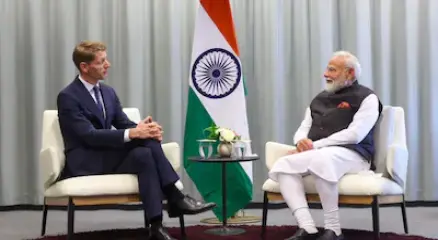
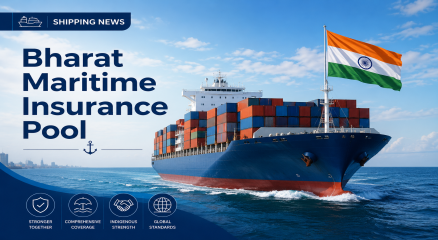
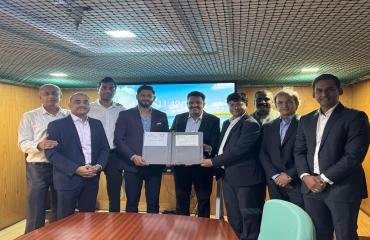
In a major boost to provide trade security amid rising global shipping disruptions, India unveiled the Bharat Maritime Insurance Pool (BMIP), a whopping $1.5 billion insurance instrument solidly supported by a sovereign guarantee of $1.4 billion (around ₹12,980 crore). The objective is simple, however, strategically important for the Indian-linked ships. The idea is to ensure that the ships continue to get insurance coverage even during times of global uncertainty and volatility. The BMIP was launched on Tuesday by the Department of Financial Services (DFS) under the Union Ministry of Finance. The official launch took place during an event chaired by DFS Secretary M. Nagaraju. During the event, the first Marine Hull and Machinery War Policy issued under the instrument was officially handed over to Hoger Offshore and Marine Pvt Ltd. The Bharat Maritime Insurance Pool (BMIP) will cover marine hull and machinery, cargo, protection and indemnity (P&I), and war for Indian-flagged or India-linked vessels. General Insurance Corporation of India (GIC Re) will manage the pool, while a governing body and underwriting committee will oversee its operations. The first policy under this system has already been issued. The New India Assurance Company provided a Marine Hull & Machinery War Policy to Hoger Offshore and Marine Pvt Ltd, officially starting the pool. The structure is organised carefully. Claims up to $100 million will be paid from pooled resources. Claims exceeding that amount will be covered by the sovereign guarantee, after reserves and reinsurance are used up. It is also learnt that the Government has assured the stakeholders from the maritime industry that India will not allow critical maritime activity to stop due to insurance disruptions. The timing of rolling out the BMIP is crucial as there have been major disruptions on key global shipping routes due to the West Asia crisis, a region very crucial for India's oil and energy imports. In these situations, international insurers often raise premiums significantly or avoid risky routes altogether, as they did with the Strait of Hormuz. For a country that imports most of its energy and relies heavily on sea trade, this unpredictability creates a strategic risk. India is now working to establish a domestic safety net. For more such news and updates, visit CARGOCONNECT.