
Loading...
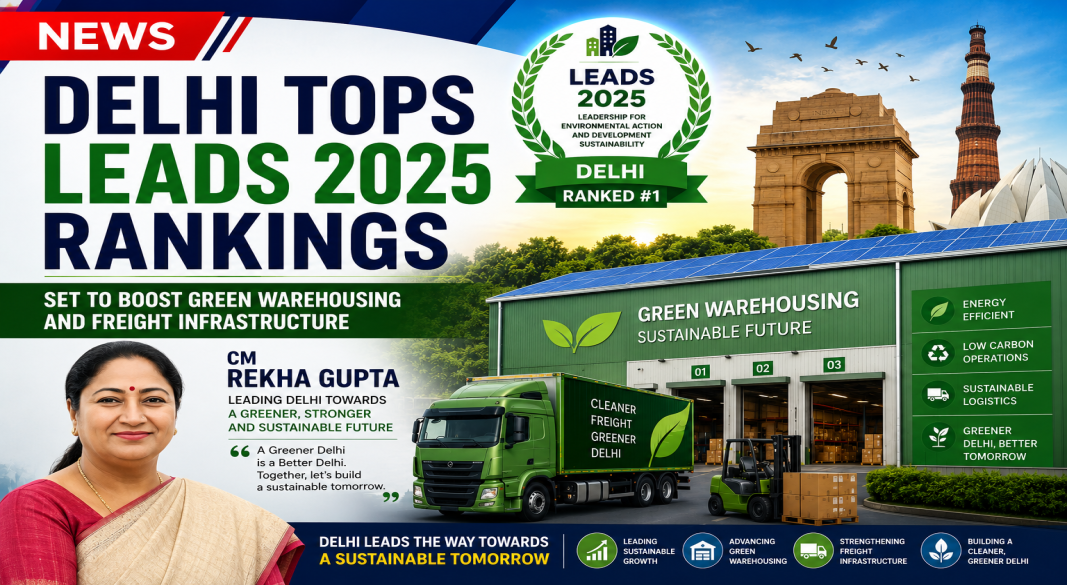
Delhi has secured an “Exemplary” ranking in the Centre’s Logistics Ease Across Different States (LEADS) 2025 Index, marking a significant milestone for the national capital’s evolving supply chain and logistics ecosystem. The recognition places Delhi among the country’s top-performing regions for logistics efficiency and reflects the government’s intensified focus on freight infrastructure, multimodal connectivity, and technology-led governance.
Announcing the achievement, Delhi Chief Minister Rekha Gupta said the ranking validates the government’s ongoing efforts to improve logistics infrastructure, streamline business processes, and modernise urban freight systems. The LEADS Index, released by the Union Ministry of Commerce and Industry, evaluates states and Union Territories on parameters such as logistics infrastructure, services, regulatory environment, sustainability, digital integration, and stakeholder perception.
Delhi’s rise to the highest category is particularly notable as the city had previously been classified in the “Achiever” segment in earlier editions of the index. The transition to the “Exemplary” category underscores rapid progress in road connectivity, warehousing capabilities, freight mobility, and digital logistics systems.
Industry observers believe the recognition could further accelerate investments in warehousing, cold chain infrastructure, and integrated logistics parks across the National Capital Region (NCR). The Delhi government is currently finalising its Warehousing and Logistics Policy 2025, aimed at reducing freight congestion, promoting sustainable transportation, and simplifying regulatory procedures for logistics operators.
A key component of the policy framework is the planned city logistics strategy, which seeks to improve last-mile delivery efficiency and urban freight movement. The initiative aligns with the broader PM Gati Shakti programme that focuses on integrated infrastructure development and seamless multimodal connectivity. According to the government, the upcoming logistics plan will support better coordination among stakeholders while improving freight turnaround times across the capital.
Delhi’s logistics transformation also comes at a time when freight volumes in the region continue to grow rapidly. Industry estimates indicate that tens of thousands of freight vehicles enter the capital daily to support retail, construction, e-commerce, and food supply chains. This has intensified the need for efficient urban freight systems, cleaner mobility solutions, and decentralised warehousing infrastructure.
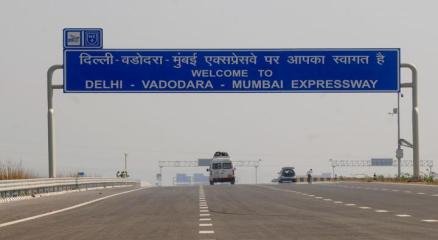
The government has additionally highlighted ongoing investments in major transport corridors, including the Urban Extension Road-II and the Delhi-Dehradun Expressway, which are expected to strengthen regional cargo movement and reduce transit bottlenecks. Simultaneously, emphasis on green warehousing, digital approvals through the Single Window System, and skilled workforce development is expected to improve Delhi’s competitiveness as a logistics hub.
With the latest LEADS recognition, Delhi is positioning itself not only as India’s administrative capital but also as a critical node in the country’s rapidly modernising logistics and supply chain network.
𝐒𝐭𝐚𝐲 𝐓𝐮𝐧𝐞𝐝 𝐭𝐨 https://cargoconnect.co.in/ 𝐟𝐨𝐫 𝐥𝐚𝐭𝐞𝐬𝐭 𝐮𝐩𝐝𝐚𝐭𝐞𝐬!

The Food Safety and Standards Authority of India (FSSAI) has stepped up its focus on cold chain compliance, directing food business operators (FBOs) to maintain prescribed temperature conditions while handling, storing and transporting perishable food products, including khoa, paneer, meat and fish. The advisory, dated October 15, 2026, aims to strengthen food safety and protect public health by addressing gaps in temperature-controlled supply chains. The directive covers the entire supply chain, from procurement and sourcing to manufacturing, packing, storage, transportation, distribution and delivery to consumers. FSSAI has reiterated that maintaining appropriate temperatures throughout these stages is essential to prevent microbial growth, product deterioration and food contamination. Temperature Control and Hygiene Under Scrutiny According to the regulator, certain perishable food commodities are not consistently handled, stored or transported under suitable temperature conditions. Such lapses can accelerate spoilage and increase the risk of foodborne illness, making effective cold chain management a critical requirement for food businesses. Under the conditions of licence specified in Schedule 4 of the Food Safety and Standards (Licensing and Registration of Food Businesses) Regulations, 2011, operators must comply with prescribed temperature and hygiene requirements across the supply chain. The latest advisory reinforces these existing obligations rather than introducing an entirely new regulatory framework. FSSAI has also directed businesses to use clean, covered and hygienic vehicles suitable for transporting food products. Appropriate food-grade packaging and secondary packaging materials must be used, while products must be protected from dust, moisture, pests, physical damage and cross-contamination during storage, loading, unloading and transit. Gunny bags and unsuitable non-food-grade coverings must be avoided. Traceability and Enforcement Measures The advisory emphasises the importance of maintaining records and ensuring consignment traceability. Food business operators must keep relevant documentation, including invoices and other supporting records, and produce them before the competent authority whenever required. These measures are intended to improve accountability and help officials identify potential breaches in the handling and movement of perishable goods. FSSAI has called on food safety authorities across states and Union Territories to maintain strict vigilance through inspections and transportation checks. The regulator has warned that violations may invite appropriate enforcement action, including the seizure and destruction of non-compliant food products under applicable provisions of the Food Safety and Standards Act, 2006, and associated regulations. Implications for Food Supply Chains The advisory places renewed emphasis on reliable refrigeration, hygienic transport infrastructure and consistent temperature monitoring across India's food distribution network. Dairy processors, meat and fish suppliers, distributors, retailers, cold storage operators and logistics providers will need to ensure that their handling practices and transport arrangements meet the prescribed requirements. For the logistics sector, the directive reinforces the importance of strengthening refrigerated transport, improving storage practices and maintaining end-to-end visibility of temperature-sensitive consignments. These capabilities are particularly important during periods of heightened demand, when increased shipment volumes and multiple handling points can raise the risk of temperature deviations. By reinforcing existing compliance requirements, FSSAI aims to reduce spoilage risks and improve food safety from source to consumer. Effective implementation will depend on consistent monitoring, appropriate infrastructure and accountability among all participants in the perishable food supply chain. 𝐒𝐭𝐚𝐲 𝐓𝐮𝐧𝐞𝐝 𝐭𝐨 CARGOCONNECT 𝐟𝐨𝐫 𝐥𝐚𝐭𝐞𝐬𝐭 𝐮𝐩𝐝𝐚𝐭𝐞𝐬!



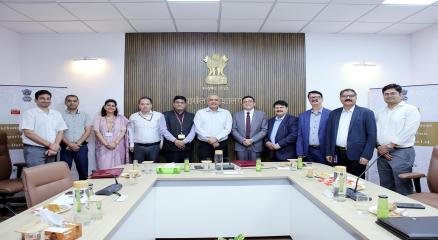
Blue Dart Express has signed a Memorandum of Understanding (MoU) with India Post to further extend its delivery reach. Building on Blue Dart’s extensive national network, the collaboration will strengthen last-mile connectivity for businesses and customers across Tier III and Tier IV towns and remote locations. The expanded coverage will be introduced in a phased manner. The collaboration brings together Blue Dart’s express logistics capabilities and India Post’s extensive postal network to provide customers with access to a wider range of markets. Shipments to these additional locations will be delivered through India Post’s network, complementing Blue Dart’s infrastructure. The partnership creates a scalable model for extending market coverage through the complementary strengths of both organisations and the efficient use of existing infrastructure. Commenting on the partnership, Sh. Harpreet Singh, Member (Operations), Department of Posts, “On World Post Day, this partnership bodes well for both organisations. The Department of Posts is committed to this partnership and looks forward to it. The Department has strong last-mile connectivity, and we will offer all possible support to make this partnership stronger. We look forward to a much broader and constantly evolving partnership ahead.” Highlighting the strategic significance of the collaboration, Balfour Manuel, Managing Director, Blue Dart, said: “With a legacy spanning over 42 years, Blue Dart has grown alongside Indian businesses, building a trusted national network that supports the country’s commerce. As the economy expands and customer expectations evolve, this strategic partnership has an important role to play in strengthening parcel delivery. Our collaboration with India Post builds on this foundation, combining the strengths of two established institutions to support businesses in reaching more customers across smaller towns and remote locations across the country.” Speaking on the opportunities for customers, Dipanjan Banerjee, Chief Commercial Officer, Blue Dart, said: “For SMEs, e-commerce sellers and enterprises, reaching customers beyond established markets is an increasingly important driver of growth. Across Bharat’s smaller towns, demand for greater product choice creates opportunities that businesses need dependable logistics to realise. Our collaboration with India Post strengthens our delivery reach across Tier III and Tier IV towns, enabling customers to enter new markets, deepen their presence and serve locations that were previously harder to reach.” Therefore, this MoU builds on the longstanding relationship between the two organisations and their shared focus on customer service. The expanded coverage will offer greater delivery accessibility and convenience, supporting the growing participation of smaller towns and remote communities in India’s commerce. 𝐒𝐭𝐚𝐲 𝐓𝐮𝐧𝐞𝐝 𝐭𝐨 CARGOCONNECT 𝐟𝐨𝐫 𝐥𝐚𝐭𝐞𝐬𝐭 𝐮𝐩𝐝𝐚𝐭𝐞𝐬!



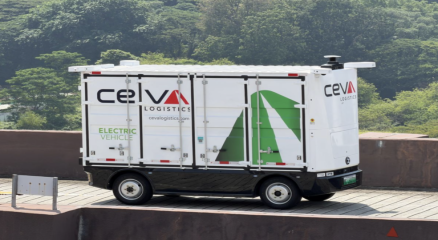
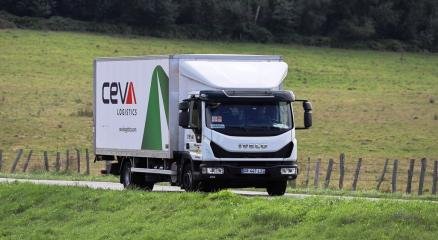
CEVA Logistics has launched a pilot programme deploying autonomous electric vehicles at its Blue Hub facility in Singapore, marking a major milestone in the company’s efforts to advance warehouse automation, operational efficiency and decarbonisation across its contract logistics network. The pilot involves two Zelostech Z10 autonomous vehicles designed to automate intra-hub inventory movements. The electric vehicles are being used to transport pallets, totes and other inventory between different floors of the eight-storey facility. Importantly, the Z10 vehicles operate using the Blue Hub’s existing multi-level ramp infrastructure, allowing CEVA to automate internal transportation without requiring major changes to the facility’s layout. By automating these movements, CEVA aims to improve operational agility, make better use of staging areas and enable inventory transfers to be scheduled more flexibly in response to changing operational requirements. Based on results from the current trial, the autonomous vehicle solution is expected to reduce carbon dioxide emissions by at least 4,600 kilograms annually, while also improving operational efficiency. The Singapore Blue Hub provides an important testing environment for the initiative. Spanning 50,000 square metres across eight floors, the facility serves customers in sectors including luxury, beauty, retail and healthcare. It already features advanced automation technologies such as Goods-to-Person systems, automated guided vehicle (AGV) picking solutions and robotics. The facility is also recognised as Asia’s first BiodiverCity®-labelled building and is LEED Gold certified. The autonomous vehicle project originated from the 2025 CMA CGM Startup Awards, co-organised by ZEBOX, the international innovation accelerator of CEVA Logistics’ parent company, CMA CGM Group. Zelostech, an award winner, received funding to develop a proof of concept with CMA CGM, subsequently paving the way for its collaboration with CEVA on supply chain applications. Chris Walton, Senior Vice President, Contract Logistics, CEVA Logistics, said: “At CEVA, innovation is embedded in our strategy. By encouraging teams across our global network to experiment with new technologies and share best practices, we are building smarter, more resilient supply chains and preparing our operations for the future.” Guy Meredith, Vice President, Contract Logistics, Asia Pacific, CEVA Logistics, added: “Our focus is to continually improve efficiency and deliver better logistics solutions for our customers. By working closely with technology innovators across Asia Pacific, we can bring the latest advances in automation and AI into real-world supply chain operations, creating value through an innovation ecosystem.” CEVA said insights generated from the Singapore deployment will help assess the potential for rolling out autonomous mobility solutions across its facilities globally, reinforcing the company’s broader strategy of using emerging technologies to build safer, more efficient and sustainable logistics operations. 𝐒𝐭𝐚𝐲 𝐓𝐮𝐧𝐞𝐝 𝐭𝐨 CARGOCONNECT 𝐟𝐨𝐫 𝐥𝐚𝐭𝐞𝐬𝐭 𝐮𝐩𝐝𝐚𝐭𝐞𝐬!