
Loading...
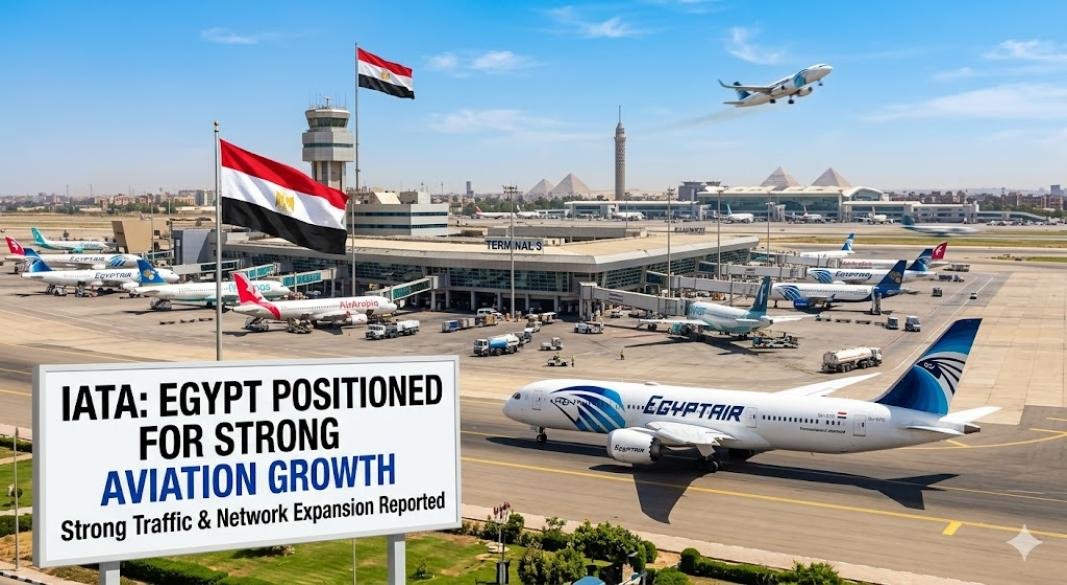
Egypt is poised for significant aviation growth over the coming years, supported by strategic geography, infrastructure investment, and rising demand for passenger and cargo connectivity, according to the International Air Transport Association (IATA). The association believes the country is well positioned to strengthen its role as a regional air transport and logistics gateway linking Africa, the Middle East, and Europe.
IATA highlighted the country’s ongoing airport modernization efforts, expanding airline networks, and growing importance in global supply chains. Egypt’s location along major international trade corridors and proximity to the Suez Canal continue to provide a competitive advantage for both passenger and cargo operations. The sector is increasingly viewed as a critical contributor to trade facilitation, tourism recovery, and economic diversification.
Cairo International Airport remains central to Egypt’s aviation ambitions. The airport has undergone substantial upgrades in recent years, including expanded terminal capacity, improved baggage systems, and enhanced airside infrastructure to accommodate growing traffic volumes and larger aircraft. These investments are expected to improve operational efficiency and strengthen Egypt’s position as a regional transit hub.
The aviation industry’s recovery after the pandemic has also accelerated opportunities for air cargo and logistics providers operating in the region. Industry observers note that rising e-commerce demand, pharmaceutical shipments, and time-sensitive cargo movements are increasing the importance of reliable air freight connectivity across Africa and the Middle East. Egypt’s expanding aviation ecosystem is therefore becoming increasingly relevant for global supply chain networks.
National carrier EgyptAir and private operators such as Nile Air are continuing to expand regional connectivity, supporting passenger mobility and cargo throughput. EgyptAir currently serves more than 75 destinations globally, while Nile Air is strengthening services across the Middle East, Africa, and parts of Europe.
IATA also emphasized the importance of policy alignment and industry collaboration to sustain long-term growth. Areas such as airport capacity development, digitalization, operational efficiency, sustainability, and workforce training will be essential as Egypt aims to capture increasing aviation demand across the region. The association continues to advocate for harmonized regulations and investments that enhance connectivity while improving resilience across the air transport value chain.
Beyond tourism, aviation is expected to play a larger role in supporting Egypt’s broader logistics and trade ambitions. With multinational manufacturers and distributors increasingly seeking alternative regional hubs, Egypt could benefit from its multimodal connectivity combining air, maritime, and land transport infrastructure. Analysts believe this integrated approach may help position the country as a preferred gateway for cargo flows into Africa and surrounding markets.
As global air traffic continues its upward trajectory, IATA’s assessment signals growing confidence in Egypt’s ability to emerge as a stronger player in international aviation and logistics. Continued investment, infrastructure modernization, and strategic partnerships are likely to determine how effectively the country converts this potential into sustained long-term growth.
𝐒𝐭𝐚𝐲 𝐓𝐮𝐧𝐞𝐝 𝐭𝐨 https://cargoconnect.co.in/ 𝐟𝐨𝐫 𝐥𝐚𝐭𝐞𝐬𝐭 𝐮𝐩𝐝𝐚𝐭𝐞𝐬!
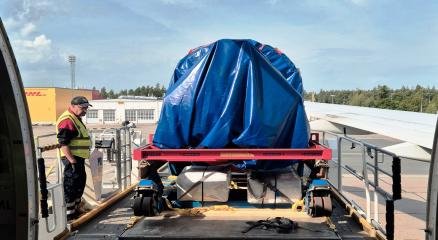
CharterDesk is strengthening its aerospace transport business by combining dedicated aircraft charters, On-Board Courier (OBC) and Next Flight Out (NFO) services to support airlines, aircraft manufacturers and maintenance providers with urgent and planned shipments. The Budapest-based company handles cargo ranging from small, time-critical replacement parts to aircraft engines, tailoring transport arrangements to delivery deadlines, cargo specifications and operational requirements. Aircraft-on-Ground (AOG) movements remain a key part of its business, but the company also supports planned maintenance programmes and production operations, where dependable component deliveries are essential to keeping engineering schedules on track. Its aerospace portfolio spans aircraft engines, landing gear, avionics, spare parts, tooling and structural components. Each movement requires a different combination of aircraft capacity, handling arrangements and delivery coordination. While larger components demand suitable loading equipment and transport capacity, smaller replacement parts may require rapid connections and carefully coordinated last-mile delivery. “Aerospace transport starts with understanding what the customer needs to achieve and how quickly the shipment must arrive,” says Emir Özdabak, Managing Director of CharterDesk. “We assess the cargo and deadline before recommending a dedicated charter, an On-Board Courier or Next Flight Out service. The objective is to minimise downtime or keep production moving.” Ground Coordination Critical to Time-Sensitive Shipments CharterDesk’s approach extends beyond securing aircraft capacity. Its planning process considers packaging, aircraft suitability, loading equipment, customs requirements, collection and final delivery. Coordination among customers, airlines and ground handlers is central to ensuring that the entire movement aligns with the required schedule. The company demonstrated this approach in a shipment involving two CF6 aircraft engines transported from Helsinki to Casablanca aboard an Ethiopian Airlines Boeing 777 freighter. CharterDesk completed the delivery within 48 hours of receiving the confirmed requirement, coordinating the operation with its airline and ground-handling partners. A key challenge was sourcing and positioning the required 20-foot pallets in Helsinki before departure. The operation therefore depended not only on securing aircraft capacity but also on ensuring that the appropriate equipment was available at the departure airport in time for loading. “The Helsinki operation showed how much depends on preparation on the ground,” Özdabak says. “We needed the right pallets in position before departure and worked closely with our partners to make that happen. Delivering the engines within 48 hours required everyone involved to work to the same operational timetable.” In another assignment, CharterDesk arranged an Antonov An-12 operation from Brussels to Istanbul carrying a LEAP-1A engine. The two movements illustrate how aircraft selection, cargo specifications and ground-handling requirements shape the transport solution for individual aerospace shipments. Security and Confidentiality Underpin Operations Given the value and sensitivity of aerospace components, security and information management form part of CharterDesk’s planning process. The company works with airline and ground-handling partners on appropriate handling arrangements, clear handover procedures and shipment monitoring as cargo moves between operational stakeholders. Confidentiality is another consideration, particularly for projects involving commercially sensitive information. CharterDesk limits the circulation of customer and shipment details to those involved in the operation while meeting applicable regulatory disclosure requirements. “Our customers need confidence in how we handle both their equipment and their information,” Özdabak says. “We agree clear handover procedures, monitor shipments and share operational details with the people who need them. Where a project requires confidentiality, we maintain that discipline while fulfilling every required regulatory disclosure.” Flexible Transport Options Support Aerospace Demand CharterDesk receives regular enquiries covering planned production shipments, maintenance support and urgent AOG requirements. Its customers include airlines, maintenance providers, manufacturers and specialist freight forwarders. Established relationships help the company respond to recurring requirements, while each shipment is assessed individually according to its urgency, dimensions and delivery deadline. The company sees opportunities to develop its aerospace business as fleet operations, maintenance needs and production activity generate demand for specialised transport. Dedicated charters can accommodate engines and oversized components, while OBC and NFO services offer alternatives for smaller, urgent shipments, subject to available capacity and operational requirements. “Aerospace fits our team’s experience and the airline relationships we have developed,” Özdabak says. “A quick, coordinated response can directly affect a customer’s operations, whether we are supporting an urgent AOG requirement or a planned movement. Offering charter, courier and scheduled flight solutions allows us to build the response around each shipment.” CharterDesk’s aerospace strategy centres on bringing technical assessment, transport selection and partner coordination together in a single operational process. By aligning the movement of high-value components with the requirements of airlines, manufacturers and maintenance teams, the company aims to support time-critical deliveries as well as planned production and engineering activity.
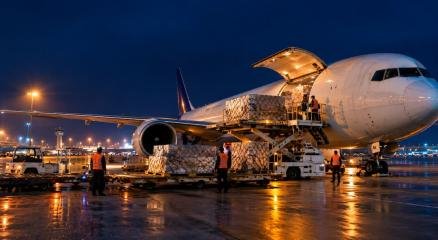

GlobeCross GmbH, a wholly owned subsidiary of Lufthansa Cargo, has opened its new headquarters at Frankfurt Airport, bringing its eCommerce logistics, customs clearance and import terminal operations teams together under one roof. The move marks a significant step in integrating the company’s operations following the merger of heyworld GmbH and CB Customs Broker GmbH. Located at one of Europe’s major air cargo and logistics hubs, the new headquarters is designed to improve internal coordination, streamline decision-making and support the company’s growth in cross-border logistics. By consolidating key functions in a shared workspace, GlobeCross aims to strengthen collaboration between teams and enhance operational efficiency, innovation and customer service. GlobeCross supports businesses transporting goods into and across Europe through integrated cross-border eCommerce logistics, import terminal handling and customs clearance services. Its offering combines logistics expertise with digital processes to help customers navigate customs requirements and manage international shipments more efficiently. Commenting on the development, Ashwin Bhat, CEO of Lufthansa Cargo, said the new headquarters reflects GlobeCross’s evolution into an integrated service provider and aligns with Lufthansa Cargo’s mission of enabling global business. He noted that the consolidation brings together the cultures, expertise and capabilities of the two businesses that formed the subsidiary. Nikola Todic, Managing Director of GlobeCross, said the headquarters represents the company’s shared vision and provides a foundation for closer collaboration and future development, supporting its ambition to turn borders into gateways. Established in May 2026 following the formal merger of heyworld and CB Customs Broker, GlobeCross combines digital eCommerce logistics capabilities with more than two decades of customs expertise. Its services include end-to-end eCommerce logistics, specialised import terminal operations and digital customs solutions for international trade. The Frankfurt headquarters is now fully operational. GlobeCross also maintains offices in the Netherlands and China, supporting its international operations. The development reinforces Lufthansa Cargo’s strategy of expanding beyond traditional airport-to-airport airfreight services by integrating complementary logistics and customs capabilities. As cross-border eCommerce continues to generate demand for reliable, transparent and compliant shipment solutions, GlobeCross aims to simplify trade processes and improve the movement of goods across European markets. 𝐒𝐭𝐚𝐲 𝐓𝐮𝐧𝐞𝐝 𝐭𝐨 CARGOCONNECT 𝐟𝐨𝐫 𝐥𝐚𝐭𝐞𝐬𝐭 𝐮𝐩𝐝𝐚𝐭𝐞𝐬!
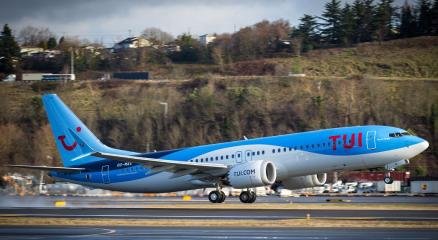
TCE is helping TUI Airline transform the freight potential of its passenger network into a structured cargo business, combining commercial development, customer management, operational coordination and regulatory compliance to unlock opportunities beyond its established leisure operations. Since January 2019, TCE has provided the specialist organisation supporting TUI Airline’s cargo activities, enabling the passenger carrier to pursue airfreight opportunities without diverting its teams from their core business. Its remit spans sales and marketing, customer service, booking coordination, capacity management, operational support, quality assurance and security compliance. The partnership reflects a wider commercial opportunity for passenger airlines: aircraft connecting holidaymakers to destinations can also carry airfreight, creating an additional revenue stream from existing network capacity. Realising that potential, however, requires more than available space. It calls for dedicated cargo expertise, established customer relationships and coordination across the entire shipment journey. “Aircraft capacity creates an opportunity, but expertise turns it into a business. We bring together the commercial relationships, operational coordination and compliance support that TUI Airline needs to develop its cargo activity,” said Sarah Scheibe, Managing Director of TCE. She added that the objective is to make the airline’s capacity accessible to freight customers through a professionally managed service. Connecting commercial promise with operational delivery For TUI Airline, cargo represents a way to maximise the value of its network while responding to demand for reliable airfreight solutions. TCE supports this ambition by acting as an extension of the airline’s organisation, linking commercial commitments with the operational processes required to move shipments through its network. Its responsibilities begin with business development, customer management and booking coordination, and extend to the operational support needed to translate enquiries and confirmed bookings into workable cargo movements. This integrated approach helps ensure that the capacity offered to customers is aligned with the airline’s operating requirements. The model also provides freight customers and handling partners with a dedicated point of contact and coordinated support. For TUI Airline, it brings together specialist resources across multiple functions under one organisation, avoiding the need to build an equivalent internal structure from the ground up. “A successful cargo product depends on every part of the operation working together. Customers need clear communication, handling partners need effective coordination and the airline needs confidence that its requirements are being met,” Scheibe said. She noted that managing these activities within one organisation helps maintain continuity from the first enquiry through to operational execution. Quality and compliance underpin growth As the cargo business develops, quality assurance and security remain integral to TCE’s role. The company manages cargo quality activities, coordinates audits and supports compliance with applicable regulatory requirements, including ACC3 validation processes where required. By integrating these responsibilities with commercial and operational management, the partnership places the necessary quality, safety and security considerations alongside business development. This helps ensure that opportunities to grow cargo volumes are supported by the standards and processes required for consistent service delivery. The arrangement also provides a framework for evaluating performance through verified operational and commercial data. Measures such as cargo volumes, revenue, capacity utilisation and service performance can help assess progress, identify opportunities and inform future decisions. TCE’s contribution therefore extends beyond sales support. Its market relationships help connect TUI Airline with freight customers, while its operational expertise and compliance oversight provide the structure needed to manage cargo as a coordinated business. Building on a long-term partnership The cooperation will continue to underpin TUI Airline’s cargo strategy, with TCE remaining its key partner in developing freight activity and making better use of available network capacity. “Our partnership with TUI Airline has developed through sustained cooperation and a shared focus on making cargo work within a passenger airline environment,” Scheibe said. She added that the focus remains on identifying commercial opportunities while maintaining the operational discipline, quality assurance and security oversight needed for long-term development. The partnership highlights the importance of an integrated approach to passenger-airline cargo. By bringing commercial development, customer support, operational coordination and compliance together, TCE provides TUI Airline with a dedicated framework to connect available capacity with market demand and further develop its freight offering across its network.