
Loading...

Andhra Pradesh Chief Minister N. Chandrababu Naidu has announced that Prime Minister Narendra Modi will inaugurate the Bhogapuram International Airport on August 1, describing the project as a transformative milestone for the economic development of North Andhra. According to the Chief Minister, the airport is expected to unlock new opportunities for the region by enhancing connectivity, attracting investments, and improving socio-economic conditions. He said the project would stimulate tourism, industrial growth, and commercial activity, positioning North Andhra as a key economic hub. Naidu noted that the airport project was originally initiated during the Telugu Desam Party (TDP) government in 2014 and was subsequently fast-tracked under the current NDA coalition government, leading to its completion within two years. The state government plans to hold the inauguration on a grand scale to mark the significance of the project. Ahead of the event, the Chief Minister chaired a high-level review meeting to assess preparations for the inauguration and ensure smooth execution of the programme. Highlighting the airport's long-term significance, Naidu said Bhogapuram International Airport would serve as a catalyst for the development of the Visakhapatnam Economic Region, driving investments and generating employment. Drawing a comparison with Hyderabad's Rajiv Gandhi International Airport at Shamshabad, he said the new airport is expected to bring similar transformational growth to North Andhra by strengthening regional connectivity and accelerating economic development. Follow CARGOCONNECT for more such news
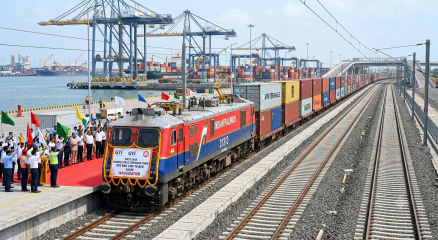
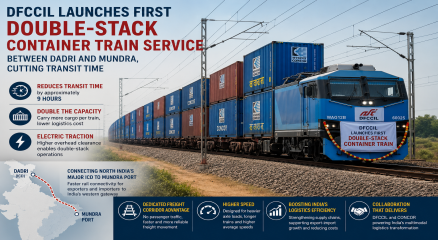
Gateway Terminals India (GTI) has marked a major milestone in India's logistics sector by successfully handling its first double-stack container train, unlocking direct access to the Dedicated Freight Corridor (DFC) and strengthening cargo connectivity between Nhava Sheva and the National Capital Region (NCR). The inaugural double-stack service to Dadri handled 270 TEUs, including 90 TEUs unloaded and 180 TEUs loaded, with the complete terminal operation completed in just seven hours. The achievement positions GTI among the growing number of terminals leveraging India's high-capacity freight corridor to accelerate inland cargo movement. The new DFC connectivity is expected to significantly improve the movement of import and export cargo by enabling direct rail access to key manufacturing and consumption hubs across northern India. Double-stack operations increase the number of containers transported per train, helping reduce transit times, optimize rail capacity, and lower overall logistics costs. According to GTI, the successful operation represents more than an infrastructure milestone. It strengthens multimodal connectivity between the port and inland markets while supporting faster, more efficient, and environmentally sustainable freight transportation. Industry experts believe the development will enhance supply chain reliability, improve cargo evacuation from the port, and encourage greater adoption of rail-based logistics as India's Dedicated Freight Corridor network continues to expand. With increasing demand for faster and more cost-effective cargo movement, double-stack rail services are expected to play a critical role in improving freight efficiency and reducing road congestion. Follow CARGOCONNECT for more such news

In a move aimed at supporting India's expanding logistics sector, Container Corporation of India Ltd. (CONCOR) and RITES Limited have entered into a strategic Memorandum of Understanding (MoU) to jointly develop modern logistics infrastructure across the country. The partnership will focus on delivering comprehensive Project Management Consultancy (PMC) services for future infrastructure projects. The collaboration brings together CONCOR's long-standing expertise in multimodal transportation, inland container terminals, containerized cargo handling and supply chain management with RITES' strengths in engineering consultancy, infrastructure planning, project execution and technical advisory services. By combining their capabilities, both public sector enterprises intend to create efficient and sustainable logistics solutions that cater to the country's growing industrial and trade demands. As part of the agreement, CONCOR and RITES will identify and pursue opportunities related to the planning, design, construction and implementation of logistics infrastructure. The objective is to adopt advanced engineering techniques, streamlined project management practices and innovative logistics planning to ensure timely execution while improving operational efficiency. The initiative also complements the Government of India's broader agenda to strengthen multimodal connectivity through flagship programmes such as the PM Gati Shakti National Master Plan and the National Logistics Policy. By working together, the two organisations expect to contribute towards lowering logistics costs, improving freight movement and enhancing the nation's overall supply chain competitiveness. Officials associated with the partnership believe the collaboration will pave the way for the development of logistics parks, multimodal cargo terminals, freight corridors and other key infrastructure projects. They added that the alliance represents another step towards building an integrated logistics ecosystem capable of supporting India's ambition to emerge as a global logistics hub through technology-driven and future-ready infrastructure.
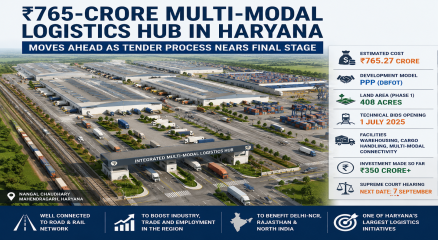
Technical bids for the Mahendragarh logistics project are scheduled to be opened on July 1, bringing one of Haryana’s largest infrastructure initiatives closer to execution. The proposed Integrated Multi-Modal Logistics Hub (IMLH) at Nangal Chaudhary in Mahendragarh district has reached an important milestone, with technical bids for its global tender set to be opened on July 1 in Chandigarh. Estimated at ₹765.27 crore, the project is expected to significantly strengthen logistics and freight infrastructure across northern India. The tender, floated in August 2025 by Haryana Multi-Modal Logistics Hub Project Limited, seeks a private developer under the Public-Private Partnership (PPP) framework using the Design, Build, Finance, Operate and Transfer (DBFOT) model. Interested firms have until 5 pm on June 30 to submit their online bids before the technical evaluation begins. The first phase of the project will be developed over around 408 acres, where modern cargo handling, warehousing and freight distribution facilities will be established. Once operational, the hub is expected to improve supply chain efficiency by integrating road and rail connectivity, reducing logistics costs and enabling faster movement of goods. Preparatory infrastructure for the project has already seen substantial progress. Rail connectivity through the New Dabla Railway Station, a 220 kV dedicated power line, a canal-based water supply from Narnaul, and road access from the National Highway have already been created. Construction of the internal railway track and cargo platform is also nearing completion. The rail infrastructure developed during the first phase has involved an investment of nearly ₹200 crore, laying the groundwork for large-scale freight operations. Authorities expect the logistics hub to attract fresh industrial investment and strengthen manufacturing activity across the region. Besides enhancing freight movement, the project is anticipated to generate considerable direct and indirect employment opportunities. It is also expected to benefit industries located in Delhi-NCR, Rajasthan, Haryana, and other parts of North India by offering modern logistics and warehousing infrastructure. Despite steady progress, a portion of the project remains subject to legal proceedings. The Supreme Court, while hearing a petition filed by 91 farmers, recently ordered a temporary stay on construction activities across 129 acres of the project land until September 7. At the same time, the court clarified that the order does not restrict the Haryana government from continuing statutory procedures under the Right to Fair Compensation and Transparency in Land Acquisition, Rehabilitation and Resettlement Act, 2013. The next hearing in the matter is scheduled for September 7. The logistics hub is being implemented through a special purpose vehicle (SPV), NICDC Haryana Multi-Modal Logistics Hub Project Limited. Since the project's inception in 2018, nearly 1,000 acres have been acquired. Around ₹150 crore has been spent on land acquisition, while another ₹200 crore has gone into developing enabling infrastructure. With the global tender process now entering its concluding phase, the project is moving closer to construction and is expected to become a major logistics gateway supporting industrial growth and multimodal transportation across the region.

Allcargo Logistics has strengthened its leadership team with the appointment of Bipin Reghunathan as Chief Business Officer for Consultative Logistics. The move comes as the company seeks to accelerate growth in its consultative logistics segment and enhance its capabilities in delivering integrated supply chain solutions. In his new role, Reghunathan will be responsible for driving the strategic expansion and profitability of Allcargo’s Consultative Logistics business. His mandate includes fostering customer-centric innovation, leveraging technology-driven decision-making, and building organizational capabilities to support the company’s long-term growth objectives. A seasoned industry professional, Reghunathan brings more than 30 years of experience spanning supply chain management, warehousing, logistics operations, business transformation, and network optimization. Over the course of his career, he has led large-scale logistics and warehousing operations, delivering business growth, operational efficiency, and enhanced customer value across multiple sectors. Announcing the appointment, Ketan Kulkarni, Managing Director & CEO, Allcargo Logistics Limited, highlighted the strategic significance of the leadership addition. "Bipin’s appointment marks an important addition to our leadership team as we continue to strengthen and expand our consultative business. He brings extensive industry experience and a deep understanding of customer requirements across sectors. At Allcargo Logistics, we are committed to building leadership depth across our businesses, and Bipin’s addition will help us further enhance our capabilities, deliver greater value to customers and accelerate growth in this segment. We are delighted to welcome him to the Group and look forward to the contributions he will make in the years ahead.” Reghunathan expressed enthusiasm about joining the company at a time when demand for integrated and agile supply chain solutions is increasing across industries. "I am delighted to be part of Allcargo Logistics, which has built a strong foundation in integrated logistics, backed by four decades of experience in the industry. This is an exciting time for the business as customers increasingly seek trusted partners who can support their growth ambitions and evolving supply chain requirements. I look forward to be part of the Allcargo Group and strengthen our Consultative Logistics capabilities and contribute to the continued growth of the business." Before joining Allcargo Logistics, Reghunathan held a leadership role at Rhenus Contract Logistics. He has also served in senior positions at DHL Supply Chain, Mahindra Logistics, Radhakrishna Foodland, and Aditya Birla Retail, where he played a key role in scaling operations, strengthening customer relationships, optimizing supply chain networks, and driving sustainable business performance. His academic credentials include a Master of Data Science from Deakin University, Australia, a Post Graduate Program in Leadership and General Management from INSEAD, France, and a Post Graduate Program in General Management from the Welingkar Institute of Management, Mumbai. Allcargo’s Consultative Logistics division offers integrated warehousing and supply chain solutions designed to improve inventory management, enhance operational efficiency, increase supply chain visibility, and create agile distribution networks. The business serves clients across industries including chemicals, pharmaceuticals, automotive and engineering, and retail, leveraging technology, process excellence, and sector expertise to deliver tailored and scalable logistics solutions. The appointment reflects Allcargo Logistics’ continued focus on strengthening its leadership bench and expanding its consultative logistics capabilities as businesses increasingly seek end-to-end supply chain partners capable of supporting evolving operational and growth requirements. 𝐒𝐭𝐚𝐲 𝐓𝐮𝐧𝐞𝐝 𝐭𝐨 CARGOCONNECT 𝐟𝐨𝐫 𝐥𝐚𝐭𝐞𝐬𝐭 𝐮𝐩𝐝𝐚𝐭𝐞𝐬!
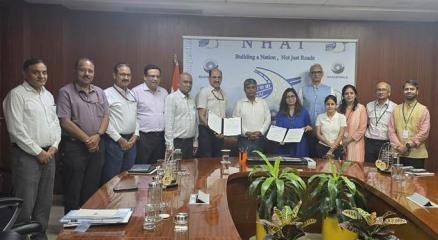
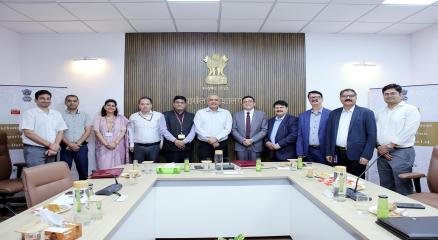
In a move aimed at deepening research-driven policymaking in the infrastructure sector, the National Highways Authority of India (NHAI) has announced the establishment of a specialised research centre focused on transportation, mobility, and logistics economics. The facility will be housed at the National Council of Applied Economic Research (NCAER) in New Delhi. The initiative marks the first dedicated and permanent institutional effort in India to study the economic dimensions of the transport and logistics sector through a structured research framework. To formalise the collaboration, NHAI and NCAER have signed a Memorandum of Understanding (MoU). While NHAI will provide financial support for the project, NCAER will work with academic institutions, industry stakeholders and research partners to build a robust knowledge ecosystem around the centre. According to officials from the Ministry of Road Transport and Highways (MoRTH), the initiative reflects the growing importance of data-backed planning in managing and expanding India's rapidly evolving highway infrastructure network. The centre's research agenda will cover a broad spectrum of subjects, including freight movement, highway economics, multimodal transport integration, regional development impacts, tolling strategies, road asset monetisation, safety-related interventions and the use of emerging technologies in highway operations and maintenance. By generating policy-focused studies and analytical insights, the institution is expected to support government departments in designing more efficient, sustainable and user-centric transportation systems. The findings could also contribute to improving investment planning and infrastructure management practices across the sector. Apart from conducting research, the centre will function as a national knowledge platform. It will disseminate findings through reports, policy briefs, working papers, stakeholder consultations, workshops and academic collaborations, while also helping build expertise in transportation economics among professionals and researchers. Governance of the centre will be overseen by an Advisory Committee comprising economists, public policy experts, transportation specialists and academicians. NHAI's Member (Finance) and NCAER's Director General will also be part of the panel. In addition, a separate Steering Committee established by NHAI will monitor research priorities and review outcomes. NHAI has committed support for the centre over the next decade, underlining its long-term commitment to strengthening institutional capacity and evidence-based decision-making in the transport sector. Commenting on the partnership, NHAI Chairman Santosh Kumar Yadav said the authority has consistently focused on improving connectivity and logistics efficiency across the country. He noted that the collaboration would provide a dedicated platform for high-quality research and policy analysis, enabling more informed decisions on infrastructure planning, investment and asset management in the years ahead.

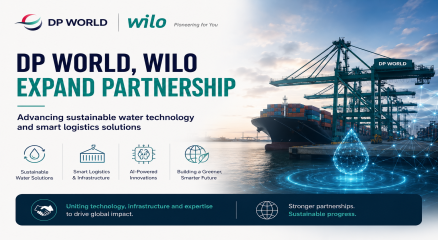
DP World and Germany-based Wilo Group have agreed to broaden their long-standing relationship through a new strategic partnership focused on sustainability, digital innovation and next-generation logistics solutions. Formalised through a Memorandum of Understanding (MoU), the collaboration will explore opportunities to integrate advanced water technologies, artificial intelligence applications and smart supply chain solutions across global operations. The agreement was signed at Wilo's headquarters in Dortmund by Oliver Hermes, President and Global CEO of Wilo Group, and Abdulla Al Hashmi, Global Chief Operating Officer for Parks and Economic Zones at DP World. The expanded partnership reflects a shared ambition to develop more efficient industrial ecosystems while supporting sustainable infrastructure projects in key international markets. According to Hermes, combining Wilo's expertise in intelligent water management with DP World's logistics and infrastructure capabilities creates new possibilities for large-scale projects. He noted that the growing role of artificial intelligence will help both organisations deliver solutions with long-term environmental and operational benefits across industries ranging from water management to logistics. For DP World, the agreement builds upon a relationship that has developed over many years through the Jebel Ali Free Zone (Jafza). Abdulla Al Hashmi said the collaboration brings together complementary strengths, with Wilo contributing engineering and technology expertise while DP World provides an integrated logistics platform capable of supporting global industrial growth. Beyond technology deployment, the partnership also places emphasis on knowledge sharing, workforce development and innovation-led industrial expansion. Both organisations see talent development as a critical factor in supporting future manufacturing and infrastructure requirements. The collaboration draws on Wilo's established presence in the UAE, particularly its Green Fab manufacturing facility in Dubai, which operates within Jafza and recently underwent a major expansion to support growing regional demand. Under the terms of the agreement, the companies will assess opportunities to deploy Wilo's AI-enabled solutions across DP World's ports, logistics parks and economic zones. They will also work on improving supply chain efficiencies and explore potential cooperation through the Wilo Global WATER AI Academy programme, which focuses on innovation, digital skills and sustainable water management technologies. The move highlights the increasing convergence of advanced manufacturing, smart logistics and sustainability initiatives as businesses seek more resilient and technology-driven supply chains.
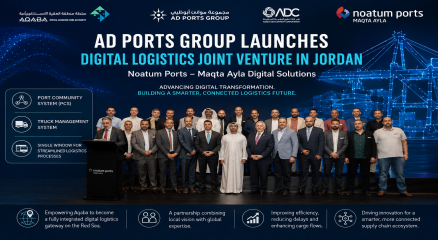
AD Ports Group has taken another step in expanding its digital logistics presence in Jordan with the launch of a new joint venture formed in partnership with Aqaba Development Corporation (ADC). The initiative, named Noatum Ports – Maqta Ayla Digital Solutions, is aimed at modernising port and logistics operations across the country through advanced digital platforms. The company, operating under AD Ports Group's Noatum Ports business, will oversee the development and management of a Port Community System (PCS) for Aqaba. Designed to bring multiple stakeholders onto a unified digital platform, the system will enable smoother coordination among port operators, government agencies, terminal operators, logistics providers, and cargo owners. Alongside the PCS rollout, the venture has successfully delivered the first phase of a truck management solution at Aqaba's ports. The platform acts as a centralised gateway for logistics-related procedures, helping reduce administrative bottlenecks, optimise truck movements, shorten turnaround times, and enhance cargo-handling efficiency. The launch event brought together senior representatives from the Aqaba Special Economic Zone Authority (ASEZA), Aqaba Development Corporation, and AD Ports Group, underscoring the strategic importance of the project for Jordan's logistics sector. According to Shadi Al Majali, Chief Commissioner of ASEZA, the initiative aligns with Aqaba's long-term vision of evolving into a digitally enabled logistics and trade gateway on the Red Sea. He noted that the truck management platform is expected to contribute to smoother traffic management and more efficient port operations. Hussein Al Safadi, Chief Executive Officer of Aqaba Development Corporation, highlighted that the collaboration combines ADC's development ambitions with AD Ports Group's international experience in port management and infrastructure development. Mohamed Al Tamimi, CEO of Noatum Ports at AD Ports Group, said the venture reflects the group's continued commitment to supporting Jordan's logistics ecosystem through technology-driven solutions that improve supply chain performance and operational visibility. The latest development further broadens AD Ports Group's activities in Jordan. The company already operates the Aqaba Multipurpose Port, manages digital customs services at the Al Madouneh Customs Centre, developed the Aqaba Cruise Terminal, and is involved in the large-scale Marsa Zayed waterfront project.
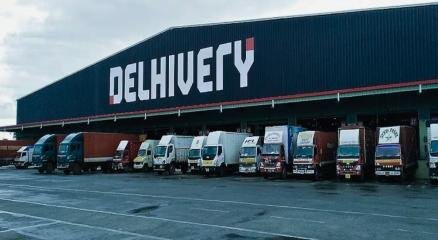
Delhivery has introduced a new geospatial technology platform, Delhivery Maps, marking its entry into the commercial mapping and navigation solutions space. The logistics company announced that the AI-driven suite of mapping APIs, previously developed and deployed exclusively for its own operations, will now be available to enterprises, developers, and gig-economy businesses. The launch reflects Delhivery’s broader effort to commercialise technology built in-house over years of operating one of India's largest logistics networks. The company originally created the mapping infrastructure to reduce dependence on external map providers while improving efficiency across its express parcel, freight, and supply chain businesses. According to the company, Delhivery Maps offers a comprehensive range of geospatial services, including address auto-completion, geocoding, reverse geocoding, navigation, route optimisation, distance matrix calculations, map tiles, and vehicle-aware routing. Unlike conventional mapping platforms, the solution has been designed specifically for logistics and commercial transportation requirements. The platform incorporates operational considerations such as heavy-vehicle movement patterns, road restrictions, commercial routing rules, and landmark-based navigation to improve route planning and delivery execution. Delhivery said the system has been trained and refined using operational data accumulated over years of deliveries across the country. The accuracy of the platform is backed by historical information generated from more than 200 crore shipments and over one billion daily GPS signals collected from a fleet exceeding one lakh vehicles. This extensive dataset enables the platform to better understand India's complex addressing ecosystem and transportation network. At the core of the offering is Naksha LLM, Delhivery’s proprietary geospatial reasoning model. Built to process unstructured and incomplete address information, the model uses advanced reasoning capabilities to interpret location data more effectively. Naksha LLM is also available through the Delhivery Maps MCP ecosystem. The company believes the platform can address a variety of use cases across sectors such as ecommerce, quick commerce, ride-hailing, and on-demand services. Businesses can leverage the APIs for tasks including address validation, dispatch optimisation, route planning, and more accurate delivery time predictions. Commenting on the launch, Delhivery Chief Technology Officer Kapil Bharati said the solution was born out of operational necessity, helping the company manage commercial routing complexities and unstructured addresses at scale while running India's largest logistics network. The launch comes as Delhivery continues to diversify its business portfolio. In recent months, the company established Delhivery Financial Services, a wholly-owned subsidiary focused on financial products for truck drivers, fleet operators, riders, and MSMEs. The offerings are expected to include credit-linked services, fuel cards, and insurance solutions. The company has also been strengthening newer business verticals such as Delhivery Direct and Rapid. While Delhivery Direct caters to hyperlocal, on-demand deliveries through two-wheelers as well as larger vehicles, Rapid supports quick-commerce fulfilment by managing dark-store operations for brands, retailers, and direct-to-consumer businesses. Financially, Delhivery maintained stable profitability during the March quarter, posting a consolidated net profit of ₹72.4 crore. Revenue from operations climbed 30 per cent year-on-year to ₹2,850 crore. For FY26, the company reported a net profit of ₹321 crore, up 8 per cent from the previous year, while service revenue increased 17 per cent to ₹10,486 crore. For more such news and updates, visit CARGOCONNECT.

Furniture and lifestyle rental company Furlenco is scaling up its electric mobility journey by extending its logistics partnership with Green Drive Mobility to Delhi and Hyderabad, following the successful implementation of an EV-led delivery model in Bengaluru. The move forms part of Furlenco's broader strategy to make its logistics operations more sustainable while maintaining service efficiency across its growing footprint. The company currently handles a vast network of deliveries, installations, product returns, warehouse transfers, refurbishment movements, and customer fulfilment activities across multiple cities, making transportation a critical component of its business operations. What began as a pilot initiative in Bengaluru has now evolved into a multi-city deployment. Under the ongoing roadmap, nearly 150 conventional internal combustion engine (ICE) vehicles are expected to be gradually replaced with electric vehicles in the coming phases, helping reduce emissions while improving long-term operational efficiency. Green Drive Mobility has been entrusted with managing the transition from end to end. Its responsibilities include vehicle deployment, driver onboarding, fleet monitoring, utilisation management, maintenance support, and local operational execution. The company believes that enterprise-led fleet electrification is gaining momentum as businesses increasingly look for predictable operating costs and cleaner transportation alternatives. According to Ala Harikrishna, Founder of Green Drive Mobility, the partnership has expanded steadily because both organisations remained focused on operational execution rather than treating electrification as a standalone sustainability initiative. He noted that the success of the Bengaluru deployment demonstrated that EVs are capable of supporting demanding logistics operations, paving the way for expansion into additional metropolitan markets. Harikrishna further observed that sustainability is becoming an integral part of business operations rather than an isolated corporate objective. He added that the planned migration of a large number of conventional vehicles to EVs illustrates how enterprises can simultaneously lower their environmental footprint and strengthen operational performance. For Furlenco, the transition is part of a longer-term vision that dates back several years. Ajay Agarwal, Chief Operating Officer of Furlenco, said the company began investing in sustainable mobility solutions as early as 2023, at a time when EVs had yet to gain widespread acceptance as a dependable logistics option. He emphasised that as Furlenco expands across India, it remains focused on building a distribution network that is scalable, cost-efficient, and aligned with its environmental commitments. Agarwal also acknowledged Green Drive Mobility's role in helping the company adopt cleaner transportation solutions while maintaining service standards and customer experience. Industry observers note that the collaboration reflects a wider transformation taking place across India's logistics sector. Electric vehicles are increasingly moving beyond pilot programmes and experimental projects to become a mainstream component of commercial fleet operations. By expanding their partnership across multiple cities, Furlenco and Green Drive Mobility are contributing to this shift and demonstrating how sustainability and business growth can progress together. As urban centres continue to tighten emission regulations and companies seek greener supply-chain solutions, such collaborations are expected to play an increasingly important role in shaping the future of logistics and last-mile transportation in India.
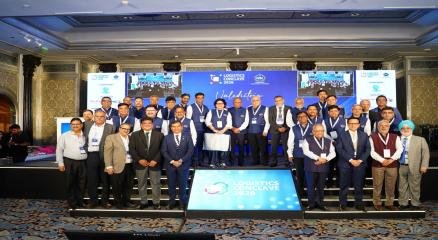
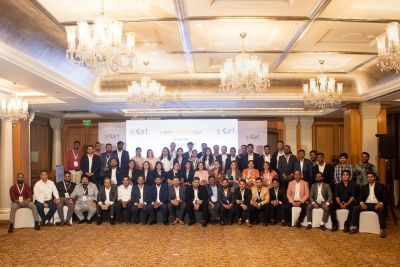
Over 550 delegates, government leaders and industry stalwarts unite around the vision — “One Fraternity, One Vision: Logistics Driving India Towards Viksit Bharat” Mumbai, 17 June 2026 — The Brihanmumbai Custom Brokers’ Association (BCBA), established in 1939, successfully hosted the second edition of The India Logistics Conclave 2026 at The Taj Mahal Palace, Mumbai, drawing more than 550 delegates, invitees and guests from across the customs, ports, shipping, trade and logistics ecosystem. Anchored in the theme “One Fraternity, One Vision — Logistics Driving India Towards Viksit Bharat,” the day-long Conclave brought senior government leadership and industry stalwarts onto one platform to chart the road to a developed India by 2047. The proceedings began at 09:45 a.m. with the ceremonial inauguration of the CBIC Pavilion, followed by the Inaugural Session. In a defining moment, Shri Vivek Chaturvedi, Chairman, Central Board of Indirect Taxes & Customs (CBIC), delivered the welcome address live online, sharing the Board’s vision for a modern, trust-based and technology-led customs administration — received by the fraternity as a source of great strength and inspiration. The inaugural dais featured an eminent gathering of dignitaries. These included Shri Yogendra Garg, Member (Customs), CBIC; Shri Anupam Prakash, Joint Secretary, Customs; Shri Sushil Mansing Khopde, IPS, Additional Director General of Shipping; Shri Sunil Jain, IRS, Director General of Valuation; Capt. BVJK Sharma, Chief Executive Officer, Navi Mumbai International Airport; Capt. Deepak Tiwari, Managing Director, MSC India and Chairman, CSLA; Shri Om Hisaria, Senior Executive Vice President, Reliance Industries Limited; and Mr Mukesh Oza, Group President & CEO, Samsara Group. They were joined on the dais by BCBA President Mr Sanjeev Harale and Senior Vice President Mr Paresh Thakkar. “To see this fraternity stand shoulder to shoulder with the highest offices of government and industry, under one roof and one vision, has been deeply humbling,” said Mr Paresh Thakkar, Senior Vice President, BCBA. “What we have built over two editions is not merely an event, but a platform where the customs broker’s voice is heard, respected and woven into the national agenda. That is the legacy we intend to carry forward.” The intellectual heart of the Conclave lay in its four business sessions, each a moderated plenary of national stature. Session 1, “India 2030, 2035, 2047 — A Roadmap for Viksit Bharat,” was moderated by Mr Shantanu Bhadkamkar and brought together Shri Yogendra Garg, Member (Customs), CBIC; Mr Shailesh Haribhakti, eminent voice on economy and governance; Capt. Deepak Tiwari of MSC India and CSLA; Dr Prasad Pradhan, senior strategy and resilience advisor; and Mr Rahul Ahluwalia, Director & Co-Founder, Foundation for Economic Development. Session 2, “Building India’s Digital Spine — Customs & Trade,” was moderated by Mr Dushyant Mulani. The panel comprised Shri Anupam Prakash, Joint Secretary, Customs; Shri Gaurav Dayal, IAS, Chairman, Jawaharlal Nehru Port Authority; Shri Parvinder Singh, Managing Director, Hans Infomatic; Mr Kunal Maheshwari, Director, Softlink Global; Mr Faisal Khan, Foundation for Economic Development; and Mr Amit Kamat, Chairman, FFFAI. “Custom Brokers are now playing a nodal role in India’s EXIM Logistics, they are quiet backbone of India’s trade, and forums like this one finally give that contribution the recognition it deserves,” said Mr Dushyant Mulani, Immediate Past President, BCBA. “Keeping National interest of being Globally Competitive it is imperative that government and trade sit at the same table as partners to conceptualise further trade facilitation measures to ensure the entire ecosystem moves faster — and that partnership is the real achievement of this Conclave.” Session 3, “Geopolitics and the New Geometry of Trade,” was moderated by Mr Tej Contractor and featured Dr Pritam Banerjee of the Indian Institute of Foreign Trade; Mr Sachin Vijan, Vanguard Logistics Services; Mr Fardeen Malbarwalla, Galaxy Freight; Mr S. Mahesh Mahalingam, Head — EXIM, Larsen & Toubro; and Dr Rumki Majumdar, Director & Economist, Deloitte India. Session 4, “Policy and Infrastructure — Building India’s Futuristic Logistics Ecosystem,” was moderated by Mr Mihir Parekh of the Foundation for Economic Development, who served as moderator cum panellist. The session brought together Shri Unmesh Sharad Wagh, IRS, Commissioner General, JNCH; Shri Ravish Kumar Singh, IRTS, Deputy Chairman, JNPA; Shri Sagar Rameshrao Kadu, Director (Logistics Division), DPIIT; Dr Rekha Raikar Kumar, Senior Advisor, Land Port Authority of India; and Mr Rajiv Chohan, Aegis Vopak Group. The Valedictory Session, themed “Logisticians — Building a Better India,” offered an inspiring close. It was led by Mr Dhimant Parekh, Founder & CEO of The Better India — the world’s largest positive-impact storytelling platform — and Mr S. Ramakrishna, Past Chairman of FFFAI, who reflected on conviction, reinvention and the logistician’s role in nation building. “This Conclave reaffirmed that the customs broker and freight forwarder are not mere facilitators, but true partners in India’s growth story,” said Mr Sanjeev Harale, President, BCBA." The participation of the highest echelons of government and industry, and the warmth of over 550 delegates, is a powerful testament to the strength of our fraternity and our shared resolve to drive India towards Viksit Bharat.” The Conclave was made possible by the generous support of its partners. The BCBA extends profound gratitude to the Jawaharlal Nehru Port Authority (Platinum Sponsor); Navi Mumbai International Airport and MPRS Shipping (Diamond Sponsors); Softlink Global Private Limited (Gold Sponsor); and Reliance Industries Limited (Silver Sponsor). The Association also acknowledges Parekh Global (Lunch Sponsor); Conex CFS, Polaris CFS and Globicon CFS (Delegate Kit Sponsors); Galaxy Freight (Seat Sponsor); Mumbai Cargo Service Center (Lanyard Sponsor); and Unifo (Hi-Tea Sponsor); and DBS Bank (Banking Partner). The BCBA further thanks our Bronze and Associate Sponsors, along with its Media Partners and supporting organisations, whose collective faith — despite a challenging global environment — was vital to the success of the event. As the second edition closed, the BCBA expressed deep appreciation to every delegate, dignitary, speaker, moderator and partner who made the day a success. The Association reaffirmed its commitment to serving as a unifying voice for the fraternity and advancing the national conversation on India’s logistics future. About BCBA: The BCBA, established in 1939, is one of India’s oldest and most respected representative bodies for customs brokers, serving as a unifying voice for the customs, trade and logistics fraternity. For media enquiries, please contact the BCBA.
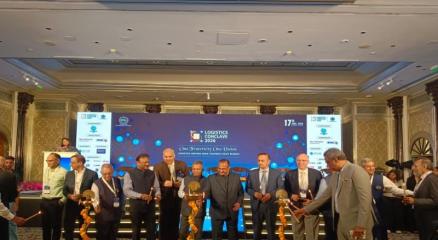
The Brihanmumbai Custom Brokers’ Association (BCBA), the apex body of the customs-broking fraternity in Mumbai, successfully hosted the second edition of its flagship policy forum, the India Logistics Conclave 2026, on June 17, 2026, at The Taj Mahal Palace, Mumbai. Building on the massive success of the inaugural 2024 edition, the high-profile, single-day gathering united over 550 industry stakeholders, senior policymakers, and logistics leaders. The landmark event was held under the powerful theme, “One Fraternity, One Vision — Logistics Driving India Towards Viksit Bharat.” Designed as a coherent dialogue on the transformative forces reshaping India’s trade-and-logistics ecosystem, the conclave focused heavily on digital customs, the strategic "China Plus One" opportunity, Free Trade Agreement (FTA) utilisation, infrastructure delivery policies, and the evolving role of the licensed intermediary. The core discussions reflected the BCBA’s firm conviction that customs brokers and freight forwarders have transitioned from traditional back-office facilitators into front-line, equal growth partners in the nation’s economic story. Underscoring this vision, the association’s leadership emphasised the sector's crucial contribution to national development. Mr. Sanjeev Harale, President of BCBA, highlighted that with falling logistics costs and maturing policies, the sector now sits at the heart of national growth, requiring stakeholders to actively shape industry changes. Mr. Dushyant Mulani, Immediate Past President, noted that the conclave has evolved from an idea in 2024 into a powerful movement, proving the fraternity's readiness to sit at the high table of national policy. Further reinforcing this stance, Mr. Paresh Thakkar, Senior Vice President, described the customs broker as the vital thread holding the entire EXIM chain together, declaring their commitment to leading, innovating, and helping build the Viksit Bharat of 2047. The prestigious Inaugural Session brought together an eminent cross-section of leaders from Indian Customs and the country’s premier ports ecosystem. The distinguished dais featured key government and port authority heads, including Shri Yogendra Garg, Member (Customs), CBIC; Shri Gaurav Dayal, IAS, Chairman, JNPA; Dr M Angamuthu, IAS, Chairman, Mumbai Port Authority; and Shri Shyam Jagannathan, IAS, Director General of Shipping. Joining them were industry captains Capt. Deepak Tiwari, Managing Director, MSC India and Chairman, CSLA; Capt. BVJK Sharma, CEO, Navi Mumbai International Airport; and Shri Niraj Ambani, Group President — Supply Chain, Reliance Industries. Additionally, Shri Vivek Chaturvedi, Chairman, CBIC, addressed the massive gathering online, while the session also took the opportunity to felicitate industry veterans for their distinguished, lifelong contributions to the EXIM community. Throughout the day, panel sessions drew prominent voices from policy, shipping lines, terminals, and academia to deliberate on the long-horizon roadmap for Viksit Bharat 2047. The conclave concluded with a highly impactful Valedictory Session titled “Custom Brokers and Freight Forwarders — Growth Partners.” The concluding keynote address was delivered by Mr. Dhimant Parekh, Founder of The Better India, who emphasised the critical role of brokers as front-line trade-facilitation partners within the CBIC, DGFT, and PGA frameworks. For more such news and updates, visit CARGOCONNECT.
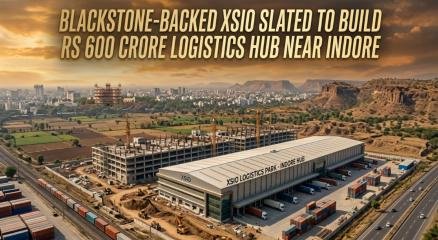
XSIO Logistics Parks, backed by global asset manager Blackstone, has finalized plans to invest upwards of Rs 600 crore to construct a state-of-the-art integrated logistics hub near Indore. The ambitious development comes after the MP Industrial Development Corporation (MPIDC) formally approved the allotment of 23.33 hectares of land in Machal village. Funded primarily through international foreign investment, the mega-facility is projected to generate more than 4,000 direct and indirect employment opportunities across the state. Commenting on the industrial significance of the allotment, Himanshu Prajapati, Executive Director of MPIDC Indore, emphasized that the project will significantly elevate the Indore-Pithampur corridor’s status among India’s top-tier logistics zones. He noted that the state government is fully committed to providing seamless regulatory support to fast-track execution. Officials expect that the finished hub will effectively service industrial manufacturing plants in Pithampur Sector-7, the Mohana industrial area, and adjacent manufacturing clusters. The new industrial park is designed to synergize with Western Indore's existing freight infrastructure, heavily complementing the ongoing Rs 1,110-crore Multi Modal Logistics Park (MMLP) in Pithampur as well as CONCOR’s active Inland Container Depot (ICD). Local authorities point out that the convergence of these major hubs will create a highly optimized supply chain network, significantly driving down overall operational and freight costs for regional businesses. This capital injection reflects a broader trend of institutional real estate investment pouring into India's central warehousing corridors to meet rising supply chain demands. By setting up a robust, institutional-grade logistics footprint in Madhya Pradesh, XSIO and Blackstone are positioning the region as a primary distribution node, ensuring it has the capacity and infrastructure to handle high-volume domestic and EXIM cargo movements for years to come. For more such news and updates, visit CARGOCONNECT.
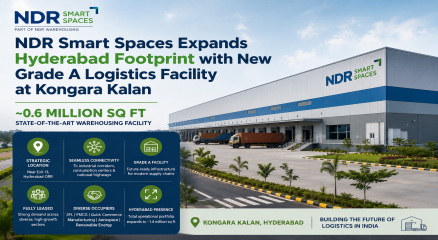
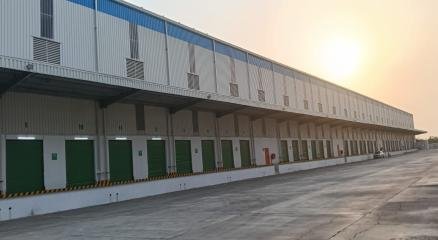
Strengthening its position in one of India's fastest-growing warehousing and logistics markets, NDR Smart Spaces has inaugurated a new Grade A warehousing facility spanning nearly 0.6 million sq ft at Kongara Kalan in Hyderabad. This development is another step in the company's long-term expansion and shows its commitment to supporting India's evolving supply chain ecosystem. The latest addition takes NDR Smart Spaces' total operational warehousing portfolio in Hyderabad to approximately 1.4 million sq ft, further enhancing its capacity to cater to the growing requirements of businesses seeking modern, technology-enabled logistics infrastructure. The newly launched park has already witnessed strong market acceptance, with the entire facility being leased before commencement of operations. The tenant mix reflects Hyderabad's emergence as a preferred logistics destination, attracting businesses from sectors such as third-party logistics (3PL), FMCG, quick commerce, and advanced manufacturing. Industry experts note that demand for high-quality warehousing continues to rise as companies focus on improving inventory management, distribution efficiency, and supply chain resilience. Hyderabad, in particular, has emerged as a key logistics gateway due to its strategic location, infrastructure development, and growing consumption base. One of the major advantages of the Kongara Kalan facility is its proximity to Exit 13 of Hyderabad's Outer Ring Road (ORR). The location provides convenient access to key industrial zones, consumption clusters, and national highway networks, enabling smoother freight movement and faster delivery timelines. By reducing transit delays and improving route accessibility, the facility is expected to help occupiers optimise logistics costs and operational efficiency. Commenting on the development, Amrutesh Reddy, Managing Director of NDR Smart Spaces, said the company views Hyderabad as a critical market in India's next phase of logistics growth. He noted that the Kongara Kalan project reflects the increasing preference among occupiers for premium Grade A warehousing infrastructure and added that the company's focus remains on creating future-ready facilities capable of addressing both current and emerging supply chain requirements. Echoing similar sentiments, Ramachandran Rajaram, Regional Business Head at NDR Smart Spaces, highlighted Hyderabad's transformation into a mature logistics and industrial destination. According to him, the wide range of occupiers operating from the facility—including companies from the manufacturing, aerospace, renewable energy, FMCG, quick commerce, and 3PL segments demonstrates the depth and diversity of demand being generated by the city. He further stated that the project's location along the Outer Ring Road places businesses at a strategic crossroads of connectivity and commercial activity, creating an ideal operating environment for efficient supply chain management. With the launch of the Kongara Kalan facility, NDR Smart Spaces continues to advance its vision of developing world-class logistics and industrial infrastructure designed to support India's rapidly expanding warehousing and distribution landscape. For more such news and updates, visit CARGOCONNECT.
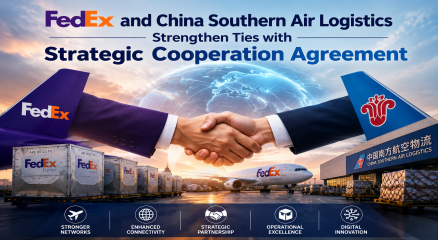
In a move aimed at enhancing international air cargo connectivity and supply chain efficiency, FedEx and China Southern Air Logistics have entered into a strategic Memorandum of Understanding (MoU) to deepen collaboration across several key areas of the logistics value chain. The agreement outlines a framework for cooperation covering network planning, international flight connectivity, fleet utilisation, ground handling operations, hub development, and digital transformation initiatives. Through this partnership, both organisations intend to leverage their respective strengths to improve service capabilities and operational performance in an increasingly dynamic global logistics environment. The MoU was formally signed by Poh-Yian Koh, President of FedEx China, and Li Xiao, Chairman of China Southern Air Logistics. The signing ceremony was witnessed by Richard Smith, Chief Operating Officer International and Chief Executive Officer of Airline at FedEx, along with Han Wensheng, President of China Southern Air Holding Co., Ltd. Commenting on the development, Koh said the agreement marks an important step toward closer strategic alignment between the two companies. He noted that combining FedEx’s extensive global air transportation network with China Southern Air Logistics’ expertise in both domestic and international markets will help create stronger route connectivity and drive greater operational efficiency. According to Koh, the collaboration is expected to contribute to the development of a more intelligent, responsive, and resilient air logistics ecosystem. He added that the partnership will better support the rapidly growing cross-border shipping requirements of Chinese businesses while also contributing to smoother global supply chain operations. As international trade continues to evolve, logistics providers are increasingly looking at strategic partnerships to improve network reach, capacity optimisation, and service reliability. The FedEx–China Southern Air Logistics agreement reflects this broader industry trend toward deeper cooperation and integrated logistics solutions. Li Xiao highlighted that FedEx has long been one of China Southern Air Logistics’ important strategic partners, with both companies maintaining a strong working relationship over the years. He described the new MoU as a significant milestone that will expand the scope of cooperation and create additional opportunities for mutual growth. He further explained that the partnership will focus on five major pillars: cargo capacity, route development, fleet resources, operational coordination, and digitalisation. By combining their complementary strengths, both companies aim to improve supply chain stability and efficiency while strengthening Guangzhou’s role as a major international aviation and logistics hub. FedEx, which established its presence in China in 1984, also noted that it has recently undertaken several initiatives to further optimise its logistics network linking China with important markets across Asia and Europe, reinforcing its commitment to supporting global trade and cross-border commerce. For more such news and updates, visit CARGOCONNECT.
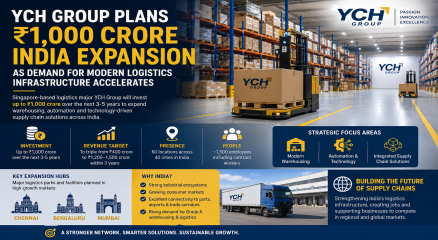
Global logistics provider YCH Group is preparing to significantly scale up its presence in India, with plans to invest up to ₹1,000 crore over the next three to five years to expand warehousing and integrated logistics infrastructure across key industrial and consumption hubs. The Singapore-headquartered company sees India as one of its fastest-growing markets and is betting on rising demand for organised warehousing, supply chain automation, and technology-enabled logistics services. Growth in sectors such as electronics manufacturing, e-commerce, semiconductor production, and advanced manufacturing is creating fresh opportunities for logistics providers capable of offering large-scale, modern infrastructure. As part of its expansion strategy, YCH is evaluating the development of major logistics parks and distribution facilities in Chennai, Bengaluru, and Mumbai—three locations that have emerged as critical nodes in India's evolving supply chain network. Their proximity to ports, airports, manufacturing clusters, and large consumer markets makes them strategically important for both domestic distribution and international trade. The company expects its India business to witness substantial growth over the coming years. Revenue from Indian operations, currently estimated at around ₹400 crore, is projected to increase threefold and potentially reach ₹1,200-1,500 crore within the next three years, reflecting management's confidence in the country's long-term logistics potential. YCH has been operating in India for nearly two decades and currently maintains a presence across 60 locations spanning 40 cities. Its network supports a broad customer base through warehousing, distribution, and supply chain management services, while generating employment for approximately 1,500 people, including contract personnel. A significant part of the company's future growth plans will revolve around southern India, particularly the Chennai region. The company already operates its largest facility in the country near Sriperumbudur, one of India's leading manufacturing and industrial hubs. The campus houses a large-scale warehousing operation with a capacity for tens of thousands of pallet positions, serving customers from various sectors, including technology and electronics. Industry analysts view YCH's proposed investment as another indicator of growing international confidence in India's logistics sector. Over the past few years, demand for Grade A warehousing has surged as manufacturers expand domestic production, e-commerce companies strengthen fulfilment networks, and businesses increasingly prioritise supply chain resilience. The timing of the planned investment also aligns with broader structural changes taking place across India's logistics landscape. Government-led infrastructure initiatives, multimodal connectivity projects, logistics policy reforms, and digital transformation efforts are improving the efficiency of cargo movement and encouraging greater private sector participation. For the wider supply chain ecosystem, the creation of new logistics parks could deliver multiple benefits. Modern facilities equipped with advanced storage systems, automation technologies, and integrated transportation connectivity can help reduce transit times, improve inventory management, lower logistics costs, and enhance service reliability for businesses operating across sectors. The proposed expansion is also expected to enhance India's capacity to support the growing manufacturing sector and export-oriented industries. As global companies continue diversifying supply chains and exploring alternative production bases, access to world-class logistics infrastructure is becoming an increasingly important factor in investment decisions. From a trade perspective, additional logistics capacity in strategic markets such as Chennai, Bengaluru, and Mumbai could further improve cargo handling efficiency and strengthen connections between production centres, consumption markets, ports, and international trade routes. With its planned ₹1,000 crore investment programme, YCH is positioning itself to play a larger role in India's next phase of logistics growth while supporting the country's ambition to become a more competitive manufacturing, distribution, and supply chain hub in the global economy. For more such news and updates, visit CARGOCONNECT.
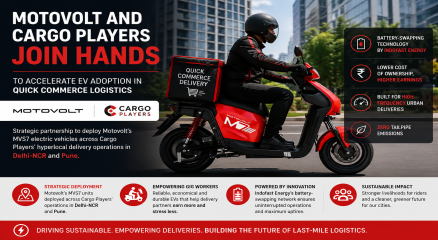
As India's quick commerce sector continues to scale rapidly, the demand for efficient and sustainable last-mile delivery solutions is becoming increasingly critical. To address this need, Motovolt Mobility has partnered with Cargo Players, a third-party logistics provider, to deploy electric vehicles across hyperlocal delivery operations in key urban markets. Under the partnership, Cargo Players will integrate Motovolt's MVS7 electric vehicles into its delivery fleet operating in Delhi-NCR and Pune. The rollout is aimed at supporting high-volume quick commerce and on-demand delivery networks while reducing the environmental footprint of urban logistics. A key component of the initiative is the integration of Indofast Energy's battery-swapping technology. By enabling riders to quickly replace depleted batteries instead of waiting for vehicles to charge, the solution is designed to improve vehicle uptime and maintain delivery efficiency during peak operating hours. The deployment comes at a time when logistics companies are increasingly exploring alternative mobility solutions to manage rising delivery volumes while controlling operating costs. For delivery partners, vehicle productivity and reliability remain critical factors influencing earnings and operational performance. Motovolt's MVS7 has been developed specifically for intensive urban delivery applications. The vehicle is engineered to support frequent daily trips, minimise downtime, and reduce concerns associated with battery range limitations. Compared with conventional petrol-powered two-wheelers, the electric vehicle also offers lower operating and maintenance costs, making it an attractive option for fleet operators and gig workers alike. According to Motovolt Mobility Founder and CEO Tushar Choudhary, the partnership reflects a shared commitment to creating a more sustainable logistics ecosystem while improving access to dependable mobility solutions for delivery partners who form the backbone of India's rapidly growing quick commerce industry. From Cargo Players' perspective, the collaboration is expected to generate both operational and economic benefits. The availability of battery-swapping infrastructure allows delivery personnel to spend more time on the road and less time waiting for vehicles to recharge, helping improve utilisation levels and delivery productivity. Commenting on the deployment, Cargo Players Co-Founder Ratanbhushan Gupta said the initiative is focused not only on reducing emissions but also on strengthening the livelihoods of delivery partners. He noted that access to affordable, low-maintenance electric vehicles can help riders lower their daily operating expenses while increasing earning opportunities through improved vehicle availability. The collaboration reflects a broader shift underway across India's logistics sector, where fleet operators, technology providers and mobility companies are working together to accelerate electrification in last-mile delivery. As quick commerce networks expand into new markets and delivery expectations continue to rise, scalable EV-based solutions are expected to play a growing role in improving efficiency, reducing costs and supporting sustainable urban logistics. By combining purpose-built electric vehicles with battery-swapping infrastructure, Motovolt and Cargo Players aim to create a delivery ecosystem that benefits logistics operators, gig workers and the environment alike, while supporting the next phase of growth in India's fast-evolving quick commerce landscape. For more such news and updates, visit CARGOCONNECT.

Ukraine has carried out a fresh wave of long-range strikes against Russian energy and transport infrastructure, hitting a port facility and an oil depot in what appears to be an expanding campaign aimed at disrupting fuel supply chains that support Moscow’s military operations. According to Russian regional authorities, drone attacks struck facilities in southern Russia, including the port area of Taganrog in the Rostov region and an oil storage site in Armavir, Krasnodar Krai. The latest attacks underscore Ukraine’s increasing focus on Russia’s energy and logistics network, a strategy designed to weaken fuel distribution and reduce the flow of resources supporting military operations. Since the beginning of the year, Ukrainian forces have repeatedly targeted oil refineries, fuel depots, pumping stations and export terminals located hundreds of kilometres from the front line. The campaign has also extended to maritime infrastructure. Ukrainian forces have previously targeted major oil export terminals, including facilities linked to Russia’s Baltic and Black Sea shipping networks. For the maritime and logistics sector, continued attacks on ports, storage terminals and pipeline infrastructure are increasing operational risks across Russia’s energy supply chain. Disruptions at export hubs can affect cargo handling, vessel scheduling and fuel distribution, while repeated strikes on refineries and depots add pressure to domestic supply networks. The latest incidents come as both sides continue to expand attacks beyond the battlefield, increasingly targeting infrastructure viewed as essential to sustaining military operations. While the immediate impact on Russian exports remains difficult to quantify, the growing focus on logistics and energy assets highlights the strategic importance of supply chains in the broader conflict. Follow CARGOCONNECT for more such updates.
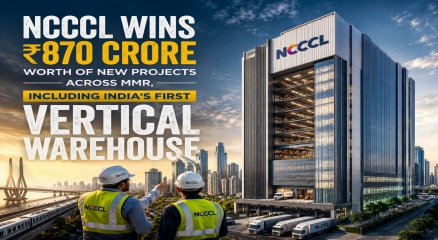
New Consolidated Construction Company Limited (NCCCL) has secured nearly ₹870 crore worth of new projects, adding major assignments in the residential, logistics, and redevelopment sectors in the Mumbai Metropolitan Region (MMR). The projects, awarded in May 2026, cover over 34 lakh square feet and come from leading developers like Lodha Group and Welspun One Logistics Parks. These wins strengthen NCCCL’s role as an important partner in large urban infrastructure and real estate projects. One notable project involves constructing India’s first vertical warehouse. This facility will be built for Welspun One Logistics Parks in the JNPA Special Economic Zone in Navi Mumbai, a key logistics and port-connected hub. This design aims to tackle the growing land shortage in urban areas, representing the next step in India’s warehousing development. The facility will include two warehouse blocks with a total area of about 18.15 lakh square feet. NCCCL will manage everything from structural work to developing external infrastructure and apron areas. In the redevelopment sector, NCCCL won one of the largest projects in its history, the ACME Hills SRA Project in Goregaon East. This assignment, given by Lodha Group on a turnkey basis, covers nearly 14.81 lakh square feet and combines rehabilitation housing with premium residential developments. The project will provide rehabilitation towers for eligible residents, residential towers for open-market sales, and a multi-level parking facility. NCCCL will oversee the entire execution process, including design coordination, construction activities, infrastructure development, and final handover. The company has also received another project from Lodha Group to build the Opulis Clubhouse at Lodha Premier Township in Dombivli. This clubhouse will span about 1.46 lakh square feet and is designed as a community space for residents. NCCCL will handle the core and shell construction for this multi-level facility. These projects come shortly after NCCCL announced a three-year partnership with Nemetschek Group. The collaboration aims to speed up the adoption of digital construction technologies, including Building Information Modelling (BIM), AI-driven workflows, and integrated project management solutions. This initiative should improve project planning, design accuracy, transparency, and execution efficiency in various sectors, including residential real estate, commercial projects, healthcare facilities, hospitality, and data centers. Commenting on the new orders, Mahesh Mudda, Vice Chairman and Managing Director of NCCCL, stated that these assignments show the trust that leading developers have in the company’s capabilities. He highlighted that the turnkey nature of the ACME Hills project aligns with NCCCL’s long-term goal of being a complete construction partner that can handle every stage of project delivery, from planning to final completion. Dr. Amit Goenka, Founder, Chairman, and Managing Director of Nisus Finance, pointed out that the scope and nature of these projects showcase NCCCL’s growing reputation in the industry. He noted that obtaining a fully turnkey project from one of the largest developers in the country signifies the company's emergence as a comprehensive construction platform capable of managing the entire project lifecycle for clients. With these new projects, NCCCL continues to grow its presence in some of the fastest-growing areas of the construction sector. These recent assignments not only boost its order backlog but also underscore its focus on technology-driven execution and integrated project delivery in India's changing urban development landscape. For more such news and updates, follow CARGOCONNECT.
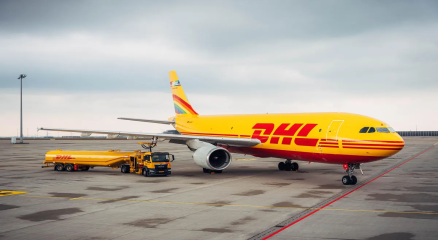
DHL Supply Chain has begun construction on a new European Battery Logistics Hub in Holtum, Limburg, to enhance battery and energy storage logistics across Europe. The facility will provide 17,000 square meters of dedicated space for the storage and handling of high-voltage batteries and will be adjacent to DHL Supply Chain’s existing automotive logistics site in Holtum. Together, these facilities will create an integrated logistics campus that supports electric mobility and energy systems throughout Europe. The hub is set to open in early 2027. This new facility will manage batteries for electric vehicles as well as battery energy storage systems, including applications for home energy storage and solar solutions. With increasing demand for electric mobility and decentralized energy systems in Europe, DHL Supply Chain is seeing heightened interest from automotive, industrial, and energy customers seeking safe and scalable battery logistics solutions. Located in the Netherlands, Holtum is expected to become a key gateway for EV and energy storage logistics, serving markets in the Netherlands, Germany, Belgium, and neighboring areas. Rainer Haag, CEO of DHL Supply Chain Europe, said, “By expanding our battery logistics in Holtum and closely linking it with our existing automotive expertise, we’re creating a one-stop shop solution for the EV sector. This investment supports DHL Group Strategy 2030, where New Energy is a major growth driver for our business across Europe.” The Holtum campus is well-located with easy access to major European transport routes, including direct connections to key motorways linking the Benelux region and Germany. The site is also near a container and barge terminal on the Juliana Canal, offering more transport options that enhance supply chain efficiency, resilience, and sustainability for customers in Europe. This initiative is part of DHL Group’s Strategy 2030, aimed at supporting customers in rapidly growing sectors, including electric mobility, renewable energy, and circular supply chains. As New Energy emerges as a key growth area, DHL Supply Chain continues to invest in specialized infrastructure and services to help customers grow sustainably across Europe. John Scherders, CEO of DHL Supply Chain Benelux, commented, “By connecting the new battery operation with our existing automotive and spare parts facility, we are establishing a center of excellence that allows us to provide seamless logistics and technical services for electric mobility and energy storage customers throughout Europe.” The Holtum campus benefits from excellent connectivity to European transport corridors, with direct access to major motorways linking the Benelux and Germany, as well as proximity to a nearby container and barge terminal on the Juliana Canal. This waterborne connection further enhances the site's ability to support efficient and resilient supply chains, offering customers additional options for sustainable European distribution. The project forms part of DHL Group Strategy 2030, which focuses on supporting customers in growth sectors such as electric mobility, renewable energy and circular supply chains. With New Energy identified as a key driver of future growth, DHL Supply Chain continues to invest in specialized infrastructure and services that enable customers to scale sustainably across Europe. For more such news and updates, visit:- CARGOCONNECT.

Indian Prime Minister Narendra Modi, during his visit to Europe, stated India is rapidly working with international partners to build robust energy supply chains, aiming to cut the energy crunch that arose from the current geopolitical crises. During his visit to the Netherlands, PM Modi addressed a gathering of the Indian community, calling the current era a decade of calamities and uncertainty. Modi highlighted the COVID-19 pandemic, subsequent wars, and now an energy crisis, warning that if the current scenario is not resolved quickly, years of progress and achievements could be lost, delivering a huge blow to the global economy. Speaking about the challenges facing the international community, the Indian Prime Minister said humanity is going through an exceptionally turbulent phase with uncertainty and economic stress. He added that the world first faced the Coronavirus Pandemic, followed by geopolitical conflicts and energy concerns, and these overlapping crises are testing the resilience of the global system, while warning of the consequences of inaction. Further, he said that unless we unite, the world will not be able to address the challenge of global security. PM Modi's remarks came during his address to the Indian diaspora in the Netherlands, where he highlighted the growing strategic, economic, and cultural cooperation between India and the Netherlands. The Indian Prime Minister is currently on a five-nation visit from May 15 to May 20, with the UAE being the first stop of the diplomatic tour. Earlier, during his meeting with the senior leadership of A.P. Moller–Maersk in Gothenburg, Sweden, the Indian Prime Minister Narendra Modi underscored India’s growing push to modernise its maritime ecosystem and position itself as a major global logistics and shipping hub. During the interaction, PM Modi met Maersk Chairman Robert Maersk Uggla on the sidelines of his engagements in Sweden, where he has been holding talks with European industry leaders and government officials. Discussions reportedly centred on opportunities for investments in India’s ports, logistics infrastructure, and sustainable maritime solutions. The talks assume significance as India accelerates efforts under its Maritime Amrit Kaal Vision 2047, aimed at transforming the country’s shipping and logistics capabilities through port-led development, improved multimodal connectivity, and adoption of green technologies. The government has been actively engaging global maritime companies to attract investments and technological expertise into the sector. For more such news and updates, follow CARGOCONNECT.
India’s two largest container gateways, Mundra and Nhava Sheva, are facing mounting congestion as rising cargo volumes, truck driver shortages and rerouted shipments from the Middle East strain operations across the country’s logistics network. Shipping lines and logistics operators are reporting worsening turnaround times at both ports, with vessel delays averaging nearly two and a half days and some unscheduled ships waiting up to five days for berthing. The disruptions are slowing cargo movement, tightening yard space and forcing carriers to make last-minute operational changes. According to industry reports, a shortage of truck drivers has become a major bottleneck for container transfers between terminals and inland transport hubs. The issue has reduced the pace of cargo evacuation from ports, adding pressure on already crowded container yards. Terminal operators have intermittently restricted gate access to control container inflow, while export gate schedules continue to shift frequently. These changes are complicating truck planning and increasing uncertainty for exporters and freight forwarders. The congestion is being intensified by cargo diversions linked to disruptions in the Middle East, particularly around Gulf trade routes. Shipping lines have increasingly redirected transshipment cargo to Indian ports as alternatives to facilities in the Persian Gulf, sharply increasing container volumes in recent weeks. The pressure has begun affecting carrier schedules. Some shipping companies are rerouting vessels between terminals at short notice to avoid yard congestion. Danish shipping giant Maersk recently shifted several sailings from its regular terminal at Nhava Sheva to PSA Mumbai after facing space constraints and a growing container backlog. Industry stakeholders say these sudden terminal changes are creating operational and financial challenges for shippers, including higher handling costs and difficulties coordinating customs clearance and inland transportation. The latest disruption comes at a time when India has been positioning itself as a major global manufacturing and logistics hub. Over the past decade, the country has expanded port capacity, improved freight corridors and modernised customs processes to strengthen supply chain efficiency. However, the current congestion highlights the vulnerability of port infrastructure during periods of sudden trade realignment and geopolitical disruption. Logistics experts warn that prolonged delays could increase freight costs, extend delivery timelines and place additional pressure on exporters already dealing with volatile global shipping conditions. Follow CARGOCONNECT for more such updates.
The diversification process by Apple continues to progress as India becomes one of the centers for manufacturing operations. Based on an analysis by Smart Analytics Global (SAG), the percentage share of Indian manufacturing of iPhones has increased from 14% in 2024 to 23% in 2025 and further to 28% by 2026, whereas China’s share has decreased from 83% to 74% within the same timeframe. As Apple continues to lower its reliance on China, India is all set to emerge as the major assembly hub for 28 percent of all iPhones exported around the world by 2026, compared to just 23 percent in the prior year. This change is due to the company's overall strategy of spreading its manufacturing operations in order to mitigate potential tariff risks and geopolitical risks, in addition to creating a more flexible manufacturing network beyond China. Based on the estimates of Smart Analytics Global (SAG), China's share in global iPhone production dropped from 83% in 2024 to 74% in 2025, while India's share increased from 14% in 2024 to 23% in 2025. Estimates provided by another market research firm, Counterpoint Research, indicate that India's share in global iPhone manufacturing could increase to approximately 26% in 2026 from 23% in 2025. As per SAG, “India will account for the manufacture of 28 percent of iPhones shipped globally in 2026, rising from 23 percent in 2025. This growth will be fueled by the ongoing diversification of Apple outside China and capacity build-up at existing manufacturers in India like Tata Electronics,” said Abhilash Kumar, an analyst at Smart Analytics Global. According to Tarun Pathak, research director at Counterpoint Research, “Apple's manufacturing partners have substantially increased their manufacturing capacities and assembly lines in India. They have also diversified their product portfolio made in India.” He further stated that the increase in manufacturing capacity of Tata Electronics is another factor aiding the growth. Apple has managed to localize production substantially in India through manufacturers like Foxconn and Tata Electronics. The recent takeover of Wistron and Pegatron in India by the Tata Group represents a huge step forward in Apple’s localization efforts in India. At present, India is assembling a larger number of iPhones, even the latest versions, and has become an important source of exports, targeting countries like the US and European nations. Over the past five years, Apple has manufactured iPhones worth almost $70 billion in India using its PLI scheme, where around $51 billion, or almost 73% of all iPhones manufactured, were exported from India. Moreover, iPhones have become the most exported goods from India during the previous financial year. India has become the biggest beneficiary of Apple’s changing supply chain. From initially assembling iPhones on a smaller scale, it has grown to become a manufacturing cluster for iPhones through government incentives, increased manufacturing capabilities, and the growing presence of suppliers. Several of the most important suppliers and manufacturers for Apple are still highly entrenched within China, allowing the country to enjoy an unrivaled capacity and adaptability when it comes to managing mass-scale productions and product shifts. For more such news and updates, visit CARGOCONNECT.
Shadowfax is significantly expanding its quick commerce infrastructure, announcing plans to scale its dark store network from 15 facilities to 100 by FY27. The move underscores the company’s growing focus on hyperlocal deliveries, same-day fulfilment, and direct-to-consumer (D2C) logistics as competition intensifies in India’s fast-evolving quick commerce ecosystem. The Bengaluru-based company plans to add 85 new dark stores over the next fiscal year, targeting metro cities with delivery radiuses of approximately seven kilometres and fulfilment timelines of around 30 minutes. The expansion is expected to support rising demand from vertical quick commerce platforms and D2C brands that increasingly rely on third-party logistics (3PL) partners for rapid deliveries. According to company executives, vertical marketplaces are emerging as a profitable segment because of their dependence on outsourced logistics infrastructure rather than captive fulfilment networks. Shadowfax believes this trend creates a strong opportunity for scalable 3PL-led quick commerce models. The dark store expansion will account for nearly 10% of Shadowfax’s planned capital expenditure of ₹180–190 crore in FY27. The company is simultaneously strengthening its automation and artificial intelligence capabilities to improve operational efficiency. AI-led demand forecasting, automated slotting, and smarter sorting centre operations are expected to reduce overhead costs while accelerating breakeven timelines for new facilities. Shadowfax’s aggressive expansion comes on the back of strong financial performance. The company reported a consolidated net profit of ₹55.8 crore in Q4 FY26, compared to a net loss of ₹9.9 crore during the same period last year. Revenue from operations surged 73.6% year-on-year to ₹1,237 crore, reflecting growing order volumes and increased adoption of quick commerce delivery services. Founded in 2015, Shadowfax has evolved into one of India’s largest logistics and last-mile delivery networks, serving over 2,500 cities and more than 15,000 pincodes. The company currently handles millions of shipments daily through a technology-driven delivery ecosystem that supports e-commerce, grocery, hyperlocal, and D2C brands. Industry analysts believe the dark store expansion reflects a broader shift within India’s logistics sector, where speed, proximity-based fulfilment, and automated operations are becoming central to supply chain competitiveness. As quick commerce adoption accelerates beyond groceries into categories such as fashion, electronics, and personal care, logistics providers like Shadowfax are positioning themselves as critical enablers of ultra-fast retail fulfilment. 𝐒𝐭𝐚𝐲 𝐓𝐮𝐧𝐞𝐝 𝐭𝐨 https://cargoconnect.co.in/ 𝐟𝐨𝐫 𝐥𝐚𝐭𝐞𝐬𝐭 𝐮𝐩𝐝𝐚𝐭𝐞𝐬!
India’s Dedicated Freight Corridors (DFCs) are rapidly reshaping the country’s logistics landscape, with the Western Dedicated Freight Corridor (WDFC) between Dadri and Jawaharlal Nehru Port Authority (JNPA) emerging as a game-changing infrastructure project for supply chains and multimodal freight movement. Designed exclusively for cargo operations, the corridor is significantly reducing transit times, improving reliability, and easing congestion on conventional rail routes. Stretching nearly 1,500 km from Dadri in Uttar Pradesh to JNPA near Mumbai, the corridor forms the backbone of India’s western logistics artery, connecting manufacturing centres, inland container depots, industrial clusters, and ports. With dedicated tracks for freight trains, the network allows uninterrupted cargo movement at higher average speeds, eliminating delays caused by mixed passenger and freight operations. One of the biggest outcomes has been a sharp reduction in transit time. Freight movement between Dadri and JNPA that traditionally took close to 72 hours on congested rail routes is now being completed in nearly half the time, improving turnaround efficiency for exporters, importers, and logistics operators. Industry stakeholders believe the reduction in transit duration will strengthen India’s competitiveness in global trade and support the government’s target of lowering logistics costs as a percentage of GDP. The DFC network has also enabled the operation of longer and heavier freight trains, including double-stack container services on electrified routes. This has increased carrying capacity while lowering per-unit transportation costs. According to sector estimates, rail freight on dedicated corridors is considerably more energy-efficient and environmentally sustainable than road transport, aligning with India’s broader decarbonisation goals. Beyond operational efficiency, the corridors are catalysing the growth of integrated logistics ecosystems. Regions such as Dadri, Greater Noida, and Jewar are witnessing accelerated development of multimodal logistics parks, warehousing zones, and industrial hubs due to their strategic connectivity with both the Eastern and Western DFCs. The emerging “rail-road-air” logistics triangle around the National Capital Region is expected to attract substantial investments in manufacturing and distribution infrastructure. The Dedicated Freight Corridor Corporation of India (DFCCIL) has reported rising freight train volumes on the operational stretches, indicating growing industry adoption. The completion of key links on the western corridor is expected to further enhance throughput and reduce dependency on road transport for long-haul cargo. Analysts say the dedicated rail network could become central to India’s ambition of creating faster, greener, and more resilient supply chains. As India continues investing in additional freight corridors across the country, the success of the Dadri-JNPA route demonstrates how infrastructure modernisation can directly influence trade efficiency, logistics performance, and industrial growth. 𝐒𝐭𝐚𝐲 𝐓𝐮𝐧𝐞𝐝 𝐭𝐨 https://cargoconnect.co.in/ 𝐟𝐨𝐫 𝐥𝐚𝐭𝐞𝐬𝐭 𝐮𝐩𝐝𝐚𝐭𝐞𝐬
In a strategic warehousing move, the South Eastern Coalfields Limited (SECL), the second largest coal-producing subsidiary of Coal India Limited, has signed a Memorandum of Understanding (MoU) with Central Warehousing Corporation (CWC) for collaboration in coal logistics, railway rake provisioning under GPWIS and similar schemes, and integrated transportation services. Guided by the Union Ministry of Coal, SECL is rapidly working to improve India’s energy security and coal logistics infrastructure. The company is taking steps to boost coal evacuation efficiency and ensure a steady fuel supply to essential sectors. This partnership with CWC is a significant move in that direction. The goal of the partnership with CWC is to strengthen SECL’s coal evacuation capabilities by providing reliable and efficient rail logistics solutions to meet the rising demand from the power, steel, cement, and other sectors. The MoU outlines collaboration in various areas, including dedicated railway rake operations, integrated coal transportation solutions, multimodal logistics, first-mile and last-mile connectivity, and the deployment of digital systems for logistics monitoring and operational efficiency. Under the agreed framework, both organizations will explore provisioning and operation of GPWIS and equivalent racks, integrated rail logistics services, and long-term transportation solutions aimed at improving dispatch efficiency and reducing logistical obstacles. The MoU was signed in the presence of Harish Duhan, Chairman-cum-Managing Director of SECL, and Santosh Sinha, Managing Director of CWC. Functional Directors and senior officials from SECL, as well as representatives from CWC, attended the signing ceremony. SECL plays a vital role in meeting the country's growing coal demand. In the current financial year 2026-27, Coal India Limited has already surpassed the 100 million tonne production mark, with SECL contributing more than 26.8 million tonnes. Central Warehousing Corporation (CWC), a Navaratna Central Public Sector Enterprise under the Government of India, is a leader in integrated logistics and warehousing services. It has extensive experience in rail-linked cargo movement and multimodal transportation solutions. For more such news and updates, visit CARGOCONNECT.