
Loading...
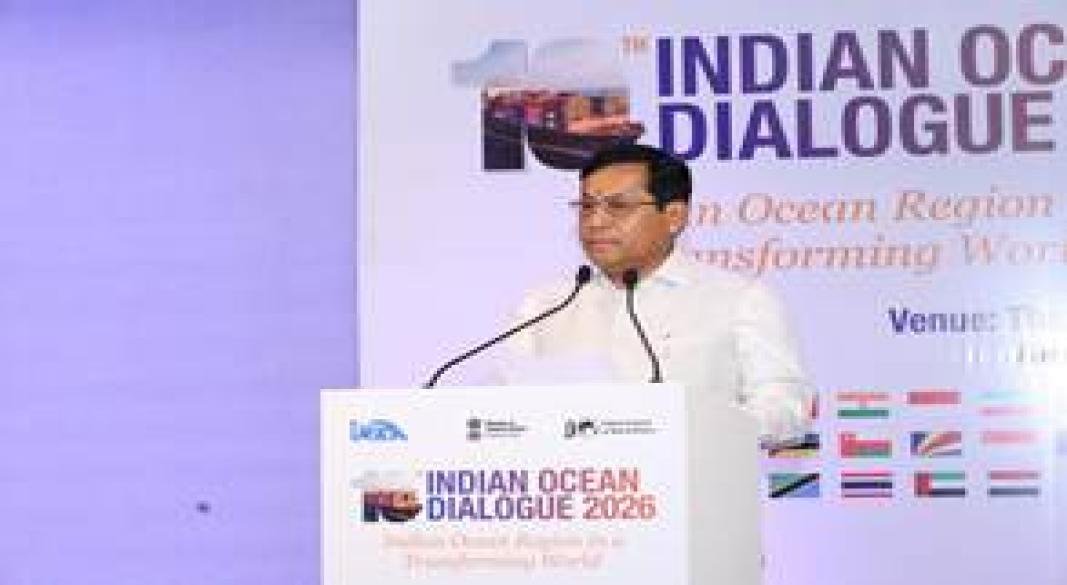
Women’s participation in India’s maritime sector has recorded a sharp increase of 340% since 2020, Union Minister for Ports, Shipping and Waterways Sarbananda Sonowal said, highlighting the government’s efforts to create a more inclusive and future-oriented maritime workforce.
Delivering the keynote address at the 10th Indian Ocean Dialogue in New Delhi, Sonowal highlighted “Nari Shakti” as a central pillar of India’s maritime growth story. Union Minister Sarbananda Sonowal was joined by His Excellency, Dhananjay Ramful, Foreign Minister of Mauritius, and His Excellency, Waleed Mohammed Al-Qadimi, Minister of State of Yemen.
“Through initiatives like ‘Sagar Mein Samman’, we are advancing dignity, inclusion and leadership opportunities for women in the maritime sector, which has seen a remarkable rise of about 340% since 2020,” Sonowal said. “Under the dynamic leadership of Prime Minister Shri Narendra Modi ji, this transformation in the maritime sector is helping shape a more inclusive, resilient and future-ready workforce for the Indian Ocean Region.”
The minister linked the growing presence of women in the maritime industry to India’s broader strategy of combining economic progress with social empowerment. He said that while India continues to strengthen maritime security, connectivity and sustainability, the “human element” remains at the heart of the country’s maritime agenda.
“The Indian Ocean is not just a geographic space, but a global lifeline,” Sonowal said. “Its importance to global energy flows, trade and supply chains calls for stronger cooperation, resilience and inclusivity.”
Sonowal emphasised that India’s maritime initiatives are aligned with the vision of Prime Minister Narendra Modi, including frameworks such as SAGAR (Security and Growth for All in the Region) and MAHASAGAR, aimed at strengthening regional cooperation and ensuring equitable growth.
The 10th Indian Ocean Dialogue is being hosted by India in its capacity as Chair of the Indian Ocean Rim Association (IORA) for the 2025–27 term. Held under the theme “Indian Ocean Region in a Transforming World,” the forum has brought together ministers, policymakers, academics and industry leaders to discuss issues including maritime security, the blue economy, climate change, disaster risk management and women’s empowerment.
India’s IORA chairmanship is centred on the themes of “Innovation, Openness, Resilience and Adaptability,” with women’s economic empowerment identified as a major cross-cutting priority.
During his address, Sonowal reiterated India’s role as a “net security provider” in the Indian Ocean Region, citing the country’s contributions in humanitarian assistance, maritime surveillance and disaster response operations. He stressed that maritime challenges require collective solutions and called for greater collaboration based on transparency and adherence to international law.
“India remains committed to working with all partners to advance a safe, secure and stable Indian Ocean Region,” he said.
The Indian Ocean Dialogue, launched in Kochi in 2014 as IORA’s flagship Track 1.5 platform, serves as a forum for engagement among governments, experts and industry stakeholders on critical regional issues. IORA currently includes 23 member states and 12 dialogue partners, with a focus on economic cooperation and sustainable development across the Indian Ocean Region.
The 10th edition of the Dialogue, being held in New Delhi on May 7 and 8, 2026, includes dedicated discussions on maritime security, blue economy initiatives, disaster resilience, climate action and women’s leadership in the maritime sector.
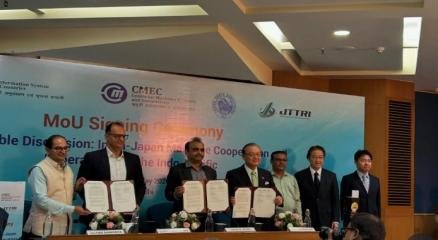
India’s maritime sector received a significant boost with the signing of a Memorandum of Understanding (MoU) between the Indian Ports Association (IPA), the Centre for Maritime Economy and Connectivity (CMEC), and Japan Transport and Tourism Research Institute (JTTRI). The agreement is aimed at strengthening bilateral cooperation in maritime research, policy development, port connectivity, logistics, and sustainable maritime growth between India and Japan. The tripartite partnership marks an important step in expanding collaboration between two of Asia’s leading maritime nations at a time when resilient supply chains, port modernization, and regional connectivity are becoming critical priorities for global trade. Under the MoU, the three organizations will work together on joint research initiatives, knowledge exchange programmes, capacity building, and policy studies focused on emerging trends in the maritime and logistics sectors. Industry stakeholders believe the agreement will create a stronger framework for sharing expertise in areas such as port-led development, maritime infrastructure, logistics efficiency, digital transformation, and sustainable shipping practices. The collaboration is also expected to facilitate academic exchanges and research projects that support evidence-based policymaking for the maritime sector. India and Japan have steadily strengthened their maritime and economic partnership over the past decade, driven by shared interests in enhancing regional connectivity, securing maritime trade routes, and building robust supply chains across the Indo-Pacific region. The latest MoU aligns with these broader strategic objectives by promoting deeper institutional engagement between maritime research bodies and industry stakeholders from both countries. Officials associated with the initiative highlighted that the agreement will encourage the exchange of best practices and innovative solutions to address evolving challenges facing the global maritime industry. The partnership is expected to support research on port competitiveness, green shipping corridors, maritime decarbonization, and multimodal logistics integration—areas that are increasingly shaping the future of international trade. For India, the collaboration complements ongoing efforts to enhance port efficiency and strengthen its position as a leading maritime hub under its long-term maritime development vision. For Japan, the partnership provides an opportunity to expand research cooperation and contribute to sustainable maritime growth across the region. As global supply chains continue to evolve amid geopolitical and economic shifts, the IPA-CMEC-JTTRI partnership is expected to play a meaningful role in fostering innovation, strengthening maritime connectivity, and advancing India-Japan cooperation in the maritime and logistics ecosystem. The agreement reinforces the commitment of both countries to building a more resilient, efficient, and sustainable maritime future. 𝐒𝐭𝐚𝐲 𝐓𝐮𝐧𝐞𝐝 𝐭𝐨 CARGOCONNECT 𝐟𝐨𝐫 𝐥𝐚𝐭𝐞𝐬𝐭 𝐮𝐩𝐝𝐚𝐭𝐞𝐬!
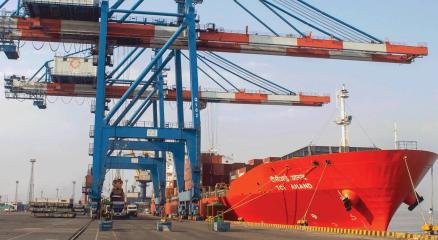
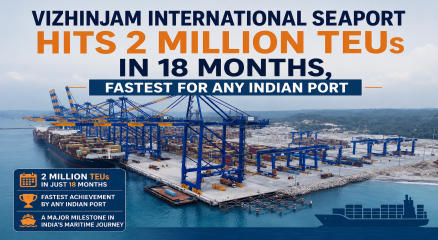
The Adani Group-operated Vizhinjam International Seaport in Kerala has handled over 2 million twenty-foot equivalent units within just 18 months of starting operations, making it the fastest Indian facility to reach this milestone. According to the port operator, Adani Ports and Special Economic Zone Ltd, Vizhinjam crossed the 1 million TEU mark in August 2025 and has now doubled that figure quickly after trial operations started in July 2024. The port was dedicated to the nation by Prime Minister Narendra Modi in May 2025. "Vizhinjam International Seaport has become the fastest Indian port to cross both the 1 million TEU and 2 million TEU milestones since beginning operations in 2024," the company stated on Thursday. The port has handled over 950 vessels, including 67 ultra-large container vessels (ULCVs). It has also berthed some of the world’s largest container ships, such as the MSC Irina, noted as the world’s largest container vessel, and the MSC Verona, among the deepest-draft vessels to arrive at an Indian port. Located about 10 nautical miles from the busy east-west international shipping route, Vizhinjam is becoming a major transshipment hub connecting South Asia, West Asia, Europe, Africa, and South America. The port has a natural draft of around 20 meters, allowing large vessels to dock without significant dredging. Shipping operators say the location reduces transit time and fuel costs, making the port appealing for global trade routes that are increasingly affected by geopolitical tensions and supply chain disruptions. For years, a large portion of India's transshipment cargo has been managed at foreign ports. With Vizhinjam expanding quickly, India aims to handle more of this cargo domestically and lessen its dependence on overseas hubs. The port is also expected to grow further. Phase II development is underway with an investment of around Rs 16,000 crore and is slated for completion by 2028. Once finished, the expansion will greatly improve container handling capacity and support full-scale export-import operations. APSEZ recently announced that it became the first Indian integrated transport utility to handle over 500 million metric tonnes (MMT) of cargo in a single year. For more such news and updates, visit CARGOCONNECT.
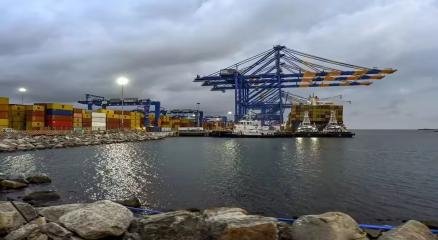
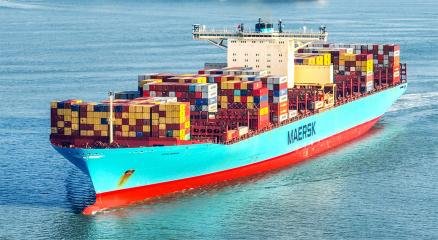
Maersk has launched a new weekly ocean freight service connecting China with India’s western ports, as the global shipping company looks to expand capacity on one of Asia’s busiest trade corridors. The move comes amid growing cargo volumes between the two countries and increasing demand from manufacturers for quicker inland connectivity. The new service, named FI2, will begin its first westbound sailing from Shanghai on June 4 and will operate between key ports in China, Malaysia, India and Pakistan. The route includes Shanghai, Ningbo, Nansha, Tanjung Pelepas, Nhava Sheva, Pipavav and Port Qasim. Maersk said the service will be deployed using six vessels with a carrying capacity of about 4,500 TEUs each. The company introduced the route in response to rising customer demand for additional shipping capacity and more reliable transit schedules between Far East Asia and the Indian subcontinent. A major feature of the new network is its integration with India’s Dedicated Freight Corridor (DFC) through Pipavav port in Gujarat. The rail-linked corridor is expected to improve cargo movement from ports to inland industrial centres across northern India, including Delhi NCR, Gurugram and Noida. The added rail connectivity is likely to benefit sectors dependent on time-sensitive cargo movement, including automotive, chemicals, electronics, retail and industrial manufacturing. Industry executives say direct port-to-rail integration is becoming increasingly important as companies seek to reduce transit delays and improve supply chain visibility. The FI2 route will complement Maersk’s existing FI3 service, giving shippers two direct Far East–India connections. Shipping analysts say additional frequency options could help importers and exporters manage inventory flows more efficiently, particularly at a time when global supply chains continue to face periodic disruptions linked to geopolitical tensions and port congestion. India’s container trade with China has remained strong despite broader geopolitical and economic challenges, driven largely by imports of industrial inputs, machinery, electronics and manufacturing components. Logistics providers have increasingly been investing in integrated multimodal networks to support this growth and improve cargo turnaround times. Follow CARGOCONNECT for more such updates.