
Loading...
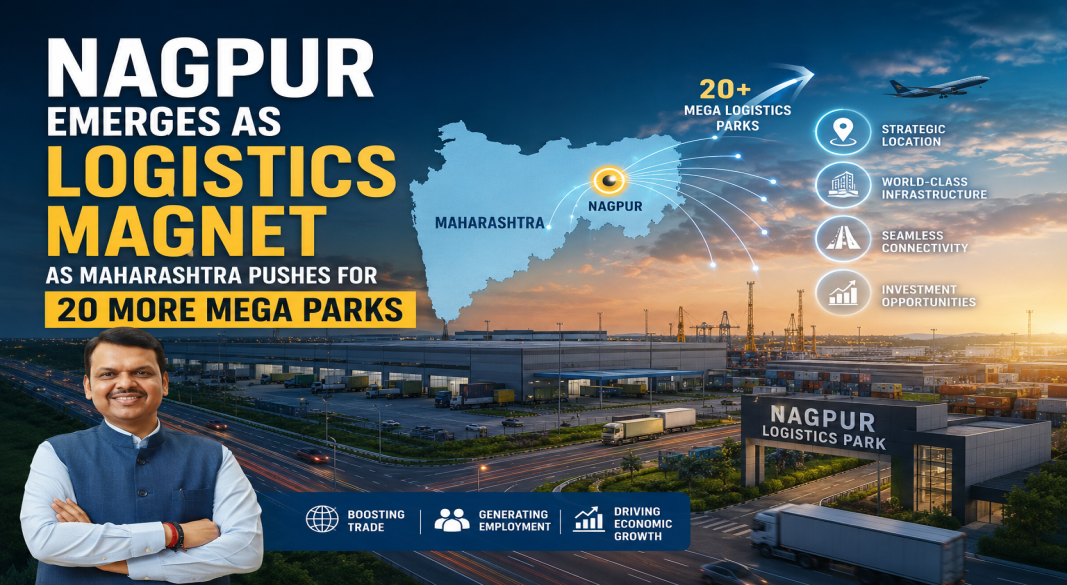
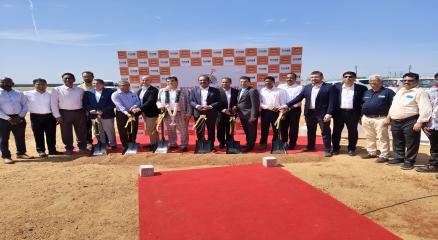
Nagpur is set for a major expansion in logistics infrastructure, with Maharashtra Chief Minister Devendra Fadnavis stating that the city requires at least 20 additional mega logistics parks to meet rising industrial and warehousing demand.
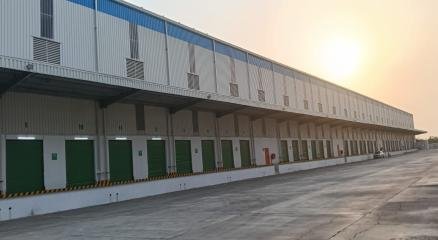
The remarks were made during the inauguration of the Godam Logistics Park on Amravati Road, one of the largest integrated logistics facilities in central India. Union Road Transport and Highways Minister Nitin Gadkari also attended the event and described Nagpur as a rapidly emerging logistics hub due to its strategic location and growing transport connectivity.
Maharashtra CM Devendra Fadnavis mentions, "Today, along with Nitin Gadkari, I inaugurated the Warehouse Logistics Park in Nagpur. A state-of-the-art facility has been developed, spread across more than 100 acres. This project will provide a major boost to the logistics and manufacturing sectors. The logistics policy we introduced in the past has helped Nagpur emerge as a logistics hub of the country. With a large number of logistics parks being developed, logistics costs will reduce significantly. If we want to compete globally and become a part of the global supply chain, reducing logistics costs is essential."
Industry experts have increasingly viewed Nagpur as a natural distribution centre because of its location at the geographical centre of India. The city connects major freight corridors linking Delhi, Mumbai, Chennai and Kolkata, giving companies shorter transit times to key consumption markets.
Gadkari highlighted that India’s logistics costs remain higher than global benchmarks, estimating them at nearly 16% of GDP compared with around 8% in China and 12% in several European economies. However, he claimed infrastructure upgrades, including highway expansion and improved fuel efficiency, are gradually reducing freight costs.
The push for logistics infrastructure in Nagpur comes amid a broader industrial buildout across Vidarbha. Over the past year, multiple warehousing and industrial park projects have been announced in the region, including smart logistics parks, multimodal freight hubs and AI-enabled manufacturing clusters.
The Maharashtra government is also banking on future port connectivity to strengthen the region’s supply chain ecosystem. Fadnavis said the upcoming Vadhvan Port project on the Konkan coast is expected to significantly improve export access for industries in central India once operational later this decade.
Nagpur’s logistics expansion is expected to support sectors such as manufacturing, e-commerce, cold chain distribution and air cargo, while also generating employment in warehousing, transport and industrial services. However, analysts note that sustained growth will depend on faster multimodal connectivity, improved urban infrastructure and long-term industrial demand.
Follow CARGOCONNECT for more such updates.

DP World and Thames Freeport have completed The Hive, a £13 million skills, amenity and innovation hub at London Gateway, DP World's deep-sea container port and logistics park on the Thames Estuary in Essex, UK. Jointly funded by the two organisations, the facility is designed to strengthen workforce development, support industry collaboration and expand access to employment opportunities across the region. Located at the centre of London Gateway's Logistics Park, the three-storey building combines a dedicated training and innovation skills centre with shared amenities for employees and businesses operating across the port and logistics park. The facility is expected to deliver more than 100 days of industrial and employability skills programmes each year, supporting approximately 1,125 trainees annually across Thames Freeport. Training will encompass crane-driver simulators, working-at-height courses and virtual reality (VR) technology for broader careers-related activities in maritime and logistics. Beyond technical training, The Hive will provide flexible meeting rooms, a double-height training and events space, a 100-person auditorium, a gym, an all-weather padel court and a multi-use sports pitch. The combination of training infrastructure and shared facilities is intended to provide a common space for businesses, employees and regional partners. Workforce Development Aligned with Logistics Growth The completion of The Hive comes as London Gateway continues to contribute to employment across the region. According to Alan Holland, Chief Executive Officer of DP World London Gateway Logistics Park, the port and its wider economic contribution now support more than 10,000 jobs. “With The Hive now complete, we are creating a space where businesses can collaborate, employees can thrive and the local community can develop the skills needed to access new opportunities,” Holland said. Stuart Rimmer, Interim Chief Executive Officer of Thames Freeport, highlighted the importance of connecting infrastructure investment with workforce opportunities. “This investment is about ensuring that the continued growth of London Gateway translates into real opportunities for local people and businesses, equipping the workforce with the skills needed to succeed in the industries of the future,” Rimmer said. SEATS, appointed earlier in 2026 as The Hive's Skills Partner, will work with DP World, employers and regional partners on workforce development. Partners are scheduled to begin moving into and operating from the facility in November 2026. Sustainability Built into the Facility Construction began in October 2025, with British steel used in the building. The Hive has achieved BREEAM ‘Outstanding’ certification and an EPC A+ rating, reflecting its stated sustainability and energy-performance credentials. By bringing together skills training, business amenities and innovation-related activities within London Gateway's Logistics Park, The Hive adds a workforce-development dimension to the site's wider logistics infrastructure. Its planned programmes will focus on equipping people with industrial and employability skills while connecting regional communities with opportunities across maritime and logistics.

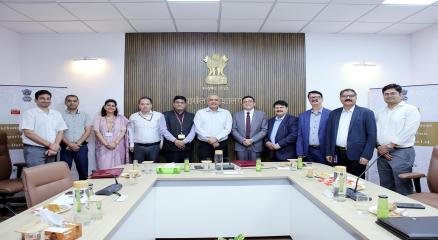
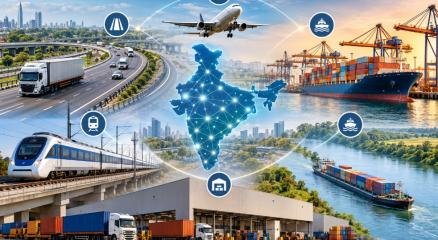
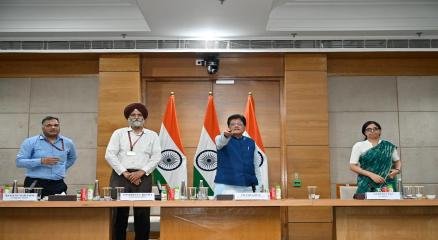
The Union Cabinet, chaired by Prime Minister Narendra Modi, has approved the establishment of the Integrated Transport & Logistics Authority (ITLA) as a Special Purpose Vehicle (SPV) to bring greater coordination and multimodal integration to India’s transport and logistics infrastructure planning. The decision, announced on October 6, 2026 is aimed at addressing fragmented planning and implementation across multiple ministries and agencies. ITLA will function as the national apex institution for integrated transport and logistics planning, research, project appraisal, monitoring, policy support and data analytics. A key mandate will be the preparation of a National Transport Master Plan with a planning horizon of 10 years or more. The plan will cover roads, railways, ports and shipping, civil aviation, inland waterways, coastal shipping, urban mobility and logistics. The authority will also assess short-term sectoral plans of around five years and annual plans of transport ministries to ensure their alignment with the long-term master plan. This is expected to encourage multimodal infrastructure development and improve coordination between different modes of transport. Another important responsibility will be the technical appraisal of Central government infrastructure projects costing ₹500 crore or more. While ITLA will undertake technical evaluation, financial appraisal will continue through existing government mechanisms. The authority will subsequently monitor the implementation of such projects, facilitate coordinated issue resolution and conduct post-implementation impact assessments to evaluate project outcomes. The new institution will also establish a National Transport Data Repository (NTDR) by integrating transport and logistics datasets from multiple sources, including GSTN e-way bills, FASTag, Vahan, GPS-based systems and urban traffic management platforms. The consolidated data is expected to support freight-flow and origin-destination analysis, enabling more evidence-based infrastructure planning and monitoring. ITLA will further advise and assist in reviewing and updating the National Logistics Policy, 2022, besides supporting capacity building, training and skilling in logistics. It will also promote research and innovation across transportation and logistics. The government expects the authority to strengthen multimodal connectivity, improve infrastructure efficiency and help reduce logistics costs, while enhancing India’s competitiveness in global trade. The initiative is also positioned as an institutional mechanism supporting the country’s Vision 2047 objectives and complementing existing initiatives such as the PM GatiShakti National Master Plan and the National Logistics Policy. 𝐒𝐭𝐚𝐲 𝐓𝐮𝐧𝐞𝐝 𝐭𝐨 CARGOCONNECT 𝐟𝐨𝐫 𝐥𝐚𝐭𝐞𝐬𝐭 𝐮𝐩𝐝𝐚𝐭𝐞𝐬!
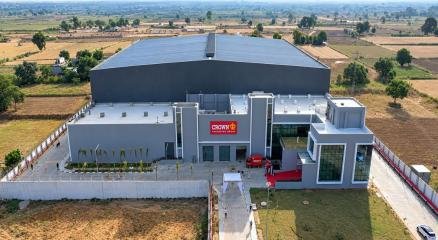

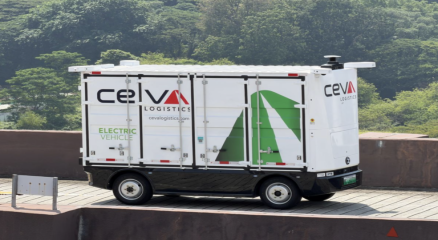

FedEx has introduced Global Trade Navigator, a new suite of digital tools designed to help businesses simplify international shipping, improve shipment data and navigate customs requirements with greater confidence. The initiative, announced on September 9, 2026, brings trade information and guidance earlier into the shipping process, helping businesses make more informed decisions and address potential clearance issues before they arise. International shipping can involve complex requirements related to customs documentation, duties, taxes, product classifications and regulatory compliance. FedEx said these challenges can affect businesses of all sizes. Its 2026 FedEx Small Business Trade Index found that 68% of small and medium-sized businesses regularly see customers surprised by duties at delivery, while 60% report losing revenue through refunds or abandoned purchases. Against this backdrop, Global Trade Navigator brings together digital capabilities covering key stages of international trade, from shipment planning and preparation to checkout, customs clearance and reporting. “International shipping requires businesses to make complex decisions long before a package begins its journey,” said Jason Brenner, senior vice president, digital portfolio, FedEx. “Building on decades of global trade expertise, Global Trade Navigator makes critical trade information and guidance more accessible to businesses as they grow internationally. The result is fewer surprises and a more predictable experience for businesses and consumers.” As part of the new offering, the FedEx Trade Planner will provide free, self-service guidance through fedex.com without requiring users to log in. Businesses can use the tool to look up Harmonized System codes, estimate duties, taxes and fees, and identify recommended documentation before creating a shipping label. FedEx is also enhancing FedEx Ship Manager, enabling customers to review product Harmonized System classifications, customs values and country-of-manufacture information. These capabilities are intended to improve the quality and completeness of shipment data before goods enter the international shipping process. For e-commerce businesses, the new FedEx Duty and Tax app on Shopify will allow merchants to display a duty and tax guarantee at checkout, giving customers greater visibility into potential import costs before completing purchases. Meanwhile, Global Trade APIs, available through the FedEx Developer Portal, will allow businesses to integrate product classifications, estimated duties and taxes, and regulatory information into their existing workflows. FedEx is also enhancing its Import Tool and Reporting capabilities, allowing customers to monitor customs clearance activity, identify required actions, manage payments and access global import and export data. The company said the tools are designed to serve a broad customer base, from small and medium-sized businesses undertaking international shipping for the first time to larger enterprises integrating trade information into established systems. The launch forms part of FedEx's wider investment in a more connected and intelligent international shipping experience aimed at helping businesses navigate cross-border trade complexity and expand globally. 𝐒𝐭𝐚𝐲 𝐓𝐮𝐧𝐞𝐝 𝐭𝐨 CARGOCONNECT 𝐟𝐨𝐫 𝐥𝐚𝐭𝐞𝐬𝐭 𝐮𝐩𝐝𝐚𝐭𝐞𝐬!