Loading...
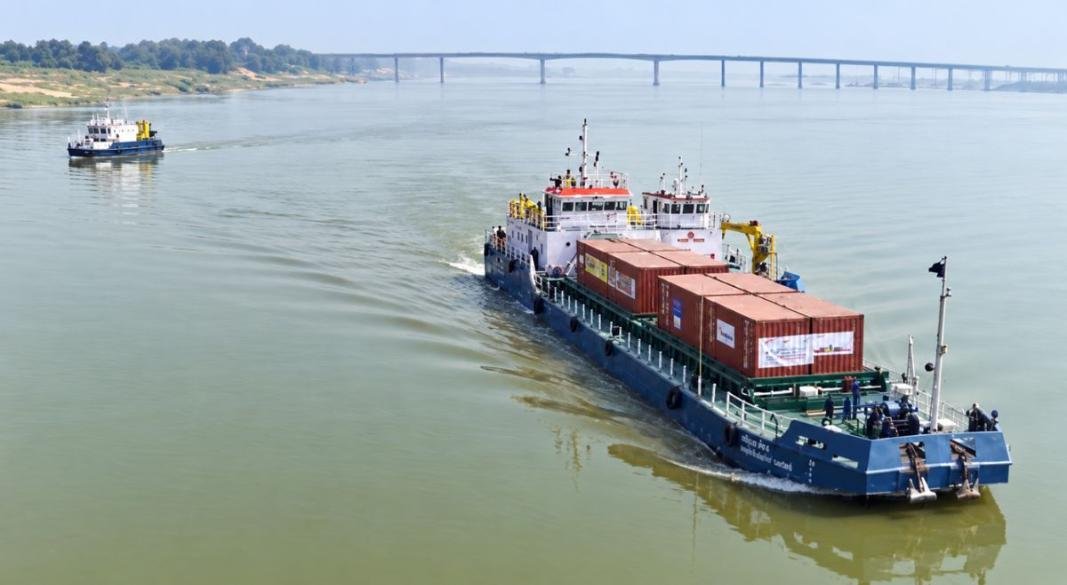
India’s inland waterway cargo traffic reached 218 million metric tonnes in the 2025–26 financial year, exceeding the 200-million-tonne target set under Maritime India Vision 2030. The milestone reflects the sector’s expansion over the past decade, as the government continues to develop navigation infrastructure, improve operational information and encourage cargo owners to consider waterway-based freight solutions.
According to government figures highlighted on 16 October 2026, inland waterway cargo increased from 29 million tonnes in 2014–15 to 218 million tonnes in 2025–26. The latest volume is 18 million tonnes above the 2030 benchmark, representing a 9% increase over the target. The next challenge for the sector is to translate higher cargo volumes into dependable, commercially competitive freight services that can connect waterways with road and rail networks.
Inland Waterway Network Continues to Expand:
India has 111 National Waterways spanning 20,187 kilometres across 23 states and four Union Territories. However, 32 waterways, covering 5,155 kilometres, were operational as of March 2026. The distinction between designated and operational waterways remains important for cargo owners and logistics providers. Commercial services require navigable channels, suitable terminals, reliable vessel operations and effective connections to production and consumption centres.
The Union Budget 2026–27 announced plans to operationalise 20 additional National Waterways over five years. The initiative forms part of the broader effort to expand the availability of inland water transport and strengthen its role in the national freight network. Longer-term policy ambitions include increasing inland water transport’s share of freight movement from approximately 2% to 5% and reaching 500 million tonnes of cargo by 2047.
Navigation Information Becomes Critical to Operations:
As cargo volumes rise, navigation reliability and access to timely operational information are becoming increasingly important.
By September 2026, regular surveys monitoring the deepest navigable channel covered 22 National Waterways. Depending on local requirements, surveys are conducted weekly, fortnightly or monthly to assess available depth and support decisions on vessel draft and cargo loading.
Electronic Navigational Charts had also been prepared for 18 operational and tidal waterways. Digital platforms, including PANI and IWAI Vessel Tracker, provide navigation-related information to operators. Access to more reliable data can help vessel operators plan voyages, determine loading conditions and manage schedules. However, digital information must be supported by physical infrastructure and fairway maintenance to ensure that waterways remain usable under changing conditions.
For freight customers, the effectiveness of these measures will depend on whether they improve service consistency, vessel utilisation and the predictability of cargo movements.
Jalvahak Scheme Seeks to Encourage Cargo Shift:
Financial incentives are another element of the government’s strategy to increase waterway utilisation.
Launched in December 2024, the Jalvahak scheme provides incentives of up to 35% of eligible operating expenditure for the waterway leg of qualifying cargo movements. The scheme covers National Waterways 1, 2 and 16, along with eligible routes under the Indo-Bangladesh Protocol.
A separate component supports scheduled services operated by Inland and Coastal Shipping Limited, with funding from the Inland Waterways Authority of India (IWAI). The scheme addresses a key challenge in multimodal logistics: while water transport may offer advantages over certain long-distance road movements, additional handling, terminal charges and connecting transport can affect the overall cost of delivery.
The incentive excludes first- and last-mile expenditure. Cargo owners must therefore evaluate the full logistics chain, including terminal handling, connecting road or rail transport, sailing frequency, transit time and delivery requirements. The commercial viability of waterway freight ultimately depends on the cost and reliability of the complete journey rather than the waterborne segment alone.
Infrastructure Supports Multimodal Freight Movement:
Infrastructure developed under the Jal Marg Vikas Project provides part of the foundation for cargo operations along National Waterway 1. Key developments include multimodal terminals at Varanasi, Sahibganj and Haldia, an intermodal terminal at Kalughat and a navigation lock at Farakka. These facilities are intended to support cargo handling and connect river transport with inland logistics networks.
Private investment is also being encouraged to expand terminal infrastructure. The National Waterways (Construction of Jetties/Terminals) Regulations, 2025 established a framework intended to facilitate the development of jetties and terminals by companies, public bodies and joint ventures. The combination of infrastructure investment, navigation support and cargo incentives is intended to create more opportunities for businesses to incorporate inland waterways into their transport strategies.
Commercial Competitiveness Remains the Next Test:
Crossing the 200-million-tonne target represents a significant milestone in the expansion of India’s inland waterway cargo business. Sustaining this growth will require more than increasing aggregate tonnage. For manufacturers, exporters, importers and logistics providers, key considerations include predictable transit times, dependable vessel schedules, adequate terminal capacity and effective road and rail connections.
Cargo volumes also need to be assessed alongside the distances travelled and the economics of individual routes. Tonnage measures the quantity of cargo handled, while tonne-kilometres account for both cargo weight and distance, offering a different perspective on freight activity. As additional waterways become operational and supporting infrastructure develops, the sector’s progress will increasingly depend on its ability to secure regular commercial cargo commitments.
For India’s logistics industry, the priority is now to turn the expansion in inland waterway traffic into reliable, cost-effective and integrated freight services that can support long-term supply chain development.
Follow CARGOCONNECT for more such updates
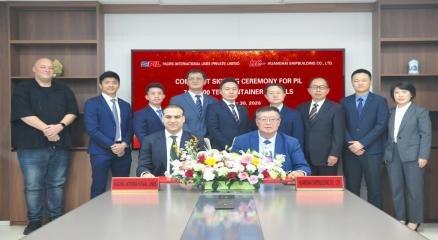
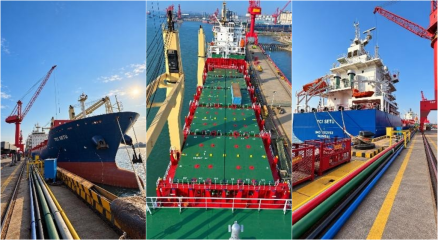
Pacific International Lines (PIL) has placed an order for seven 1,400-TEU container vessels with China’s Huanghai Shipbuilding, as part of its ongoing fleet renewal and expansion programme. The new vessels are expected to strengthen PIL’s network capabilities and operational efficiency, particularly across its Intra-Asia and Pacific Islands services. Designed to serve the requirements of these regional markets, the ships will measure 172 metres in length and 25 metres in width, with dimensions customised to maximise vessel size while retaining the flexibility to connect smaller ports with key transhipment hubs across PIL’s network. The methanol-ready vessels will also support the company’s decarbonisation strategy, enabling the potential adoption of lower-emission fuels as availability and supporting infrastructure develop. “Investing in these new feeder vessels will strengthen our capabilities and capacity across the Intra-Asia and Pacific Islands network. These ships, equipped with energy-saving technologies and designed to be methanol-ready, will further optimise our operations while supporting our goal of net zero emissions by 2050,” said Lars Kastrup, CEO of PIL. He added that the vessels will incorporate modern technological features and digital capabilities to support more efficient operations and performance monitoring, helping PIL provide customers with wider services and sustainable shipping solutions. The ships will feature energy-saving technologies, including pre-swirl vanes and propeller boss cap fins, designed to improve propulsion efficiency and reduce fuel consumption. Enhanced cargo safety systems will include fixed fire water monitors and cargo hold water spray systems to strengthen onboard firefighting capabilities. The vessels are scheduled for delivery between 2029 and 2030. PIL selected Huanghai Shipbuilding for its technical capabilities, experience and ability to meet the company’s requirements for quality, efficiency and delivery.
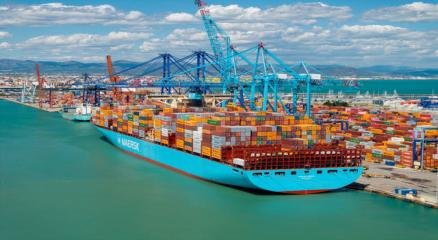
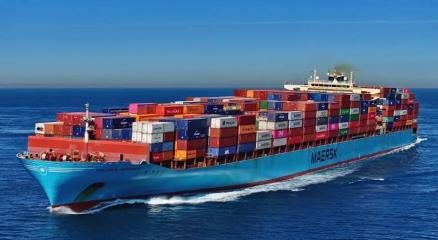
Maersk and Hapag-Lloyd are shifting their joint India-Europe container service back to the Suez Canal and Red Sea corridor, replacing the longer route around the Cape of Good Hope. Announced on November 2, 2026, the move is expected to reduce transit times for cargo moving between India and Europe, subject to regional security conditions. Operating under the Gemini Cooperation, the service is designated ME1 by Maersk and Indian Ocean Service (IOS) by Hapag-Lloyd. The revised routing marks another step in the carriers’ gradual return to the Suez corridor following disruptions that prompted vessels to divert around southern Africa. According to Maersk, the first westbound sailing on the revised route will be Atlanta Express, voyage 644W, departing Salalah, Oman, on November 4. The first eastbound sailing will be Savannah Express, voyage 644E, departing Tangier, Morocco, with Maersk listing November 13 as the scheduled date. The updated port rotation is Mundra–Nhava Sheva–Salalah–Suez Canal–Tangier–Rotterdam–Wilhelmshaven–Hamburg–London–Algeciras–Tangier–Suez Canal–Salalah–Mundra. The revised schedule retains Mundra and Nhava Sheva as the service’s Indian port calls, while maintaining connections to major European trade gateways, including Rotterdam, Hamburg, Wilhelmshaven, London and Algeciras. The route will use the Suez Canal in both directions, avoiding the extended voyage around the Cape of Good Hope. The return to the Suez route is expected to improve transit efficiency for Indian exporters and importers shipping goods to European markets. A shorter maritime route can support better shipment planning, inventory management and supply chain coordination, particularly for businesses dependent on predictable international container schedules. However, Maersk has not specified the number of days that will be saved or published revised port-to-port transit times. Shippers are advised to confirm updated schedules with their respective carriers before finalising shipment plans. The carriers have emphasised that the routing decision remains dependent on the security situation in the Red Sea and surrounding waters. Both companies will continue monitoring regional developments, with the safety of crews, vessels and cargo remaining their priority. However, the change applies specifically to the ME1/IOS service and does not mean that all Gemini Cooperation services have returned to the Suez Canal. The move underscores the importance of the Suez Canal as a strategic maritime corridor connecting Asia and Europe. If security conditions remain stable, the revised routing could help improve transit efficiency and strengthen connectivity across the India-Europe container trade. 𝐒𝐭𝐚𝐲 𝐓𝐮𝐧𝐞𝐝 𝐭𝐨 CARGOCONNECT 𝐟𝐨𝐫 𝐥𝐚𝐭𝐞𝐬𝐭 𝐮𝐩𝐝𝐚𝐭𝐞𝐬!
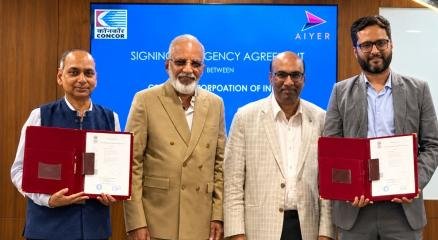
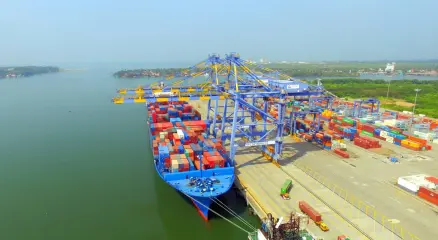

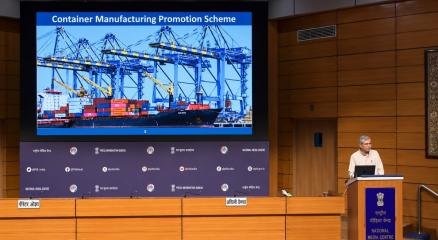
The Union Cabinet has approved the ₹10,000 crore Container Manufacturing Promotion Scheme (CMPS), aimed at establishing a globally competitive container manufacturing ecosystem in India, reducing import dependence and strengthening maritime and logistics supply chains. Announced in the Union Budget 2026–27, the scheme will run from FY 2027–28 to FY 2039–40. The initiative seeks to increase India's annual domestic container manufacturing capacity nearly tenfold, from approximately 70,000 twenty-foot equivalent units (TEUs) to 7.5 lakh TEUs. It will support both the establishment of new manufacturing facilities and the expansion of existing units, creating a stronger domestic base for shipping containers used in international trade. The scheme has four key components covering production costs, capital investment, testing infrastructure and land leasing support. The largest allocation, ₹8,891 crore, is earmarked for Operational Expenditure Assistance (OEA), which will provide financial support for eligible containers manufactured to global shipping standards and sold by approved manufacturers. The assistance is intended to bridge the cost gap between domestically produced containers and competing imports. Interest Subvention Assistance has been allocated ₹859 crore to provide a 3% annual interest subsidy on eligible term loans taken for setting up greenfield manufacturing facilities or expanding existing capacity. The scheme also provides ₹150 crore for testing and certification infrastructure, including specialised facilities for dynamic longitudinal impact testing. A further ₹100 crore has been earmarked for management, monitoring and capacity-building activities. Land-leasing support at major ports is another component. The scheme is expected to create around 3,000 direct jobs and more than 50,000 indirect employment opportunities. It could also stimulate demand across ancillary industries, including specialised steel, corner castings, wooden flooring and paints, supporting the development of a broader domestic manufacturing ecosystem. For India's logistics and export sectors, expanding local container production could diversify equipment sourcing and improve supply-chain resilience amid global shipping disruptions. A stronger domestic industry could also position India as a potential export hub for quality shipping containers. However, the long-term impact will depend on manufacturers' ability to meet international quality standards, achieve competitive production costs and secure sustained demand from shipping lines and other container users. Successful implementation could strengthen India's position in global maritime trade while supporting the government's broader Make in India ambitions. 𝐒𝐭𝐚𝐲 𝐓𝐮𝐧𝐞𝐝 𝐭𝐨 CARGOCONNECT 𝐟𝐨𝐫 𝐥𝐚𝐭𝐞𝐬𝐭 𝐮𝐩𝐝𝐚𝐭𝐞𝐬!