
Loading...
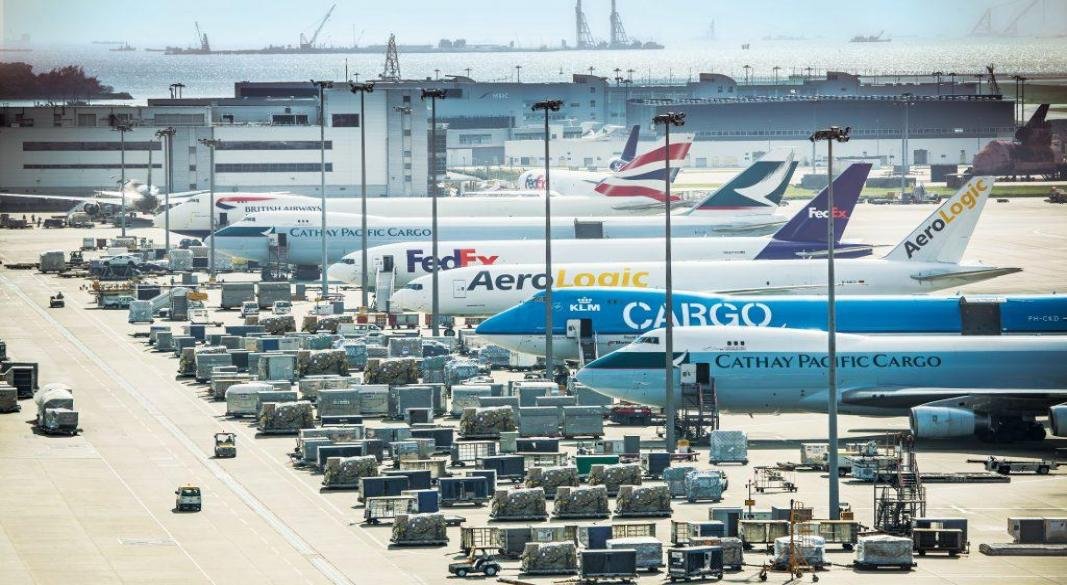
Global air cargo rates have begun to stabilise after weeks of sharp increases triggered by geopolitical tensions in the Middle East, offering cautious relief to shippers and logistics providers navigating volatile supply chains.
According to recent market data from the TAC Index, the overall Baltic Air Freight Index (BAI00) declined by 4.9% in the week ending May 18, signaling the first notable easing in freight prices since conflict-related disruptions tightened global air cargo capacity earlier this year. Despite the weekly correction, rates remain significantly elevated compared to last year, underlining the fragile balance between supply and demand in the air freight sector.
The softening trend has been largely attributed to a decline in jet fuel prices during early May. Fuel costs, which account for a substantial share of airline operating expenses, had surged amid fears of prolonged disruption around major Gulf transit corridors. However, easing oil prices and improving market sentiment have reduced immediate pressure on carriers and shippers alike.
Freight rates from major Asian export hubs, including Hong Kong, Shanghai, India and South Korea, registered week-on-week declines. Outbound Hong Kong rates fell 2.4%, while Shanghai slipped 1.7%. India-origin air freight rates also eased after experiencing some of the steepest increases during the height of the disruption. Nevertheless, pricing on many trade lanes remains well above year-ago levels due to ongoing capacity constraints and rerouting challenges.
Industry analysts note that the recent moderation does not necessarily indicate a return to pre-crisis stability. Earlier this year, Middle East airspace disruptions forced carriers to reroute flights, cut frequencies and absorb higher fuel burn, leading to severe capacity shortages across Asia-Europe and India-Europe corridors. In some cases, spot rates doubled within weeks as demand outpaced available lift.
The easing of rates is also being supported by gradual network adjustments and the return of limited capacity into the market. Airlines have started introducing alternative routings and additional freighter services to stabilize operations, although backlogs continue to affect several global gateways.
Market observers believe air cargo demand will remain resilient through the second half of 2026, particularly for high-value and time-sensitive shipments such as electronics, pharmaceuticals and e-commerce goods. However, uncertainty surrounding fuel markets, geopolitical risks and supply chain disruptions could continue to drive periodic volatility in freight pricing.
For logistics providers and shippers, the latest decline in air freight rates may offer temporary cost relief, but the broader market remains highly sensitive to global economic and geopolitical developments.
𝐒𝐭𝐚𝐲 𝐓𝐮𝐧𝐞𝐝 𝐭𝐨 https://cargoconnect.co.in/ 𝐟𝐨𝐫 𝐥𝐚𝐭𝐞𝐬𝐭 𝐮𝐩𝐝𝐚𝐭𝐞𝐬!
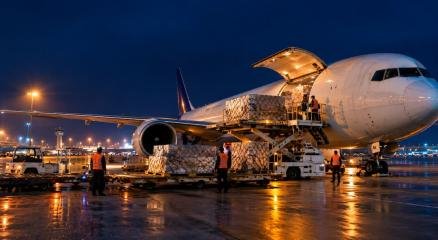
Global air cargo volumes rebounded in the week of 12–18 October, 2026 as Asian exports recovered following the Golden Week holiday period, with chargeable weight rising 2% week on week and global air freight rates increasing by 4%, according to the latest figures from WorldACD Market Data. The recovery was led by a 9% increase in chargeable weight from Asia Pacific, offsetting declines across North America, Central and South America, the Middle East and South Asia (MESA), Europe and Africa. Global available capacity also rose by 2%, rGlobal Air Cargo Volumes Rise 2% as Asian Exports Rebound; Rates Climb 4%, reversing two consecutive weeks of 1% declines as airlines expanded freighter operations. North America recorded a 5% week-on-week decline in chargeable weight, partly reflecting public holidays in Canada and the US. Central and South America fell by 4%, while MESA declined by 3%. Europe and Africa registered smaller contractions of 2% and 1%, respectively. Asia Pacific Drives Transpacific Growth The resumption of factory and export activity following Golden Week and mid-autumn festival holidays propelled Asia Pacific volumes higher, particularly on routes to the US and Europe. Chargeable weight from Asia Pacific to Europe rose 13% week on week, while shipments to the US increased 10%. On the transpacific trade lane, volumes from Hong Kong and mainland China to the US surged 27% and 18%, respectively. Shipments to the US increased across all Asian origins except Japan, where volumes stabilised following the post-Silver Week recovery. South Korea led growth on Asia–Europe routes, with volumes rising 34%, followed by China at 22%, Singapore at 16% and Hong Kong at 11%. However, European-bound shipments from Vietnam, Japan and Malaysia declined. Year on year, Asia Pacific chargeable weight to the US was up 14%, reflecting continued demand for artificial intelligence-related shipments and other technology cargo. The picture was weaker on routes to Europe, where volumes fell 16% compared with the corresponding period in 2025. Hong Kong recorded a 32% annual decline in shipments to Europe, which WorldACD partly attributed to European Union measures aimed at curbing e-commerce parcel imports. Volumes from China and Vietnam declined 12% and 10%, respectively, while South Korea was the only Asian origin to post double-digit annual growth, increasing 14%. MESA Shipments Reveal Contrasting US and European Trends Air cargo volumes from the Middle East and South Asia weakened during the week, with shipments to Europe falling 6% and those to the US declining 4%. Sharp reductions from Dubai and Sri Lanka contributed to the slowdown in US-bound traffic, while shipments from India decreased 2%. On routes to Europe, volumes from Sri Lanka fell 15% and those from India declined 7%. Dubai bucked the trend, recording a 5% increase. Annual comparisons, however, showed stronger performance on the US-bound trade lane. MESA chargeable weight to the US rose 24% year on year, supported by increases of 34% from India and 44% from Bangladesh. In contrast, volumes to Europe fell 13%, with Sri Lanka the only origin to avoid a decline. Capacity and Rates Rise as Peak Season Approaches Global air cargo capacity increased 2% week on week after declining in each of the previous two weeks. Asia Pacific led the expansion with a 6% rise, while capacity from Europe increased 2% and from North America and Central and South America rose 1% each. Africa and MESA recorded 2% reductions. Across the two-week period covering weeks 41 and 42, capacity remained 1% below the preceding fortnight but was 2% higher than in the corresponding period of 2025. Air cargo rates strengthened across all origin regions except Africa, where prices declined 4%. Rates rose 4% from Asia Pacific, 3% from Central and South America, 2% from MESA, and 1% each from Europe and North America. The two-week comparison showed global rates up 1%, while the year-on-year picture was markedly stronger: worldwide air cargo rates were almost 30% higher than a year earlier. MESA recorded the steepest increase at 61%, followed by gains ranging from 25% to 29% across Europe, Asia Pacific, North America and Africa. Central and South America registered a more moderate 7% rise. Transpacific Rates Strengthen amid Technology Cargo Demand Rates from Asia Pacific to the US increased 6% week on week, while those to Europe rose 1%. Singapore recorded a particularly sharp 23% increase in rates to the US, with most other Asian origins posting single-digit gains. Indonesia remained unchanged. On Asia–Europe routes, most origins recorded single-digit increases, while Thailand was unchanged. Rates from Vietnam slipped 1% and from Japan fell 8%. Compared with the same period in 2025, Asia Pacific rates to the US were 41% higher, with increases of 34% to 48% across most routes. Rates to Europe rose 25% on average, ranging from a 16% increase for Hong Kong to 56% for Indonesia. WorldACD noted that robust artificial intelligence-related cargo flows had strengthened expectations for a strong peak season on transpacific routes. The outlook for Asia–Europe traffic was less certain, however, as changes to EU import rules threatened to add pressure to e-commerce shipments. From 1 November, a €2 handling fee is due to apply to non-EU e-commerce imports, in addition to the €3 customs duty per item introduced on 1 July 2026 for low-value consignments worth up to €150. As the industry enters the final months of the year, the latest data point to a market shaped by recovering Asian export activity, firmer freight rates and expanding capacity, alongside diverging demand across major trade lanes and continued uncertainty over e-commerce flows into Europe.
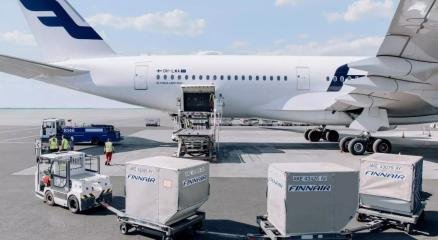

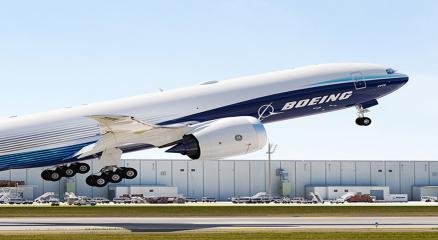
Boeing’s 777 Freighter (777F) has become the most widely operated dedicated freighter aircraft globally, overtaking the combined in-service fleet of Boeing 747 freighter variants, according to reports. The milestone reinforces the aircraft’s position in long-haul air cargo operations, where airlines require high payload capacity, extended range and operational efficiency. More than 330 Boeing 777F aircraft are now in service worldwide. Boeing’s reported figures indicate that the fleet accounts for approximately 40% of global freighter capacity and transports more air cargo annually than any other freighter type. Its growing presence reflects the importance of large widebody aircraft in connecting major manufacturing centres, distribution hubs and consumer markets across continents. Strong performance on long-haul routes The 777F’s operational utilisation highlights its role in international freight networks. During 2025, the fleet recorded approximately 6,250 flight hours, averaging more than 17 hours of operation per aircraft per day. Boeing’s figures also indicate that the aircraft accounted for around 80% of freighter flights covering distances exceeding 6,000 nautical miles. The company estimates that goods worth approximately US$4 trillion were transported aboard 777F aircraft during the year. The aircraft’s capabilities support direct, long-distance cargo services with fewer technical stops. Boeing lists the 777F’s maximum structural payload at 107 tonnes and its range at up to 5,000 nautical miles with a full payload of that capacity. These characteristics make it suitable for express shipments, e-commerce consignments, industrial goods and other time-sensitive international freight. Production outlook and next-generation transition The aircraft’s market position is also supported by continued demand for large freighters. In September 2026, the US Federal Aviation Administration granted Boeing an exemption allowing up to 35 additional 777F aircraft to receive certification beyond the emissions-rule deadline, providing a bridge towards the next-generation 777-8 Freighter. Boeing’s 777-8F is designed to carry up to 118 tonnes of structural payload, with a range of 5,000 nautical miles at a 110-tonne payload. As global trade networks evolve and demand for long-haul air freight remains significant, the 777F’s extensive operating base underlines its importance to airlines, freight forwarders and international supply chains. 𝐒𝐭𝐚𝐲 𝐓𝐮𝐧𝐞𝐝 𝐭𝐨 CARGOCONNECT 𝐟𝐨𝐫 𝐥𝐚𝐭𝐞𝐬𝐭 𝐮𝐩𝐝𝐚𝐭𝐞𝐬!

Etihad Cargo has supported a five-year international wildlife rescue mission by transporting two rescued brown bears from Russia to their new home at Wild Ireland, a wildlife sanctuary in County Donegal, highlighting the role of specialised air cargo operations in advancing animal welfare and conservation. The bears, Bu, a former circus bear, and Tyapa, previously kept at a petting zoo, had spent years in unsuitable conditions in Dagestan, Russia. Their arrival in Ireland on 4 August 2026 marked a major milestone in the rescue effort led by Killian McLaughlin, Founder and Director of Wild Ireland, with more than 100 people across multiple countries contributing to the mission. Etihad Cargo transported the bears from Moscow to Dublin via its Abu Dhabi hub, working alongside Abu Dhabi Airports and Velora to coordinate specialist handling and transit arrangements at Zayed International Airport. The operation drew on the carrier’s experience in live-animal transportation, supported by its International Air Transport Association (IATA) CEIV Live Animals certification, which recognises standards for animal handling, safety and welfare. Stanislas Brun, Chief Cargo Officer at Etihad, said the mission demonstrated how the airline’s global network and operational expertise can contribute to wildlife conservation and animal welfare. He highlighted the collaboration between the participating organisations as central to giving the bears an opportunity for a better life. Following their arrival, Bu and Tyapa moved into their new forest habitat at Wild Ireland in September, where they are showing encouraging signs of recovery and gradually adapting to their surroundings. McLaughlin said the successful relocation was the culmination of years of challenges and collective effort across national borders. The rescue is also being documented by Abu Dhabi-based Moondance Productions, with a documentary chronicling the five-year mission expected to be released in 2027. Shane Brennan, CEO of Moondance Productions, described the collaboration between Wild Ireland, Etihad Cargo and international partners as a powerful example of what coordinated efforts can achieve for animal welfare. Beyond the transportation itself, the mission underscores the importance of specialised cargo expertise, careful handling and cross-border coordination in moving vulnerable animals safely. For Etihad Cargo, the operation illustrates how its international network can support initiatives that extend beyond commercial logistics to wildlife protection and conservation.