
Loading...
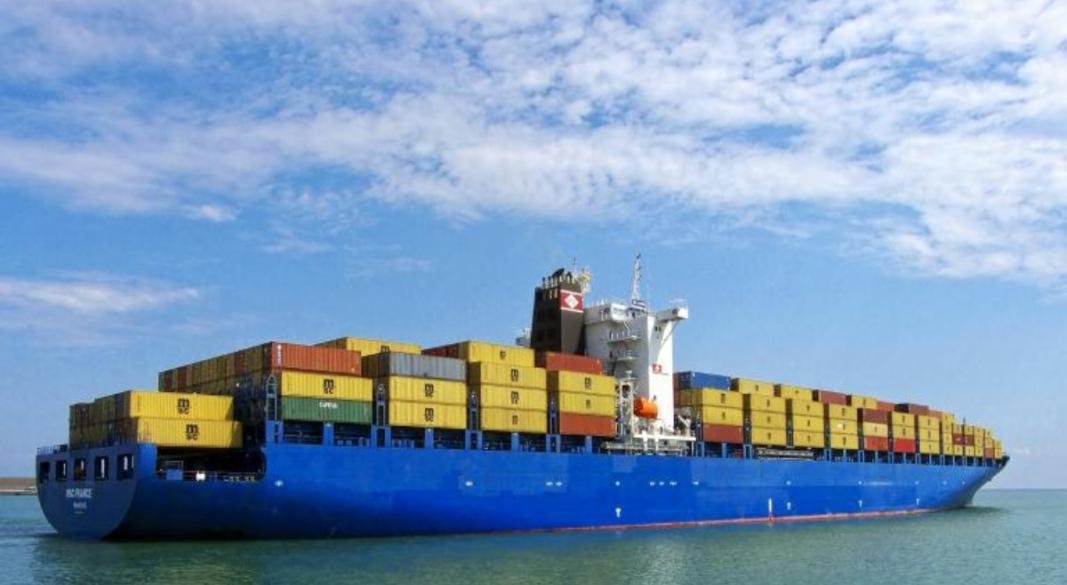
Deendayal Port Authority (DPA), Kandla, has received the maiden call of MV ESL Shekou under Emirates Shipping Lines' ECSX Service, marking the addition of a new international container service at the Kandla International Container Terminal (KICT). The vessel berthed at the terminal on June 18, strengthening the port's connectivity with key overseas trade routes.
The vessel measures 276 metres in length overall (LOA) and has a gross registered tonnage (GRT) of 66,280 metric tonnes, making it one of the larger container ships to call at the terminal. Its successful handling reflects the port's capability to accommodate modern, high-capacity container vessels and support growing container traffic.
The new ECSX service is expected to provide exporters and importers with additional shipping options while improving cargo connectivity between India and international markets served by Emirates Shipping Lines. The service is also likely to enhance schedule reliability and increase capacity for containerised trade through Kandla.
Port officials said the maiden call represents growing confidence among global shipping lines in Deendayal Port's infrastructure and operational capabilities. The addition of another mainline service is expected to strengthen the port's position as a key gateway for containerised cargo on India's western coast and support the country's expanding international trade network.
Follow CARGOCONNECT for more such updates.
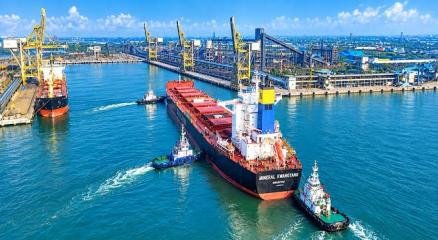
Paradip Port Authority (PPA) has registered an 8.62% year-on-year growth in coastal cargo handling during the first seven months of FY 2026-27, reinforcing its position as a major hub for coastal shipping and domestic maritime logistics in India. According to the latest performance figures released by the Port Authority, Paradip Port handled 39.981 million metric tonnes (MMT) of coastal cargo between April and October 2026, compared with 36.806 MMT during the corresponding period of FY 2025–26. The increase highlights the growing contribution of coastal shipping to India's domestic freight movement and multimodal logistics network. The growth further strengthens Paradip Port's role as a strategic maritime gateway on India's eastern coastline, facilitating the movement of bulk commodities and supporting industries across its extensive hinterland. The rising coastal cargo volumes also underline the increasing relevance of waterways in improving domestic supply chain efficiency. Coastal shipping offers significant advantages for India's logistics sector, particularly in reducing dependence on road and rail transportation for long-distance bulk cargo movement. By shifting suitable freight to waterways, businesses can potentially lower transportation costs, ease congestion on highways and railway networks, and improve overall cargo movement efficiency. Additionally, coastal shipping provides environmental benefits through relatively lower fuel consumption and carbon emissions per tonne of cargo transported compared with conventional road-based freight movement. This makes it an important component of India's efforts to develop a more sustainable and cost-efficient transportation ecosystem. Paradip Port's performance aligns with the Government of India's broader strategy to promote coastal shipping, strengthen multimodal connectivity and increase the utilisation of waterways for domestic freight transportation. The port has also been focusing on improving operational efficiency, strengthening cargo-handling infrastructure and enhancing the reliability of maritime logistics services to meet the evolving requirements of domestic industries and trade stakeholders. The latest growth is significant given Paradip Port's expanding role in India's maritime sector. During FY 2025–26, the port recorded its highest-ever annual cargo throughput of 156.45 MMT, with coastal cargo contributing 65.81 MMT. With coastal cargo handling continuing to gain momentum, Paradip Port is expected to remain an important contributor to India's efforts to build an integrated, sustainable and competitive maritime logistics network. 𝐒𝐭𝐚𝐲 𝐭𝐮𝐧𝐞𝐝 𝐭𝐨 CARGOCONNECT 𝐟𝐨𝐫 𝐥𝐚𝐭𝐞𝐬𝐭 𝐮𝐩𝐝𝐚𝐭𝐞𝐬!
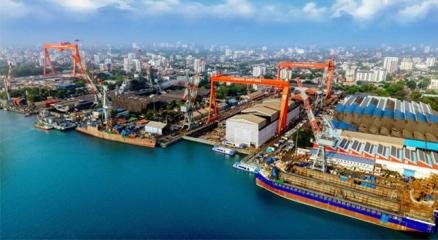

The International Association of Dry Cargo Shipowners (INTERCARGO) has re-elected John A. Xylas as its Chair for 2027-2028, alongside appointing two new Vice-Chairs, as the association's membership crossed the 500-member mark for the first time. The leadership appointments were confirmed at its Annual General Meeting (AGM), held in Rome, Italy. Xylas, President and Chief Executive Officer of Ariston Navigation Corp., will commence his second consecutive two-year term on 1 January 2027. Members also re-elected Metaxia Psalti, Chief Operating Officer of Neda Maritime Agency Co. Ltd., as Vice-Chair. Paolo Tonon, Technical Director of Berge Bulk, and Captain Ranvijay S. Rana, Product Director – Dry Cargo Operations at Fleet Management Ltd., were elected as the association's new Vice-Chairs. All three Vice-Chairs will serve two-year terms. The appointments come amid significant organisational growth, with INTERCARGO's membership exceeding 500 companies, representing operators of more than 5,100 dry cargo vessels worldwide. The three Vice-Chairs will be based in Piraeus, Hong Kong and Singapore, strengthening the association's international representation across major maritime centres. The AGM also approved amendments to INTERCARGO's Constitution, effective 1 January 2027, including the establishment of the new INTERCARGO Technical and Operations Committee (ITOC). The committee will consolidate technical, operational and vessel-vetting matters under a unified structure. Dimitris Monioudis of Rethymnis & Kulukundis will chair the committee, with Cesare d’Api of d’Amico leading the Technical Sub-Committee and Psalti heading the Operations Sub-Committee. Looking ahead, the association has approved two new working groups focusing on artificial intelligence (AI), digitalisation and crew welfare, scheduled to commence operations in early 2027. Other priorities for the 2027–2028 term include expanding member engagement, strengthening industry advocacy and promoting the Dry Bulk Management Standard (DryBMS) and Dry Bulk Centre of Excellence (DBCE) as important industry benchmarks. INTERCARGO's recent initiatives have also included expanding its technical and operational work, with its Ship-to-Ship (STS) Transfer Guidelines for Bulk Carriers recording sales of more than 1,000 copies. Meanwhile, Captain Uttam Kumar Jaiswal of Pacific Basin Shipping (HK) Ltd. will step down as Vice-Chair at the end of 2026 after completing the maximum three consecutive terms. The association's next meetings are scheduled to take place in Hong Kong from 19 to 21 April 2027, as it looks to build on its expanding membership and strengthen its contribution to the global dry bulk shipping industry. 𝐒𝐭𝐚𝐲 𝐭𝐮𝐧𝐞𝐝 𝐭𝐨 CARGOCONNECT 𝐟𝐨𝐫 𝐥𝐚𝐭𝐞𝐬𝐭 𝐮𝐩𝐝𝐚𝐭𝐞𝐬!

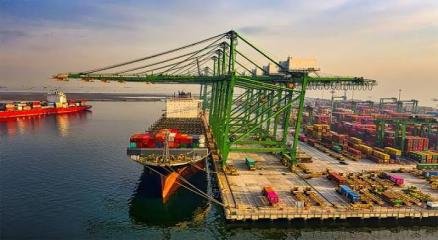
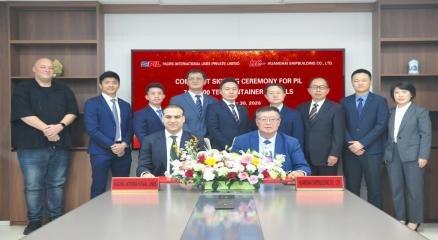
Pacific International Lines (PIL) has placed an order for seven 1,400-TEU container vessels with China’s Huanghai Shipbuilding, as part of its ongoing fleet renewal and expansion programme. The new vessels are expected to strengthen PIL’s network capabilities and operational efficiency, particularly across its Intra-Asia and Pacific Islands services. Designed to serve the requirements of these regional markets, the ships will measure 172 metres in length and 25 metres in width, with dimensions customised to maximise vessel size while retaining the flexibility to connect smaller ports with key transhipment hubs across PIL’s network. The methanol-ready vessels will also support the company’s decarbonisation strategy, enabling the potential adoption of lower-emission fuels as availability and supporting infrastructure develop. “Investing in these new feeder vessels will strengthen our capabilities and capacity across the Intra-Asia and Pacific Islands network. These ships, equipped with energy-saving technologies and designed to be methanol-ready, will further optimise our operations while supporting our goal of net zero emissions by 2050,” said Lars Kastrup, CEO of PIL. He added that the vessels will incorporate modern technological features and digital capabilities to support more efficient operations and performance monitoring, helping PIL provide customers with wider services and sustainable shipping solutions. The ships will feature energy-saving technologies, including pre-swirl vanes and propeller boss cap fins, designed to improve propulsion efficiency and reduce fuel consumption. Enhanced cargo safety systems will include fixed fire water monitors and cargo hold water spray systems to strengthen onboard firefighting capabilities. The vessels are scheduled for delivery between 2029 and 2030. PIL selected Huanghai Shipbuilding for its technical capabilities, experience and ability to meet the company’s requirements for quality, efficiency and delivery.