
Loading...
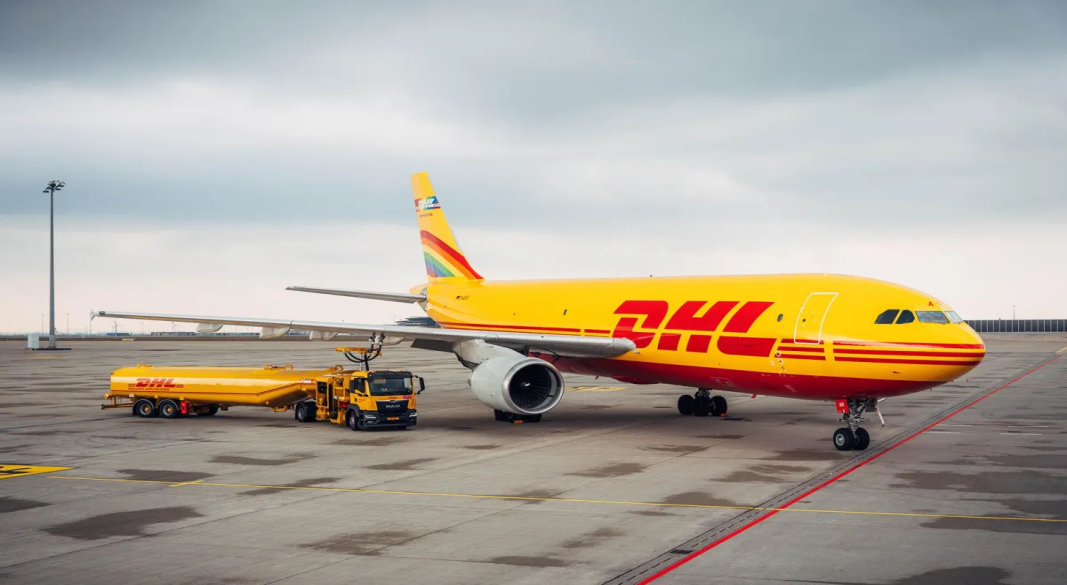
DHL Express has teamed up with SAF One, a Dubai-based developer of sustainable aviation fuel, to sign a groundbreaking long-term agreement. This partnership will bring the first sustainable aviation fuel production facility to the Middle East, which will be integrated into DHL’s global network of sustainable fuels. As part of this deal, DHL Express will secure an impressive 25,000 metric tonnes of unblended sustainable aviation fuel each year for the next decade, amounting to a total of 250,000 metric tonnes starting from when production kicks off in 2028.
The sustainable aviation fuel will be produced at SAF One’s state-of-the-art facility in Bahrain, utilizing renewable feedstocks and cutting-edge refining technologies. This fuel is anticipated to significantly reduce lifecycle CO2e emissions across DHL’s air operations, both regionally and internationally. This agreement is a significant milestone in DHL Express’s larger decarbonization strategy, aligning with its goal to boost the use of sustainable aviation fuel to 30 percent by 2030. It also offers long-term market stability for SAF One and helps to speed up the development of clean energy infrastructure throughout the Middle East.
"We are proud to see the Middle East playing a central role in the global shift toward emission-reduced aviation," said Abdulaziz Busbate, CEO DHL Express MENA. "Partnering with SAF One allows us to accelerate regional decarbonization, strengthen local innovation ecosystems, and offer our customers credible and transparent emission reduced shipping solutions. This agreement symbolizes our long-standing commitment to Bahrain and across the region."
"By integrating the first SAF plant in the Middle East into our global supply chain, we are taking another major step toward making sustainable aviation the new normal," Travis Cobb, EVP Global Network Operations & Aviation at DHL Express, added. "This agreement not only expands our SAF footprint geographically but also strengthens our resilience by diversifying our sourcing. Collaborating with SAF One demonstrates how regional innovation can deliver global climate impact."
"We are grateful to DHL Express for entering into this offtake agreement with us, which is an important step toward bringing a landmark sustainable aviation fuel facility to the Middle East." said Deepak Munganahalli, Co-Founder & CEO, SAF One. "We would also like to thank all stakeholders in Bahrain who actively supported this project, including BAPCO Energies and the Bahrain Economic Development Board."
Through DHL’s GoGreen Plus program, the sustainable aviation fuel will be distributed globally using a verified “book and claim” model, allowing customers to cut down on Scope 3 emissions even on routes that aren’t directly powered by sustainable fuel. DHL emphasized that this initiative is part of its ongoing strategy to collaborate closely with leading sustainable aviation fuel producers around the world, ensuring reliable long-term access to these fuels and assisting customers in reaching their climate goals.
For more such news and updates, visit: CARGOCONNECT.
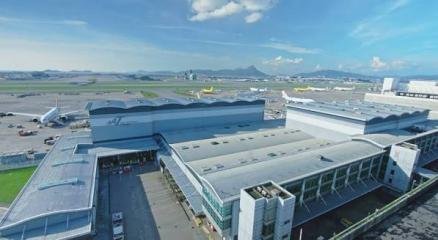
Asia Airfreight Terminal (AAT) has renewed its operating franchise with Airport Authority Hong Kong (AAHK) for a further 15 years, securing its presence at Hong Kong International Airport (HKIA) from 2028 to 2043. The agreement reinforces the cargo terminal operator’s long-term commitment to Hong Kong’s air freight industry, with plans to expand handling capacity to 2 million tonnes. A subsidiary of SATS Ltd and an affiliate of Eastern Option Ltd., AAT has operated at HKIA since 1998. Its services include physical air cargo handling and documentation processing for airlines, supporting the movement of freight through one of the region’s key international aviation gateways. The franchise renewal comes as Hong Kong strengthens its aviation infrastructure and regional transport links. The full commissioning of HKIA’s Three-Runway System is expected to support the airport’s long-term development, while improved multimodal connectivity across the Greater Bay Area offers opportunities to enhance cargo movement and links between air freight and other transport networks. Mike Chew, Chief Executive Officer of AAT, said: “We are honoured to continue our long-standing partnership with Airport Authority Hong Kong. Building on nearly three decades of experience at HKIA, we will continue to invest in enhancing the infrastructure, technology, operational capabilities, including increasing our cargo handling capacity to 2 million tonnes, for long-term development of Hong Kong’s air cargo industry.” The planned capacity increase will be supported by continued investment in infrastructure, technology and operational capabilities, aimed at improving efficiency and meeting evolving requirements across the air cargo supply chain. AAT’s specialised facilities include AAT COOLPORT, which holds IATA CEIV Pharma and CEIV Fresh certifications, alongside World Health Organization Good Distribution Practices (GDP) accreditation for pharmaceutical products. These credentials support the handling of temperature-sensitive pharmaceuticals and fresh produce. AAT’s renewed franchise follows a similar extension secured by Hong Kong Air Cargo Terminals Limited (Hactl), another major cargo terminal operator at HKIA, whose agreement also runs until 2043. Together, the extensions provide long-term operating continuity for the airport’s cargo handling sector as Hong Kong seeks to strengthen its position as an international air freight hub. 𝐒𝐭𝐚𝐲 𝐓𝐮𝐧𝐞𝐝 𝐭𝐨 CARGOCONNECT 𝐟𝐨𝐫 𝐥𝐚𝐭𝐞𝐬𝐭 𝐮𝐩𝐝𝐚𝐭𝐞𝐬!
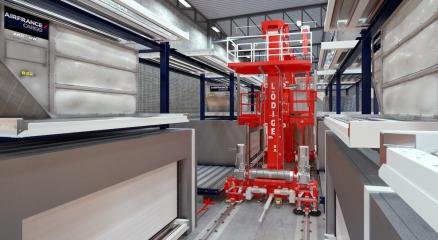
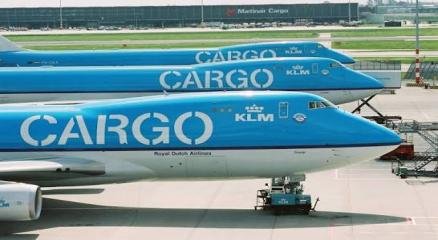
Air France KLM Martinair Cargo has initiated a project to expand and automate its perishables centre at Paris-Charles de Gaulle Airport (CDG), in partnership with Lödige Industries, to increase storage capacity, improve operational efficiency and strengthen its handling capabilities for temperature-sensitive shipments. The project reflects the growing importance of automated infrastructure in maintaining efficient and reliable cold-chain logistics. The dedicated cargo business of the Air France-KLM Group is implementing an elevating transfer vehicle (ETV) system to enable automated, multi-level storage and retrieval of unit load devices (ULDs) and pallets. The solution is designed to maximise the use of available building space while accommodating future growth in cargo volumes. By automating storage and retrieval operations, the system is expected to reduce manual handling, streamline internal cargo movements and improve the utilisation of existing storage capacity. It will also support consistent handling processes within dedicated temperature-controlled areas, which are critical for preserving the quality and integrity of perishable goods throughout their journey through the cargo facility. “Expanding our temperature-controlled cargo capabilities at Paris-Charles de Gaulle is an important step in strengthening our cold-chain operations. The new automated storage solution will enable us to handle growing volumes more efficiently and further enhance the cargo handling flow for temperature-sensitive shipments at CDG,” the project team at Air France KLM Martinair Cargo said. The installation will feature a 10-foot-wide edge ETV serving 58 storage decks, of which 17 will be located within temperature-controlled areas. This configuration will allow the facility to combine high-density storage with dedicated temperature-managed space, supporting the operational requirements of perishable cargo. Lödige Machine Warburg and Lödige Machine Romania are supplying the system, which is scheduled to become operational at the end of September 2027. The installation is expected to provide a scalable foundation for further automation as cargo volumes and cold-chain requirements evolve. Commenting on the project, Björn Ussat, Director Airport Logistic Solutions at Lödige Industries, said: “Cold-chain logistics place particularly high demands on reliability, efficient use of space and consistent handling processes. This project demonstrates how automation can help cargo operators optimise storage capacity and internal material flows while supporting the stringent handling requirements of temperature-sensitive shipments. We are delighted to support Air France KLM Martinair Cargo with an efficient and scalable solution that also provides a solid basis for future expansion of automated storage processes at Paris-Charles de Gaulle,” The investment will reinforce Paris-CDG's role in the group's cargo operations by improving how temperature-sensitive shipments are stored and transferred within the facility. Automated storage systems can help cargo operators manage space constraints, reduce unnecessary handling and establish more predictable internal workflows. For Air France KLM Martinair Cargo, the project forms part of the broader effort to strengthen specialised cargo-handling capabilities as supply chains increasingly demand reliable infrastructure for perishable goods. Efficient cold-chain operations are particularly important for shipments such as fresh produce, flowers and other temperature-sensitive commodities, where handling conditions and transit efficiency can influence product quality. As air cargo facilities face growing pressure to improve throughput without proportionate increases in their physical footprint, automation offers a way to enhance capacity and operational consistency. The Paris-CDG project combines these objectives with dedicated temperature-controlled storage, positioning the facility to accommodate future demand while maintaining the handling standards required for perishables. 𝐒𝐭𝐚𝐲 𝐓𝐮𝐧𝐞𝐝 𝐭𝐨 CARGOCONNECT 𝐟𝐨𝐫 𝐥𝐚𝐭𝐞𝐬𝐭 𝐮𝐩𝐝𝐚𝐭𝐞𝐬!

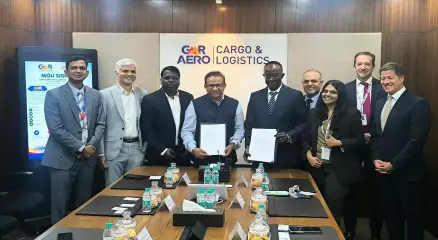
Aramex has signed a Memorandum of Understanding (MoU) with GMR Airports Limited (GAL) to strengthen its express cargo and freight infrastructure across GMR-operated airports in India, with a focus on improving cross-border logistics, customs clearance and international trade connectivity. The proposed collaboration aims to support micro, small and medium enterprises (MSMEs), exporters, importers and other businesses by enabling more efficient movement of international shipments through key airport gateways. Signed at GMR Hyderabad Air Cargo (GHAC) in Hyderabad, the agreement will explore opportunities to enhance Aramex’s operational infrastructure at GMR Airports’ express cargo terminals. The proposed facilities include dedicated truck docks, screening systems and designated operational space, subject to mutually agreed terms and conditions under a definitive agreement. The infrastructure is expected to facilitate integrated customs clearance capabilities for multiple international products, helping streamline cargo processing, improve operational efficiency and support smoother movement of shipments across borders. Exploring Warehousing and Airside Connectivity Under the proposed arrangement, GMR Airports will maintain the identified infrastructure at the express cargo terminal in accordance with the terms to be finalised by both parties. Aramex and GAL are also exploring the development of a warehousing facility close to the express cargo terminal, with dedicated airside corridor access to support cargo movement. GMR Airports may additionally facilitate engagement with relevant authorities and share its technical expertise and operational experience to support the proposed development. The initiative is intended to strengthen Aramex’s logistics network in India while enhancing the capabilities available to businesses using GMR-operated airports for international shipments. The collaboration places particular emphasis on supporting trade flows between India and the Gulf Cooperation Council (GCC) region. The two companies are working towards developing the proposed infrastructure by March 2027. Investment requirements, project timelines and other implementation details will be explored jointly as discussions progress. Strengthening India's Global Trade Connectivity Commenting on the partnership, Amadou Diallo, Group CEO, Aramex, said, “Our focus on India goes beyond expanding our footprint; it is about building the capabilities and infrastructure needed to support the country's next phase of growth in global trade. At Aramex, we are committed to strengthening our network, investing in local capabilities and working with strategic partners to create more efficient channels for businesses to access international markets. Our collaboration with GMR Airports Limited reflects this long-term commitment to India and will further strengthen our ability to support businesses across the country with efficient logistics solutions.” Veena Bhogaonkar, Managing Director, Aramex India, said, “We are pleased to partner with GAL to strengthen our logistics capabilities across GMR-operated airports. By enhancing our infrastructure and operational capabilities at the express cargo terminal, we aim to provide businesses, including MSMEs, with more efficient and seamless express and freight services to support their domestic and international trade requirements.” Abbas Panju, Regional CEO GCC and Indian Subcontinent, Aramex, said, “India is a strategically important market for Aramex, and we continue to see significant opportunities to strengthen our logistics network and support the country's growing international trade. Our collaboration with GAL will help us enhance our capabilities through GAL’s key international gateways and further support businesses looking to connect with global markets.” Therefore, this MoU reflects the companies’ intent to build stronger airport-linked logistics capabilities as India’s international trade and cross-border shipment requirements expand. Subject to the final agreements and implementation plans, the proposed infrastructure could help businesses access more integrated express and freight services while supporting the efficiency of international supply chains. 𝐒𝐭𝐚𝐲 𝐓𝐮𝐧𝐞𝐝 𝐭𝐨 CARGOCONNECT 𝐟𝐨𝐫 𝐥𝐚𝐭𝐞𝐬𝐭 𝐮𝐩𝐝𝐚𝐭𝐞𝐬!