
Loading...
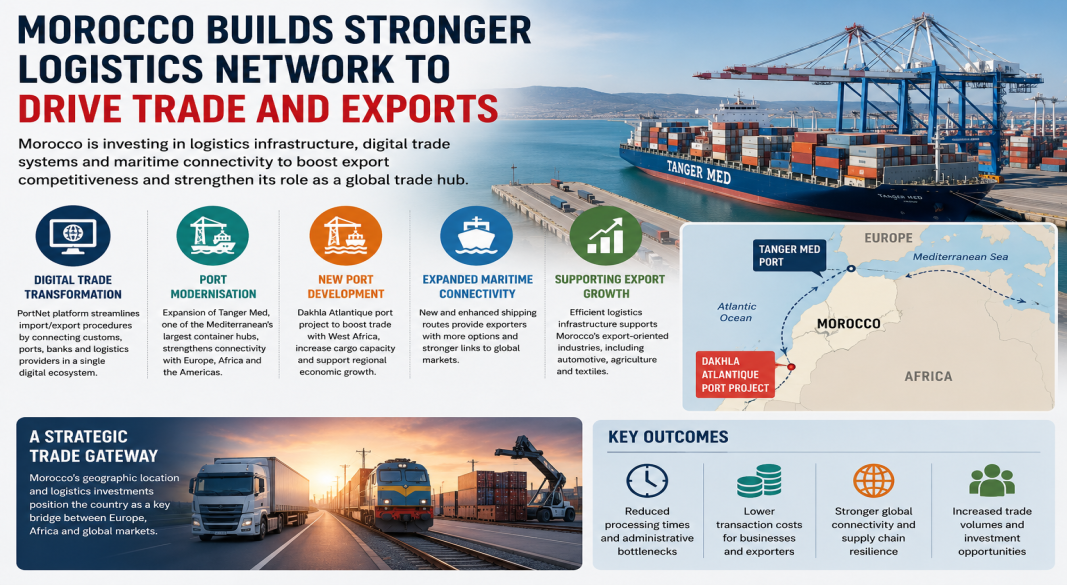
Morocco is accelerating investments in logistics infrastructure, digital trade systems and maritime connectivity as it seeks to strengthen its position as a key trade gateway linking Europe, Africa and Atlantic markets. The strategy is aimed at improving supply chain efficiency, supporting export growth and enhancing the country's role in international commerce.
A central element of the initiative is the modernization of logistics corridors through the integration of digital platforms, port infrastructure upgrades and expanded shipping connections. Moroccan authorities are focusing on reducing administrative bottlenecks, improving cargo movement and creating a more efficient environment for international trade.
The country's digital trade platform, PortNet, is playing a significant role in this transformation. The system has been designed to streamline import and export procedures by bringing together multiple stakeholders, including customs authorities, ports, banks and logistics providers, into a single digital ecosystem. Government officials expect the platform to reduce processing times, improve transparency and lower transaction costs for traders.
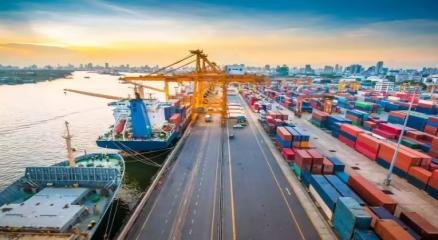
Port infrastructure remains another major focus area. The continued expansion of Tanger Med, one of the Mediterranean region's largest container hubs, has reinforced Morocco's importance in global shipping networks. The port serves as a critical gateway connecting manufacturers and exporters to markets across Europe, Africa and the Americas while supporting the country's growing industrial base.
Morocco is also advancing the development of the Dakhla Atlantique port project on the Atlantic coast. The project is expected to strengthen trade links with West African markets, create additional cargo handling capacity and support economic activity in the country's southern regions. The development forms part of a broader effort to diversify maritime trade routes and improve supply chain resilience.
Alongside port investments, Morocco is expanding maritime connections to improve access to international markets. New and enhanced shipping services are expected to provide exporters with greater route options and strengthen connectivity with both European and African trading partners. Industry analysts view these initiatives as increasingly important as global supply chains continue to adapt to changing trade patterns and geopolitical risks.
The logistics upgrades come as Morocco seeks to support long-term export growth and attract greater investment into manufacturing and industrial sectors. Recent trade data shows continued expansion in export-oriented industries, particularly automotive manufacturing, highlighting the importance of efficient logistics infrastructure in sustaining trade competitiveness.
With ongoing investments in digitalisation, ports and multimodal transport networks, Morocco is positioning itself to handle larger trade volumes while improving the speed and reliability of cargo movement. The strategy reflects a broader effort to leverage the country's geographic location and strengthen its role as a regional logistics and trade hub.
Follow CARGOCONNECT for more such updates.

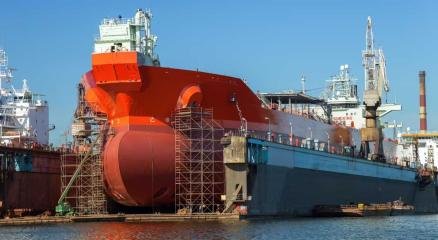
The Gujarat Government has launched the Shipbuilding Policy 2026, a strategic initiative aimed at transforming the state into India's premier shipbuilding and ship repair hub. The policy seeks to attract investments exceeding Rs 27,000 crore, create a shipbuilding capacity of 50 lakh Deadweight Tonnage (DWT), and establish two world-class shipbuilding parks, reinforcing Gujarat's position in the country's maritime and logistics ecosystem. The new policy comes at a time when India is intensifying efforts to strengthen domestic shipbuilding capabilities under the broader vision of developing a self-reliant maritime sector. With Gujarat already accounting for a significant share of India's ship recycling, ports and maritime trade, the state aims to leverage its extensive coastline, robust port infrastructure and industrial ecosystem to emerge as a global destination for shipbuilding. A key highlight of the policy is the development of two integrated mega shipbuilding parks equipped with modern infrastructure and common facilities. These parks are expected to support the construction of commercial vessels, specialised ships and offshore structures while also promoting ancillary industries involved in marine equipment, engineering and component manufacturing. To attract investors, the policy offers a range of financial incentives, including capital assistance, interest subsidies, skill development support and infrastructure incentives. The state government expects these measures to encourage both domestic and international companies to establish manufacturing facilities and expand operations in Gujarat. Besides increasing industrial investment, the initiative is projected to generate substantial employment opportunities across shipbuilding, ship repair, marine engineering, logistics and allied sectors. The policy also places emphasis on developing a skilled workforce through dedicated training programmes, ensuring the availability of specialised talent required by the industry. Industry experts believe the policy could significantly strengthen India's maritime manufacturing capabilities while reducing dependence on imported vessels. The expansion of shipbuilding infrastructure is also expected to improve coastal shipping, facilitate exports and enhance the efficiency of the country's logistics network. The Shipbuilding Policy 2026 aligns with the Centre's vision of making India a global maritime powerhouse and complements ongoing investments in ports, coastal infrastructure and multimodal logistics. By creating an enabling ecosystem for shipbuilding and marine manufacturing, Gujarat is positioning itself to play a pivotal role in supporting India's long-term ambitions in global trade and supply chain development. With substantial investments, infrastructure development and industry-friendly incentives, Gujarat's latest policy is expected to provide fresh momentum to the country's maritime economy while strengthening the state's leadership in the logistics and shipping sector. 𝐒𝐭𝐚𝐲 𝐓𝐮𝐧𝐞𝐝 𝐭𝐨 CARGOCONNECT 𝐟𝐨𝐫 𝐥𝐚𝐭𝐞𝐬𝐭 𝐮𝐩𝐝𝐚𝐭𝐞𝐬!


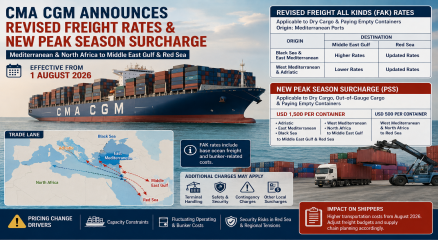
Global container carrier CMA CGM will implement revised Freight All Kinds (FAK) rates and introduce a new Peak Season Surcharge (PSS) for shipments from the Mediterranean and North Africa to the Middle East Gulf and Red Sea, effective 1 August 2026, as carriers continue to adjust pricing in response to evolving market conditions and regional operational challenges. The revised FAK rates will apply to dry cargo and paying empty containers originating from Mediterranean ports. Freight charges will vary depending on the origin and destination, with shipments to the Middle East Gulf attracting higher rates from the Black Sea and East Mediterranean than those from the West Mediterranean and Adriatic regions. Cargo destined for Red Sea ports will also be subject to updated tariffs based on the port of origin. Alongside the rate revision, CMA CGM will introduce a Peak Season Surcharge on the same trade lanes. A surcharge of USD 1,500 per container will apply to dry cargo, out-of-gauge cargo and paying empty containers moving from the Adriatic, East Mediterranean and Black Sea to both the Middle East Gulf and the Red Sea. Shipments from the West Mediterranean and North Africa to the Middle East Gulf will incur the same surcharge, while cargo bound for the Red Sea from those origins will attract a lower USD 500 per container charge. The carrier said the published FAK rates cover base ocean freight and bunker-related costs. However, customers should expect additional charges, including terminal handling, safety and security fees, contingency charges and other local surcharges, where applicable. The pricing changes come as shipping lines continue to respond to capacity constraints, fluctuating operating costs and ongoing security risks affecting trade through the Red Sea and surrounding maritime corridors. Recent geopolitical tensions in the region have also contributed to higher bunker costs, prompting carriers to revise pricing across multiple services. For shippers and freight forwarders operating on Mediterranean–Middle East trade lanes, the revised freight rates and seasonal surcharges are expected to increase transportation costs from August, requiring adjustments to freight budgets and supply chain planning. Follow CARGOCONNECT for more such updates.

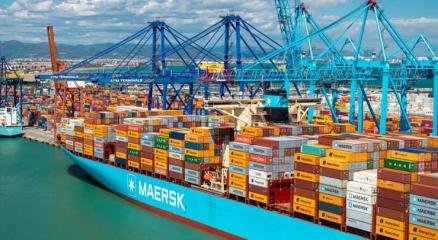
Maersk has announced an increase in its Emergency Contingency Surcharge (ECS) for cargo moving from the Indian subcontinent to North Europe and the Mediterranean, with the revised charges coming into effect from August 1, 2026. The move is expected to raise ocean freight costs for exporters across India and neighbouring South Asian markets, adding further pressure on supply chains already navigating volatile global shipping ecosystem. The revised ECS applies to cargo transported on Maersk's E3W (North Europe) and E4W (Mediterranean) services originating from North West India, South and East India, Nepal, Pakistan, Bangladesh, Sri Lanka and the Maldives. According to the carrier, the surcharge revision follows a review of prevailing market conditions aimed at maintaining the stability and reliability of its ocean freight. Under the new tariff structure, the ECS for shipments from North West India and Pakistan to North Europe will increase to US$3,500 per container across dry and reefer equipment, up from US$2,500. Similarly, shipments from South and East India and Nepal to North Europe will attract an ECS of US$3,800 for 20-foot containers and US$4,400 for 40-foot containers and reefers. Bangladesh-bound exports to North Europe will see the surcharge rise to US$4,000 for 20-foot containers and US$4,800 for 40-foot dry containers. Comparable increases have also been announced for shipments destined for the Mediterranean. The surcharge increase effectively adds US$1,000 per container across most trade lanes, making exports to Europe more expensive for manufacturers and shippers. Industry observers believe sectors such as textiles, engineering goods, chemicals, pharmaceuticals and automotive components, which rely heavily on Europe-bound container traffic, are likely to witness higher logistics costs in the coming months. The announcement comes amid continued uncertainty in global shipping markets, where carriers are adjusting freight rates and surcharges to offset elevated operating costs, capacity constraints and network disruptions. Shipping lines have increasingly relied on emergency and contingency surcharges to recover additional expenses arising from changing trade dynamics and operational challenges. In a separate advisory issued on July 17, Maersk also introduced a Heavy Load Surcharge (HWS) for cargo moving from North West India to North Europe and Israel-bound Mediterranean destinations, indicating a broader review of pricing across its regional services. For Indian exporters, the revised ECS is expected to translate into higher freight bills from August, prompting many to reassess logistics budgets, negotiate shipping contracts and explore cost optimisation strategies as Europe remains one of India's largest export markets. 𝐒𝐭𝐚𝐲 𝐓𝐮𝐧𝐞𝐝 𝐭𝐨 CARGOCONNECT 𝐟𝐨𝐫 𝐥𝐚𝐭𝐞𝐬𝐭 𝐮𝐩𝐝𝐚𝐭𝐞𝐬!