
Loading...

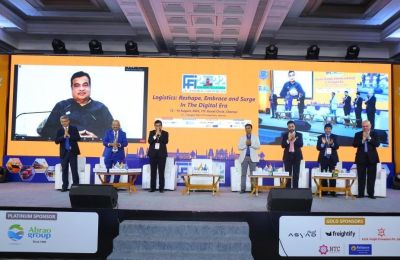
The Federation of Freight Forwarders Associations in India (FFFAI) has announced its 24th Biennial Convention of the Federation to be held from August 12 to 14, 2022 at ITC Grand Chola in Chennai with the theme ‘Logistics – Reshape, Embrace and Surge in The Digital Era’.
Elaborating on the 24th Biennial Convention, FFFAI Chairman Shankar Shinde informed that the Convention would focus on innovative logistics embracing the digital era for surging ahead.
“The ‘New Normal’ has been discussed a lot in every industry which has changed the dynamics of doing business. The trade and industry in recent years witnessed great changes in logistics with different challenges and opportunities, and introduction of digital environment has compelled to adopt changes rather than by choice, today,” Shinde said.
According to him, post-COVID, logistics sector is scaling up considerably and it is time to assess the situation to convert challenges into opportunity. FFFAI Convention is the ideal platform to get together and discuss enhancing knowledge through business sessions with expert speakers from various sectors and business networking partners.
“A Customs Broker is the heart of supply chain and everything will evolve around the Customs Broker with the logistics support system to make the value chain successful. Hence, Customs Brokers play important role in facilitating and expediting the seamless movement of cargo shipment,” Shinde asserted.
Adding further on the theme of the Convention, the FFFAI Chairman underscored that Technology will be playing an important role. The business models will change with adaptation of technology and digital marketing.
“In the forthcoming FFFAI Convention, we intend to focus on ‘Logistics – Reshape, Embrace and Surge in The Digital Era’ for sustainability of successful business investments of time and money. It will also result in reducing importance of working on site and shifting process of logistics to the offices,” he said.
In Sinde's opinion, the customs brokers and freight forwarders in India will also need to grapple with the perception of their clients – that they remain Relationship Managers besides being domain experts.
“Their expectations of us being in a position to solve every issue without compensation or acceptance of our ability will also need to be addressed by us in the coming period,” he added.
Considering the same, said Shinde, the theme 'Logistics – Reshape, Embrace and Surge in The Digital Era’ is indeed very apt as it is the genesis of our existence and growth.
Shinde also shared that the business sessions based on the above theme will provide delegates with a broad perspective and insight to re-align and re-shape to the changing environment and the multiple changes that will come along with it.
AV Vijayakumar, Convener of the 24th Biennial Convention outlined the format and further details of the Convention.
“We are witnessing rapid, significant and visible changes especially in the recent years. With India becoming a signatory to the Trade Facilitation Agreement there is an accelerated approach by the Indian Government – more so of the Ministry of Finance – to create a seamless, smooth and swift environment for global cross border trade,” said Vijayakumar.
In his opinion, the pace of trade facilitation is so dominant that adopting to such changes is becoming a challenge.
“Logistics industry is the core center for the success of the trade facilitations and a comprehensive rethink is required in our business environment and business model,” he observed.
In his opinion, in view of the fact that India is taking strong strides and is emerging as one of the fastest developing economies with huge expectations to be in the first few top slots in the years to come, there is a need match this growth in all support activities.
“With all the uncertainties around us, the only certainty is change and our willingness to accept and adopt to such change so as to remain relevant in every time zone. It is in this challenging backdrop that we will be holding our 24th Biennial Convention after a pause of a year due to the pandemic,” he pointed out.
Apart from the inauguration session to be addressed by the FFFAI Chairman, Convention Chairman, other Office Bearers of FFFAI, and special Guests from the Government/Ministries/industry experts, there will be six Business Sessions on various topics aligned with the theme of the convention. Networking evening functions coupled with dinners and gala dinner on the concluding day would be the added attractions of this biennial event.
“FFFAI intends to invite top Ministries and Minsters to be an integral part of the convention to share their thoughts, visions and focus for the future. The iconic event will have very senior officials, bureaucrats and industry leaders to address the gathering," Vijaykumar added.
"It will be a unique opportunity and a healthy platform for the participants to interact, integrate and involve in meaningful engagements of knowledge sharing. It could also be a trigger off for business opportunities,” shared the Convention Convenor.
"Business sessions will be focusing on thought leadership with tangible content for improvement, enhancing knowledge and progress of business spectrum. Experts from different fields from private as well as government segments/ministries and having strong domain knowledge would be invited to speak at the Business Sessions," said Dushyant Mulani, Chairman Elect FFFAI and Convenor- Business Sessions.
“FFFAI Convention is an opportunity for members to participate and network on one common platform with more than 450 delegates and we would expect to close registration even before the Early Bird Discount date as there is huge participation expected from international logistics players too,” Shinde concluded with high optimism.
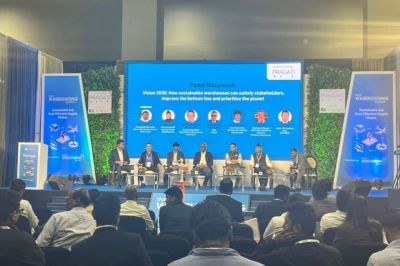
The 13th edition of the India Warehousing Show (IWS), slated for July 11th to 13th, 2024, at the Yashobhoomi, India International Convention & Expo Centre (IICC) in Dwarka, New Delhi, promises to be a pivotal event for warehousing, material handling, logistics, automation, and supply chain professionals. Organised by RX India, IWS continues to be a cornerstone event, uniting the entire industry under one roof. Highlighting the event will be a special address by Shri Surendra Ahirwar, Joint Secretary Logistics & Trade, Ministry of Commerce & Industry. His insights into India's evolving logistics landscape will underscore government initiatives aimed at enhancing sector efficiency and competitiveness, aligning with the theme "Streamlining Tomorrow: Transforming Supply Chains through Automation." Mr. Umang Gupta, Country General Manager, RX India, emphasised the event's significance, stating, "With the warehousing & logistics sector's critical role in the national economy, collaboration across the economic value chain and technological advancements are crucial for growth. Over the decade, India Warehousing Show has emerged as the flagship event connecting policy makers, technology companies, and infrastructure customers." Featuring more than 250 exhibitors, IWS will showcase the latest technological advancements and live product demonstrations from leading national and international companies in storage, transportation, and logistics solutions. The event will also host expert-led panel discussions, industry talk shows, and networking sessions with industry leaders. Topics will range from the National Logistics Policy and optimizing logistical costs to AI, Industry 4.0, sustainability in logistics, and the impact of e-commerce and Q-commerce on consumer experiences. The Yashobhoomi venue, renowned for its state-of-the-art facilities and expansive space, promises an ideal environment for industry professionals to connect, collaborate, and drive innovation in logistics and supply chain management.
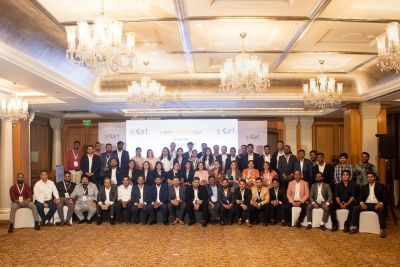
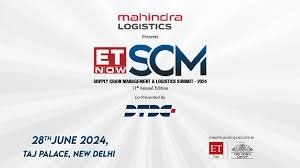
Mahindra Logistics presents ET NOW Supply Chain Management and Logistics Summit 2024, Strategic Partner Oracle and Co-presented by DTDC Express, promises to be a beacon of transformative discourse, steering the conversation towards building a resilient supply chain ecosystem capable of navigating the complexities of the modern global economy. With advancements in AI, data analytics, and automation, supply chains have undergone a rapid evolution, becoming indispensable for ensuring the seamless flow of goods and maintaining the competitiveness of stakeholders worldwide. This evolution underscores the need for adaptability to change, as supply chain professionals take the lead in innovating sustainable practices to shape the future landscapes of commerce and trade. Scheduled for June 28th at Taj Palace, New Delhi, the summit aims to convene industry leaders, policymakers, and experts to explore, exchange insights, and chart a course towards a more efficient, sustainable, and resilient supply chain ecosystem. The event will feature engaging discussions, expert-led masterclasses, an expo showcasing transformative solutions, and awards celebrating outstanding organisations. Among the critical themes to be discussed are the future of digital supply chains and the transformative role of automation in reshaping the industry. With over 100 leading supply chain heads expected to participate, the summit provides a unique platform for knowledge sharing and networking. The summit also aligns with India's commitment to transforming its trade landscape and achieving global leadership through world-class infrastructure, institutional reform, and sustainable practices. By fostering collaboration and innovation, the event aims to drive positive change and propel the industry towards a brighter future. As the world continues to evolve, the ET NOW Supply Chain Management and Logistics Summit 2024 stands as a testament to the industry's resilience and determination to overcome challenges, ultimately forging a path towards a more efficient, transparent, and sustainable supply chain ecosystem.
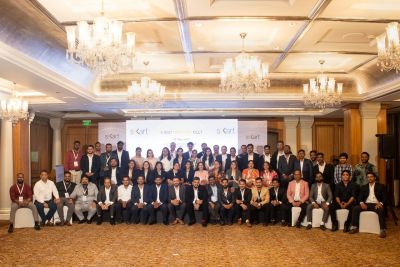
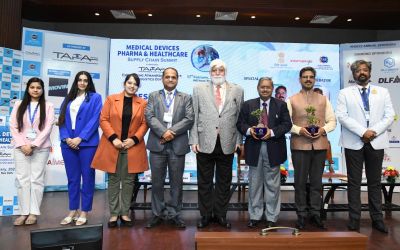
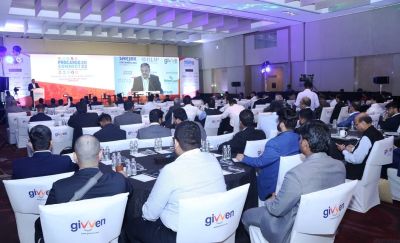
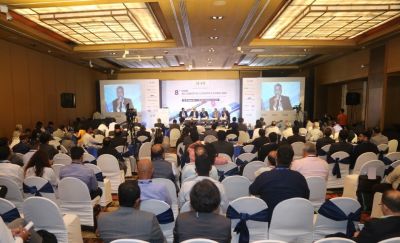
Surecom Media organised PROCARGOCONNECT 2022,the ‘first-of-its-kind’ conference, mainly revolving around the sector of Project Cargo and Logistics Management. Pioneering a new saga and legacy of conferences, PROCARGOCONNECT 2022 that convened on August 25, 2022 at The Westin Mumbai Garden City, attracted an audience of 150+ specialised logistics and projects professionals, which included several eminent personalities belonging to government-owned corporations as well as from the private sector, mainly from heavy engineering companies, components and process equipment manufacturers, industrial projects and EPC companies that majorly use the modes of transport steering and fulfiling the crucial demand for procurement and installing of over-dimensional and overweight consignments at the sites. The conference witnessed six multifarious extensively informative panel discussions, which proved to be extremely engaging with steaming debates and discussions, brewing in continuum. At the outset, Ajeet Kumar, Director, Surecom Media, in his opening remarks welcomed the delegates and introduced them to the kind of discussions the conference would unfurl through the day, thereby setting a definite context for relevance and updation of information. Eminent leaders and sector experts both from the service user and provider side gathered around to light the lamp and marked an auspicious beginning to the eventful day ahead. The chief guest for the event, Pradeep Dongre, Associate Director (Contracts and Materials Management), Nuclear Power Corporation of India Ltd (NPCIL), addressed the most dominant issues and elaborated on the degree and severity of impact with facts and figures. The 1st panel discussion revolved around ‘Demand and Supply, Trends and Expectations shaping the EPC Industry’. This panel specifically discussed the impact of emerging markets – where volumes will come from; the outlook for the EPC sector; the key driver for the project cargo market; future forecasting, developing innovations, new operational designs and service readiness. The deliberations touched upon the activities that need to be done by the core companies and the ones that need outsourcing. The demand “from India”, i.e. the resources that India provides globally – solar energy and wind energy and their states of readiness, in terms of logistics and supply chain management capabilities making these sectors equipped for increasing exports, were discussed. Moreover, collaboration from all the associated sectors will fill the gaps which continue to glare at us, despite the various innovative initiatives of the government. Shashi Kant Misra, Lead- SCM & Logistics, L&T Hydrocarbon Engineering rightly questioned the limitations and doubts that the user industry is facing, even after claiming that they have handed over the project to reliable partners. “Why don’t companies depend completely on the channel partners and why do they feel a need to send their men to the site for such a considerable period of time?”. Subsequently, Hardik Lalani,Deputy General Manager- Procurement, Kalpataru Power Transmission; Mukesh Nandan Jha, Head- Procurement - Substations (GIS/AIS), KEC International; Anand Iyer, Head- Corporate EXIM and Commercial, Thermax Global; and Nitesh Shinde, Manager- SCM, Primetals Technologies chimed in, in unison, to collectively claim that the need for trust on project partners is what determines the prerequisite for an ideal industry, setting benchmarks for the future. The panel, through its riveting dialogue, opened up new ways of thinking, gelling in thoughts of procurement professionals, supply chain management experts and corporate heads for trade and commerce activities. The panelists were felicitated by Rajesh Gupta, Managing Director, Premier Global Logistics. Taking the blow-by-blow account ahead, the 2nd panel took in its stride to discuss on the highly common and yet brimming-with-newness dialectical concept of ‘Capacity versus Cost – How to navigate transportation challenges in the post-COVID environment’, which brought to the fore some very interesting insights on how to work together with a perfectly aligned understanding of what can be delivered in the new normal and how to adapt to the shifts and changes, transforming the conventional work methodologies. The pandemic, not surprisingly, cropped up as a major anchor of the discussion since the cost-fluctuation and disruption that the market witnessed due to the catastrophic outbreak of the COVID-19 pandemic still lingers like a nightmare, inflicting great damage to the profit margins of businesses. Bibhudendra Maharana, Head- Logistics Center of Excellence, GE India Industrial says that there is a need to look at things from a new angle, what best can be done differently, how to come out of the disputes. “Plannings, which has been so difficult to manage, have still been implemented all across the nation. Having a proper forecast will help quell the challenges and we need to work better, towards that.” P V S Nageswara Rao, Director and CEO, Mechtrotech Projects highlighted how the pandemic changed the entire pattern of life of any business. “Sending engineers too on the project is one of the many changes or new developments that have become an example of how a pandemic has changed the project logistics industry.” Amandeep Singh, Director, Techno Process Equipment India said that their focus on the areas from where they source their raw materials, on inventory management – how they pushed for tie ups between logistics companies to enable more cost competitiveness. Pavithran M Kallada, Managing Director- India, BDP UGL Global Logistics, who was the moderator for the panel, highlighted the scarcity of ocean containers and increasing charter prices. He put forward some enthralling questions to the panel as to how they have been able to answer not just their customers but also their vendors, rather business partners, with ingenuity, despite all such disruptions. In spite of all the challenges, the panelists agreed and echoed the fact that post-COVID, logistics companies, manufacturers have come together like never before and that is what will make up for resiliency in the coming times. Anup Nair, Projects Director – India, BDP UGL Global Logistics felicitated the speakers after the session concluded. As without hearing out the problems no industry can deliberate on recuperation measures to scale new heights, the 3rd panel session focussed particularly on the ‘Challenges faced by Project Cargo shippers and Service Providers’. The discussions proved to be extremely singular with its sharp dissection of intricacies involved in the highly complex web of cargo shipping that deals with an intense sieving off layers of costs, with an approach that is dedicated to adapt to new realities. Prospects like diverse onshore projects; drive towards renewable energy; decarbonising operations, all the while making the trade more collaborative and symbiotic, by sharing of capabilities were illuminated upon. Subesh Kumar, Chief General Manager (Inspection) and Head BO - Mumbai - SCM, Engineers India Ltd discussed the importance of alternative modes for logistics management of ODC cargo. Nailesh Gandhi, Direcotr, Express Global Logistics (EXG) emphasised on the significance of "listening" as a service provider. “Every engineer, every member should be a part of the entire on-ground team, should be a part of discussions, should be actively involved towards making a project achieve executional excellence in itself, by adhering to and doing what is desired of them.” Harsh Chheda, Director, Hirji Logipack in his deliberation touched upon the importance of packaging of products in determining the quality of the goods transported and adding value to the supply chain. “New design requirements have been added for packaging: on the one hand, to improve the differentiation capacity of the product, and on the other, to improve the efficiency of the product at every step of the transit process.” Jay Kumar Patro, Head- Logistics, Plasser India talked about the risk factors in designing and manufacturing that might cause the entire system to fall through. “Planning before the process initiates is the key to managing costs,” he emphasised. Being a part of the high-on-demand green energy sector, Vinod Kumar Vyas, Regional Logistics Leader - Hydro Project, GE Renewable Energy added on to the list of challenges and affirmed some already mentioned factors and assessments by the fellow panelists while stressing on the synergies that can be achieved by integrating systems and interfaces between evolving supply chains and its set of new customers. As the panel marked an end to some enlightening discussions, Ajit Menon, Business Advisor, Givven Logistics took to the stage to felicitate the speakers. The 4th panel kick-started with some in-depth analyses, followed by a gripping discussion on ‘Today’s global MPV, SPMT fleet, purpose-built vessels and their specifics – scalability and growth’ shedding light on the current state of multipurpose vessel fleet, RORO, purpose-built vessels, self-propelled modular transporters, electronic steer platform trailers, self-loading girder systems and roll-trailers, with a quest to comprehend what the future demands. Capt. Atul Sharma, Manager- Sales (Breakbulk & Projects), Höegh Autoliners India spoke about the new regulations of the maritime industry and the new changes after the outbreak of the pandemic. Ibrahim Khan, Chartering Manager (India and Middle East), dship Carriers taking cue from Sharma’s statement, highlighted the huge demand coming from the Wind Energy sector, which is taking a great share of the vessels present today. Shreyas Vyas, Vice President, Total Movements representing the SPMT perspective highlighted the need for investment in the sector to make that rare leap of faith and reliability at any circumstance and terrain. He said, it all depends, albeit, on the execution of the new projects lying in the pipeline. Vishal K Joshi, General Manager- Projects & Chartering, Om Freight Forwarders talked about how the risks and damages can be mitigated and avoided by aircraft charters. “Project Cargo is an out-of-the-box cargo and hence, every solution has to be tailor-made for the very specific challenges,” he added. Shashi Kant Misra, Lead- SCM & Logistics, L&T Hydrocarbon Engineering who also took to this technical panel talked about preventive steps that help in management of operations despite disruptions. “The lack of focus on SPMTs by Indian companies is one of the major issues,” he said. SPMTs, engineers, workers – there is a need to rope in more and more of these.” The panelists were felicitated by Sanjiv Garg, Managing Director, Pipavav Railway Corporation and Secretary General, Chartered Institute of Logistics and Transport (CILT) - India. Digitisation is soon emerging as the necessary first step in the journey of modernisation, as embarked by businesses. Hence, the 5th Panel attracted significant attention with a stimulating conversation revolving around ‘Data Transparency and Visibility across the Value Chain System’. After all, companies should be capable of knowing what is happening upstream and downstream in the supply chain and supplier ecosystems and be equipped to effectively communicate this knowledge both internally and externally across the value chain. Ruchita Mishra, Director- Procurement and Supply Chain, ISS Facility Services India, the moderator for the panel, initiated the opening dialogue on data visibility and transparency and how data integration within and beyond ecosystems can benefit processes substantially. Pradeep Tewari, Head - Petchem SCM Operations, Reliance Industries and Mayur Karekar, Project Logistics Manager, Air Products India enlightened the audience about the information that is available due to the current infrastructure. Both presented various examples of how the pandemic affected logistics, where one process was accomplished but something or the other acted as a barrier to a finished result. Anand Iyer, Head- Corporate EXIM and Commercial, Thermax Global, who was also a part of the panel critically highlighted how fluid is data and that the focus should now shift on how to use it and leverage it to integrate processes. Amit Bhowmik, Cluster Head of Procurement - Southeast Asia, Linde India explained how the present situation has several opportunities in store, as now there are so many suppliers available for management of goods. “Firefighting”, he said, has definitely subsided to quite an extent. Daljit Singh Kohli, India Lead, Port of Antwerp-Bruges took to the dais to congratulate and felicitate the speakers. The 6th panel witnessed a new turn in the general direction of the discussion, as ideas poured scheming to bring in changes into the traditional patterns. The theme revolved around‘Cultivating Sector Leaders: identifying, upskilling, empowering the NextGen’. The panel delved into the mandates and requirements considering extensive up-gradation of processes and people in the EPC Industry, as well as cargo movers, while evolving alongside tech deployments, necessary to holistically equip the future of the sector. S Mahesh Mahalingam, Head- EXIM, L&T Construction and Gopi T, Chief Procurement Officer, Senvion cast light on the skills of workforce management through being the right coach and mentor, given the fact that there are three generations working under the same roof. Sanjiv Garg, Managing Director, Pipavav Railway Corporation and Secretary General, Chartered Institute of Logistics and Transport (CILT) - India explained how the working conditions had to be changed for logistics workers, because of necessary human rights movements. “Only when these changes are made, will the logistics industry truly modernise,” he said. Gopinath Thube, Logistics Expert - Domestic and International, EPC Projects said that there has to be on-site experience when it comes to the projects sector. “Formulating analysis reports, implementing route surveys, etc. are highly region-specific and time-specific and hence, have to be conducted again and again. It is impossible to determine all the factors that intervene in the dynamics of the overall scheme of things.” The moderator for the panel Snehal Jain,Logistics Manager - LNC Canada Project (OSBL), Fluor annotated how young professionals need to be inspired by making them focus on far-reaching perspectives. “Logistics systems should change the environment, the rules and regulations of the game, so as to make everything progressive and not necessarily micromanaging.” Janesh Gulati, Managing Director, Total Movements felicitated the speakers as the session brought the curtain down with a fulfiled quest to grasp new lines of thought. Following that, Sanjiv Garg, Managing Director, Pipavav Railway Corporation and Secretary General, Chartered Institute of Logistics and Transport (CILT) – India, took to the dais and offered a kind and heartfelt vote of thanks to the entire team of Surecom Media, for organising a highly distinguishable event. Ajeet Kumar, Director, Surecom Media felicitated the sponsors and partners – Express Global Logistics, Sarjak Container Lines, BDP International India, Givven Logistics, dship Carriers Germany, AVA Global, Balmer Lawrie, Industrial Freight Movers and Rhenus Logistics – with mementos, while extending a worthy note of gratitude for their contribution, leading to the huge success that PROCARGOCONNECT 2022 instated.