
Loading...
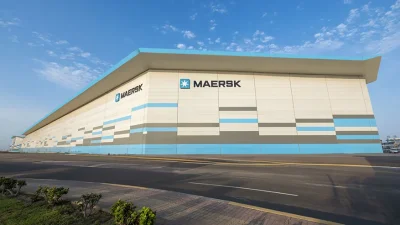
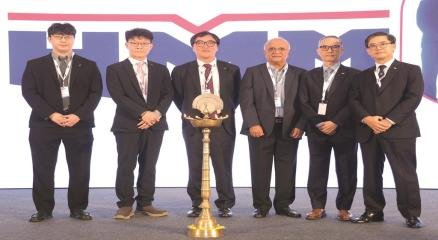
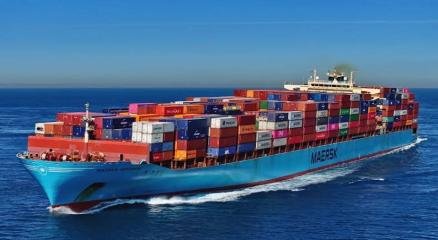
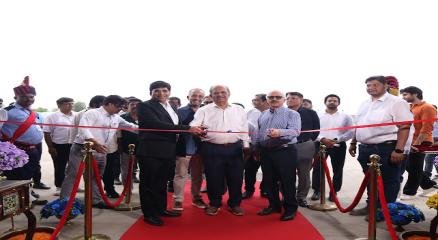
A.P. Moller – Maersk (Maersk) and the General Ports Authority of Saudi Arabia, known as Mawani, unveiled the largest Maersk Logistics Park in the Middle East at Jeddah Islamic Port on Wednesday. The opening ceremony was graced by notable figures including His Excellency Engineer Saleh bin Nasser Al-Jasser, Minister of Transport and Logistics Services and Chairman of the General Ports Authority, and Vincent Clerc, CEO of A.P. Moller – Maersk, alongside other key officials from the logistics and business sectors.
In his keynote address, Engineer Saleh bin Nasser Al-Jasser highlighted the transformation of Saudi Arabia’s ports sector, marked by higher operational efficiency and growing maritime connectivity. He emphasised that the new logistics park will play a pivotal role in strengthening Saudi Arabia's economic activities, supporting trade, exports, and improving supply chain logistics. "The Maersk Logistics Park at Jeddah Islamic Port will contribute significantly to the Kingdom’s economic development by providing top-tier logistics services that enhance trade movement and export capabilities," Al-Jasser stated.
Omar bin Talal Hariri, President of the General Authority of Ports, praised the role of the logistics park in bolstering the logistics industry’s growth. He said, "This facility will facilitate supply chain connectivity, which will drive significant improvements in the operational performance of Saudi ports and enhance the capabilities of the logistics sector."
Vincent Clerc, CEO of A.P. Moller – Maersk, emphasised the strategic importance of the new logistics park, positioning Saudi Arabia as a vital hub for global trade. "Our Logistics Park in Jeddah demonstrates our integrated logistics strategy. It supports our customers with resilient logistics while advancing our decarbonisation goals," Clerc remarked.
Ahmed Kudous, Head of Supply Chain for Unilever’s Middle East and Turkey region, reiterated the significance of the logistics park in supporting Unilever's sustainability goals. By consolidating operations at the facility, Unilever aims to reduce energy consumption and CO2 emissions, aligning with its Net Zero ambition by 2039. Kudous added, "This partnership with Maersk advances our sustainability agenda while contributing to the Saudi Vision 2030, which aims to transform the Kingdom into a leading global logistics hub."
Spanning 225,000 square meters, the Maersk Logistics Park offers fully integrated logistics solutions under one roof. It boasts multi-modal connectivity, linking ocean, land, and air transport, and provides warehousing solutions for both B2B and e-commerce. The facility includes temperature-controlled warehouses, custom-bonded setups, and distribution solutions, such as first- and last-mile deliveries, making it ideal for industries ranging from FMCG, frozen food, and retail to petrochemicals, electronics, and pharmaceuticals.
The logistics park is also a cornerstone of Maersk’s decarbonisation strategy. Up to 70% of the facility's electricity will be drawn from 32,000 solar panels installed across 64,000 square meters of rooftop space. The site will operate electric equipment and trucks, utilise low-consumption LED lighting, and adopt other energy-efficient technologies, contributing to Maersk’s ambition to achieve Net Zero greenhouse gas emissions by 2040.
In addition to its environmental initiatives, Maersk has established a women’s academy at the park, dedicated to training and empowering Saudi women in the logistics and supply chain sector. This academy offers specialised training and mentorship programs to enhance diversity and inclusion within an industry traditionally dominated by men.
Safety remains a priority at the Maersk Logistics Park, which has been built with world-class firefighting systems, segregated pedestrian and equipment paths, and comprehensive surveillance camera systems to ensure the security of both personnel and cargo. The facility’s state-of-the-art safety measures reflect Maersk’s commitment to creating a safe environment for all stakeholders.
Strategically located at Jeddah Islamic Port, which features advanced infrastructure, the logistics park is positioned to leverage modern automated and eco-friendly equipment. This will enhance the port’s operational efficiency, competitiveness, and capacity, enabling it to accommodate new generations of large vessels.
The launch of the Maersk Logistics Park is a significant milestone in advancing Saudi Arabia’s logistics capabilities and global trade competitiveness, aligning with the broader objectives of Saudi Vision 2030 to position the Kingdom as a leading logistics hub on the global stage.
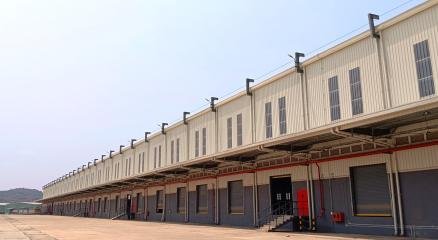
TVS Industrial & Logistics Parks (TVS ILP) has leased 80,000 sq ft of warehousing space at its Visakhapatnam facility in Andhra Pradesh to ATC Tires AP, a Yokohama Group company, strengthening the tyre manufacturer’s distribution and export logistics network. ATC Tires has commenced operations at the facility, which will function as a mother hub warehouse supporting its domestic and international operations. The facility will support the storage and distribution of Yokohama passenger car tyres, alongside the company’s ALLIANCE, GALAXY and PRIMEX off-highway tyre brands serving the agricultural, construction, industrial and forestry sectors. Its location is expected to help ATC Tires streamline domestic supply chains, improve access to key industrial and manufacturing markets, and strengthen export operations. The development also highlights Visakhapatnam’s growing relevance as an industrial and logistics destination, supported by its maritime connectivity, expanding infrastructure and access to markets across South and East India. The facility is expected to contribute to local employment generation while supporting the region’s wider industrial growth. Dr. Ramnath Subramaniam, Joint Managing Director, TVS ILP, said the partnership reflects the role of technology-enabled, well-connected infrastructure in meeting evolving operational and supply-chain requirements. He also pointed to Visakhapatnam’s industrial ecosystem, strategic location and government incentives as factors enhancing its appeal for businesses across sectors. For Yokohama, the warehouse represents a strategic addition to its logistics infrastructure. Jose Motha, General Manager, Supply Chain Management, Yokohama, noted that an efficient and well-connected warehousing network is central to building resilient supply chains. Combined with the company’s highly automated tyre manufacturing facility in Visakhapatnam, the new hub is expected to improve operational efficiency and support a more agile distribution network. The lease adds to TVS ILP’s expanding Grade A warehousing portfolio across India and underscores the growing importance of strategically located logistics infrastructure in connecting manufacturing, distribution and export activity. For ATC Tires, the new mother hub provides an additional operational base to serve customers more efficiently while strengthening its supply-chain reach across key Indian markets.

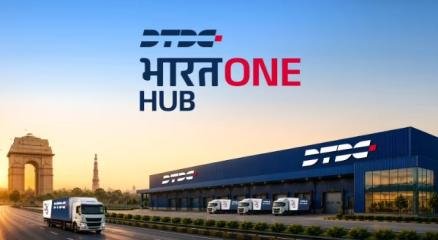
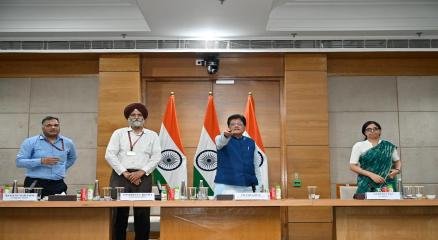
Union Commerce and Industry Minister Piyush Goyal has launched the BHAVYA (Bharat Audyogik Vikas Yojana) Portal, a digital platform designed to accelerate the implementation of the government’s ambitious ₹33,660 crore industrial parks programme, strengthening India’s logistics infrastructure. The initiative seeks to develop 100 world-class industrial parks across the country over the next six years, creating investment-ready manufacturing hubs and boosting industrial competitiveness. The BHAVYA Portal will serve as a centralised digital interface for states, Union Territories and other stakeholders to submit proposals, track project progress and facilitate approvals under the scheme. The platform is expected to improve transparency, streamline coordination and ensure faster execution of industrial infrastructure projects. Approved by the Union Cabinet earlier this year, the BHAVYA scheme aims to create integrated industrial ecosystems featuring plug-and-play infrastructure, multimodal connectivity, digital governance systems and worker-support facilities. The parks are envisioned as comprehensive manufacturing and investment destinations that can support both domestic and global businesses looking to expand operations in India. Union Minister Piyush Goyal said that the parks will provide infrastructure including assured water and power supply, road and rail connectivity, land titles, digital single-window clearances and, where feasible, air connectivity. The government is also open to developing dedicated areas for Global Capability Centres (GCCs), worker housing and social infrastructure within the parks. The operational guidelines for BHAVYA were released by the Department for Promotion of Industry and Internal Trade (DPIIT) in May 2026, and the launch of the portal marks the next critical step in translating policy into implementation. The portal will serve as the single digital interface for end-to-end implementation of the Scheme, facilitating the submission of Detailed Project Report (DPR) proposals, project appraisal and evaluation, and real-time monitoring of implementation progress. It will support the challenge-based competitive selection framework under BHAVYA by providing a structured and transparent mechanism for assessing proposals from States, Union Territories, and implementing agencies, while enabling efficient coordination among stakeholders throughout the project lifecycle. The launch event was chaired by Shri Piyush Goyal, and attended by Secretary, DPIIT, Shri Amardeep Singh Bhatia, and CEO & MD, NICDC, Shri Rajat Kumar Saini, along with representatives from State and Union Territory Governments, industry associations, Export Promotion Councils, banks and financial institutions, master developers, and MSMEs. Secretary, DPIIT, Shri Amardeep Singh Bhatia, emphasised that robust digital systems are essential for effective programme management and informed decision-making at scale. He noted that the portal, by serving as a single digital interface across all stages of project submission, evaluation, monitoring, and reporting, would significantly strengthen implementation of the Scheme and enable faster operationalisation of industrial parks across the country. CEO & MD, NICDC, Shri Rajat Kumar Saini, highlighted that the platform had been designed to support the complete lifecycle of projects under BHAVYA. He stated that it would facilitate efficient coordination among stakeholders, provide real-time visibility into project progress, and strengthen transparency and accountability in implementation. The launch was followed by an interaction between Shri Piyush Goyal and industry stakeholders, providing an opportunity to discuss India's next phase of industrial infrastructure development, investment facilitation, ease of doing business, logistics efficiency, and the role of integrated industrial parks in deepening domestic manufacturing capabilities and strengthening India's integration with global value chains. Additionally, the government has also adopted a competitive, challenge-based selection process for park development. In the first phase, states and Union Territories have been invited to submit proposals for up to 50 industrial parks, with the Centre providing financial assistance under defined eligibility criteria. The initiative encourages collaboration between state governments and private sector participants to accelerate infrastructure creation and attract large-scale investments. As India intensifies efforts to strengthen manufacturing capabilities and improve ease of doing business, the launch of the BHAVYA Portal marks a critical step in translating policy intent into on-ground industrial infrastructure. For logistics providers, manufacturers and investors alike, the programme signals the emergence of a new generation of industrial hubs designed to support India’s next phase of economic growth. 𝐒𝐭𝐚𝐲 𝐓𝐮𝐧𝐞𝐝 𝐭𝐨 CARGOCONNECT 𝐟𝐨𝐫 𝐥𝐚𝐭𝐞𝐬𝐭 𝐮𝐩𝐝𝐚𝐭𝐞𝐬!
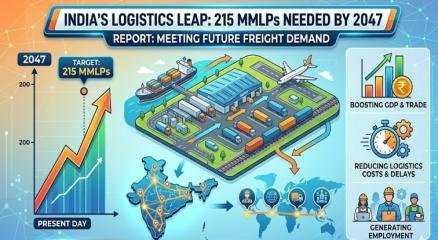
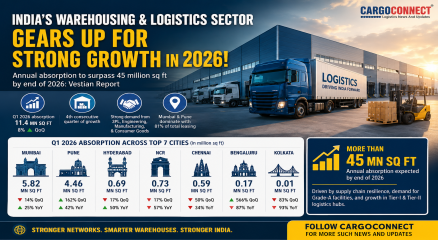
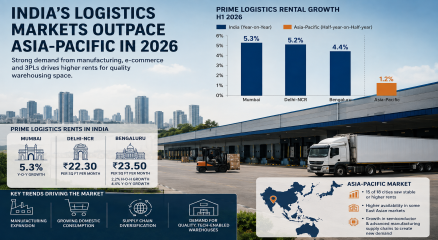
The warehousing and logistics sector is expected to see annual absorption surpassing 45 million sq ft by the end of 2026, reflecting strong demand, according to a Vestian survey. After a phase of slowdown in 2025, India’s warehousing and logistics sector has begun 2026 on a stronger note. This is due to improved confidence among renters, steady domestic demand, and ongoing upgrades to infrastructure. Following a year of careful growth strategies and optimizing networks, renters are gradually moving back to expansion, seeking selective capacity increases in major logistics corridors, especially for high-demand properties. In the first quarter of 2026, the top seven cities in India recorded an absorption of 11.4 million sq ft. This marks an 8 percent increase from the previous quarter and the fourth consecutive quarter of growth. Although absorption fell by 14 percent compared to last year, leasing activity remained strong, particularly from third-party logistics, engineering and manufacturing, and consumer goods sectors. Mumbai and Pune accounted for 81% of the total leasing activity, highlighting the ongoing strength of established industrial and logistics hubs in western India. The continued recovery quarter after quarter suggests that the slowdown in 2025 was a strategic adjustment rather than a sign of weakened demand. Pune was the second-largest contributor with 4.46 million sq ft of absorption. This figure rose by 162 percent from the last quarter and by 42 percent year-on-year, signaling a strong rebound after lower activity in previous quarters. Hyderabad saw an absorption of 0.69 million sq ft in Q1 2026, down 17 percent from the last quarter but up 50 percent from the same period last year. The NCR experienced an absorption of 0.73 million sq ft, which dropped sharply by 61 percent sequentially and 57 percent year-on-year, indicating limited leasing activity. Chennai recorded 0.59 million sq ft of absorption, a decrease of 50 percent from the previous quarter and 34 percent year-on-year, following a strong performance in earlier quarters. Bengaluru, despite a significant 566 percent increase from the last quarter, faced an 87 percent decline year-on-year, with absorption reaching 0.17 million sq ft in Q1 2026. Kolkata experienced a steep drop in leasing activity, with absorption falling to just 0.01 million sq ft. Looking ahead, an increasing focus on supply chain resilience, a rising demand for modern Grade-A facilities, and continued growth in emerging Tier-I and Tier-II logistics hubs are expected to drive growth in 2026. Renters are likely to prioritize network efficiency, quicker delivery times, and technology-driven warehousing solutions, creating fresh demand in key corridors. The warehousing and logistics sector is projected to see annual absorption exceed 45 million sq ft by the end of 2026, indicating ongoing demand in the sector, according to the Vestian report. For more such news and updates, follow CARGOCONNECT.