
Loading...
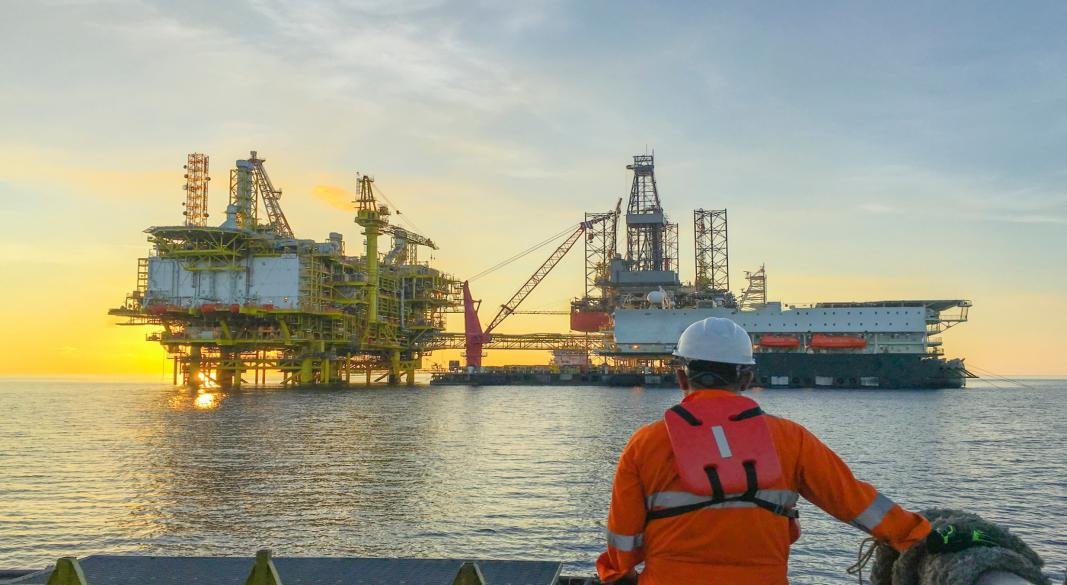
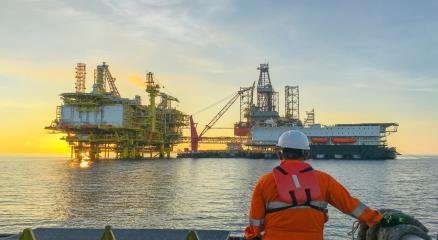
Adani Ports and Special Economic Zone Ltd. (APSEZ), through its marine platform Astro Offshore, has entered into a strategic agreement with Oceaneering International to jointly pursue specialised offshore and subsea opportunities across Europe, marking a major step in its global marine expansion strategy.
The collaboration strengthens APSEZ’s ambitions to build one of the world’s largest integrated marine platforms while accelerating its entry into ultra-deepwater offshore operations and international markets.
A key milestone in this expansion is the induction of Astro Atlas — Astro Offshore’s first ultra-deepwater vessel and its largest, most advanced asset to date. The 2021-built 97-metre DP2 multipurpose support vessel has been added to the company’s growing fleet to support complex subsea engineering and offshore infrastructure projects.
Equipped with a 150-tonne subsea AHC crane, secondary lifting systems, moonpool functionality and accommodation for up to 100 personnel, Astro Atlas is designed for specialised operations including cable laying, subsea construction, underwater intervention and pipeline installation in water depths exceeding 3,000 metres.
According to Ashwani Gupta, Whole-time Director and Chief Executive Officer (CEO), APSEZ, the partnership combines Astro Offshore’s expanding high-specification fleet with Oceaneering’s expertise in deepwater engineering and remotely operated vehicle (ROV) systems, significantly enhancing APSEZ’s offshore operational capabilities.
Mark Humphreys, CEO, Astro Offshore noted that the addition of Astro Atlas strengthens the company’s ability to support increasingly complex offshore requirements while reinforcing its focus on operating one of the industry’s youngest and smartest fleets.
The move aligns with APSEZ’s broader roadmap to scale its marine business into a globally diversified platform spanning logistics, offshore support, subsea engineering and deepwater infrastructure services. The company is targeting a 200-vessel fleet, marine revenues of ₹6,000 crore and planned capital expenditure of ₹13,000 crore by FY31.
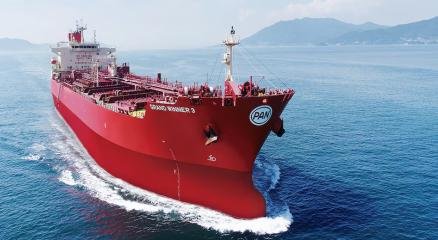
Pan Ocean has strengthened its push into the global crude tanker market with an order for four Very Large Crude Carriers (VLCCs), further accelerating the South Korean shipping company’s diversification beyond its traditional dry bulk operations. The Pan Ocean disclosed in a stock exchange filing that it plans to invest KRW 783.4 billion (approximately US$525 million) in the quartet of supertankers, translating to an estimated US$131 million per vessel. Deliveries are scheduled for the second half of 2030. While the shipyard involved in the contract has not yet been disclosed, the latest order marks another significant milestone in Pan Ocean’s growing tanker strategy after decades of operating primarily as a dry bulk shipping heavyweight. The company, controlled by the Harim Group, currently operates a fleet of more than 100 vessels, with dry bulk activities still accounting for nearly 60% of its overall business operations. However, the carrier has rapidly expanded its presence in crude transportation through a combination of newbuilding investments and fleet acquisitions. Earlier this year, Pan Ocean agreed to acquire 10 VLCCs operated by SK Shipping in a transaction valued at nearly US$700 million, substantially increasing its tanker market exposure. The company had also placed an order in 2025 for two VLCC newbuildings at HD Hyundai Heavy Industries, with deliveries expected in 2027, while additionally entering the VLCC newbuilding segment through a vessel order at Qingdao Beihai Shipbuilding. The latest investment underscores the continued attractiveness of the crude tanker segment for global shipowners amid evolving energy trade flows and long-term fleet diversification strategies.
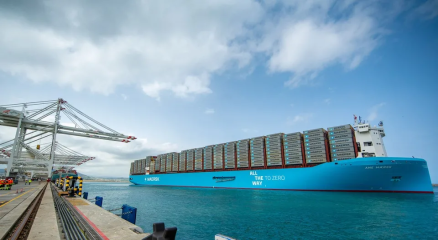
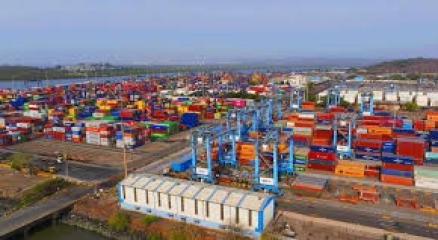
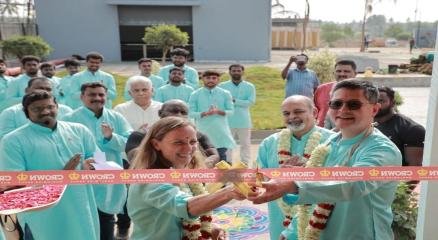
PSA Mumbai, the country’s largest container terminal located at Jawaharlal Nehru Port Authority (JNPA), has expanded its infrastructure with the inauguration of new Super Panamax Quay Cranes to improve cargo handling efficiency and boost port capacity. The inauguration ceremony was attended by PSA International Regional CEO Vincent Ng, PSA Mumbai Executive Director Ashwin Arvind and other dignitaries. The newly added cranes will enhance the operational capabilities of Bharat Mumbai Container Terminals Pvt. Ltd. (BMCTPL), helping increase container handling capacity, reduce vessel turnaround and strengthen logistics operations. Officials said the development highlights the growing collaboration between JNPA and PSA India in modernizing port infrastructure and establishing JNPA as one of India’s leading maritime gateways for global trade and commerce JNPA Inaugurates Advanced Cranes At India’s Largest Container Terminal PSA Mumbai, the country’s largest container terminal located at Jawaharlal Nehru Port Authority (JNPA), has expanded its infrastructure with the inauguration of new Super Panamax Quay Cranes to improve cargo handling efficiency and boost port capacity. The inauguration ceremony was attended by PSA International Regional CEO Vincent Ng, PSA Mumbai Executive Director Ashwin Arvind and other dignitaries. The newly added cranes will enhance the operational capabilities of Bharat Mumbai Container Terminals Pvt. Ltd. (BMCTPL), helping increase container handling capacity, reduce vessel turnaround and strengthen logistics operations. Officials said the development highlights the growing collaboration between JNPA and PSA India in modernizing port infrastructure and establishing JNPA as one of India’s leading maritime gateways for global trade and commerce. Follow CARGOCONNECT for more such updates.
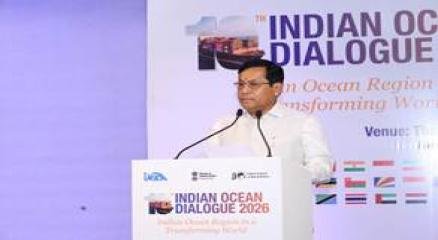
Women’s participation in India’s maritime sector has recorded a sharp increase of 340% since 2020, Union Minister for Ports, Shipping and Waterways Sarbananda Sonowal said, highlighting the government’s efforts to create a more inclusive and future-oriented maritime workforce. Delivering the keynote address at the 10th Indian Ocean Dialogue in New Delhi, Sonowal highlighted “Nari Shakti” as a central pillar of India’s maritime growth story. Union Minister Sarbananda Sonowal was joined by His Excellency, Dhananjay Ramful, Foreign Minister of Mauritius, and His Excellency, Waleed Mohammed Al-Qadimi, Minister of State of Yemen. “Through initiatives like ‘Sagar Mein Samman’, we are advancing dignity, inclusion and leadership opportunities for women in the maritime sector, which has seen a remarkable rise of about 340% since 2020,” Sonowal said. “Under the dynamic leadership of Prime Minister Shri Narendra Modi ji, this transformation in the maritime sector is helping shape a more inclusive, resilient and future-ready workforce for the Indian Ocean Region.” The minister linked the growing presence of women in the maritime industry to India’s broader strategy of combining economic progress with social empowerment. He said that while India continues to strengthen maritime security, connectivity and sustainability, the “human element” remains at the heart of the country’s maritime agenda. “The Indian Ocean is not just a geographic space, but a global lifeline,” Sonowal said. “Its importance to global energy flows, trade and supply chains calls for stronger cooperation, resilience and inclusivity.” Sonowal emphasised that India’s maritime initiatives are aligned with the vision of Prime Minister Narendra Modi, including frameworks such as SAGAR (Security and Growth for All in the Region) and MAHASAGAR, aimed at strengthening regional cooperation and ensuring equitable growth. The 10th Indian Ocean Dialogue is being hosted by India in its capacity as Chair of the Indian Ocean Rim Association (IORA) for the 2025–27 term. Held under the theme “Indian Ocean Region in a Transforming World,” the forum has brought together ministers, policymakers, academics and industry leaders to discuss issues including maritime security, the blue economy, climate change, disaster risk management and women’s empowerment. India’s IORA chairmanship is centred on the themes of “Innovation, Openness, Resilience and Adaptability,” with women’s economic empowerment identified as a major cross-cutting priority. During his address, Sonowal reiterated India’s role as a “net security provider” in the Indian Ocean Region, citing the country’s contributions in humanitarian assistance, maritime surveillance and disaster response operations. He stressed that maritime challenges require collective solutions and called for greater collaboration based on transparency and adherence to international law. “India remains committed to working with all partners to advance a safe, secure and stable Indian Ocean Region,” he said. The Indian Ocean Dialogue, launched in Kochi in 2014 as IORA’s flagship Track 1.5 platform, serves as a forum for engagement among governments, experts and industry stakeholders on critical regional issues. IORA currently includes 23 member states and 12 dialogue partners, with a focus on economic cooperation and sustainable development across the Indian Ocean Region. The 10th edition of the Dialogue, being held in New Delhi on May 7 and 8, 2026, includes dedicated discussions on maritime security, blue economy initiatives, disaster resilience, climate action and women’s leadership in the maritime sector.