
Loading...
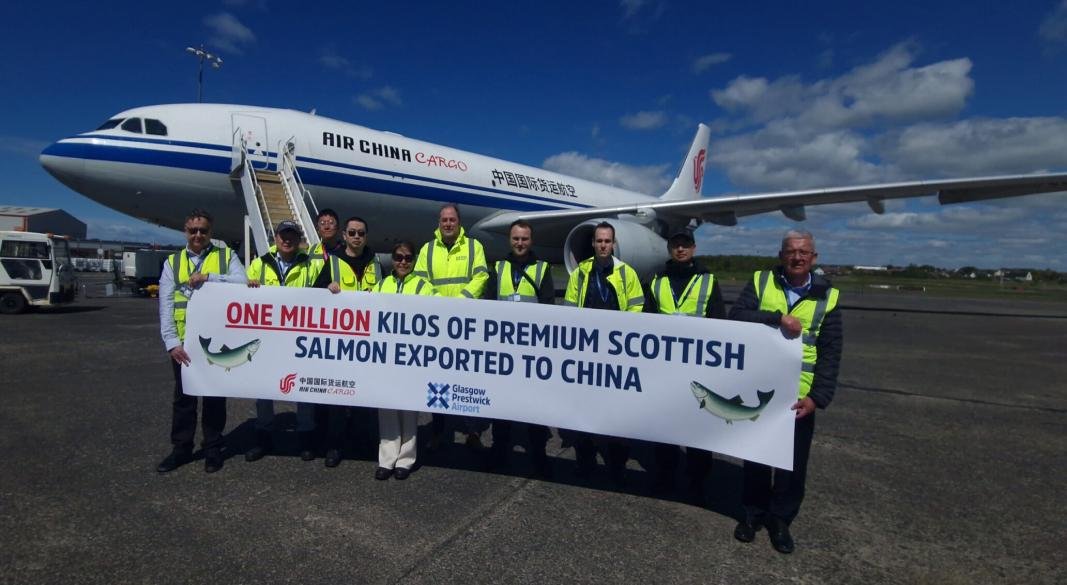
Glasgow Prestwick Airport has surpassed the milestone of exporting one million kilograms of Scottish salmon since January 2026, highlighting the growing strength of the airport’s temperature-controlled seafood logistics operations.
The achievement follows the launch of Prestwick’s dedicated Scotland-to-China seafood export service last September, supported by investments in specialised cool-chain infrastructure, temperature-controlled handling systems and dedicated personnel for perishable cargo operations.
The airport’s seafood export ecosystem now includes high-capacity metal detection systems, advanced temperature monitoring and tracking technologies, along with 87 tonnes of chiller capacity designed to support time-sensitive exports.
According to Ian Forgie, Chief Executive Officer, Glasgow Prestwick Airport the milestone demonstrates increasing confidence among seafood exporters in Prestwick’s ability to provide faster and more resilient market access for premium Scottish produce.
"Every hour saved between the catch and final market helps protect quality, shelf life, and value for exporters, and that is exactly where Prestwick can make a difference," he noted.
The cargo growth has also been supported by expanded freighter connectivity with Asia. Air China Cargo recently increased its Prestwick–Chengdu cargo services from four weekly flights to daily operations, taking the airport’s total direct cargo flights to mainland China to 15 per week.
Additionally, Ethiopian Airlines introduced three new weekly Hong Kong cargo flights earlier this month, further strengthening Prestwick’s position as a strategic gateway connecting Scottish exports to high-growth Asian markets including South Korea and Vietnam.
The development reinforces the growing role of air cargo infrastructure and cold-chain logistics in supporting Scotland’s premium seafood export industry and enhancing supply chain resilience across international trade corridors.
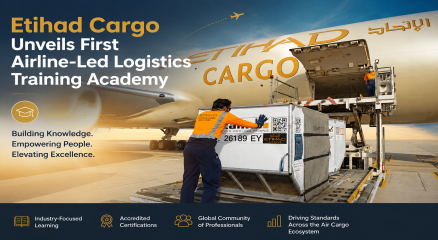
Etihad Cargo, the cargo and logistics division of Etihad Airways, has introduced the Excellence Hub, describing it as the airline industry's first dedicated logistics training academy established by an airline. The initiative has been launched to strengthen knowledge sharing, professional development, and operational excellence across the global air cargo ecosystem. The new platform has been designed to bring greater consistency to operational practices throughout Etihad Cargo's worldwide partner network. By standardising learning and best practices, the Excellence Hub aims to maintain uniform service quality, reinforce safety and regulatory compliance, and improve risk management across every stage of cargo operations. The academy is also expected to strengthen collaboration among partners while supporting the carrier's commitment to reliable and customer-focused services. Developed for Etihad Cargo employees, representatives, partners, customers, and logistics professionals around the world, the academy offers an extensive learning framework covering operational procedures, service standards, product knowledge, safety practices, and compliance requirements aligned with international aviation regulations. The platform also includes industry-recognised certification programmes created in collaboration with accredited educational institutions. The Excellence Hub features a wide range of learning formats, including introductory courses, expert-led masterclasses, educational podcasts, and executive programmes such as a miniMBA. Participants receive accredited certifications after successfully completing their respective learning tracks. To keep users engaged, the academy incorporates interactive elements such as leaderboards, reward points, and LinkedIn achievement badges that recognise individual progress. In addition, university students are being offered complimentary access, enabling aspiring professionals to gain industry exposure and become part of a global learning community. Supporting continuous learning is an AI-powered system that delivers personalised recommendations, monitors learner performance, and provides real-time insights throughout the training journey. With a mobile-friendly interface, the platform ensures that users can access educational content anytime and from virtually anywhere, making professional development more flexible and accessible. Commenting on the launch, Stanislas Brun, Chief Cargo Officer at Etihad Airways, said the Excellence Hub represents a major milestone for the air cargo sector. He noted that bringing operational expertise, accredited education, and industry knowledge together on a single platform will help enhance professional capabilities and elevate service standards across the global logistics network. Dr Nadia Al Bastaki, Chief People and Corporate Affairs Officer at Etihad Airways, emphasised that investing in people remains a core priority for the airline. She said the Excellence Hub reflects that commitment by creating accessible learning opportunities for both newcomers and experienced professionals. According to her, the initiative will contribute to higher operational efficiency, stronger customer service, and the continued development of talent within the global air cargo industry. Additionally, Etihad Cargo has expanded its digital customer platform with five additional languages and a series of new online shipment management tools designed to improve accessibility, visibility and customer self service. The logistics arm of Etihad Airways announced that its website is now available in Japanese, German, Spanish, Chinese and Arabic, enabling customers and partners to access services and manage shipments in their preferred language across key international markets. The latest updates form part of the carrier’s digital strategy to simplify customer interactions and improve the end to end cargo experience through enhanced connectivity and shipment visibility.

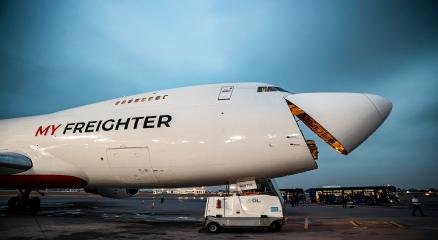
My Freighter has appointed Group Concorde as its Cargo Sales Agent across the United Arab Emirates, the Philippines, Cambodia and Myanmar, marking a strategic move to strengthen its commercial footprint and accelerate growth in key international markets. The partnership is expected to enhance My Freighter’s market presence in regions that play a vital role in global trade and logistics. Through the agreement, Group Concorde will be responsible for cargo sales development, customer engagement, market intelligence and commercial representation for the Uzbekistan-based airline in the four countries. The appointment reflects My Freighter’s continued focus on expanding its international network and improving access to customers across Asia and the Middle East. As global air cargo demand evolves, the airline is investing in partnerships that can help it connect more effectively with freight forwarders, shippers and logistics providers in strategic markets. Group Concorde brings extensive experience in airline representation and cargo sales management. With a growing network spanning Asia-Pacific, South Asia and the Middle East, the company has established itself as a prominent player in the air cargo sales and services sector. Over the years, it has managed cargo sales operations for several leading international airlines, helping carriers strengthen market penetration and improve customer service standards. Industry observers note that the collaboration combines My Freighter’s expanding freighter operations with Group Concorde’s regional expertise and established customer relationships. The arrangement is expected to support capacity utilization, improve market responsiveness and create new business opportunities in sectors such as e-commerce, pharmaceuticals, perishables and general cargo. For My Freighter, the move aligns with its broader growth strategy aimed at increasing connectivity between Central Asia and major global trade corridors. The carrier has steadily expanded its fleet and network in recent years, positioning itself as an emerging player in the international air cargo industry. The airline currently operates cargo services linking Central Asia with Europe, the Middle East and Asia, supporting the growing demand for time-sensitive freight transportation. The partnership also underscores the increasing importance of specialized cargo sales agents in helping airlines navigate competitive markets. By leveraging local market knowledge and customer networks, cargo sales agents enable carriers to expand their reach without establishing a direct commercial presence in every market. As air cargo continues to play a critical role in global supply chains, the collaboration between My Freighter and Group Concorde is expected to strengthen service accessibility and create greater value for customers across the UAE, the Philippines, Cambodia and Myanmar. The agreement further reinforces both companies’ ambitions to expand their influence in fast-growing cargo markets and capitalize on emerging trade opportunities. 𝐒𝐭𝐚𝐲 𝐓𝐮𝐧𝐞𝐝 𝐭𝐨 CARGOCONNECT 𝐟𝐨𝐫 𝐥𝐚𝐭𝐞𝐬𝐭 𝐮𝐩𝐝𝐚𝐭𝐞𝐬!

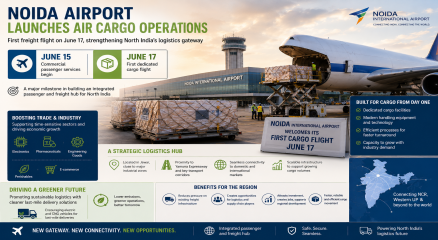
Noida International Airport is set to begin dedicated cargo operations on June 17, marking a significant milestone in the development of North India's newest aviation and logistics hub. The first cargo flight is scheduled to depart two days after the airport commences commercial passenger services on June 15. Airport officials said the launch of cargo services will strengthen the airport's role as a multimodal logistics gateway for the National Capital Region (NCR), western Uttar Pradesh and neighbouring industrial clusters. The airport has been designed to handle both passenger and freight traffic from the start of commercial operations, with cargo expected to become a key growth segment. The initial cargo movement is expected to support industries across electronics, pharmaceuticals, engineering goods, perishables and e-commerce, sectors that rely heavily on time-sensitive transportation. Logistics stakeholders view the airport as an additional capacity source for the region's air freight market, which has traditionally depended on Delhi's Indira Gandhi International Airport. Located in Jewar, the airport is positioned near major industrial and manufacturing zones across Uttar Pradesh, Haryana and Rajasthan. Its proximity to the Yamuna Expressway and upcoming logistics developments is expected to improve cargo connectivity between production centres and international markets. Industry observers believe the addition of a new air cargo gateway could help reduce pressure on existing freight infrastructure in the NCR while creating new opportunities for freight forwarders, express operators and supply chain service providers. The airport's long-term development plans include expanding cargo handling capacity as freight volumes increase. Commercial operations at Noida International Airport will begin on June 15, with domestic passenger services operated by airlines including IndiGo and Akasa Air. Cargo flights are expected to follow shortly thereafter, supporting the airport's ambition to establish itself as an integrated passenger and freight transportation hub. Follow CARGOCONNECT for more such updates.