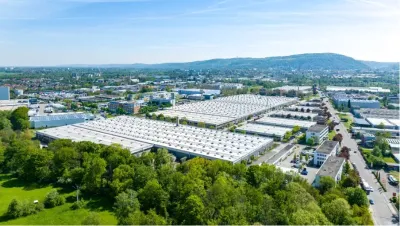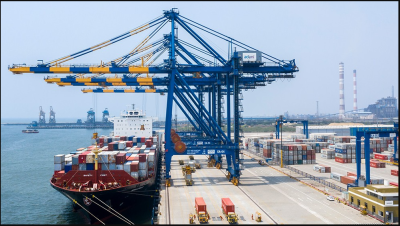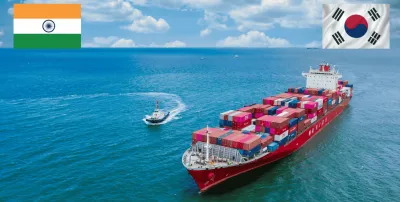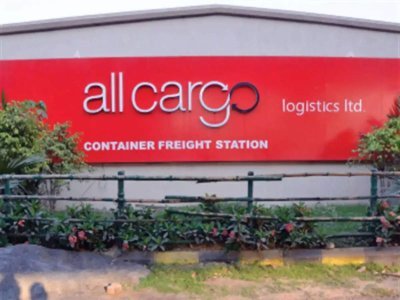
ECU Worldwide Korea, a joint venture of Allcargo Logistics, has launched a new subsidiary, Allcargo ULS Terminals, to strengthen its warehousing presence in South Korea. This move marks a significant step for Allcargo in expanding its logistics footprint in Asia.
In a recent exchange filing, Allcargo Logistics announced the incorporation of Allcargo ULS Terminals, aimed at owning and leasing warehouse spaces in Korea. The acquisition of these warehouses is pending approval from the Busan port authorities, a crucial step for operational commencement.
Allcargo will hold a 49% stake in the newly formed entity, highlighting its strategic investment in the Korean market, which aligns with its vision to enhance global supply chain efficiencies.
ECU Worldwide, recognised as the leader in Less-than-Container Load (LCL) consolidation, facilitates cargo movement across 180 countries through more than 2,400 direct trade lanes and offers door-to-door delivery services in over 50 markets. The establishment of Allcargo ULS Terminals is expected to bolster ECU Worldwide's position by providing essential warehousing support, thus enabling smoother and more efficient cargo handling operations.
The move underscores Allcargo's commitment to expanding its service offerings and creating value for its global clientele, enhancing its role in the global logistics landscape.
The Federation of Freight Forwarders’ Associations in India (FFFAI) held its 6th EC Meeting for the term 2021-23 on May 27 and 28 in Bengaluru. The meeting was attended by the Office Bearers and 28 Member Association representative of FFFAI from across the country, there were many issues discussed and updates provided concerning customs, CBLR, EDI, Service Tax/GST, logistics, air cargo, sea cargo, skill development,importance of social media which FFFAI has expanded recently, technology developments, etc. The special focus of the 6th EC meeting was the updates on forthcoming 24th Biennial Convention of FFFAI to be held from August 12 to 14, 2022 in Chennai with the theme LOGISTICS RESHAPE, EMBRACE AND SURGE IN THE DIGITAL ERA. At this EC meeting, FFFAI also implemented Digital Learning platform for members and next generation for e-learning. It has been decided that FFFAI would initiate FIATA eFBL here in India to benefit the trade, which empowers customs brokers, freight forwarders and logistics service providers. In addition, updates on the recently held FIATA HQ Meet was also provided by the concerned members of FFFAI. FFFAI members present at this EC meeting stressed upon enhancing productivity on ICEGATE for trade facilitation and Ease of Doing Business. The FFFAI members also urged for creating a dedicated portal for LSP integration. As regard to skill development initiatives, IIFF’s (training arm of FFFAI) past and forthcoming training programmes (both online and classroom/physical) for the entire logistics industry were presented at the EC meeting. In addition, FFFAI’s various initiatives on capacity building through technology/IT also discussed withadequate importance. Recent activities of FFFAI Women’s Wing including organising interactive meetings with Government of India officials and industry experts were highlighted at this meeting which drew huge appreciation from the members. The members committed to expand the activities of the Women’s Wing in all the 28 member association locations to empower/encourage the women logistics practitioners. At this EC meeting FFFAI has signed an MoU with the National Institute of Industrial Engineering (NITIE) with an objective of skilling the aspiring candidates looking for opportunities in the logistics sector. Notably, a special session was organised at this 6th EC Meeting where N Sivasailam, former Special Secretary (Logistics), Ministry of Commerce, Government of India was present to address the FFFAI members and highlight the recent initiatives of the government in strengthening the logistics infrastructure, thereby leading in increase of international trade through multimodal connectivity and faster cargo clearance. He projected the ambitious growth potential of the logistics industry in India with a strong collaboration between government and industry people. Also speaking on the occasion was Bani Bhattacharya, IRS, who interacted with members of FFFAI on various initiatives of CBIC for the trade facilitation without human intervention. FFFAI Chairman Shankar Shinde thanked all the 28 associations for their support and appreciated the contribution of CBIC/DG systems trade facilitation measures. FFFAI Member Associations are: 1. Ahmedabad Custom Brokers' Association2. Aurangabad Customs House Agents Association3. Association of Custom House Agents Thiruvanthapuram4. Bangalore Custom House Agents Association5. Brihnamumbai Custom Brokers Association6. Calcutta Customs House Agents Association7. Chennai Customs House Agents Association8. Cochin Customs Brokers' Association9. Coimbatore Customs House and Steamer Agents Association10. Custom Brokers Association Hyderabad11. Delhi Customs Brokers Association12. Goa Custom Brokers Association13.Indore Customs House Agents Association14. The Kakinada Customs Brokers Association15. Kandla Custom Brokers Association16. Kanpur Customs Brokers Association17. Ludhiana Customs House Agents Association18. Mangalore Customs House Agents Association19. Mundra Customs Brokers Association20. Nagpur Customs House Agents Association21. Nashik Customs House Agents Association22. Nadia Custom Brokers Association23. Pipavav Custom Brokers Association24. Pune Customs House Agents Association25. Rajasthan Customs House Agents Association26.Tuticorin Custom Brokers Association27.Visakhapatnam Cusotms Brokers' Association28.West Bengal Custom House Agents Society FFFAI welcomes Women in Logistics/Youth in Logistics to participate on FFFAI forums and also invites membership application form logistics service providers in industry as this is a big national and international forum to network.
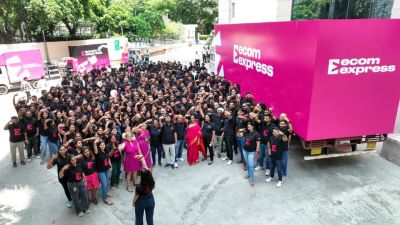
Ecom Express Limited, India’s sole pure-play B2C e-commerce logistics provider as of the Financial Year 2024, has introduced a new brand identity, underscoring its commitment to customer-centricity. This rebranding reflects a focus on addressing specific customer needs, prioritising customer-facing metrics, and integrating innovative technology across its nationwide express logistics network. The goal is to enhance speed, agility, and network reach, ensuring a customer-focused approach. The rebranding includes a dynamic logo and a refreshed visual identity, symbolising Ecom Express’s pursuit of excellence. The new logo features a forward-moving arrow within a square, representing the company’s dedication to delivery. The letter "E" in the logo stands for Expression, Innovation, and Progress, while the bold magenta colour signifies bravery, self-expression, and strength. This vibrant magenta reintroduction reflects Ecom Express's renewed commitment to customers, partners, and team members, as the company aims to simplify and democratise logistics for all. Ajay Chitkara, CEO and MD of Ecom Express, elaborated on the transformation, stating, “Our refreshed brand identity reaffirms our customer-first approach as we continue to integrate technology and innovation to provide reliable, high-speed services with the widest network reach. This transformation also underscores our commitment to our employees and delivery partners, who are essential to our business.” The new logo embodies Ecom Express’s dedication to its core values, focusing on customer welfare and fostering a diverse, inclusive environment. This rebranding signifies a promise to redefine logistics through advanced technology, making life easier for all types of customers.
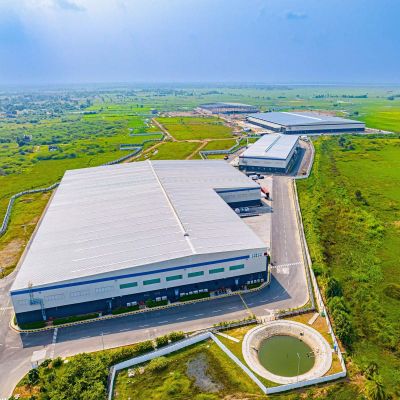
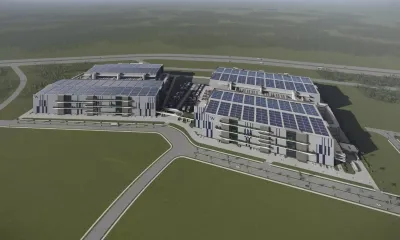
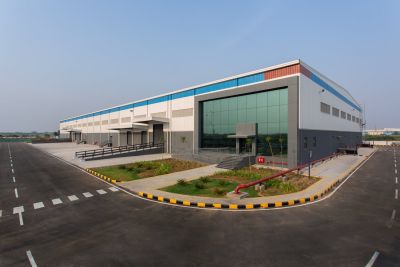
ESR India, the largest APAC focused industrial and logistics real estate platform, has inked a Memorandum of Understanding (MoU) with the Government of Tamil Nadu for a potential investment of INR 550 crores. The MOU is signed for the launch of two industrial parks in Kancheepuram and Krishnagiri districts of the state over the next five years. Once fully operational, the two projects have the potential to create over 4,400 jobs in the facility, that shall boost the overall socio-economic growth in the region. The MoU was signed at the Investment Conclave 2021 conference held today. It will facilitate ESR India’s proposed investment at Kancheepuram and Krishnagiri industrial parks by helping in streamlining land acquisition, approvals, clearances, and administrative processes as per existing policies, rules, and regulations of the Government of Tamil Nadu. The policy and regulatory reforms unveiled in recent times has accentuated the entry of international institutional players and has set new benchmarks for industrial developments in the country. Commenting on the development, Abhijit Malkani, CEO and Country Head, ESR India said, “We are delighted to announce our affiliation with the state government. The Government of Tamil Nadu has been very supportive in encouraging industrial developments in the state by creating a favourable business climate for industrial players. The MoU will see ESR invest INR 550 crores to develop industrial parks in Tamil Nadu, offering 1,800 direct and 2,600 indirect job opportunities in the facility.” “Our goals are aligned with the vision of the Tamil Nadu government, to create avenues to increase business and trade inclusion opportunities and employment towards garnering better economic growth in the region,” he further stated. ESR India is currently present across 9 cities and 15 locations with a total GFA of 18 mn sq ft. These state-of-the-art facilities will be developed upholding the best practices for ESG and sustainability.
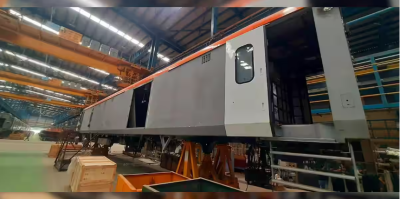
A significant milestone has been achieved in the Indo-Bangla railway project with the inauguration of the inaugural freight train connecting Bangladesh's Gangasagar to Tripura's Nischintanpur. This momentous event marks a significant step forward in strengthening the rail connectivity between the two neighboring countries. The new railway connection is set to enhance trade and commerce between India and Bangladesh, providing a more efficient and cost-effective mode of transportation for goods. It will not only boost bilateral trade but also promote economic development in the region by opening up new opportunities for businesses and industries. The Indo-Bangla railway project is part of a broader effort to improve connectivity and foster closer ties between the two nations. It is expected to play a vital role in facilitating the movement of goods and passengers, ultimately contributing to the economic growth and prosperity of both countries.
Mahindra World City Jaipur (MWC Jaipur), a joint venture between Mahindra Lifespace Developers Ltd (MLDL) and Rajasthan State Industrial Development and Investment Corporation (RIICO) announced it concluded 26 new lease agreements between April 2021 and June 2022. The new signings included both new customers and expansion of facilities by existing clients, together leasing about 137 acres of land. In the same period, MWC Jaipur and its constituent units' aggregated investments crossed Rs 721 crores, and cumulative exports by MWC Jaipur exceeded Rs 15,930 crores, of which Rs 3,321 crores were in the last 15 months. Over these fifteen months, a total of 69 companies have completed their facility buildout at MWC Jaipur and become operational. The new entrants to MWC Jaipur represent a variety of sectors, like Logistics and Warehousing, IT & ITeS, Engineering, Furniture Manufacturing, Solar Energy, Gems and Jewelry manufacturing. The newly added roster of clients at MWC Jaipur includes Wipro Hydraulics, Shakti Hormann, Renew Photovoltaics, Kerakoll India, Normet, Gulmohar Lane Lifestyle, Manor & Mews, J Atelier Pink City, Kamal Coach Works, Maxop Engineering, amongst others. Rajaram Pai, Chief Business Officer – Industrial, Mahindra Lifespaces said, “MWC Jaipur today is home to prestigious domestic and international manufacturing companies from across the world, who have established a manufacturing base in India for the first time. Enabling business acceleration for customers has always been our focus. We continue to deliver the highest urbanisation standards by leveraging innovation, thoughtful design, and a deep commitment to sustainability. MWC Jaipur contributes towards generating incremental employment and income for the state while creating world-class infrastructure which would serve the nation for many years to come. We are glad to be the enablers of Make-in-India and Make-for-India.” Becoming a preferred destination of choice for over 121 global and domestic companies, MWC Jaipur is enabling business growth for customers by crafting a conducive environment, with robust infrastructure and facilities that propagate ease of doing business. Mahindra World City Jaipur is the first project in Asia to receive Climate Positive Development Stage 2 Certification from the C40 Cities Climate Leadership Group (C40), a global network of large cities taking action to address climate change. With a focus on climate-positive development, MWC Jaipur is continuing its efforts on integrating sustainability within the city. Green, integrated developments is continuously being upgraded to mitigate the impact of business operations on the environment. As of March 31, 2022, a total of 59,955 trees have been planted in government-approved forest areas and rural areas under the Mahindra Group’s flagship program – Hariyali. Around 11,100 trees have been planted within the industrial park.


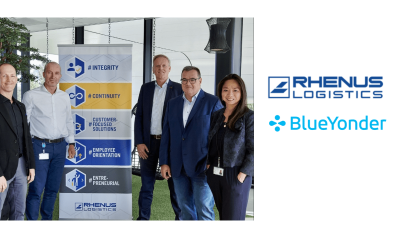
Rhenus Warehousing Solutions has deepened its collaboration with Blue Yonder to drive the global standardisation of its IT systems, reinforcing its digital transformation strategy. As a leading warehousing and fulfilment service provider with operations across 180 sites in 20 countries, Rhenus aims to establish a uniform and efficient IT framework to enhance customer experience worldwide. The partnership will see Rhenus implement Blue Yonder Warehouse Management on a global scale. This interoperable and configurable solution is designed to meet specific customer requirements efficiently while optimising resource allocation across different regions. By enabling in-house configuration of warehouse management modules, Rhenus will reduce its dependence on new software developments, ensuring a more agile and cost-effective operation. Ronny Sassen, Chief Executive Officer of Rhenus Warehousing Solutions, highlighted the significance of the collaboration: "With the global expansion of Blue Yonder, we are creating a robust and flexible foundation for the future of our warehouse management. This not only strengthens our competitiveness but also enables us to respond to the individual needs of our customers worldwide." Beyond system implementation, the partnership will also establish a Blue Yonder competence centre, focused on developing preconfigured modules tailored for various industries. This initiative aims to streamline the implementation process, facilitating the global roll-out of Blue Yonder’s warehouse management solutions and enhancing supply chain efficiencies. Markus Sandbrink, Chief Information Officer of the Rhenus Group, emphasised the long-term strategic benefits: "With Blue Yonder, we are building an IT infrastructure that optimises our global business processes while ensuring the security and performance of our systems. By harmonising this infrastructure, we are strengthening cooperation between all our sites and offering our business partners a reliable basis for their core business." Echoing this sentiment, Nafe Hagen, General Manager, Global Logistics Service Provider and Edge Technologies at Blue Yonder, stated: "Expanding our relationship with Rhenus to include warehousing is an important step in jointly developing innovative and scalable supply chain solutions. Our technology will support Rhenus' security and performance needs as they look to deploy our solutions globally." The initial phase of the collaboration has already demonstrated the potential of a standardised and flexible warehouse management solution. As Rhenus continues its global expansion, the strengthened partnership with Blue Yonder underscores its commitment to digital transformation and operational excellence.

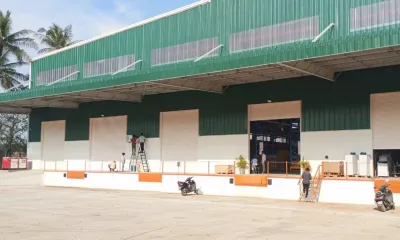
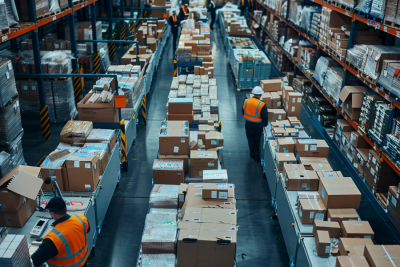
The industrial and warehousing sector in India has experienced remarkable growth in 2024, with a total leasing of 20.2 million sq ft recorded from January to September, according to a report by Colliers India. This figure represents a 17% increase year-on-year, underscoring the sustained momentum in the sector across the country’s top five cities. Notably, the quarterly average space uptake has grown from 5.7 million sq ft in 2021 to 6.7 million sq ft in 2024, highlighting a consistent rise in demand. Among the leading regions, Delhi NCR and Chennai emerged as the frontrunners, collectively accounting for 53% of the total leasing activity during the first nine months of 2024. Third-Party Logistics (3PL) players continued to dominate demand, holding a significant 35% share of the overall leasing. The Engineering and Fast-Moving Consumer Goods (FMCG) sectors also contributed meaningfully to this upward trend. At a micro market level, Bhiwandi in Mumbai recorded the highest activity with 3.7 million sq ft leased in 2024, followed closely by Oragadam in Chennai and Chakan-Talegaon in Pune, both of which saw leasing exceed 2 million sq ft. In the third quarter of 2024 alone, the industrial and warehousing demand reached an impressive 7.3 million sq ft, marking an 18% increase compared to the same period in 2023. Delhi NCR led this surge with 2.3 million sq ft of space leased, primarily driven by significant demand in the Bhaproda and Kulana micro markets. Commenting on this trend, Vijay Ganesh, Managing Director of Industrial & Logistics Services at Colliers India, stated, “On a quarterly basis, Q3 2024 saw an increase in industrial and warehousing demand across the top five cities, indicating a robust recovery in the sector. The large uptake of space in micro markets reflects the growing need for efficient logistics solutions.” The report also revealed that while 3PL players maintained their dominant position with 35% of the leasing share during January to September, the Engineering and FMCG sectors collectively accounted for 32% of the demand. The electronics sector, in particular, witnessed heightened traction, doubling its leasing activity in the first three quarters of 2024 compared to the corresponding period in 2023. The rise of quick commerce (Q-commerce) players has further catalysed the demand for larger hub warehouses in major urban centres, especially in anticipation of the festive season. Vimal Nadar, Senior Director and Head of Research at Colliers India, emphasized the positive outlook for the sector, saying, “Given the healthy demand across major cities and supportive government policies, we anticipate 2024 could close with record leasing activity of around 25 to 30 million sq ft. The improving logistics efficiencies, capacity augmentation, and India's enhanced credibility as a global manufacturing hub will sustain the growth momentum in the industrial and warehousing sector.” In terms of supply, the first three quarters of 2024 saw a significant 29% year-on-year increase, with 21.6 million sq ft of new developments coming online. Delhi NCR again led the pack, contributing 35% of the overall completions with 7.6 million sq ft of new space. Even on a quarterly basis, new supply remained robust in Q3 2024, with around 7.2 million sq ft of completions across the top five cities. Amidst favorable demand-supply dynamics, overall vacancy levels at the end of Q3 2024 remained stable at around 12-13%, indicating a healthy balance in the market. Moreover, large deals (greater than 200,000 sq ft) accounted for approximately 40% of the overall demand during the first nine months of 2024. While the majority of these larger deals were dominated by 3PL players, both the Engineering and FMCG sectors also participated significantly in the larger-sized deals. At the city level, the industrial and warehousing space uptake in Delhi NCR was notably driven by large-sized deals, a marked departure from 2023, where leasing activity was predominantly composed of smaller transactions. In fact, nearly 50% of the deals in the first nine months of 2024 were large-sized in Delhi NCR, illustrating a shift in market dynamics.
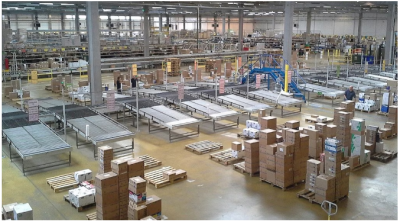
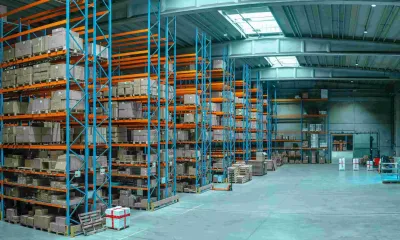
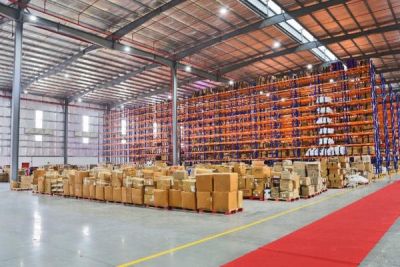
Warehouse transactions across eight primary markets in India reached 23 million square feet in the first half of this year, driven by growing demand from the manufacturing sector, according to a report by Knight Frank India. Nearly 55% of these transactions were in ‘Grade A’ spaces, with Mumbai leading the way, accounting for 20% of the total warehousing volume. “Demand from the manufacturing sector has compensated for the lull in e-commerce and helped broad-base the market’s occupier profile,” said Shishir Baijal, Chairman and Managing Director of Knight Frank India. Despite challenges in the availability of viable land for warehousing development, high institutional interest is expected to support the development of high-quality supply, Baijal added. Delhi-NCR was the second most active market, representing 17% of the total warehousing area transacted, driven by third-party logistics and the manufacturing sectors. Pune emerged as the most expensive warehousing rental market, with average rents at Rs 26 per sq ft per month, followed by Kolkata at Rs 23.8 and Mumbai at Rs 23.6. Pune and Chennai saw a 4% increase in rentals, with NCR and Kolkata witnessing a 3% year-on-year growth. “India’s robust fiscal position and resilient economy are well-positioned to sustain and enhance the warehousing market’s stability and growth potential for the remainder of fiscal year 2024,” Baijal noted. The decentralisation of manufacturing capacity has significantly benefited India, with global giants like Apple, Samsung, Foxconn, and TSMC expanding their manufacturing bases in the country.