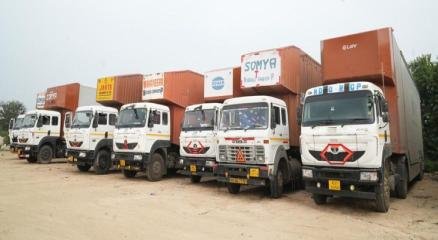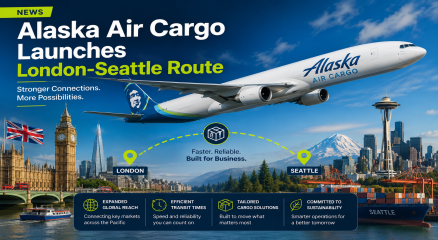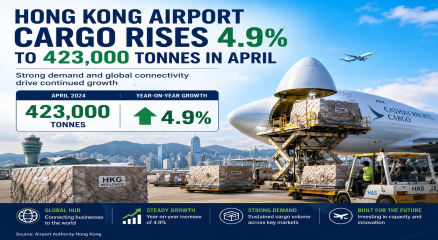


In a momentous event today, PM Modi inaugurated a 77-kilometer-long section of the Western Dedicated Freight Corridor (WDFC), marking a significant milestone in India's ambitious infrastructure development efforts. The inauguration ceremony, held in the presence of key dignitaries and government officials, showcased the country's commitment to enhancing its transportation network. The Western Dedicated Freight Corridor is a game-changing project that aims to revolutionize India's freight transportation sector. The newly inaugurated 77-kilometer section connects key industrial regions, providing a dedicated pathway for the efficient movement of goods. With this achievement, India takes a major step towards reducing logistics costs, boosting manufacturing, and improving the overall economy. PM Modi, while addressing the audience, emphasized the importance of this project in promoting economic growth, generating employment, and reducing the carbon footprint. He noted, "The Western Dedicated Freight Corridor is a testament to India's vision for a modern and efficient transportation system. It will not only enhance our connectivity but also make us a global logistics hub." The event was attended by several Union Ministers and top officials from the Ministry of Railways, underscoring the government's commitment to accelerating infrastructure development in the country.
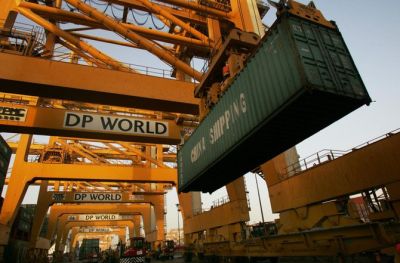
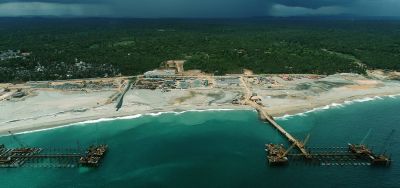
Prime Minister of India Narendra Modi laid the foundation stone for the ambitious project, "Development of Container Terminal on BOT Basis under PPP Mode" situated at Tuna-Tekra at Deendayal Port, on Tuesday, October 17, marking a significant milestone for the Deendayal Port Authority and DP World. The new 2.19 million TEU per annum mega container terminal on India’s western coast, to be built at a cost of Rs 4,539 crores at Deendayal Port in Gujarat, is expected to cater to trade demand from Northern, Western and Central India, connecting these regions to global markets. The momentous occasion was graced by the esteemed presence of Janaksinh Jadeja, President, Kutch District Panchayat, Virendrasinh Jadeja, MLA (Rapar), Maltiben Maheshwari, MLA (Gandhidham), Tejas Sheth, President, Gandhidham Municipality, and Suresh Joseph, Director (Projects), DP World, amongst other dignitaries. S K Mehta, Chairman of Deendayal Port Authority, expressed his enthusiasm for the partnership stating, "This collaborative endeavour signifies our shared dedication to transforming India's maritime landscape. The container terminal at Tuna-Tekra is poised to become a key hub for trade, not only in the region but on a global scale." Rizwan Soomar, MD and CEO – Middle East and North Africa and Indian subcontinent, DP World said, “We are extremely happy to partner with Deendayal Port Authority in developing the Tuna-Tekra mega container terminal. The foundation stone laying ceremony is yet another step towards our commitment to building a best-in-class port infrastructure that will connect Northern, Western, and Central India with global markets, drive economic growth in the hinterlands enabling us to grow the trade possibilities for all stakeholders.” The Tuna-Tekra mega container terminal project is being developed through a Public Private Partnership (PPP) between the Deendayal Port Authority and Hindustan Infralog (a joint venture between DP World and National Investment and Infrastructure Fund – India’s collaborative investment platform anchored by the central government). This collaboration marks a significant milestone in India's maritime sector. The project is part of the National Infrastructure Pipeline and will complement initiatives of the centre such as the PM Gati Shakti Master Plan and National Logistics Policy. It aligns seamlessly with the government's vision of fostering economic growth and ensuring India's competitiveness in the global maritime domain by revolutionising port infrastructure. The project is anticipated to enhance port efficiency, facilitate smoother cargo movement, and drive economic prosperity in the region. The container terminal will be fully compliant with the green port guidelines ensuring sustainability in port operations by adopting best practices of port environment management contributing towards the long-term sustainability goals set out by the Government of India. Once completed in 2027, the Tuna-Tekra container terminal will have state-of-the-art equipment and a 1,100 m berth capable of handling next-generation vessels carrying more than 18,000 TEUs. As part of this concession agreement the berth can be further extended to 1,375 mt. DP World currently operates five container terminals in India – two in Nhava Sheva, one each in Mundra, Cochin and Chennai – with a combined capacity of approximately 6 million TEUs. The new greenfield terminal at Tuna-Tekra, with an annual capacity of 2.19 million TEUs, will increase DP World’s combined capacity to 8.19 million TEUs.
DP World and the Jawaharlal Nehru Port Authority (JNPA), today, along the sidelines of the third Global Maritime Summit, signed a Memorandum of Understanding (MoU) to initiate willingness and co-operation between them for developing Vadhvan Port. Nestled towards the north of Mumbai along the Arabian coast, Vadhvan provides an ideal location for a port with a natural draft of 20 meters. Its proximity to Mumbai as well as Gujarat along the western coast along with established connectivity to Northern and Central India via the national railway network and NH8 add to its attractiveness as a trade gateway to the region. Speaking about the MoU, Sanjay Sethi, Chairman, Jawaharlal Nehru Port Authority said, "We are extremely happy to sign a Memorandum of Understanding with DP World for the new port at Vadhvan. DP World has been a strong partner for us over the last two and a half decades and we are confident that their support will go a long way in making Vadhvan port a reality." Commenting on the MoU, Jibu K Itty, CEO, DP World Nhava Sheva said, “Our relationship with Jawaharlal Nehru Port Authority (JNPA) is built on trust and a shared vision to make trade possible. We are excited to partner with JNPA in exploring trade opportunities that can be unlocked by developing Vadhvan Port along the west coast of the country. We believe that the proposed location has the requisite features to transform Vadhvan into a great port that can bring incremental prosperity to the region.”
Following the completion of cargo-partner’s acquisition of Aztek International Freight Ltd in March 2022, the company continues to grow in the UK, with the Manchester team now relocating to a new office, to support further development of the team, services and products. After embarking on a joint venture with Aztek International Freight Ltd in 2021, cargo-partner acquired the remaining shares of the UK-based company earlier this year. Over the last few months, the team has grown to 70 UK employees in three locations across the UK. cargo-partner’s UK Managing Director Neil Murray said, “We’re pleased to have delivered on such an ambitious growth strategy so far this year, with new service offerings and multiple new team members highlighting our current positive momentum – but we’re not stopping there." “With existing offices in Manchester, Bradford and East London, we are pleased to announce that we have opened the doors to a new office by Manchester Airport as we continue to deliver on our expansive strategy for the UK and beyond.” Following the acquisition of Aztek International, the two teams have collaborated fantastically over the last 12 months, having previously worked together as separate businesses for many years. The full UK cargo-partner team is now able to provide air, sea, road and comprehensive customs services. “We’ve got an incredibly exciting future ahead of us. This is no ‘ordinary’ office and represents all the individuals working at cargo-partner," Neil Murray added. “A place where our personalities can shine through, and we can be our true authentic selves whilst continuing to deliver exceptional service to our clients and partners." “We look forward to welcoming more customers and clients to our offices, so please get in touch with our UK teams for a full-service solution and see how cargo-partner can benefit your logistical needs.”
TVS Supply Chain Solutions (TVS SCS) announced the expansion of its Centre of Excellence (CoE) by inaugurating a new technology centre in Madurai. The CoE, a core unit of the company's global operations, strengthens TVS SCS' leadership as a technology-led global supply chain player and acts as an important pillar of the company's growth strategy. The company looks to tap into the rich talent available in the region to build on its competitive advantage and aims to double its employees' strength in two years from its current level of 300. The new wing will have a total work area of around 13,000 sq ft and would provide advanced services such as technology product development and deployment; analytics and business intelligence support; and business process outsourcing for its global operations. Thangam Thennarasu, Minister for Industries, Investment Promotion and Commerce, Government of Tamil Nadu; P Moorthy, Minister for Commercial Taxes, Registration and Stamp Law, Government of Tamil Nadu; and Dr S Aneesh Sekhar, IAS, District Collector, Madurai inaugurated the new centre. Commenting on the CoE's expansion, R Dinesh, Executive Vice Chairman, TVS SCS said, "I am happy that we are expanding our operations in Madurai through our Centre of Excellence, which provides specialised services, using technology and data analytics, to our global operations. Being a home-grown organisation, we always wanted to provide opportunities to the local talent here and that's when we started our Centre of Excellence in 2017 with 5 employees. Going forward, CoE will be the hub for all technology developments for our operations globally besides being the back-office capital for TVS SCS." Ravi Viswanathan, Managing Director, TVS SCS said, "The expansion of the CoE facility is a testimony to the value it drives to our operations both in India and globally and helps in being an agile and responsive partner to our customers globally. The CoE today boasts of deep domain depth combined with the latest technology capabilities serving our global customer clientele. Our expansion in Madurai is based on the underlying belief in the rich talent available in the region and be a key driver in realising our vision of being a global leader in the Supply Chain Solutions space." The new technology facility is an ISO 27001:2013 certified and has implemented required information systems, management systems, policies, and procedures to maintain industry standard best practices and applicable controls. TVS SCS' Centre of Excellence in Madurai, established in 2017, has now completed five years and employs over 300 strong workforce of supply chain experts and technology professionals.
Mahindra World City Jaipur (MWC Jaipur), a joint venture between Mahindra Lifespace Developers Ltd (MLDL) and Rajasthan State Industrial Development and Investment Corporation (RIICO) announced it concluded 26 new lease agreements between April 2021 and June 2022. The new signings included both new customers and expansion of facilities by existing clients, together leasing about 137 acres of land. In the same period, MWC Jaipur and its constituent units' aggregated investments crossed Rs 721 crores, and cumulative exports by MWC Jaipur exceeded Rs 15,930 crores, of which Rs 3,321 crores were in the last 15 months. Over these fifteen months, a total of 69 companies have completed their facility buildout at MWC Jaipur and become operational. The new entrants to MWC Jaipur represent a variety of sectors, like Logistics and Warehousing, IT & ITeS, Engineering, Furniture Manufacturing, Solar Energy, Gems and Jewelry manufacturing. The newly added roster of clients at MWC Jaipur includes Wipro Hydraulics, Shakti Hormann, Renew Photovoltaics, Kerakoll India, Normet, Gulmohar Lane Lifestyle, Manor & Mews, J Atelier Pink City, Kamal Coach Works, Maxop Engineering, amongst others. Rajaram Pai, Chief Business Officer – Industrial, Mahindra Lifespaces said, “MWC Jaipur today is home to prestigious domestic and international manufacturing companies from across the world, who have established a manufacturing base in India for the first time. Enabling business acceleration for customers has always been our focus. We continue to deliver the highest urbanisation standards by leveraging innovation, thoughtful design, and a deep commitment to sustainability. MWC Jaipur contributes towards generating incremental employment and income for the state while creating world-class infrastructure which would serve the nation for many years to come. We are glad to be the enablers of Make-in-India and Make-for-India.” Becoming a preferred destination of choice for over 121 global and domestic companies, MWC Jaipur is enabling business growth for customers by crafting a conducive environment, with robust infrastructure and facilities that propagate ease of doing business. Mahindra World City Jaipur is the first project in Asia to receive Climate Positive Development Stage 2 Certification from the C40 Cities Climate Leadership Group (C40), a global network of large cities taking action to address climate change. With a focus on climate-positive development, MWC Jaipur is continuing its efforts on integrating sustainability within the city. Green, integrated developments is continuously being upgraded to mitigate the impact of business operations on the environment. As of March 31, 2022, a total of 59,955 trees have been planted in government-approved forest areas and rural areas under the Mahindra Group’s flagship program – Hariyali. Around 11,100 trees have been planted within the industrial park.
AD Ports Group has signed a joint venture agreement with Sanoat Energetika Guruhi (SEG), one of the largest oil and gas companies in Uzbekistan, to open new logistics and freight businesses. The two companies will create a partnership for logistics and freight forwarding services including intermodal freight forwarding, road, rail and air transport services, the development of inland ports and container depots, warehousing and other logistics infrastructure, contract logistics, and customs clearance. The entity also signed a memorandum of understanding to develop a food trading hub in Uzbekistan, which will support storage and distribution and enhance Uzbekistan's food trade across global markets and drive Central Asian food security In Tashkent, the two companies signed the key agreements which aims to develop logistics infrastructure and services that will enable Uzbek and SEG's refined products to reach global markets at competitive costs. Additionally, the signing ceremony saw the announcement of AD Ports Group's office in Uzbekistan, the Group's first in the Central Asia region. Subsequently, the office will oversee the projects announced within the agreements signed in Tashkent. "This agreement will support the direction of our leadership and strengthen our strategic partnership with Uzbekistan," said Falah Mohammed Al Ahbabi, Chairman, AD Ports Group. "We are delighted to be able to deploy the expertise and resources of AD Ports Group to address the core logistics challenges and opportunities present within the country. We believe that we will be able to contribute to unlocking the wider economic potential of the nation by building new supply chains and opening new trade routes. Our capacity to build one-stop economic hubs and logistics centres will be put to good use through the creation of a dedicated food hub, as well as the creation of inland ports and depots." Capt Mohamed Juma Al Shamisi, Managing Director and Group CEO, AD Ports Group added, "This is a major new agreement that will help transform trade and logistics for Uzbekistan, which has a fast-growing economy and rich natural resources. With our expertise, we will develop multimodal transport connections that will bring goods to market faster and more efficiently. Our strategic investment in infrastructure and capabilities will help support international companies by opening new points of entry into Central Asian markets and ensuring the highest levels of service and support. In line with the direction of the UAE's leadership, we are positioning Abu Dhabi as a global leader in logistics and industry." Bakhtiyor Fazilov, Chairman of the Board, SEG commented, "This agreement will have a significant impact on the economic progress of our nation, creating new jobs and new opportunities for trade and development. Through working with AD Ports Group, we will establish new trade corridors that will be facilitated by advanced digital services and supported by world-class logistics facilities, including intermodal freight forwarding. Uzbekistan is a major producer of key exports, including oil, natural gas and gold, as well as being the second largest exporter of cotton in the world. Through these new joint ventures, we will be able to bring a wider range of products to more markets around the world, transforming our trade potential." Based upon the Regional Food Hub – Abu Dhabi, currently under development in KIZAD, AD Ports Group will share their expertise and provide best practice guidance toward the new project. The food hub, as stated by the entity, will collaborate with Rungis International Market, the wholesale fresh food market, to bring buyers, sellers, logistics players, consolidators, and distributors together to expand access to fresh food and boost exports for Uzbekistan. The hub is planned to be operated near Samarkand International Airport by Marakand Logair, a subsidiary of SEG.
Copenhagen-headquartered Scan Global Logistics (SGL) has opened its second office in Dubai, in just a month after launching its first office in the emirate. The firm has had a commercial representation in Dubai for several years. However, with the new regulations allowing 100% foreign ownership in the UAE, the company grasped the opportunity to set up a full-fledged business platform benefitting both global and local customers with flows to and from the UAE. “We have grown much faster than expected and still see exponential growth. To get even closer to our key customers, we will open our next office in Abu Dhabi in a few months, just as we expect to open a third office in Dubai,” says SGL Managing Director for the UAE Ayman Kabbara. Lars Syberg, SGL Regional CEO for EMEA says, “The rapid growth has also paved the way for importing global talent from our global network to boost our operations. It enables us to keep offering customers the same level of service and attention that they have come to expect from SGL.” Today, the international team in the Dubai office is represented by nine nationalities embracing the fact that everyone at SGL is global citizens. “Our customers will gain direct access to our global network, and not least our best-in-class local know-how and experience,” Kabbara underlines. SGL pursues an ambitious global growth strategy that includes plans to further expand across the EMEA region in a combination of greenfield and local acquisitions. “Over the past two years, Scan Global Logistics has been active across multiple new markets, amongst others in the UK, Poland, Czech Republic, Cambodia, France, South Africa, Togo, and Benin. With the help of our global legal and mergers and acquisitions teams, my team and I are reviewing all available options for expansion locally and in the region,” says Kabbara. “We are in it for the long run.” The long run also goes for SGL’s environmental effort. Here, the forward-looking company waves the flag of sustainability. In its latest sustainability report, 2021, SGL outlines new Sustainable Logistics services ranging from CO2 reporting tools to low-emission transport solutions and an end-to-end CO2 reduction concept to help the customers reduce their CO2 emissions regardless of the mode of transport. “The message to our customers is that we can help them decrease their CO2 emissions. We believe it’s better for their business to start preparing, rather than waiting until stricter regulations force them,” adds Kabbara. SGL recently announced a new low-emission solution to all airfreight customers with the potential to reduce their airfreight emissions by up to 80% by using Sustainable Aviation Fuel (SAF). The initiative is part of a collaboration with Neste, the world’s leading producer of sustainable aviation fuel. Recognising the critical part airfreight plays in modern supply chains, the flexible solution allows SGL’s customers to meet their CO2 reduction targets without compromising transit times, potentially affecting time-sensitive products.
Dubai-based DP World and CDPQ, the Canadian global investment group, announced a joint investment of US$5 billion in three flagship UAE assets controlled by DP World. "CDPQ will invest US$2.5 billion in Jebel Ali Port, Jebel Ali Free Zone, and National Industries Park through a new joint venture in which it will hold a stake of approximately 22 per cent (through a sub-concession of up to 35 years) with the remainder of the transaction being financed by debt," according to an official statement from DP World. "Other long-term investors will have the opportunity to acquire an additional stake of up to US$3 billion. The transaction implies a total enterprise value of approximately US$23 billion for the three assets." "The Jebel Ali Port, Free Zone and National Industries Park together form a world-class integrated ecosystem for the supply and logistics chains of over 8,700 companies from around the world, serving more than 3.5 billion people globally. The three assets generated pro-forma 2021 revenue of US$1.9 billion, the statement said. The three assets will remain fully consolidated businesses within the DP World Group, and day-to-day operations, customers, service providers and employees will not be affected," it added. According to the DP Word statement, "Tranche 1 (US$5 billion) of the transaction is expected to close in the second or third quarter of 2022, and tranche 2 (up to US$3 billion) is expected to close during the fourth quarter of 2022." "We are delighted to announce the broadening of our partnership with CDPQ," says Sultan Ahmed Bin Sulayem, Group Chairman and CEO, DP World. "The DP World and CDPQ co-investments have been very successful, thanks to our complementary expertise and long-term investment horizon. We believe this new partnership will enhance our assets and allow us to capture the significant growth potential of the wider region. The transaction also achieves our objective of reducing DP World's net leverage to below 4x Net Debt to EBITDA and this has been achieved despite the challenges of the pandemic and recent global economic conditions." Emmanuel Jaclot, Executive Vice-President and Head of Infrastructure, CDPQ adds, "This investment in Jebel Ali is another great illustration of the partnership between CDPQ and DP World, which now spans four continents and eighteen terminals. Today, we are pleased to deepen our long-standing relationship with a world-class logistics and supply chain operator by investing in this strategic trade infrastructure, one that will play a pivotal role in the evolution of the global economy." "DP World is well positioned to provide innovative solutions to their customers worldwide, and we welcome this opportunity to invest in a best-in-class group of infrastructure that provides CDPQ with exposure to new fast-growing markets and trade routes in Africa and South Asia."
DB Schenker is focussing on green supply chains of the future and has already completed more than 1.5 million kilometers with electrically-powered trucks in its European land transport network. The company recently published the figures at the DB Schenker Sustainable Logistics Forum in Berlin. Within this scope, the company is thus scaling up its efforts to shift its urban collect and delivery fleet completely to electric drives by 2030. Dr Volker Wissing, Federal Minister of Digital and Transport commented, “To achieve our climate change targets, we urgently need to decarbonise the road haulage sector. Electric drivetrains can already deploy their inherent strength, especially in cities and on the last mile. They make an important contribution to sustainably reducing emissions from transport.” Dr Levin Holle, Chairman of the Supervisory Board of Schenker AG said, “DB Schenker has already achieved good progress towards better climate protection in all major business units. We want DB Schenker, just like the entire DB Group, to be CO2-neutral by 2040. That's a long way ahead of us, which is why we are now taking decisive action.” Jochen Thewes, CEO of Schenker AG expressed, “DB Schenker is looking to join forces with shippers and freight forwarders to advance CO2-free land transport further. We are making advanced investments in green supply chains despite high costs to protect our climate. Our appeal is to customers: The offer is there, now the demand and willingness to pay for clean transport must also pick up.” DB Schenker deployed its first two electric trucks in Berlin back in 2017. To date, the e-fleet in Europe's largest land transport network has grown to 79 vehicles. With series-produced e-trucks from all major manufacturers in its groupage network, DB Schenker is able to make CO2-free general cargo deliveries from more than 60 locations across Europe. In 24 European cities, a total of more than 60 cargo bikes are used in urban transport. DB Schenker is organising the Sustainable Logistics Forum as a discussion platform for shippers and carriers to mark the 150th anniversary of the company's founding. In this way, DB Schenker is once again sending a signal to the industry in its anniversary year to further intensify joint efforts for environmentally friendly transport and logistics solutions.

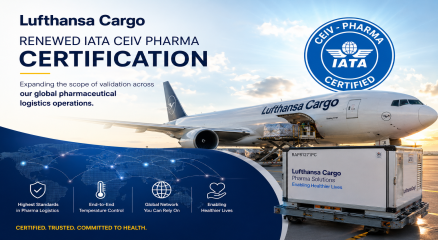
Dachser has been successfully recertified with the Center of Excellence for Independent Validators in Pharmaceutical Logistics (CEIV Pharma) certification from IATA for its Hyderabad and Mumbai branches. The transportation of life science and healthcare products must meet strict requirements. Medicines, vaccines and other pharmaceutical products are often temperature-sensitive, urgent shipments that must be handled in compliance with a highly complex regulatory environment. As an industry standard, CEIV Pharma certification provides coverage of the specific requirements of pharmaceutical products shippers in terms of safe, correct and efficient air cargo services. “With the recertification, we confirm our capabilities in Life Science and Healthcare in India,” says Timo Stroh, Global Head of Airfreight and Life Science and Healthcare Logistics at Dachser. The same standards apply for recertification as for initial certification. CEIV Pharma certification requires internal and external training, a review of procedures for handling temperature-controlled life science and healthcare shipments, and a comprehensive evaluation of these complex processes by an independent auditor. “We strive to adhere to the highest international standards in global transportation of sensitive products,” states Timo Stroh. “We are proud of this recertification and once more confirm our strong presence in the Indian market despite worldwide COVID-19 impacts. For the Business Field Solution Life Science and Healthcare Logistics at DACHSER, the Indian subcontinent is an essential pillar.” Apart from the Mumbai and Hyderabad stations, DACHSER Shanghai (China), Frankfurt (Germany) as well as Atlanta (USA) are certified by IATA. With the Life Science and Health-care Logistics Quality Management System being implemented on global level, DACHSER can ensure the uniform processes in all countries. CEIV Pharma offers the pharmaceutical industry a globally uniform and recognised certification for the handling of pharmaceutical products that meets and exceeds international standards and guidelines. These include the Good Distribution Practices (GDP) and the World Health Organisation (WHO), the standards of the United States Pharmacopeia and the IATA regulations on temperature control. If you interested in additional information and transport solutions of our Business Field Solution Life Science and Healthcare Logistics, please contact your local DACHSER representative or our dedicated Life Science and Healthcare team.
The Port of Barcelona has launched its Innovation Plan to coordinate the advancement, under the same umbrella, of the various projects that are transforming the way the Port is offering its services, as they place it at the forefront of economic and social growth. The Innovation Plan was unveiled on May 13 by Damià Calvet, President of the Port of Barcelona and Emma Cobos, Director of Innovation and Business Strategy, Port of Barcelona. For the Port, innovation means turning new ideas into value for the Port Community, its customers and society at large. The Innovation Plan, which develops the proposals specified in the Fourth Strategic Plan, establishes its own innovation model based on the smart port concept and therefore considers that innovation must be sustainable, open, collaborative, demand-driven, aligned with the Port’s strategy and have a strong technological base. “With the Port of Barcelona’s Innovation Plan, the city’s innovation will look out to sea,” said Damià Calvet The Plan defines three main objectives: strengthening the Port of Barcelona’s role as a driver of economic growth and recovery; driving innovation and digitisation of the logistics ecosystem; and fostering synergies with the city in this area. The Innovation Plan is structured around four lines of action: Developing nimble and cross-cutting management tools involving the Port Community of Barcelona.Forging alliances with the innovative environment of Barcelona.Stimulating sectoral innovation.Disseminating the Port’s innovative activity. Within this scope, Damià Calvet explained that the Port of Barcelona has always been at the forefront of the Spanish port system and also of the Mediterranean and European ports when it comes to proposing, designing and putting into service innovative solutions in areas as diverse as logistics (Logistics Activities Area), the networked port and the inland terminals (Zaragoza Maritime Terminal), the port-city (Port Vell), the participation of the port community (Steering Council of the Port Community of Barcelona, Telematic Forum), training (European School of Intermodal Transport), telematics (Portic), inter alia. The Port President explained that Barcelona is today one of Europe’s tech capitals, highlighting its commitment to developing mobility and energy model solutions that facilitate the transition to a sustainable city model that takes particular care of people and the environment. Consequently, the Innovation Plan, Calvet says, proposes a new model of participation, which must be collaborative and open, and which requires the active involvement of Barcelona Port Community and the innovative ecosystem of the city” through strategic alliances with the agents of the city’s innovative ecosystem, such as 22@, Consortium of the Free Trade Zone of Barcelona, Barcelona Tech City, Mobile World Capital, etc. and that of the Port. “We have set ourselves the goal that all of this powerful technological and innovative ecosystem that is being developed in Barcelona will look out to sea,” he added. Acceleration of technological projects Emma Cobos stressed on the importance of having a structure that is more nimble than the Port Authority and able to promote new initiatives quickly and efficiently. "For this reason, the Innovation Plan provides for the creation of the BCN Port Innovation Foundation, which will facilitate the management of innovative initiatives and the acceleration of technological, environmental and energy transition projects that must facilitate the transformation of Barcelona and its Port,” she said. BCN Port Innovation is a private foundation with a prominent participation of companies from the Port Logistics Community as partners and the Port of Barcelona together with two technology companies, Ackcent and Aggity as founding patrons, which Ms. Cobos says will provide a dynamic and external vision to the port maritime sector. The BCN Port Innovation Foundation will be the meeting and debate forum in which port companies will discuss the increasing challenges being generated by international transport and logistics, and in which technology companies will offer disruptive solutions. Cobos explained that there can be no open innovation without alliances and collaboration. "In this connection, and to facilitate the development of the Innovation Plan, there are plans to promote the Blue District, a forum for sectorial innovation located mainly in the Port Vell area, where facilities are already set up, such as Pier01, the Barcelona Nautical Faculty, or the D·Factory of the Free Trade Zone Consortium. Lines of collaboration are already being maintained with such facilities." The Port will provide a definitive boost to the Blue District with the creation of the Blue Tech Port, the new blue economy innovation centre, which will be located on the Sant Bertran pier and will host start-ups, international maritime institutions, innovation centres for large companies linked to logistics, transport, port activity and training centres such as the Barcelona Logistics Institute, which will open its doors in the 2022-2023 academic year at the World Trade Center Barcelona and will then be set up at the Blue Tech Port. "One example of the activity being generated within the Innovation Plan is the holding of the TechTour Maritime, Trade & Logistics on May 31 and June 01 at the Port of Barcelona to coincide with the International Logistics Fair. TechTour Maritime, Trade & Logistics will bring to Barcelona the most advanced solutions from more than 30 start-ups pre-selected in the maritime and logistics field, as well as more than 30 top international investors for the first time," Cobos further went to explain.
With the launch of its Los Angeles hub, Tower Cold Chain confirms it is on track to double the size of its global network during 2022. Each new hub helps pharmaceutical businesses and airlines to access Tower’s range of robust, reliable and reusable temperature-controlled containers. The latest hub, located 18 miles from LAX International Airport, gives Tower its first location on the West Coast of America, a pivotal region in terms of access across the Pacific and into South America. The Los Angeles hub is operated for Tower by DSV, the first time the freight forwarder has collaborated with the company. With up to 10,000 sq ft of dedicated, secure warehousing, the hub will be used to house products across the Tower range. “By having strategic locations around the world, we can guarantee proximity and availability of our containers – allowing customers to ship temperature-sensitive pharmaceutical, life-science and biotech products,” said Natalie Robinson, Global Head of Operations at Tower Cold Chain. “Each hub opening strengthens our global presence, something reflected in our recent recognition with the Queen’s Award for Enterprise in International Trade." "We’re on course to double the network during 2022, as well as expanding many existing hubs to full-range despatch capacity. Forthcoming locations include Chicago and Incheon.” The choice of location is governed by the volume of inbound and outbound deliveries likely to pass through the airport. With California home to several major biotech and pharmaceutical hubs, it was high on Tower’s priority list for a hub – pending the right local representative to operate the hub. “We approached DSV because of its overall quality and calibre as a freight forwarder, but also the excellence of its Los Angeles operation,” said Natalie. “DSV was able to provide us with dedicated space within its facility – initially, 5,000 sq ft but with the flexibility to grow to 10,000 sq ft." “Its specialist staff also gave us every confidence they can manage the requirements of the Tower solution.” Each Tower container offers a passive solution, requiring no manual intervention or power supply during transit. This places particular importance on pre-conditioning the container with the appropriate phase-change materials, to maintain the required temperature for 120 hours. “Tower’s commitment is total, with a comprehensive onboarding process including training, testing, stock ordering and inventory reporting. As a result, we have launched successfully and can declare the Tower hub open for business,” said Tina Larsen, Branch Manager LA at DSV. “Having Tower’s containers as part of our offering will undoubtedly add value to our pharmaceutical freight business on the West Coast.”
The port authorities of Duisburg and Rotterdam have signed a letter of intent (LOI) to renew and expand their collaboration, as well as to look for ways for establishing future hydrogen hubs. Besides existing agreements relating to the optimisation of logistical connections, the cooperation will be expanded to include initiatives in the area of digitalisation and the energy transition. The agreement was signed by Markus Bangen, CEO at duisport, and Allard Castelein, CEO at Port of Rotterdam. As informed, the LOI includes agreements on looking into the possibility of linking the port community systems Portbase (Rotterdam) to the RheinPorts Information System (Duisburg) and to learn from each other’s initiatives in the area of digital twin projects. With regard to the energy transition, both ports plan to investigate whether they can jointly take on the development of hydrogen hubs. Rotterdam as the future ‘hydrogen gateway’ to Europe and Duisport as the hub for Germany. Setting up a physical link between the two is therefore an obvious choice. The port officials believe that using sustainable hydrogen substantially can contribute to the European objectives of reducing climate change and increasing Europe’s energy independence. Duisport and the Port of Rotterdam have been trading partners for a long time. For example, each year more than one million TEU of containers are exchanged between the two logistics hubs. Almost a third of them are already shipped by rail. Digitalisation and data sharing could further increase the part played by this sustainable mode of transport. The LOI is also aimed at creating the most digital and most sustainable port-inland hub connection in the world by linking Duisburg’s ‘Rail Freight Data Hub’ initiative with Rotterdam’s ‘Rail Connected’. “We are facing major challenges that we will overcome together much faster, more efficiently and more intelligently,” said Markus Bangen, CEO at duisport. “Particularly in the areas of digitalisation and the energy transition, it is important to work together and share our knowledge and expertise.” "I am therefore very pleased that we will continue the trusting partnership between the ports of Duisburg and Rotterdam," Bangen added. “Digitisation and energy transition are as important to duisport’s strategy as they are to our own. We believe in the power of collaboration with like-minded organisations. This LOI represents a positive step in that direction,” said Allard Castelein, CEO at Port of Rotterdam. In December 2021, duisport revealed its plans to construct Europe’s first climate-neutral container terminal based on hydrogen technology. The port plans to construct the trimodal Duisburg Gateway Terminal (DGT) by 2023 together with Cosco Shipping Logistics, Hupac SA, and the HTS Group. In March 2022, the Port of Rotterdam published a report announcing its ambition to cut carbon emissions by 23 million tonnes. Most recently, Stolt Tankers has signed a memorandum of understanding (MoU) with the Port of Rotterdam Authority and Vopak Botlek to conduct a six-month feasibility study for the use of shore-based power for chemical tankers calling at Vopak’s Botlek terminal.
Essar Ports Vizag Terminal Ltd (EVTL), the largest iron ore handling port complex said that it has handled the largest dry bulk vessel, and recorded the largest parcel in Vizag Port. On April 20, 2022, the MV Star Eleni, a bulk carrier built in 2018, sailing under the flag of Liberia was successfully berthed at EVTL. The terminal created another milestone by successfully loading a record 1,65,000 MT of iron ore fines on MV Star Eleni vessel. This was the largest bulk carrier handled by EVT to date, loaded with DWT- 2,07,555 metric tonnes (MT), LOA- 299.88 meters and BEAM- 50 meters. With the Vizag team achieving such massive scale in a seamless manner, Rajiv Agarwal, Operating Partner (Infrastructure), Essar and Managing Director, Essar Ports commented, “I congratulate the team at Vizag. The demand of our terminals is strong and we believe our terminals are well placed to offer sustainable advantage to our customers and trade.” Marking the occasion, CH Satyanand, CEO, EVTL said “The milestone is a matter of pride for us at EVTL. We strive to deliver the best in class services to our customers” Essar Ports Vizag terminal’s fully mechanised eco-friendly infrastructure delivers a performance which can be benchmarked with the best across the globe, while also enabling lower logistics’ cost for customers. The terminal is strategically located in the Bay of Bengal in close proximity to iron-ore mines located in Chhattisgarh, southern Odisha and Jharkhand. The all-weather deep draft facility has the wherewithal to serve the rapidly growing markets of Southeast Asia including China, Japan and Korea, in addition to coastal movement for the steel industry within India.
Unifeeder will make its first vessel call at the Port of Maputo as part of a direct sailing service introduced to connect the Mozambican capital with core ports in the UAE and India. Unifeeder’s service aims to reduce the congestion with a clear focus to ease the challenges faced by the supply chain and logistics sectors in the region. The first two vessels have already been chartered and the long-term schedule is already published, with our first vessel call expected early May 2022. When shipping via Maputo, customers will get exclusive direct connectivity between Maputo to Jebel Ali and Mundra and will significantly reduce the transit time of goods from South Africa and its immediate neighbours to the East with fastest transit time of 11 and 15 days respectively. In addition, Unifeeder is a part of DP World Group and DP World operates the Port of Maputo and Port of Komatipoort, offering end-to-end logistics options for shippers. Apart from Jebel Ali and Mundra, clients would also have access to Unifeeder’s transhipment network linking up with ports such Umm Qasr, Shuaiba, Shuwaikh, Hamad, Bahrain and other Upper Gulf ports. There are various connecting options closer to Jebel Ali which includes the port of Abu Dhabi and Sohar. On the Indian subcontinent besides Mundra, shippers could hook up with the network that includes ports as far as Port Klang and beyond. More reasons to ship to and from Maputo: •Market leading direct service from Maputo to Jebel Ali (11 days transit) and Mundra (15 days transit). •Reliable fortnightly service with acceptance for both dry and reefer cargo. •Faster, more cost-efficient transportation for Johannesburg, Komatipoort, Matsapha and Harare with alternative rail and road connections. •Enhanced connectivity to major Middle East, and Indian Subcontinent ports via Jebel Ali.
During the delegation of FFFAI to the ‘World Expo 2020’ and ‘LOGIX INDIA 2022’ held in Dubai, FFFAI Office Bearers and Executive Committee Members visited Jebel Ali Free Zone (Jafza) to experience the port infrastructure and cost-effective operations. Jafza is a free economic zone located in the Jebel Ali Port area at the far western end of Dubai, United Arab Emirates, near Abu Dhabi. It is the flagship free zone of DP World and the integrated ports and logistics conglomerates' leading trade and logistics hub. The FFFAI delegation headed by the Chairman Shankar Shinde interacted with the top officials and team members of DP World Dubai headquarters Mike Bhaskaran, COO of Logistics and Technology at DP World and CEO, World Logistics Passport; Mahmood Albastaki, COO, Dubai Trade International; Mohamed Absaar, VP– Global Technology, DP World; Ayaz Maqbool, Head of Digital Products, DP World; M Ronald Van Der Meer, Director of Global Engineering, Boxbay; Ludgero Sousa, Head of Automation and Global Engineering, Boxbay; and Deepak Dobal, Product Sales, Boxbay. “We thank DP World for warm welcome and hospitality extended to our FFFAI team during visit to their Dubai head quarter. It was pleasure meeting Mike and the DP World team exchanging ideas and areas of cooperation to take it forward to next level,” said Shankar Shinde. Shinde pointed out that FFFAI has been associated with DP World, India team in past with port terminals, CFSs and SEZ units, in providing trade inputs and would be happy to continue providing the same to have develop more initiatives in aligning cooperation for mutual benefits to achieve seamless cost-effective EXIM trade movements. The FFFAI Chairman congratulated the DP World officials and the team on the developments undertaken by DP World on IT modules to benefit logistics service providers/freight forwarders across India such as Cargoes Runner (ERP for Freight Forwarders), Cargoes Finance (Trade Finance Solution), Cargoes Flow (Track & Trace and Shipment Visibility) and DFA (Logistics Network for Global Freight Forwarders) and would further to show interest in developing Containers manufacturing /leasing and Shipping services. Highlighting growing importance of IT in logistics, Shinde stated that it is well experienced that the future of logistics is digital logistics and the industry jointly can create more opportunities with the potential of logistics development foreseen with the growth of trade to benefit the logistics service providers. He informed that FFFAI and DP World would jointly work to enhance technology-based solution to help logistics service providers and would initiate training measures to create talent pool in every area of logistics for creating infrastructure support to benefit FFFAI Members. “We would also like to look beyond our discussion which would also include training and development, skill developments, creation of logistics institute infrastructure for next-generation and gender-inclusive participation in the logistics sector to build up the talent pool gap for our industry,” he added. Shinde is confident that such initiatives will restructure the logistics sector to get it organised and evolve as a lucrative sector for next generation to look at it as first choice of industry and create professionalism. He pointed out that FFFAI Biennial Conventions are organised to create such exchange platform, understanding the gap, to be built with industry requirements. The next Convention is scheduled to be held from 12th to 14th August, 2022 in Chennai with participation from cross section of the EXIM trade and logistics industry, and from across the country.
Jebel Ali Free Zone (Jafza), DP World’s leading trade and logistics hub, held a ground-breaking ceremony for the first phase of its new “Jafza Logistics Park”. Scheduled for completion in 2023, the purpose-built trading and logistics development will accommodate the growing number of warehousing, processing and logistics activities carried out in Dubai. The ground-breaking was attended by Abdulla Bin Damithan, CEO and Managing Director, DP World UAE and Jafza, as well as the company’s leadership team. Jafza Logistics Park will reinforce the success of the logistics cluster in Jafza, which has already grown by 14% since 2016. The project covers a total leasable area of over 46,000 sq mts, of which 87% will be allocated to warehousing. The remaining space is dedicated to office facilities. Abdulla Bin Damithan, CEO and Managing Director, DP World UAE and Jafza said, “We recognise the critical role the logistics sector plays in enabling the growth of various industries around the globe. Jafza is aligned with key government initiatives, such as the Dubai Silk Road strategy, to boost economic growth. As the UAE continues to grow into a global processing and re-distribution gateway, we have experienced a significant spike in demand for the logistics and warehousing space. We are building the Jafza Logistics Park in response to this increase in demand and to further boost the development of the UAE’s logistics sector.” Bin Damithan added, “Logistics companies in e-commerce and similar growing segments can benefit from the Park’s modern offerings, including digital trade enablement, competitive costs, and customisable units. We are in discussions with a number of large customers that need 60 to 80% of the space and may need to commission phase two ahead of schedule.” Flexible logistics offerings Currently, Jafza’s logistics cluster is home to over 460 companies from 30 countries, almost all international logistics providers which already operate from the free zone. Jafza Logistics Park will support their growth aspirations and attract new players seeking to establish themselves in the market. The smallest unit will be just under 2,900 sq mt, including 360 sq mt of mezzanine office space. Customers will also be allowed to consolidate multiple units to meet their space requirements. Jafza Logistics Park businesses will also leverage DP World’s integrated end-to-end logistics solutions and expertise as a data-driven supply chain logistics provider. The Park’s ideal location between Jebel Ali Port, the region’s largest deep-sea port, Al Maktoum International Airport, Dubai’s airport of the future, and Etihad Rail’s Jebel Ali station will facilitate efficient and seamless flow of goods within the region and across the world.
In fiscal year 2021, traffic development at Munich Airport was still heavily influenced by the effects of the global COVID-19 pandemic. At 12.5 million, the number of passengers at the airport increased by more than twelve percent compared to the previous year, but remained well below the record figure of approximately 48 million in 2019. As the management of Flughafen München GmbH (FMG) explained at today’s annual press conference, a significant recovery in traffic development is emerging this year. With a total of around 13,000 flights, for example, traffic volume at Munich Airport during the recent Easter holidays already came to around 70 percent of the comparative figure from 2019. “We expect a significant increase in aircraft movements and passengers in 2022 as a whole. In our estimation, Munich Airport can be expected to make a full return to pre-crisis levels in 2024,” said Chief Executive Officer Jost Lammers. FMG’s Group-wide revenue amounted to EUR 601 million in the past year. Earnings before interest and taxes (EBIT) amounted to EUR 286 million, an improvement of nearly EUR 120 million on the previous year. FMG posted earnings after taxes (EAT) of EUR 261 million, an improvement of around EUR 60 million or 19 per cent on the previous year’s loss. In addition to the growth in traffic compared to the first year of the pandemic, the measures taken by FMG to counter the crisis also contributed to this earnings improvement. As Nathalie Leroy, FMG’s Chief Financial Officer and Director of Infrastructure, highlighted, these efforts made it possible to limit the airport’s losses and permanently maintain its liquidity and future viability. Leroy said, “We are therefore well equipped for the challenges we are facing to re-establish our Munich Airport as a premium hub for international aviation.” In line with the increase in traffic volume, Flughafen München GmbH is also currently seeing a significant upward trend in its end customer business. The range of stores and restaurants represented at the airport has changed since the time before the crisis. On the one hand, not all providers in the retail and restaurant sector survived the long economic dry spell. On the other hand, new renowned companies have been added. “The engagement of these brands shows that the market continues to find our airport highly attractive as an important location for stores and restaurants, which is also attracting business models that were not represented at the airport before,” said Jan-Henrik Andersson, FMG’s Managing Director for Commercial and Security. Overview of Munich Airport’s financial results FMG Group financial results 20212022(in EUR million) (IFRS) (IFRS) Consolidated revenue 601580Including other income 680624 Earnings before interest, taxes, depreciation and amortization (EBITDA) Depreciation and amortization 240242Earnings before interest and taxes (EBIT)-286-404Financial result -51-30EBT -336-433Taxes75112Earnings after taxes (EAT) -261-321EBITDA margin-8%-28%Free cash flow -275-504Capital expenditure248391
The Airforwarders Association (AfA) is driving an initiative to help find solutions for five critical issues contributing to airport congestion in the US. Members of AfA’s Airport Congestion Committee (ACC) met last week to agree to focus on developing solutions in the areas of: technology and automation; service standards; airport facilities and infrastructure; staffing and hours of operation; and regulatory and paperwork challenges. The five critical issues were identified following a survey of airport cargo stakeholders undertaken by AfA, the National Customs Brokers and Forwarders Association of America (NCBFAA) and the Airports Council International-North America (ACI-NA). ACC members will now work on producing a Recommendation Paper with which to approach private, public, and government entities in order to highlight challenges and suggest solutions for cargo congestion issues at airports. “When we have completed the work, we will be inviting the air cargo industry to come together to implement the needed solutions for more efficient throughput and movement of inbound and outbound air cargo at airports,” said Donna Mullins, Vice President of AfA member - Kale Info Solutions, and Chair of the ACC. “Our survey generated hundreds of responses from a broad cross-section of industry segments clearly articulating a number of problems that require remedial action." “Our deliverable will not be a document that sits on a shelf, we will be presenting concerns as well as potential solutions to key industry leaders and appropriate members of Congress and the Office of the Secretary of Transportation." “The potential upside of our efforts is enormous with regard to our ability to obtain available public funds for a wide range of capital and technology improvements.” The ACC, which has recently been joined by Airlines for America (A4A) and the Airline Service Providers Association (ASPA), is seeking to drive improvements including enhanced electronic communications linking all the stakeholders at an airport, as well as improved access and on-airport landside infrastructure to accommodate the operating demands of the trucking industry. Modernised airport cargo facilities designed to facilitate throughput and accommodate the requirements of mechanized handling systems, and cross-training across all business segments to enhance communications and operating efficiency, are also identified as key areas for improvement. “Congestion at our airports is such an important issue, and by working together as a Committee, we are able to draw upon each member's unique knowledge and diverse experience, to be able to execute a robust plan and achieve our collective goals of improved throughput and modernisation of outdated infrastructure with an emphasis on environmental sustainability,” said Shawn Richard, Director, AfA and Vice President- Global Air Freight for AfA member - SEKO Logistics, and Vice Chair of the ACC. Members of the 35-strong ACC, comprising companies from across the supply chain, including airports, airlines, ground handlers, forwarders, and trucking and tech companies, have been tasked with prioritizing and suggesting solutions using a list of evaluation criteria including costs, applicability and ease of implementation, urgency, and timelines. “Truck congestion caused by cargo handling delays at major airport cargo facilities continues to cost our members significant financial resources and lost productivity,” said Brandon Fried, Executive Director, AfA. “This initiative will help us identify causes while providing a foundational document to share with government officials in creating solutions to the challenge.” ACC will meet at the end of May to review submissions and plan next steps and deliverables.
According to a recent analysis by Container xChange, one of the many challenges for the supply chain now is the overflowing container depots in the US and the pileup of empties that will push the container prices further downwards in the mid-term. The analysis shows that container prices are declining in the US by as much as 30% in the past two months across the east and the west coast and more than halved at some ports from 2021 prices. Bigger carriers, as per a report by CNBC recently, are shipping empty containers back to Asia from the US to increase profitability and ensure that the high-value cargo from Asia reaches back to the US where the demand is. “In general, logjams and disruptions lead to increase in container prices, especially in second-hand container prices because more container volume is tied up along the logistics supply chain. However, in the United States, there is a pile-up of empties as those containers cannot be repatriated back to Asia because of several disruptions one after the other in the past 2 years, and more recently due to the China lockdowns and Russia Ukraine crisis,” said Christian Roeloffs, Co-founder and CEO, Container xChange. “We might see a continued slide in container prices because depots are overflowing of the containers. Carriers and other container owners will be getting desperate to get rid of those units. Once we see depots overflowing (and this is also what we expect in the midterm once disruptions ease up a little bit), container turnaround times becoming faster and shorter again, container fleet utilisation (the number of trips that container can take on average within a given year) increasing again, we do believe that container availability on a global scale will become more abundant again.” “As more and more containers will be required to be stored in depots in the US and because the depot space is limited, there will be a massive downward push on container prices in the immediate short to mid-term,” he added. The average container prices for 40 ft HC containers at the port of LA dropped by 20% since late February from US$3467 to US$2754 in April. These prices are expected to further decrease in the coming few weeks according to the xChange trading insights tool. Similarly, the average price for 20 ft DC at the port of Los Angeles is US$1661 as of 11 April 2022. These were much higher in the year 2021, peaking at US$3080 towards the end of August 2021. Almost halved since the last year. “It does seem that the China lockdowns have impacted the US logjam positively in the short term," said Roeloffs. "But there will be a lot of disruptions when the lockdowns are lifted, and vessels will storm the east as well as the west coast ports. There will be an added element of panic shipping. This will further increase supply chain pressures and logjams in the US.” Port Negotiations to disrupt the peak season shipping “We know that the port labor unions are very aggressive negotiators, and the event has historically also resulted in work stoppages in the past. If that happens this year too, it will cause unloading and loading of cargo practically impossible," continued Roeloffs. "I am doubtful whether the negotiations are done within one and a half months because that's effectively the time that we have before the current contract ends at the beginning of July. And it's just concerning whether the port and terminal unions will find an agreement with the employers by that time. This will of course lead to disruptions at the beginning of the early peak season shipping, a crucial time for the shipping industry, set to have implications on consumer demand fulfilment.” “Beyond these US-centric disruptions, the global economic condition is creating many roadblocks for shippers, especially for small and medium-sized players. While the bigger companies do have an edge owing to the economies of scale at which they operate, smaller players are still struggling to devise strategies to pile up stock ahead of the peak season,” informed Roeloffs. “Owing to the intermodal congestion at the US west coast, a lot of shippers have refocussed on inbound cargo and US imports to the east coast ports that are traditionally smaller and less able to cope with such high volumes. They have been shifting this, and they continue to be shifting this. Even now that congestion or port waiting times are easing off on the transpacific in front of the ports of the west coast because we see these major lockdowns in China. So, this is already pushing through now to the wait times on the west coast." "Shippers continue to head towards the east coast because they anticipate disruptions due to the labor union negotiations that now start in early May and pretty much coincide with an anticipated beginning of peak season. This is never a good mix when the peak season is about to start. Historically, the east coast ports are not able to deal with such high volume. I don’t expect this condition to improve." "There will be a lot of disruptions when the China ports start to open again, and we see a wave of inbound containers full of cargo on both the east and the west coast ports,” he said.
The Federation of Freight Forwarders’ Associations in India (FFFAI) held its 6th EC Meeting for the term 2021-23 on May 27 and 28 in Bengaluru. The meeting was attended by the Office Bearers and 28 Member Association representative of FFFAI from across the country, there were many issues discussed and updates provided concerning customs, CBLR, EDI, Service Tax/GST, logistics, air cargo, sea cargo, skill development,importance of social media which FFFAI has expanded recently, technology developments, etc. The special focus of the 6th EC meeting was the updates on forthcoming 24th Biennial Convention of FFFAI to be held from August 12 to 14, 2022 in Chennai with the theme LOGISTICS RESHAPE, EMBRACE AND SURGE IN THE DIGITAL ERA. At this EC meeting, FFFAI also implemented Digital Learning platform for members and next generation for e-learning. It has been decided that FFFAI would initiate FIATA eFBL here in India to benefit the trade, which empowers customs brokers, freight forwarders and logistics service providers. In addition, updates on the recently held FIATA HQ Meet was also provided by the concerned members of FFFAI. FFFAI members present at this EC meeting stressed upon enhancing productivity on ICEGATE for trade facilitation and Ease of Doing Business. The FFFAI members also urged for creating a dedicated portal for LSP integration. As regard to skill development initiatives, IIFF’s (training arm of FFFAI) past and forthcoming training programmes (both online and classroom/physical) for the entire logistics industry were presented at the EC meeting. In addition, FFFAI’s various initiatives on capacity building through technology/IT also discussed withadequate importance. Recent activities of FFFAI Women’s Wing including organising interactive meetings with Government of India officials and industry experts were highlighted at this meeting which drew huge appreciation from the members. The members committed to expand the activities of the Women’s Wing in all the 28 member association locations to empower/encourage the women logistics practitioners. At this EC meeting FFFAI has signed an MoU with the National Institute of Industrial Engineering (NITIE) with an objective of skilling the aspiring candidates looking for opportunities in the logistics sector. Notably, a special session was organised at this 6th EC Meeting where N Sivasailam, former Special Secretary (Logistics), Ministry of Commerce, Government of India was present to address the FFFAI members and highlight the recent initiatives of the government in strengthening the logistics infrastructure, thereby leading in increase of international trade through multimodal connectivity and faster cargo clearance. He projected the ambitious growth potential of the logistics industry in India with a strong collaboration between government and industry people. Also speaking on the occasion was Bani Bhattacharya, IRS, who interacted with members of FFFAI on various initiatives of CBIC for the trade facilitation without human intervention. FFFAI Chairman Shankar Shinde thanked all the 28 associations for their support and appreciated the contribution of CBIC/DG systems trade facilitation measures. FFFAI Member Associations are: 1. Ahmedabad Custom Brokers' Association2. Aurangabad Customs House Agents Association3. Association of Custom House Agents Thiruvanthapuram4. Bangalore Custom House Agents Association5. Brihnamumbai Custom Brokers Association6. Calcutta Customs House Agents Association7. Chennai Customs House Agents Association8. Cochin Customs Brokers' Association9. Coimbatore Customs House and Steamer Agents Association10. Custom Brokers Association Hyderabad11. Delhi Customs Brokers Association12. Goa Custom Brokers Association13.Indore Customs House Agents Association14. The Kakinada Customs Brokers Association15. Kandla Custom Brokers Association16. Kanpur Customs Brokers Association17. Ludhiana Customs House Agents Association18. Mangalore Customs House Agents Association19. Mundra Customs Brokers Association20. Nagpur Customs House Agents Association21. Nashik Customs House Agents Association22. Nadia Custom Brokers Association23. Pipavav Custom Brokers Association24. Pune Customs House Agents Association25. Rajasthan Customs House Agents Association26.Tuticorin Custom Brokers Association27.Visakhapatnam Cusotms Brokers' Association28.West Bengal Custom House Agents Society FFFAI welcomes Women in Logistics/Youth in Logistics to participate on FFFAI forums and also invites membership application form logistics service providers in industry as this is a big national and international forum to network.
Ecom Express Limited, India’s sole pure-play B2C e-commerce logistics provider as of the Financial Year 2024, has introduced a new brand identity, underscoring its commitment to customer-centricity. This rebranding reflects a focus on addressing specific customer needs, prioritising customer-facing metrics, and integrating innovative technology across its nationwide express logistics network. The goal is to enhance speed, agility, and network reach, ensuring a customer-focused approach. The rebranding includes a dynamic logo and a refreshed visual identity, symbolising Ecom Express’s pursuit of excellence. The new logo features a forward-moving arrow within a square, representing the company’s dedication to delivery. The letter "E" in the logo stands for Expression, Innovation, and Progress, while the bold magenta colour signifies bravery, self-expression, and strength. This vibrant magenta reintroduction reflects Ecom Express's renewed commitment to customers, partners, and team members, as the company aims to simplify and democratise logistics for all. Ajay Chitkara, CEO and MD of Ecom Express, elaborated on the transformation, stating, “Our refreshed brand identity reaffirms our customer-first approach as we continue to integrate technology and innovation to provide reliable, high-speed services with the widest network reach. This transformation also underscores our commitment to our employees and delivery partners, who are essential to our business.” The new logo embodies Ecom Express’s dedication to its core values, focusing on customer welfare and fostering a diverse, inclusive environment. This rebranding signifies a promise to redefine logistics through advanced technology, making life easier for all types of customers.

ESR India, the largest APAC focused industrial and logistics real estate platform, has inked a Memorandum of Understanding (MoU) with the Government of Tamil Nadu for a potential investment of INR 550 crores. The MOU is signed for the launch of two industrial parks in Kancheepuram and Krishnagiri districts of the state over the next five years. Once fully operational, the two projects have the potential to create over 4,400 jobs in the facility, that shall boost the overall socio-economic growth in the region. The MoU was signed at the Investment Conclave 2021 conference held today. It will facilitate ESR India’s proposed investment at Kancheepuram and Krishnagiri industrial parks by helping in streamlining land acquisition, approvals, clearances, and administrative processes as per existing policies, rules, and regulations of the Government of Tamil Nadu. The policy and regulatory reforms unveiled in recent times has accentuated the entry of international institutional players and has set new benchmarks for industrial developments in the country. Commenting on the development, Abhijit Malkani, CEO and Country Head, ESR India said, “We are delighted to announce our affiliation with the state government. The Government of Tamil Nadu has been very supportive in encouraging industrial developments in the state by creating a favourable business climate for industrial players. The MoU will see ESR invest INR 550 crores to develop industrial parks in Tamil Nadu, offering 1,800 direct and 2,600 indirect job opportunities in the facility.” “Our goals are aligned with the vision of the Tamil Nadu government, to create avenues to increase business and trade inclusion opportunities and employment towards garnering better economic growth in the region,” he further stated. ESR India is currently present across 9 cities and 15 locations with a total GFA of 18 mn sq ft. These state-of-the-art facilities will be developed upholding the best practices for ESG and sustainability.
Mahindra World City Jaipur (MWC Jaipur), a joint venture between Mahindra Lifespace Developers Ltd (MLDL) and Rajasthan State Industrial Development and Investment Corporation (RIICO) announced it concluded 26 new lease agreements between April 2021 and June 2022. The new signings included both new customers and expansion of facilities by existing clients, together leasing about 137 acres of land. In the same period, MWC Jaipur and its constituent units' aggregated investments crossed Rs 721 crores, and cumulative exports by MWC Jaipur exceeded Rs 15,930 crores, of which Rs 3,321 crores were in the last 15 months. Over these fifteen months, a total of 69 companies have completed their facility buildout at MWC Jaipur and become operational. The new entrants to MWC Jaipur represent a variety of sectors, like Logistics and Warehousing, IT & ITeS, Engineering, Furniture Manufacturing, Solar Energy, Gems and Jewelry manufacturing. The newly added roster of clients at MWC Jaipur includes Wipro Hydraulics, Shakti Hormann, Renew Photovoltaics, Kerakoll India, Normet, Gulmohar Lane Lifestyle, Manor & Mews, J Atelier Pink City, Kamal Coach Works, Maxop Engineering, amongst others. Rajaram Pai, Chief Business Officer – Industrial, Mahindra Lifespaces said, “MWC Jaipur today is home to prestigious domestic and international manufacturing companies from across the world, who have established a manufacturing base in India for the first time. Enabling business acceleration for customers has always been our focus. We continue to deliver the highest urbanisation standards by leveraging innovation, thoughtful design, and a deep commitment to sustainability. MWC Jaipur contributes towards generating incremental employment and income for the state while creating world-class infrastructure which would serve the nation for many years to come. We are glad to be the enablers of Make-in-India and Make-for-India.” Becoming a preferred destination of choice for over 121 global and domestic companies, MWC Jaipur is enabling business growth for customers by crafting a conducive environment, with robust infrastructure and facilities that propagate ease of doing business. Mahindra World City Jaipur is the first project in Asia to receive Climate Positive Development Stage 2 Certification from the C40 Cities Climate Leadership Group (C40), a global network of large cities taking action to address climate change. With a focus on climate-positive development, MWC Jaipur is continuing its efforts on integrating sustainability within the city. Green, integrated developments is continuously being upgraded to mitigate the impact of business operations on the environment. As of March 31, 2022, a total of 59,955 trees have been planted in government-approved forest areas and rural areas under the Mahindra Group’s flagship program – Hariyali. Around 11,100 trees have been planted within the industrial park.

The Uttar Pradesh government is set to develop a multi-modal logistics hub (MMLH) in Greater Noida’s Dadri, investing Rs 7,064 crore to support its $1 trillion economy goal. This hub will cover 823 acres, with a core development area spanning 455 acres. Key developments include commercial and administrative facilities over 17.5 acres, a rail yard, and other projects across 350 acres. Under Chief Minister Yogi Adityanath’s directives, a detailed action plan has been designed to expedite these initiatives. The Dadri MMLH aims to become a world-class freight handling facility, functioning as a dry port to ensure the swift transit of goods and raw materials. This project is poised to be India's largest logistics hub. Located on the eastern and western dedicated freight corridors, it will serve as a central hub for container handling, warehousing, cold storage, processing, de-stuffing, stuffing, and value-added packing. Providing seamless rail connectivity, the hub will feature rail platforms, customs clearance facilities, cargo segregation areas, truck parking zones, and extensive green spaces. The project is being developed under the Public-Private Partnership (PPP) model, supervised by the Greater Noida Industrial Development Authority and adhering to the guidelines of the National Industrial Corridor Development and Implementation Trust (NICDIT). The Greater Noida Industrial Development Authority has prepared the Master Detailed Project Report (DPR) for constructing the approach track and Rail Over Rail (ROR) bridge from New Dadri station to the MMLH boundary. The Dedicated Freight Corridor Corporation of India (DFCCIL) has approved the DPR for railway tracks and terminal stations within the MMLH. Additionally, the tender documentation for land acquisition and signaling processes for the approach track has been finalized. Concurrently, the development of trunk infrastructure, including boundary work, roads, canals, bridges, utility relocation, and water and power supply, is progressing through various phases.