
Loading...
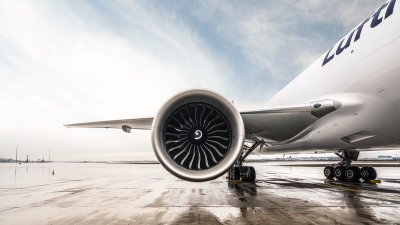
Lufthansa Cargo enhances its strategic presence in China through major new partnerships, government support, and marks a vital moment in the airline's growing influence within Asia Pacific's logistics landscape. Shanghai Airport Authorities, Air China Cargo, and China Postal Express & Logistics Co., Ltd. signed cooperation agreements that were signed by Ashwin Bhat, CEO Lufthansa Cargo while on a recent visit to China. This speaks to Lufthansa Cargo's strategic commitment to further reinforce its position in the increasingly booming aviation and logistics market of China.
Shanghai Airport Authority and Lufthansa Cargo have taken a significant step towards strengthening their partnership with the signing of a Memorandum of Understanding (MOU). The MOU aims to establish a framework to further develop cooperation in focused areas, enhancing operational efficiencies, and improving customer experiences through innovative solutions and shared expertise. It also recognizes the strategic goal of jointly developing Shanghai Pudong Airport into the world's most competitive Asia-Pacific core hub and actively exploring ways to deepen the partnership.
"The last 25 years of partnership through our joint venture have yielded excellent results for both parties. The MOU marks the beginning of our cooperation journey, and we look forward to even closer collaboration in the years ahead", commented Feng Xin, CEO of Shanghai Airport Authority.
Both - the Shanghai Airport Authority and Lufthansa Cargo - are committed to leveraging their strengths and resources to drive the success of this partnership and achieve their shared objectives. “The MOU represents a significant milestone in our collaboration and sets the stage for a deeper and more fruitful partnership in the future.” said Ashwin Bhat, CEO of Lufthansa Cargo. “Shanghai is the biggest freight hub for Lufthansa Cargo next to our hub in Frankfurt and the MOU gives us the confidence and commitment to further contribute to business excellence in this strategically important market."
The Shanghai Municipal Government supports Lufthansa Cargo
Ashwin Bhat, CEO of Lufthansa Cargo also met Shanghai Vice Mayor Hua Yuan together with delegation of Lufthansa Cargo to report on the industry status and strategic direction of Lufthansa Cargo in Shanghai and China. They discussed the sustainability and digital development of the aviation logistics, the development of cross-border e-commerce and the strengthening of further cooperation with local enterprises. During the meeting, the Shanghai government expressed very positive and supportive signals for the cooperation with Lufthansa Cargo.
“Shanghai actively develops the sector of aviation logistics and attaches great importance to the development of cross-border e-commerce business. The Shanghai Municipal Government is willing to work together to promote Lufthansa Cargo's deeper participation in the development of Shanghai, including closer cooperation between the Company and the Airports Group, facilitating cooperation among the enterprises and top e-commerce platforms, and jointly boosting the digital integration of China and Germany's customs”, commented Vice Mayor Hua Yuan. “Lufthansa Cargo is encouraged to further increase investment and business layout in Shanghai, deepen transformation and cooperation with Chinese related enterprises in the fields of aviation digitization, intelligence and greening, and make contributions to promoting the development of Shanghai's overseas logistics transportation and promoting Sino-German economic and trade exchanges.”
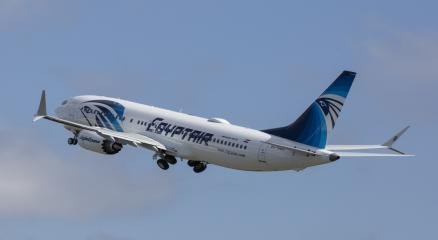
EgyptAir has taken delivery of its first Boeing 737 MAX aircraft, marking a major milestone in the airline’s fleet modernisation and sustainability strategy. The newly delivered 737-8 is the first of 18 aircraft being leased from SMBC Aviation Capital and also represents the first Boeing 737 MAX aircraft to enter service in Egypt. The aircraft will support EgyptAir’s short- and medium-haul network across key international destinations including Paris, Brussels, Istanbul and Vienna, while complementing the carrier’s existing fleet of Next-Generation 737 aircraft. According to Ahmed Adel, Chairman and CEO of EgyptAir Holding Company, "The integration of the 737 MAX marks a significant milestone in our fleet modernization strategy and providing passengers with a superior travel experience while achieving greater operational efficiency. "This aircraft's advanced technology and reduced environmental footprint align perfectly with our vision for sustainable growth and our dedication to maintaining a young, state-of-the-art fleet that connects Egypt to the world," he noted. The Boeing 737-8 offers approximately 20% lower fuel consumption and emissions compared to older-generation aircraft, while featuring upgraded passenger amenities including the Boeing Sky Interior, enhanced LED lighting, larger windows and expanded overhead storage space. Commenting on the delivery, Anbessie Yitbarek, Vice President of Commercial Sales and Marketing for Africa, Boeing added, "With this delivery, we build on 60 years of partnership with EgyptAir and welcome them as a 737 MAX operator. The 737 MAX offers the efficiency, range and passenger comfort airlines need as they grow and enhance their operations." EgyptAir remains one of Africa’s oldest operators of the Boeing 737 family, with its association with the aircraft platform dating back to 1975.
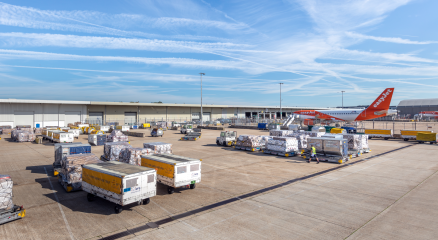
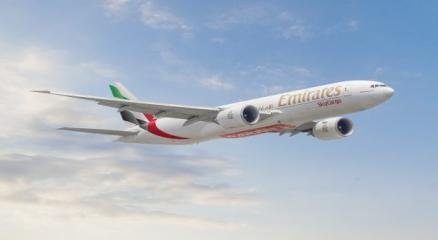
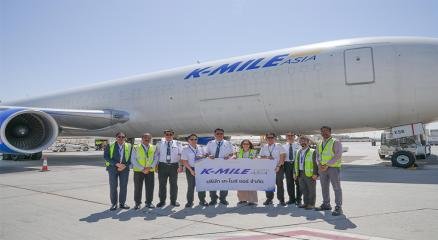
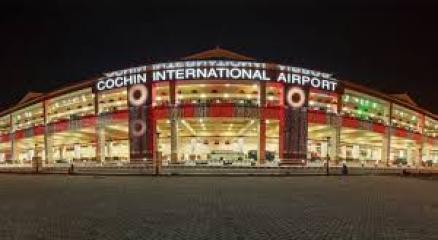
Cochin International Airport Limited (CIAL) has witnessed significant growth in its air cargo operations during February and March, despite operational interruptions and geopolitical tensions in West Asia. Significant progress has been made in streamlining exports to the Gulf region, allowing CIAL to grow by about 10% during the fiscal year. Almost 76% of the 72,178 tonnes of cargo that CIAL handled in FY26 was foreign. In comparison to the prior year, this represented a rise of about 10%. The freight segment's revenue increased to ₹52.84 crore. Higher mobility of perishables, pharmaceuticals, industrial consignments, and e-commerce shipments was the main cause of the increase in cargo volumes. In order to improve logistical efficiency and streamline landside cargo movement, CIAL also established a Dedicated Trucking Centre. Furthermore, to enable 24-hour cargo operations, the facility had distinct parking areas, driver amenities, and movement zones for long-haul and short-haul cargo trucks. Significant capacity improvements were also made to CIAL's cargo infrastructure. The airport can now handle 1,25,000 tonnes of export cargo annually, thanks to the addition of the Export Cargo Warehouse. Advanced screening systems, specific handling zones for hazardous materials and radioactive cargo, specialised cold-chain infrastructure, and improved storage facilities for high-value shipments are all features of the updated facility. A significant portion of Kerala's aviation freight movement is being handled by the airport's 2.5 lakh square foot cargo holding facilities. During the West Asia crisis, CIAL also showed remarkable operational agility by managing 11 unscheduled cargo freighter trips that connected Kochi with Gulf destinations in March and April. During that time, Etihad Airways, National Airlines, SolitAir Aviation Services, SMB Private Cargo Charters, Fly Vaayu, Emirates, Kuwait Airways, Gulf Air, Maldivian, Saudia, Air Arabia, and Jazeera Airways offered non-scheduled freighter and special cargo services. "CIAL is steadily evolving into a future-ready air cargo and logistics gateway for South India," stated S. Suhas, Managing Director. We seek to provide smooth freight connectivity while assisting exporters, industries, and developing e-commerce marketplaces through infrastructure augmentation, digital cargo management systems, and multimodal integration initiatives," he stated. CIAL has also initiated steps to further strengthen specialised cargo handling, including efforts to obtain certification for pharmaceutical cargo handling and expand support systems for temperature-sensitive and time-critical shipments. For more such news and updates, follow CARGOCONNECT.

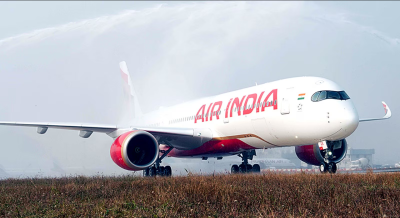
Tata-owned Air India began operations on its flagship Airbus A350-900 aircraft from Delhi to Newark, New Jersey, on Thursday. This marks a key expansion of Air India's A350 service, following the inaugural Delhi-New York (JFK) route launched on November 1, 2024. The move makes the A350 the exclusive aircraft serving all direct flights between India's capital and New York region destinations, the airline announced. Air India's ongoing enhancements to its international route network aim to optimse schedules, boost connectivity, and improve cabin experiences. From 2025, Air India plans to deploy upgraded A350 and Boeing 777 aircraft on key U.S. and UK routes while extending premium services to Southeast Asia and Europe gateways. These updates are designed to offer seamless intercontinental travel options for passengers connecting between North America, Europe, Australia, and Southeast Asia via Air India hubs in Delhi and Mumbai. Currently, Air India operates a combined fleet of 298 aircraft, servicing 55 domestic and 48 international destinations. By 2027, the airline aims to add 100 planes, supplementing its fleet with Vistara's assets and upcoming new aircraft to maintain competitiveness, particularly on metro routes and corporate-heavy international sectors like London and Frankfurt. Despite these ambitions, the airline faces challenges with aging Boeing 777 aircraft impacting its North America operations.