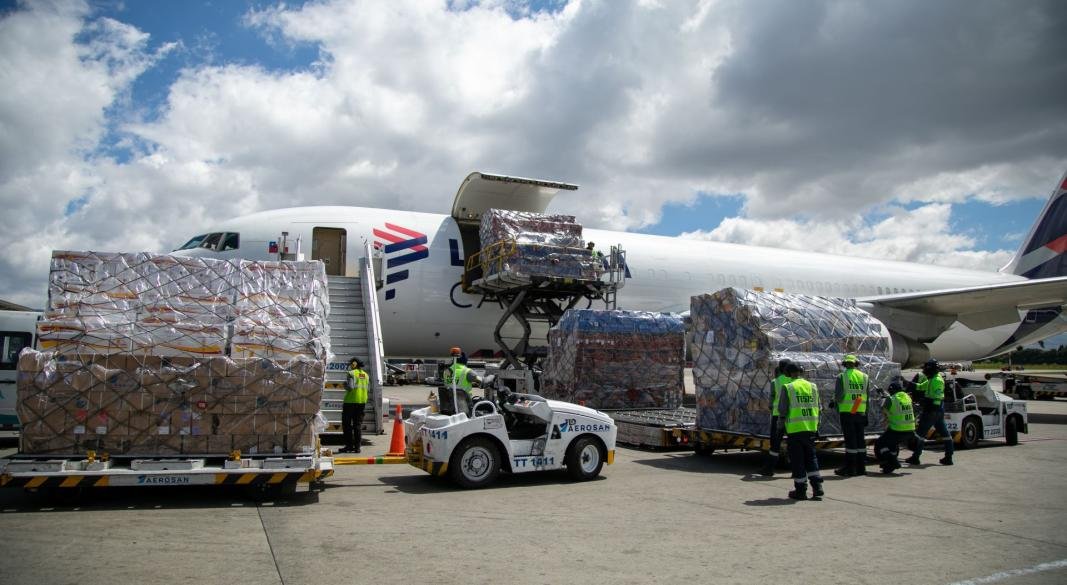
LATAM Cargo and its cargo subsidiaries concluded the 2026 Mother’s Day season by transporting 24,400 tonnes of flowers from South America, reinforcing the group’s leadership in the region’s floral air cargo market for the fourth consecutive year.
The large-scale seasonal operation was coordinated through key export hubs in Bogotá, Quito and Medellín, with more than 430 dedicated cargo flights deployed to support shipments bound primarily for the United States and other international markets across three continents.
The operation was driven by extensive pre-season planning, commercial coordination and capacity management, enabling efficient handling of high-volume perishables traffic during one of the air cargo industry’s busiest floral export periods. To support the surge, LATAM significantly expanded ground handling resources across ramp, warehouse and supervisory operations at origin airports.
According to the company, the total flower volume transported during the 21-day season was equivalent to nearly 560 million stems, underlining the scale and operational intensity of the campaign. The performance further highlights the growing importance of specialised perishables logistics and temperature-sensitive cargo handling within Latin America’s export ecosystem.
LATAM Cargo and its cargo subsidiaries concluded the 2026 Mother’s Day season by transporting 24,400 tonnes of flowers from South America, reinforcing the group’s leadership in the region’s floral air cargo market for the fourth consecutive year. The large-scale seasonal operation was coordinated through key export hubs in Bogotá, Quito and Medellín, with more than 430 dedicated cargo flights deployed to support shipments bound primarily for the United States and other international markets across three continents. The operation was driven by extensive pre-season planning, commercial coordination and capacity management, enabling efficient handling of high-volume perishables traffic during one of the air cargo industry’s busiest floral export periods. To support the surge, LATAM significantly expanded ground handling resources across ramp, warehouse and supervisory operations at origin airports. According to the company, the total flower volume transported during the 21-day season was equivalent to nearly 560 million stems, underlining the scale and operational intensity of the campaign. The performance further highlights the growing importance of specialised perishables logistics and temperature-sensitive cargo handling within Latin America’s export ecosystem.
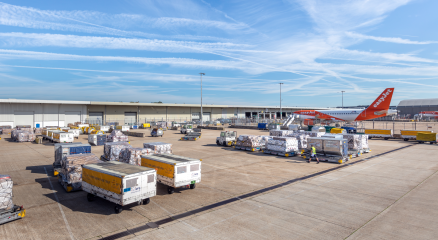

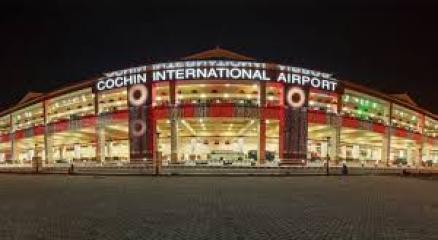
Cochin International Airport Limited (CIAL) has witnessed significant growth in its air cargo operations during February and March, despite operational interruptions and geopolitical tensions in West Asia. Significant progress has been made in streamlining exports to the Gulf region, allowing CIAL to grow by about 10% during the fiscal year. Almost 76% of the 72,178 tonnes of cargo that CIAL handled in FY26 was foreign. In comparison to the prior year, this represented a rise of about 10%. The freight segment's revenue increased to ₹52.84 crore. Higher mobility of perishables, pharmaceuticals, industrial consignments, and e-commerce shipments was the main cause of the increase in cargo volumes. In order to improve logistical efficiency and streamline landside cargo movement, CIAL also established a Dedicated Trucking Centre. Furthermore, to enable 24-hour cargo operations, the facility had distinct parking areas, driver amenities, and movement zones for long-haul and short-haul cargo trucks. Significant capacity improvements were also made to CIAL's cargo infrastructure. The airport can now handle 1,25,000 tonnes of export cargo annually, thanks to the addition of the Export Cargo Warehouse. Advanced screening systems, specific handling zones for hazardous materials and radioactive cargo, specialised cold-chain infrastructure, and improved storage facilities for high-value shipments are all features of the updated facility. A significant portion of Kerala's aviation freight movement is being handled by the airport's 2.5 lakh square foot cargo holding facilities. During the West Asia crisis, CIAL also showed remarkable operational agility by managing 11 unscheduled cargo freighter trips that connected Kochi with Gulf destinations in March and April. During that time, Etihad Airways, National Airlines, SolitAir Aviation Services, SMB Private Cargo Charters, Fly Vaayu, Emirates, Kuwait Airways, Gulf Air, Maldivian, Saudia, Air Arabia, and Jazeera Airways offered non-scheduled freighter and special cargo services. "CIAL is steadily evolving into a future-ready air cargo and logistics gateway for South India," stated S. Suhas, Managing Director. We seek to provide smooth freight connectivity while assisting exporters, industries, and developing e-commerce marketplaces through infrastructure augmentation, digital cargo management systems, and multimodal integration initiatives," he stated. CIAL has also initiated steps to further strengthen specialised cargo handling, including efforts to obtain certification for pharmaceutical cargo handling and expand support systems for temperature-sensitive and time-critical shipments. For more such news and updates, follow CARGOCONNECT.



Global air cargo brand Turkish Cargo renewed its corporate website within its scope of digital transformation vision. Consolidating information and processes regarding shipment planning and operational processes into a single point, the platform offers a fast, convenient, and functional digital experience with its refined interface and its mobile-compatible infrastructure. The website developed by Turkish Technology, the technology subsidiary of Turkish Airlines, enables shippers to manage a wide range of processes, from pre-booking to map-based cargo tracking, from a single platform. Through the interactive world map, the global flight network and served destinations can be viewed, while advanced filtering options allow connection alternatives to be evaluated directly. The platform also presents product and equipment options for different cargo types together, supported by comparative tools. Thus, the shippers can create the most convenient shipment plan by building how and where the shipment will be transported within a single stream. Continuously updated in line with user needs, the website provides a high level of predictability in planning and decision-making processes through its dynamic structure. Commenting on Turkish Cargo’s renewed website, Turkish Airlines Chief Cargo Officer, Ali Türk states that: “As Turkish Cargo, we aim to establish a digital ecosystem that transforms not only the planning and booking processes, but the entire operational mindset end-to-end. The website project, as one of the pioneering steps of this vision, provides our customers with speed, reliability, and accessibility, while also making processes more integrated, transparent, and predictable for our air cargo industry partners. The platform also makes our global flight network and operational capabilities more visible and accessible, thereby facilitating shipment planning and decision-making processes. With the website developed in collaboration with our internal teams, we aim to simplify air cargo processes, increase operational efficiency, and provide a single point of response to our customers’ needs. We believe that our digital transformation projects will not only enhance operational efficiency but also contribute to the development of a more integrated structure in air cargo logistics.” Developed for the present and potential shippers, “How to Send My Cargo” page offers an experiential guide that explains the air cargo sending process from beginning to the end. Users can enter shipment details and practically review how the transportation process progresses step by step, from the planning stage to shipment. At the end of the process, Turkish Cargo’s global sales offices and authorized agents are engaged for the actual shipment transactions. The website also includes a fleet and equipment page, where shippers can identify the most suitable equipment and solutions based on their needs and submit their requests directly. The AI-powered digital assistant Cargy further enhances the user experience by enabling faster access to the desired content during site navigation. Turkish Cargo aims to enable planning and decision-making processes to be managed in a simpler, more predictable, and more controlled manner through its corporate website, which brings its strong position in the air cargo industry into the digital world. For More Such News, Visit:- https://cargoconnect.co.in/