Maritime software start-up Awake.AI has won the tender to provide vessel schedule estimates for Finnish ports through Fintraffic Vessel Services, helping to improve the competitiveness of Finnish maritime logistics.
The new Port Call Time Stamp and Estimation Service for port operators and authorities will boost the efficiency of port operators’ routine activities, support the development of automation, help to anticipate exceptional circumstances, and reduce environmental emissions.
Olli Soininen, Programme Manager at Fintraffic’s vessel traffic services said, “The importance of time data for shipping has been taking into account in both national transport system plans and the government’s decision-in-principle on the digitalisation of logistics.”
“The port call schedule service will now enable us to implement this on a practical level.”
Awake.AI was able to offer a ready-made service that successfully met both Fintraffic’s needs and the requirements set in the invitation to tender.
Therefore, the service can be made quickly available to port operators as development work does not need to start from scratch.
Kimmo Kummala, Project Manager and Vice President of Engineering at Awake.AI said, “In practice, the new port call schedule service will provide the necessary APIs from which port operators can obtain time data for use in their own systems.”
The port call schedule working group Traficom, which was launched in Spring 2019 and consists of about 30 operators in the marine logistics sector, helped to launch the new service.
Katariina Kalatie, Chief Advisor of Ship Technology and Marine Environment at Traficom said, “There have long been attempts to tackle the challenges posed by data management in maritime logistics.”
“Before the working group was established, a preliminary study was carried out to collate existing research and reports and to identify any overarching needs. Time data clearly took centre stage.”
The preliminary study revealed a largely general consensus in terms of needs and the target state: better predictability and information sharing is required to boost operational efficiency.
Considering the challenge of how and what data could be shared openly, time data was found to be something that would benefit all port operators equally.
Kalatie added. “The members of the port call schedule working group make practical use of this information in their daily work.”
“This gave us a good idea of what was really important and relevant at a grassroots level. The goal was to find practical solutions rather than high-flying strategy slogans.”
The new service will be based on data analysis through machine learning (ML), improving upon the current method of the majority of vessels have had to provide estimated time of arrival via VHF frequencies which often results in poor and fragmented data.
The forecasts will be influenced by many factors that will be analysed using global AIS messages.
In addition to automatic classifications, such as where a ship is coming from and where it is going, a ship’s estimated time of arrival will be influenced by many variable factors, such as it speed and route, the weather and the ice situation.
Jussi Poikonen, Awake.AI’s Technical Project Manager said, “The AIS messages sent by vessels hold a lot of potential, but for some reason, there benefits have so far been ignored.”
Through ML, the service will remember what has happened in the past and how various factors have affected a ship’s arrival time.
AI will therefore learn the normal deviations for a particular locality and adjust its calculations accordingly, helping to reduce data fragmentation and generate more accurate schedules.
The new port call schedule will be introduced later this year, in autumn, and now that the agreement has been signed Awake.AI will begin an approximately month-long delivery process which the service will be technically customised to meet Fintraffic’s needs.
A test phase will follow after which Fintraffic can mobilise the service for use at ports.
The service will be available through the Fintraffic Digitraffic API or the Fintraffic Port Activity app and will first be introduced at Finnish ports but can in practice be used anywhere.
Sami Kaksonen, Vice President of Sales and Marketing at Awake.AI said, “Fintraffic has handled this project superbly, and shipping will now take a great leap forward.”
“We hope that the service will be actively further developed to meet the needs of various operators.”
Kalatie said, “Better predictability is of concrete benefit to many people’s everyday work, and I hope that up-to-date and reliable schedule forecasts will be available to everyone who needs them within the next couple of years.”
“Perhaps we can also find similar areas for development that can be improved with the aid of data.”
The Federation of Freight Forwarders’ Associations in India (FFFAI) held its 6th EC Meeting for the term 2021-23 on May 27 and 28 in Bengaluru. The meeting was attended by the Office Bearers and 28 Member Association representative of FFFAI from across the country, there were many issues discussed and updates provided concerning customs, CBLR, EDI, Service Tax/GST, logistics, air cargo, sea cargo, skill development,importance of social media which FFFAI has expanded recently, technology developments, etc. The special focus of the 6th EC meeting was the updates on forthcoming 24th Biennial Convention of FFFAI to be held from August 12 to 14, 2022 in Chennai with the theme LOGISTICS RESHAPE, EMBRACE AND SURGE IN THE DIGITAL ERA. At this EC meeting, FFFAI also implemented Digital Learning platform for members and next generation for e-learning. It has been decided that FFFAI would initiate FIATA eFBL here in India to benefit the trade, which empowers customs brokers, freight forwarders and logistics service providers. In addition, updates on the recently held FIATA HQ Meet was also provided by the concerned members of FFFAI. FFFAI members present at this EC meeting stressed upon enhancing productivity on ICEGATE for trade facilitation and Ease of Doing Business. The FFFAI members also urged for creating a dedicated portal for LSP integration. As regard to skill development initiatives, IIFF’s (training arm of FFFAI) past and forthcoming training programmes (both online and classroom/physical) for the entire logistics industry were presented at the EC meeting. In addition, FFFAI’s various initiatives on capacity building through technology/IT also discussed withadequate importance. Recent activities of FFFAI Women’s Wing including organising interactive meetings with Government of India officials and industry experts were highlighted at this meeting which drew huge appreciation from the members. The members committed to expand the activities of the Women’s Wing in all the 28 member association locations to empower/encourage the women logistics practitioners. At this EC meeting FFFAI has signed an MoU with the National Institute of Industrial Engineering (NITIE) with an objective of skilling the aspiring candidates looking for opportunities in the logistics sector. Notably, a special session was organised at this 6th EC Meeting where N Sivasailam, former Special Secretary (Logistics), Ministry of Commerce, Government of India was present to address the FFFAI members and highlight the recent initiatives of the government in strengthening the logistics infrastructure, thereby leading in increase of international trade through multimodal connectivity and faster cargo clearance. He projected the ambitious growth potential of the logistics industry in India with a strong collaboration between government and industry people. Also speaking on the occasion was Bani Bhattacharya, IRS, who interacted with members of FFFAI on various initiatives of CBIC for the trade facilitation without human intervention. FFFAI Chairman Shankar Shinde thanked all the 28 associations for their support and appreciated the contribution of CBIC/DG systems trade facilitation measures. FFFAI Member Associations are: 1. Ahmedabad Custom Brokers' Association2. Aurangabad Customs House Agents Association3. Association of Custom House Agents Thiruvanthapuram4. Bangalore Custom House Agents Association5. Brihnamumbai Custom Brokers Association6. Calcutta Customs House Agents Association7. Chennai Customs House Agents Association8. Cochin Customs Brokers' Association9. Coimbatore Customs House and Steamer Agents Association10. Custom Brokers Association Hyderabad11. Delhi Customs Brokers Association12. Goa Custom Brokers Association13.Indore Customs House Agents Association14. The Kakinada Customs Brokers Association15. Kandla Custom Brokers Association16. Kanpur Customs Brokers Association17. Ludhiana Customs House Agents Association18. Mangalore Customs House Agents Association19. Mundra Customs Brokers Association20. Nagpur Customs House Agents Association21. Nashik Customs House Agents Association22. Nadia Custom Brokers Association23. Pipavav Custom Brokers Association24. Pune Customs House Agents Association25. Rajasthan Customs House Agents Association26.Tuticorin Custom Brokers Association27.Visakhapatnam Cusotms Brokers' Association28.West Bengal Custom House Agents Society FFFAI welcomes Women in Logistics/Youth in Logistics to participate on FFFAI forums and also invites membership application form logistics service providers in industry as this is a big national and international forum to network.
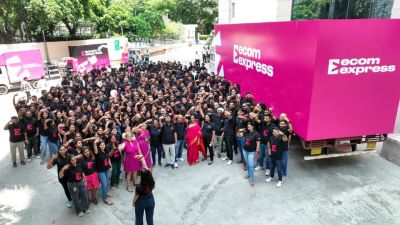
Ecom Express Limited, India’s sole pure-play B2C e-commerce logistics provider as of the Financial Year 2024, has introduced a new brand identity, underscoring its commitment to customer-centricity. This rebranding reflects a focus on addressing specific customer needs, prioritising customer-facing metrics, and integrating innovative technology across its nationwide express logistics network. The goal is to enhance speed, agility, and network reach, ensuring a customer-focused approach. The rebranding includes a dynamic logo and a refreshed visual identity, symbolising Ecom Express’s pursuit of excellence. The new logo features a forward-moving arrow within a square, representing the company’s dedication to delivery. The letter "E" in the logo stands for Expression, Innovation, and Progress, while the bold magenta colour signifies bravery, self-expression, and strength. This vibrant magenta reintroduction reflects Ecom Express's renewed commitment to customers, partners, and team members, as the company aims to simplify and democratise logistics for all. Ajay Chitkara, CEO and MD of Ecom Express, elaborated on the transformation, stating, “Our refreshed brand identity reaffirms our customer-first approach as we continue to integrate technology and innovation to provide reliable, high-speed services with the widest network reach. This transformation also underscores our commitment to our employees and delivery partners, who are essential to our business.” The new logo embodies Ecom Express’s dedication to its core values, focusing on customer welfare and fostering a diverse, inclusive environment. This rebranding signifies a promise to redefine logistics through advanced technology, making life easier for all types of customers.
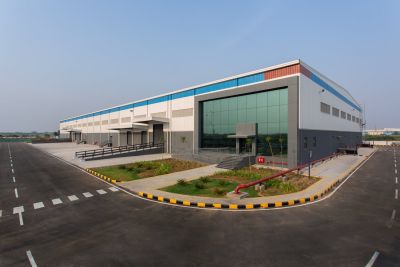
ESR India, the largest APAC focused industrial and logistics real estate platform, has inked a Memorandum of Understanding (MoU) with the Government of Tamil Nadu for a potential investment of INR 550 crores. The MOU is signed for the launch of two industrial parks in Kancheepuram and Krishnagiri districts of the state over the next five years. Once fully operational, the two projects have the potential to create over 4,400 jobs in the facility, that shall boost the overall socio-economic growth in the region. The MoU was signed at the Investment Conclave 2021 conference held today. It will facilitate ESR India’s proposed investment at Kancheepuram and Krishnagiri industrial parks by helping in streamlining land acquisition, approvals, clearances, and administrative processes as per existing policies, rules, and regulations of the Government of Tamil Nadu. The policy and regulatory reforms unveiled in recent times has accentuated the entry of international institutional players and has set new benchmarks for industrial developments in the country. Commenting on the development, Abhijit Malkani, CEO and Country Head, ESR India said, “We are delighted to announce our affiliation with the state government. The Government of Tamil Nadu has been very supportive in encouraging industrial developments in the state by creating a favourable business climate for industrial players. The MoU will see ESR invest INR 550 crores to develop industrial parks in Tamil Nadu, offering 1,800 direct and 2,600 indirect job opportunities in the facility.” “Our goals are aligned with the vision of the Tamil Nadu government, to create avenues to increase business and trade inclusion opportunities and employment towards garnering better economic growth in the region,” he further stated. ESR India is currently present across 9 cities and 15 locations with a total GFA of 18 mn sq ft. These state-of-the-art facilities will be developed upholding the best practices for ESG and sustainability.
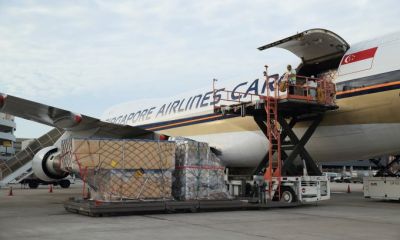
Singapore’s Changi Airport is sharpening its focus on pharmaceuticals and e-commerce shipments to navigate constrained cargo capacity until planned expansion in the 2030s. According to Lim Ching Kiat, Executive Vice President of Air Hub and Cargo Development at Changi Airport Group, current facilities face mounting pressure due to growing regional demand, necessitating strategic tenant and cargo type management. E-commerce continues to be a key growth driver for air cargo globally, fueled by major players like Shein, Temu, and TikTok Shop. At the same time, Singapore is solidifying its position as Southeast Asia’s preferred pharmaceutical hub, attracting investments from global biopharma giants such as Thermo Fisher, Sanofi, BioNTech, and MSD. Looking ahead, Changi Airport plans to launch a second logistics park by the 2030s, aiming to increase its annual cargo capacity from 3 million tons to 5.4 million tons. The new free trade zone will further expedite cargo handling and redistribution. In 2024, Changi Airport reported handling 1.99 million tons of airfreight, a 14.6% rise from 2023, driven by robust cross-border e-commerce demand, improved trade routes with China and the U.S., and recovering electronics exports. Top air cargo markets included China, Australia, the U.S., Hong Kong, and India.
The Uttar Pradesh government is set to develop a multi-modal logistics hub (MMLH) in Greater Noida’s Dadri, investing Rs 7,064 crore to support its $1 trillion economy goal. This hub will cover 823 acres, with a core development area spanning 455 acres. Key developments include commercial and administrative facilities over 17.5 acres, a rail yard, and other projects across 350 acres. Under Chief Minister Yogi Adityanath’s directives, a detailed action plan has been designed to expedite these initiatives. The Dadri MMLH aims to become a world-class freight handling facility, functioning as a dry port to ensure the swift transit of goods and raw materials. This project is poised to be India's largest logistics hub. Located on the eastern and western dedicated freight corridors, it will serve as a central hub for container handling, warehousing, cold storage, processing, de-stuffing, stuffing, and value-added packing. Providing seamless rail connectivity, the hub will feature rail platforms, customs clearance facilities, cargo segregation areas, truck parking zones, and extensive green spaces. The project is being developed under the Public-Private Partnership (PPP) model, supervised by the Greater Noida Industrial Development Authority and adhering to the guidelines of the National Industrial Corridor Development and Implementation Trust (NICDIT). The Greater Noida Industrial Development Authority has prepared the Master Detailed Project Report (DPR) for constructing the approach track and Rail Over Rail (ROR) bridge from New Dadri station to the MMLH boundary. The Dedicated Freight Corridor Corporation of India (DFCCIL) has approved the DPR for railway tracks and terminal stations within the MMLH. Additionally, the tender documentation for land acquisition and signaling processes for the approach track has been finalized. Concurrently, the development of trunk infrastructure, including boundary work, roads, canals, bridges, utility relocation, and water and power supply, is progressing through various phases.


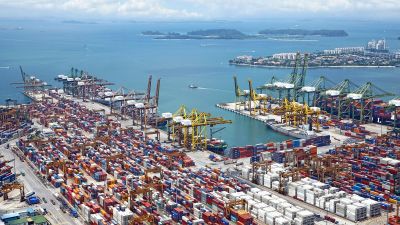
India's major ports experienced a very rare 3.2% year-on-year fall in cargo through October 2024, as official data showed. The total cargo handled at these 12 major ports fell to 68.22 million metric tonnes. A drastic fall in both crude oil and coal imports dragged down the figures. The overall cargo decreased mainly due to a decrease of 5.5% for overseas cargo, which consisted of 52.9 mmt. However, the domestic coastal shipping increased by 5.3% to 15.9 mmt. Crude oil, which comprised nearly 20% of the total cargo traffic, decreased by 8.8%, lowering to 12.9 mmt. The quantity of petroleum products also decreased, leading to the general decline. Its traffic, the most significant revenue earner, was down 13% versus last year, and declined even sharply because of the sharp fall in volumes of non-thermal coal. Yet, with the festival season, October usually witnesses higher cargo volume and the containerised volumes at the government-controlled ports were essentially flat with just a minus 0.2%. Contrasting that, India's overall merchandise exports grew by 17% as its pace marked a 28-month high led primarily by inventory build-up before Christmas and New Year time. On a positive note, private ports witnessed 5.7% growth in cargo volume to 64.2 mmt. Container volume at the private ports has seen an exponential growth of 21.5%, which actually speaks about festival season boosters. Adani Ports and Special Economic Zone, the largest private port operator in the country, reported an 8% Y-o-Y growth in total cargo handled, at 257.7 mmt, pulled up by 19% growth in container volumes and 9% liquid and gas cargo. As of the fiscal year 2024-25, traffic at major ports has increased by 3.9%, with the total touching 481 mmt. However, some individual ports saw drastic falls, as does the Kolkata Port that slipped down 25% in handling cargo whereas Visakhapatnam Port fell by 15.5% for October.
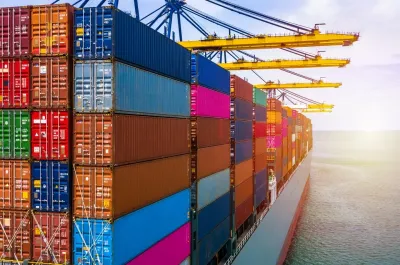
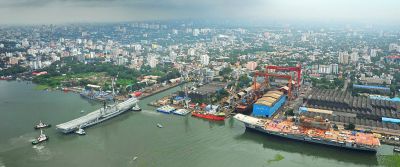
The Syama Prasad Mookerjee Port, Kolkata (SMPK), and the Haldia Dock Complex have experienced a notable downturn in cargo handling during the first half of the fiscal year 2024, reporting an 8.7% decline in combined cargo volumes. In stark contrast, 12 major ports across India collectively achieved a 5% increase in cargo handling during the same period. Key to this decline is the substantial drop in coking coal volumes, which constitutes a major portion of the cargo for these ports. In the April-September 2024 period, coking coal handling plummeted by 33% compared to the previous fiscal year. SMPK handled 28.54 million tonnes (MT) of cargo in this timeframe, a decrease from 31.26 MT last year. The Kolkata Dock System (KDS) was hit particularly hard, with a significant 15.18% drop in tonnage, falling from 8.38 MT to 7.11 MT. Meanwhile, the Haldia Dock Complex recorded a 6.34% decline, with volumes dropping from 22.88 MT to 21.42 MT. Notably, apart from SMPK, only Mormugao port in Goa recorded a cargo handling decrease of 5.67%. Conversely, the 12 major ports together processed 413.74 MT of cargo in the first half of FY24, up from 393.9 MT during the same period last year. The primary factor contributing to SMPK's cargo decline is the diversion of coking coal shipments to nearby ports such as Paradip and the Adani-owned Dhamra, which offer deeper drafts. For instance, coking coal handling at SMPK dropped to 6.86 MT in H1FY24 from 10.22 MT in H1FY23, while Paradip's volumes increased by 1 MT to 8.4 MT. The ongoing spike in seaborne bulk cargo rates, driven by geopolitical tensions in the Red Sea, has further exacerbated the situation. Importers have increasingly avoided anchorages like Sandheads, leading to decreased traffic. The limited draft at Haldia restricts larger vessels, significantly increasing logistics costs and limiting economies of scale for importers. SMPK officials remain hopeful that coking coal volumes will rebound with the onset of fair weather in October, potentially stabilizing operations. Source: The Statesman
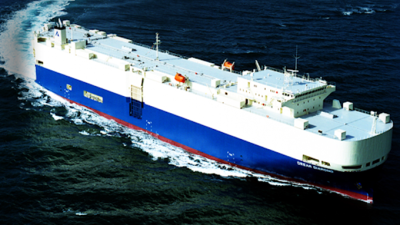
MacGregor, a division of Cargotec, has received a significant order to supply cargo access equipment for 12 new Pure Car and Truck Carriers (PCTCs) with an option for eight additional vessels. The vessels are set to be constructed at China Merchants Heavy Industry (Jiangsu) Co., Ltd. (CMHI) for CIDO Shipping. This order is included in Cargotec's third-quarter 2024 order intake, with deliveries scheduled to commence in the second quarter of 2026 and conclude by the fourth quarter of 2029. The contract encompasses the design and essential components for quarter ramps, side ramps, internal ramps, covers, and liftable car decks, along with installation assistance. MacGregor's successful collaboration with CMHI, marked by dependable deliveries and high-quality solutions, was pivotal in securing this contract. CIDO Shipping's longstanding partnership with MacGregor, which includes equipping numerous vessels with MacGregor technology, also influenced the decision. Magnus Sjöberg, Senior Vice President of the Equipment Solutions Division at MacGregor, expressed pride in continuing the partnership with CMHI and CIDO Shipping. He emphasised that the order reflects MacGregor's commitment to delivering innovative and reliable solutions that enhance operational efficiency and vessel performance over the long term. This order highlights the company's strong relationships with its customers and its reputation for reliability and quality in the maritime industry. This order not only signifies growth for MacGregor but also underscores the ongoing demand for advanced cargo handling solutions in the evolving shipping sector.