
Loading...

ECS Group’s subsidiary, Globe Air Cargo India, has been appointed as the GSSA for Thai Airways in Bangalore and Cochin. This partnership, effective since September 1, 2024, aims to strengthen Thai Airways’ operational capacity and connectivity in India, facilitating access to key markets in the Far East, Europe, and Australia.
Under the new contract, Globe Air Cargo India oversees daily A350-900 flights from Bangalore, each providing a cargo capacity of 15 tons. Initially operating 3 weekly flights, Cochin has now expanded to daily operations, contributing an additional 2.5 tons per flight approximately. This strategic move significantly bolsters Thai Airways’ cargo network within India, with Globe Air Cargo India now managing four of the airline’s eight major stations nationwide, and handling over 40% of its total exports. The primary commodities expected to benefit from this agreement include pharmaceuticals, perishables, garments, spices, and automotive parts, supported by improved logistics and streamlined connections.
Jean Ceccaldi, CEO of ECS Group, expressed his enthusiasm for the collaboration: “Our partnership with Thai Airways underscores the trust in our expertise and operational excellence. Expanding our footprint in India through this contract enables us to support Thai Airways in optimising its reach and enhancing trade flows between India and international markets.”
Girish Kunder, Managing Director of Globe Air Cargo India, echoed these sentiments: “This partnership marks an exciting chapter for Globe Air Cargo India as we join forces with Thai Airways to boost cargo capacity and connectivity across key routes. Leveraging our resources and experience, we are dedicated to delivering a seamless experience for our customers and positively impacting the air cargo industry in India.”
Veera-Anong Pookgaman, Team lead of Cargo and Mail Sales at Thai Airways also emphasised the importance of the collaboration: “Partnering with Globe Air Cargo India aligns perfectly with our strategy to strengthen our presence in the Indian market. Their extensive experience and commitment to service excellence assure us that this collaboration will enhance the reliability and efficiency of our cargo services, meeting the diverse needs of our clients.”
This contract marks a significant milestone for ECS Group as Globe Air Cargo India assumes a pivotal role in supporting Thai Airways’ expansion and operational success in India’s dynamic cargo sector.

Alaska Air Cargo has strengthened its international logistics footprint with the launch of a new daily freight corridor connecting London Heathrow and Seattle, marking a significant milestone in the carrier’s expanding transatlantic operations. The new route, operated in partnership with Alaska Airlines’ passenger services, is expected to enhance cargo connectivity between Europe and the U.S. Pacific Northwest while creating additional opportunities for shippers moving high-value and time-sensitive goods. The London-Seattle service officially commenced on May 21, 2026, using Boeing 787-9 Dreamliner aircraft configured for long-haul international operations. The route links Seattle-Tacoma International Airport (SEA), Alaska Airlines’ primary global gateway, with London Heathrow (LHR), one of the world’s busiest cargo and passenger hubs. For the air cargo industry, the launch represents more than a passenger network expansion. The route is expected to support growing trade volumes between the United Kingdom and the U.S. West Coast, particularly across sectors such as pharmaceuticals, perishables, aerospace components, e-commerce shipments, and technology products. Seattle’s strategic position as a gateway to North America and Asia further strengthens the corridor’s importance for international supply chains. Alaska Air Cargo stated that the daily service will provide customers with improved freight capacity, faster transit times, and enhanced network reliability. The airline is positioning the new route as part of its broader strategy to build Seattle into a leading intercontinental hub with stronger global cargo connectivity. The move follows Alaska Airlines’ recent international expansion efforts, including new routes to Rome and Reykjavík, as the carrier accelerates long-haul growth after integrating widebody aircraft into its fleet. Industry analysts view the London-Seattle corridor as a strategic addition amid rising demand for direct transatlantic cargo services. Heathrow remains a critical logistics gateway for European freight forwarding and international trade, while Seattle serves as a major center for technology, manufacturing, retail distribution, and seafood exports. The daily frequency is expected to offer supply chain stakeholders greater scheduling flexibility and more consistent cargo uplift capacity. The Boeing 787-9 aircraft operating the route also provides improved fuel efficiency and lower emissions compared to older-generation long-haul aircraft, aligning with growing sustainability priorities across the logistics and aviation sectors. Airlines globally are increasingly leveraging modern widebody fleets to balance operational efficiency with environmental targets. The launch also intensifies competition in the Seattle international aviation market, where carriers are expanding long-haul operations to capture premium passenger and cargo demand. Alaska Airlines has announced plans to further develop its international network from Seattle, targeting at least 12 intercontinental destinations by 2030. With daily connectivity between London and Seattle now in place, Alaska Air Cargo is expected to strengthen its position in the transatlantic freight market while offering logistics providers and exporters an additional route option for moving goods efficiently between Europe and North America. 𝐒𝐭𝐚𝐲 𝐓𝐮𝐧𝐞𝐝 𝐭𝐨 https://cargoconnect.co.in/ 𝐟𝐨𝐫 𝐥𝐚𝐭𝐞𝐬𝐭 𝐮𝐩𝐝𝐚𝐭𝐞𝐬!

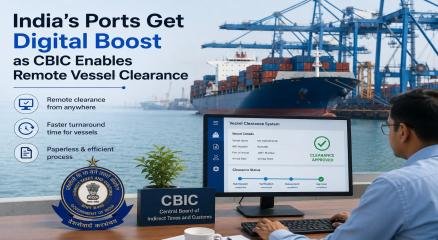
The Central Board of Indirect Taxes and Customs (CBIC) has introduced remote customs clearance for sea cargo operations, eliminating the longstanding requirement for customs officers to physically board vessels for routine clearances. The reform is expected to reduce vessel turnaround time, streamline cargo movement, and improve operational efficiency at Indian ports. The initiative, implemented through Circular No. 26/2026-Customs, standardises procedures for “Entry Inward” and “Vessel Sail-out Clearance” processes across ports. Under the revised framework, customs approvals will now be granted based on electronic filings and digital verification systems rather than mandatory physical inspections. The move aligns with the government’s broader push for faceless and paperless trade facilitation. Shipping lines and vessel operators will now be able to submit mandatory declarations digitally under the Sea Cargo Manifest and Transshipment Regulations (SCMTR). These include cargo manifests, crew declarations, and ship store details through online platforms such as e-Sanchit. Industry stakeholders believe the reform could significantly ease congestion at major ports by reducing procedural delays linked to vessel boarding schedules. Traditionally, customs officials physically boarded ships to verify documents before granting entry or departure clearance, a process that often resulted in operational bottlenecks, especially during high traffic periods. Under the new risk-based approach, physical boarding will be limited to vessels flagged through risk profiling and intelligence assessments. This selective inspection mechanism is expected to help customs authorities maintain regulatory oversight while enabling faster cargo processing for compliant operators. The reform is also expected to strengthen India’s ease-of-doing-business credentials and improve the competitiveness of its ports in global trade networks. Faster clearances can lower logistics costs, improve shipping schedules, and support exporters and importers dealing with time-sensitive cargo. The policy complements other digital customs initiatives introduced in recent years, including automated export clearances and electronic documentation systems. Experts note that digitisation of customs processes has become increasingly critical as cargo volumes rise and supply chains demand greater speed and predictability. By integrating remote clearances with SCMTR-based electronic filings, the CBIC aims to create a more transparent and technology-driven cargo management ecosystem. The latest reform underscores India’s intent to align its maritime trade procedures with international best practices while supporting port-led economic growth. For the logistics and shipping sector, the shift towards remote customs operations could mark a crucial step in reducing inefficiencies and enhancing end-to-end supply chain performance. 𝐒𝐭𝐚𝐲 𝐓𝐮𝐧𝐞𝐝 𝐭𝐨 https://cargoconnect.co.in/ 𝐟𝐨𝐫 𝐥𝐚𝐭𝐞𝐬𝐭 𝐮𝐩𝐝𝐚𝐭𝐞𝐬!

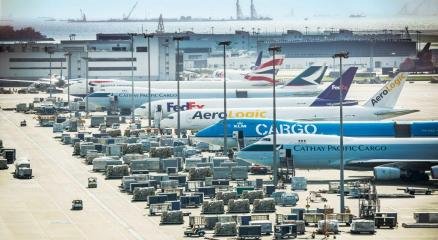

Global air and travel services provider dnata has expanded its long-standing partnership with Lödige Industries to enhance cargo handling operations at Singapore Changi Airport, reinforcing its commitment to operational efficiency and long-term infrastructure reliability. Under the renewed agreement, Lödige Industries will continue maintaining and upgrading multiple cargo handling systems across dnata’s facilities at Singapore Changi Airport. The scope of work includes the Automatic Cargo Handling System (ACHS), Pallet Cargo Handling System (PCHS), as well as mechanical systems supporting dnata’s cool chain and perishables operations. A key highlight of the collaboration is the continued support for the first material handling system installed by Lödige in Asia in 1979. The system, which has been operational for more than four decades, is now undergoing upgrades aimed at improving long-term performance and supporting rising cargo volumes in Singapore’s fast-growing airfreight market. The partnership reflects dnata’s broader strategy to modernise cargo infrastructure while ensuring uninterrupted service reliability. Singapore remains one of dnata’s most significant cargo hubs globally, with the company’s Changi facilities capable of handling approximately 550,000 tonnes of cargo annually. Industry observers note that investments in automated cargo systems and predictive maintenance are becoming increasingly critical as airports and ground handlers face pressure to improve turnaround efficiency, reduce downtime and support temperature-sensitive cargo flows. The Singapore operation is particularly important for pharmaceutical, perishables and e-commerce shipments moving through Southeast Asia. Lödige Industries has previously supported dnata through several infrastructure enhancement projects at Changi Airport, including upgrades to perishables handling facilities and the implementation of elevating transfer vehicle systems. Beyond Singapore, the two companies have also collaborated on cargo terminal developments and system upgrades in Sydney, Melbourne, Brisbane, London Heathrow and Amsterdam Schiphol airports. The renewed agreement underscores a growing trend in the air cargo sector where operators are prioritising lifecycle extension and technology upgrades over complete system replacement. By modernising existing infrastructure while maintaining operational continuity, dnata aims to strengthen service resilience and prepare for future cargo demand growth across Asia-Pacific. 𝐒𝐭𝐚𝐲 𝐓𝐮𝐧𝐞𝐝 𝐭𝐨 https://cargoconnect.co.in/ 𝐟𝐨𝐫 𝐥𝐚𝐭𝐞𝐬𝐭 𝐮𝐩𝐝𝐚𝐭𝐞𝐬!