Dachser, DB Schenker, duisport and Rhenus has established an ‘Open Logistics Foundation’ in Berlin. The purpose of the non-profit foundation is to build a European open-source community aiming to promote digitalisation in logistics and supply chain management based on open source and standardise logistics processes through de facto standards.
Not only is a technology initiative like this unique in logistics to date, the founding members are also taking on a pioneering role as to the future topic of open source.
“We want to drive the digitalisation of logistics forward together. That is why open source is an important success factor for the entire logistics industry and, at the same time, a driver for harmonised processes in digital supply chains. We consider the Open Logistics Foundation to be the first step towards a platform economy based on European legal standards and values. It is both a beginning and an appeal to the logistics sector to think of technology and processes together and actively participate in the open-source community,” the founding members declared in a joint statement.
Now it is about anchoring open source in the logistics sector and implementing the internal structures to work with the corresponding hardware and software.
The foundation addresses all logistics-related companies and their IT developers. Through Open Logistics eV, the funding association, which was also founded in Berlin, it is open to new members from all areas of logistics, ranging from industry, retail and services to freight forwarders and political organisations. Numerous companies already announced their participation in the funding association, including AEB, BLG Logistics Group, GS1 Germany, Lobster Logistics Cloud and the Bochum-based Setlog Holding, but also associations such as the Fraunhofer Gesellschaft zur Förderung der angewandten Forschung.
The core of the foundation's work is the operation of the so-called Open Logistics Repository, a technical platform on which software and hardware interfaces reference implementations and components available as open source under a free license (permissive license). All tools and components will be free of charge without restriction for commercial applications to promote broad acceptance within the logistics sector. Companies may use them, for example, to expand their platforms or to set up new products and business models faster. The open-source approach guarantees an open standard for digitalising logistics processes while offering a significant degree of flexibility for individual customisation. Companies that use open source are usually more productive, reduce costs and prevent being tied to proprietary software. Another advantage is that the software solutions are not isolated, but all components are compatible, facilitating digital networking beyond company boundaries.
The main tasks of the foundation also include identifying collaborative projects to be included in the repository. It monitors the quality of the open-source software and guarantees neutrality in its development. Furthermore, it offers training for companies on how to work with the platform.
The set-up phase of the platform will take place in the coming year. In Berlin, some open-source projects have already been named, for example, the first open-source digital consignment note (eCMR) as well as implementations for the digital load carrier exchange or the AGV interface VDA 5050. Further developments from the community will be added in the future.
On the foundation's establishment, the board members were appointed. Jochen Thewes (Chairman), CEO of DB Schenker, Dr Stephan Peters (Vice Chairman), Member of the Board of Rhenus, and Stefan Hohm (Vice Chairman), CDO of Dachser, were elected to the Executive Board. The Advisory Board is made up of Prof Dr Dr h c Michael ten Hompel (Chairman), Managing Director of the Fraunhofer IML, and Markus Bangen, CEO of duisport, as well as Jakub Piotrowski CIO/CDO of BLG Logistics Group.
The Open Logistics Foundation was initiated by the Fraunhofer Institute for Material Flow and Logistics IML as part of its Silicon Economy research project, which is funded by the German Federal Ministry of Transport and Digital Infrastructure (BMVI) with 25 million euros. More than 150 researchers are working on an open-source software and hardware infrastructure that enables companies to process their business operations in an automated way and to offer and use services and data securely across different platforms beyond company boundaries. The software and hardware created during the project duration until 2023 and the developments from the community will form the basis of the Open Logistics Foundation's repository.
Jochen Thewes, CEO of DB Schenker, Chairman of the Board of the Open Logistics Foundation expressed, “If we want to digitise logistics successfully, we have to overcome silo structures. Hardware and software from open source can and will make a significant contribution to achieving this. The benefits are impressively simple: Everyone uses the same freight documents, for example, and everyone plans routes or offers tracking and tracing. In this respect, we want to jointly develop IT standards in logistics beyond company boundaries and make the results accessible to everyone. This open-source approach is intended to replace individual investments in the digitalisation of commodities. Every company will benefit from this.”
Dr. Stephan Peters, Member of the Board of Rhenus SE & Co KG, Vice Chairman of the Open Logistics Foundation stated, “Digitalisation is not an end in itself. It overcomes interfaces and pays off higher-level goals such as transparency, efficiency, and sustainability. Above all, however, it must also be economically feasible and successful on the market. 100 percent digital is not a dream, but our common future in more and more use cases. The open-source concept guarantees an open standard for digitalising logistics processes while offering a high degree of flexibility for individual adaptations. By founding the Open Logistics Foundation, we have laid the basis for the era of open source in logistics.”
Stefan Hohm, Chief Development Officer (CDO), Dachser SE, Vice Chairman of the Open Logistics Foundation said, “Intelligent logistics is based on high-performance IT systems. This principle has applied at Dachser for many decades and will certainly remain so. However, it hardly makes sense to program every line of code in a standard application yourself. This is neither economical nor does it provide a competitive advantage. On the contrary, quite often, it even prevents the pragmatic networking of partners and customers. Therefore, it is advantageous for all supply chain parties, if in the future, that selected software components are available to everyone free of charge as open-source elements and continuously updated via a neutral authority. Open source thus becomes another important competitive factor, and that is why we have supported the idea of the Open Logistics Foundation since the very beginning.”
Prof Dr Dr h c Michael ten Hompel, Managing Director of the Fraunhofer Institute for Material Flow and Logistics (IML), Chairman of the Advisory Board of the Open Logistics Foundation said, “The logistics sector must become more software driven to play a role in the forthcoming platform economy and to self-determine its future based on European legal standards and values. Digitisation is the goal, and open source is the key to taking all companies along this journey, regardless of size and sector. Dachser, DB Schenker, duisport and Rhenus have laid the basis with their donation of the non-profit Open Logistics Foundation. Now it's a matter of what the logistics sector turns it into.”
Markus Bangen, Chairman of the Executive Board of Duisburger Hafen AG (duisport), Member of the Advisory Board of the Open Logistics Foundation said, “After the presentation of the Open Logistics Foundation, it was clear to the Port of Duisburg very quickly that we would like to get involved. The primary goals of our commitment are an industry-wide dialogue, the identification of overarching challenges, and the creation of urgently needed standards to make cross-location collaboration technologically easier. The bundling of resources and topics offers us the unique opportunity to set de facto standards instead of creating further monoliths. The digitalisation of logistics can only be advanced by working together. The early involvement of all stakeholders creates important internal structures and also promotes the mutual exploration of existing needs and necessities as well as the identification of available resources.”
The Federation of Freight Forwarders’ Associations in India (FFFAI) held its 6th EC Meeting for the term 2021-23 on May 27 and 28 in Bengaluru. The meeting was attended by the Office Bearers and 28 Member Association representative of FFFAI from across the country, there were many issues discussed and updates provided concerning customs, CBLR, EDI, Service Tax/GST, logistics, air cargo, sea cargo, skill development,importance of social media which FFFAI has expanded recently, technology developments, etc. The special focus of the 6th EC meeting was the updates on forthcoming 24th Biennial Convention of FFFAI to be held from August 12 to 14, 2022 in Chennai with the theme LOGISTICS RESHAPE, EMBRACE AND SURGE IN THE DIGITAL ERA. At this EC meeting, FFFAI also implemented Digital Learning platform for members and next generation for e-learning. It has been decided that FFFAI would initiate FIATA eFBL here in India to benefit the trade, which empowers customs brokers, freight forwarders and logistics service providers. In addition, updates on the recently held FIATA HQ Meet was also provided by the concerned members of FFFAI. FFFAI members present at this EC meeting stressed upon enhancing productivity on ICEGATE for trade facilitation and Ease of Doing Business. The FFFAI members also urged for creating a dedicated portal for LSP integration. As regard to skill development initiatives, IIFF’s (training arm of FFFAI) past and forthcoming training programmes (both online and classroom/physical) for the entire logistics industry were presented at the EC meeting. In addition, FFFAI’s various initiatives on capacity building through technology/IT also discussed withadequate importance. Recent activities of FFFAI Women’s Wing including organising interactive meetings with Government of India officials and industry experts were highlighted at this meeting which drew huge appreciation from the members. The members committed to expand the activities of the Women’s Wing in all the 28 member association locations to empower/encourage the women logistics practitioners. At this EC meeting FFFAI has signed an MoU with the National Institute of Industrial Engineering (NITIE) with an objective of skilling the aspiring candidates looking for opportunities in the logistics sector. Notably, a special session was organised at this 6th EC Meeting where N Sivasailam, former Special Secretary (Logistics), Ministry of Commerce, Government of India was present to address the FFFAI members and highlight the recent initiatives of the government in strengthening the logistics infrastructure, thereby leading in increase of international trade through multimodal connectivity and faster cargo clearance. He projected the ambitious growth potential of the logistics industry in India with a strong collaboration between government and industry people. Also speaking on the occasion was Bani Bhattacharya, IRS, who interacted with members of FFFAI on various initiatives of CBIC for the trade facilitation without human intervention. FFFAI Chairman Shankar Shinde thanked all the 28 associations for their support and appreciated the contribution of CBIC/DG systems trade facilitation measures. FFFAI Member Associations are: 1. Ahmedabad Custom Brokers' Association2. Aurangabad Customs House Agents Association3. Association of Custom House Agents Thiruvanthapuram4. Bangalore Custom House Agents Association5. Brihnamumbai Custom Brokers Association6. Calcutta Customs House Agents Association7. Chennai Customs House Agents Association8. Cochin Customs Brokers' Association9. Coimbatore Customs House and Steamer Agents Association10. Custom Brokers Association Hyderabad11. Delhi Customs Brokers Association12. Goa Custom Brokers Association13.Indore Customs House Agents Association14. The Kakinada Customs Brokers Association15. Kandla Custom Brokers Association16. Kanpur Customs Brokers Association17. Ludhiana Customs House Agents Association18. Mangalore Customs House Agents Association19. Mundra Customs Brokers Association20. Nagpur Customs House Agents Association21. Nashik Customs House Agents Association22. Nadia Custom Brokers Association23. Pipavav Custom Brokers Association24. Pune Customs House Agents Association25. Rajasthan Customs House Agents Association26.Tuticorin Custom Brokers Association27.Visakhapatnam Cusotms Brokers' Association28.West Bengal Custom House Agents Society FFFAI welcomes Women in Logistics/Youth in Logistics to participate on FFFAI forums and also invites membership application form logistics service providers in industry as this is a big national and international forum to network.
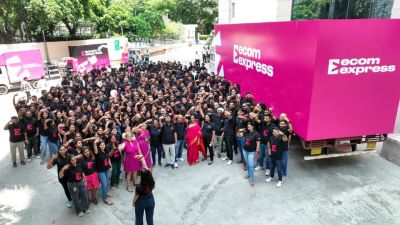
Ecom Express Limited, India’s sole pure-play B2C e-commerce logistics provider as of the Financial Year 2024, has introduced a new brand identity, underscoring its commitment to customer-centricity. This rebranding reflects a focus on addressing specific customer needs, prioritising customer-facing metrics, and integrating innovative technology across its nationwide express logistics network. The goal is to enhance speed, agility, and network reach, ensuring a customer-focused approach. The rebranding includes a dynamic logo and a refreshed visual identity, symbolising Ecom Express’s pursuit of excellence. The new logo features a forward-moving arrow within a square, representing the company’s dedication to delivery. The letter "E" in the logo stands for Expression, Innovation, and Progress, while the bold magenta colour signifies bravery, self-expression, and strength. This vibrant magenta reintroduction reflects Ecom Express's renewed commitment to customers, partners, and team members, as the company aims to simplify and democratise logistics for all. Ajay Chitkara, CEO and MD of Ecom Express, elaborated on the transformation, stating, “Our refreshed brand identity reaffirms our customer-first approach as we continue to integrate technology and innovation to provide reliable, high-speed services with the widest network reach. This transformation also underscores our commitment to our employees and delivery partners, who are essential to our business.” The new logo embodies Ecom Express’s dedication to its core values, focusing on customer welfare and fostering a diverse, inclusive environment. This rebranding signifies a promise to redefine logistics through advanced technology, making life easier for all types of customers.
The Uttar Pradesh government is set to develop a multi-modal logistics hub (MMLH) in Greater Noida’s Dadri, investing Rs 7,064 crore to support its $1 trillion economy goal. This hub will cover 823 acres, with a core development area spanning 455 acres. Key developments include commercial and administrative facilities over 17.5 acres, a rail yard, and other projects across 350 acres. Under Chief Minister Yogi Adityanath’s directives, a detailed action plan has been designed to expedite these initiatives. The Dadri MMLH aims to become a world-class freight handling facility, functioning as a dry port to ensure the swift transit of goods and raw materials. This project is poised to be India's largest logistics hub. Located on the eastern and western dedicated freight corridors, it will serve as a central hub for container handling, warehousing, cold storage, processing, de-stuffing, stuffing, and value-added packing. Providing seamless rail connectivity, the hub will feature rail platforms, customs clearance facilities, cargo segregation areas, truck parking zones, and extensive green spaces. The project is being developed under the Public-Private Partnership (PPP) model, supervised by the Greater Noida Industrial Development Authority and adhering to the guidelines of the National Industrial Corridor Development and Implementation Trust (NICDIT). The Greater Noida Industrial Development Authority has prepared the Master Detailed Project Report (DPR) for constructing the approach track and Rail Over Rail (ROR) bridge from New Dadri station to the MMLH boundary. The Dedicated Freight Corridor Corporation of India (DFCCIL) has approved the DPR for railway tracks and terminal stations within the MMLH. Additionally, the tender documentation for land acquisition and signaling processes for the approach track has been finalized. Concurrently, the development of trunk infrastructure, including boundary work, roads, canals, bridges, utility relocation, and water and power supply, is progressing through various phases.
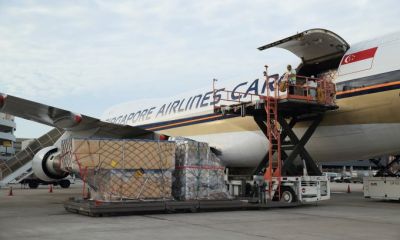
Singapore’s Changi Airport is sharpening its focus on pharmaceuticals and e-commerce shipments to navigate constrained cargo capacity until planned expansion in the 2030s. According to Lim Ching Kiat, Executive Vice President of Air Hub and Cargo Development at Changi Airport Group, current facilities face mounting pressure due to growing regional demand, necessitating strategic tenant and cargo type management. E-commerce continues to be a key growth driver for air cargo globally, fueled by major players like Shein, Temu, and TikTok Shop. At the same time, Singapore is solidifying its position as Southeast Asia’s preferred pharmaceutical hub, attracting investments from global biopharma giants such as Thermo Fisher, Sanofi, BioNTech, and MSD. Looking ahead, Changi Airport plans to launch a second logistics park by the 2030s, aiming to increase its annual cargo capacity from 3 million tons to 5.4 million tons. The new free trade zone will further expedite cargo handling and redistribution. In 2024, Changi Airport reported handling 1.99 million tons of airfreight, a 14.6% rise from 2023, driven by robust cross-border e-commerce demand, improved trade routes with China and the U.S., and recovering electronics exports. Top air cargo markets included China, Australia, the U.S., Hong Kong, and India.
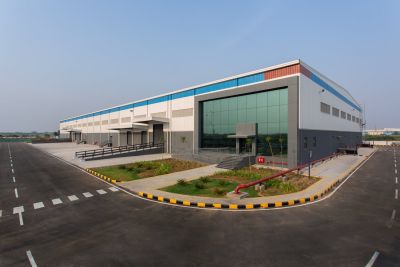
ESR India, the largest APAC focused industrial and logistics real estate platform, has inked a Memorandum of Understanding (MoU) with the Government of Tamil Nadu for a potential investment of INR 550 crores. The MOU is signed for the launch of two industrial parks in Kancheepuram and Krishnagiri districts of the state over the next five years. Once fully operational, the two projects have the potential to create over 4,400 jobs in the facility, that shall boost the overall socio-economic growth in the region. The MoU was signed at the Investment Conclave 2021 conference held today. It will facilitate ESR India’s proposed investment at Kancheepuram and Krishnagiri industrial parks by helping in streamlining land acquisition, approvals, clearances, and administrative processes as per existing policies, rules, and regulations of the Government of Tamil Nadu. The policy and regulatory reforms unveiled in recent times has accentuated the entry of international institutional players and has set new benchmarks for industrial developments in the country. Commenting on the development, Abhijit Malkani, CEO and Country Head, ESR India said, “We are delighted to announce our affiliation with the state government. The Government of Tamil Nadu has been very supportive in encouraging industrial developments in the state by creating a favourable business climate for industrial players. The MoU will see ESR invest INR 550 crores to develop industrial parks in Tamil Nadu, offering 1,800 direct and 2,600 indirect job opportunities in the facility.” “Our goals are aligned with the vision of the Tamil Nadu government, to create avenues to increase business and trade inclusion opportunities and employment towards garnering better economic growth in the region,” he further stated. ESR India is currently present across 9 cities and 15 locations with a total GFA of 18 mn sq ft. These state-of-the-art facilities will be developed upholding the best practices for ESG and sustainability.



In a momentous event today, PM Modi inaugurated a 77-kilometer-long section of the Western Dedicated Freight Corridor (WDFC), marking a significant milestone in India's ambitious infrastructure development efforts. The inauguration ceremony, held in the presence of key dignitaries and government officials, showcased the country's commitment to enhancing its transportation network. The Western Dedicated Freight Corridor is a game-changing project that aims to revolutionize India's freight transportation sector. The newly inaugurated 77-kilometer section connects key industrial regions, providing a dedicated pathway for the efficient movement of goods. With this achievement, India takes a major step towards reducing logistics costs, boosting manufacturing, and improving the overall economy. PM Modi, while addressing the audience, emphasized the importance of this project in promoting economic growth, generating employment, and reducing the carbon footprint. He noted, "The Western Dedicated Freight Corridor is a testament to India's vision for a modern and efficient transportation system. It will not only enhance our connectivity but also make us a global logistics hub." The event was attended by several Union Ministers and top officials from the Ministry of Railways, underscoring the government's commitment to accelerating infrastructure development in the country.


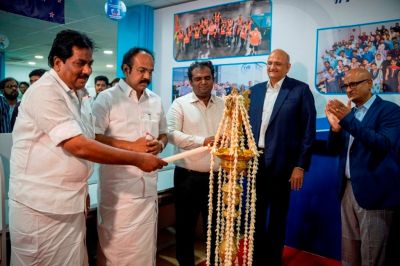
TVS Supply Chain Solutions (TVS SCS) announced the expansion of its Centre of Excellence (CoE) by inaugurating a new technology centre in Madurai. The CoE, a core unit of the company's global operations, strengthens TVS SCS' leadership as a technology-led global supply chain player and acts as an important pillar of the company's growth strategy. The company looks to tap into the rich talent available in the region to build on its competitive advantage and aims to double its employees' strength in two years from its current level of 300. The new wing will have a total work area of around 13,000 sq ft and would provide advanced services such as technology product development and deployment; analytics and business intelligence support; and business process outsourcing for its global operations. Thangam Thennarasu, Minister for Industries, Investment Promotion and Commerce, Government of Tamil Nadu; P Moorthy, Minister for Commercial Taxes, Registration and Stamp Law, Government of Tamil Nadu; and Dr S Aneesh Sekhar, IAS, District Collector, Madurai inaugurated the new centre. Commenting on the CoE's expansion, R Dinesh, Executive Vice Chairman, TVS SCS said, "I am happy that we are expanding our operations in Madurai through our Centre of Excellence, which provides specialised services, using technology and data analytics, to our global operations. Being a home-grown organisation, we always wanted to provide opportunities to the local talent here and that's when we started our Centre of Excellence in 2017 with 5 employees. Going forward, CoE will be the hub for all technology developments for our operations globally besides being the back-office capital for TVS SCS." Ravi Viswanathan, Managing Director, TVS SCS said, "The expansion of the CoE facility is a testimony to the value it drives to our operations both in India and globally and helps in being an agile and responsive partner to our customers globally. The CoE today boasts of deep domain depth combined with the latest technology capabilities serving our global customer clientele. Our expansion in Madurai is based on the underlying belief in the rich talent available in the region and be a key driver in realising our vision of being a global leader in the Supply Chain Solutions space." The new technology facility is an ISO 27001:2013 certified and has implemented required information systems, management systems, policies, and procedures to maintain industry standard best practices and applicable controls. TVS SCS' Centre of Excellence in Madurai, established in 2017, has now completed five years and employs over 300 strong workforce of supply chain experts and technology professionals.
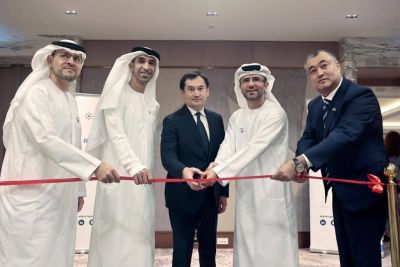
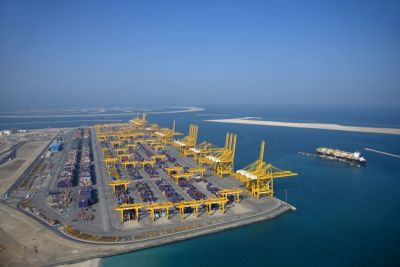
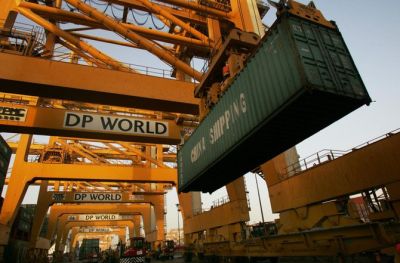
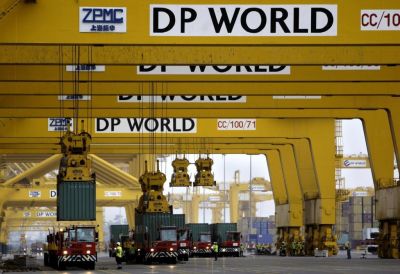
Dubai-based DP World and CDPQ, the Canadian global investment group, announced a joint investment of US$5 billion in three flagship UAE assets controlled by DP World. "CDPQ will invest US$2.5 billion in Jebel Ali Port, Jebel Ali Free Zone, and National Industries Park through a new joint venture in which it will hold a stake of approximately 22 per cent (through a sub-concession of up to 35 years) with the remainder of the transaction being financed by debt," according to an official statement from DP World. "Other long-term investors will have the opportunity to acquire an additional stake of up to US$3 billion. The transaction implies a total enterprise value of approximately US$23 billion for the three assets." "The Jebel Ali Port, Free Zone and National Industries Park together form a world-class integrated ecosystem for the supply and logistics chains of over 8,700 companies from around the world, serving more than 3.5 billion people globally. The three assets generated pro-forma 2021 revenue of US$1.9 billion, the statement said. The three assets will remain fully consolidated businesses within the DP World Group, and day-to-day operations, customers, service providers and employees will not be affected," it added. According to the DP Word statement, "Tranche 1 (US$5 billion) of the transaction is expected to close in the second or third quarter of 2022, and tranche 2 (up to US$3 billion) is expected to close during the fourth quarter of 2022." "We are delighted to announce the broadening of our partnership with CDPQ," says Sultan Ahmed Bin Sulayem, Group Chairman and CEO, DP World. "The DP World and CDPQ co-investments have been very successful, thanks to our complementary expertise and long-term investment horizon. We believe this new partnership will enhance our assets and allow us to capture the significant growth potential of the wider region. The transaction also achieves our objective of reducing DP World's net leverage to below 4x Net Debt to EBITDA and this has been achieved despite the challenges of the pandemic and recent global economic conditions." Emmanuel Jaclot, Executive Vice-President and Head of Infrastructure, CDPQ adds, "This investment in Jebel Ali is another great illustration of the partnership between CDPQ and DP World, which now spans four continents and eighteen terminals. Today, we are pleased to deepen our long-standing relationship with a world-class logistics and supply chain operator by investing in this strategic trade infrastructure, one that will play a pivotal role in the evolution of the global economy." "DP World is well positioned to provide innovative solutions to their customers worldwide, and we welcome this opportunity to invest in a best-in-class group of infrastructure that provides CDPQ with exposure to new fast-growing markets and trade routes in Africa and South Asia."