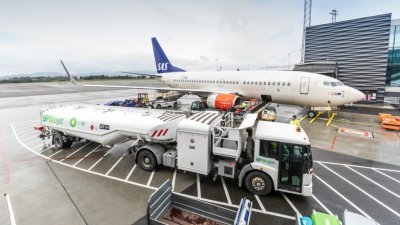
With air freight representing 1.9% of all global greenhouse emissions, maritime shipping accounting for about 1.7%, and land transport 11.9%, the logistics industry altogether had understood the need to rise up and be is a crucial facilitator in reducing overall greenhouse gases. As sustainability becomes more and more critical, freight businesses and logistics service providers are looking for ways to grow their economic base, and make a positive social impact with their ecological footprint. Sustainable Aviation Fuels (SAF) has been identified as one of the key elements in helping achieve the change.
In November 2020, DB Schenker partnered with Lufthansa Cargo and flew the world’s first CO2-neutral all-cargo flight from Germany (Frankfurt) to China (Shanghai), and back to home. The Boeing 777F cargo aircraft used SAF on both legs of the flight.
As a real alternative to fossil fuels, SAF is produced from waste materials, such as those derived from used cooking and vegetable oils, landfill, municipal waste, crop waste, and more. More critical, SAF can have up to 80% fewer Greenhouse Gas (GHG) emissions than traditional conventional kerosene fuels resulting in CO2 emission reductions and cleaner air.
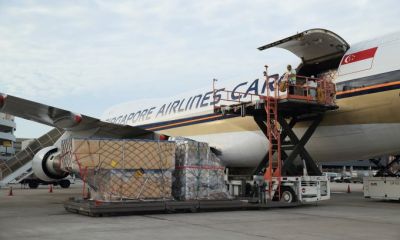
With the start of the summer schedule, DB Schenker has been offering clients CO2-neutral airfreight service, in collaboration with Lufthansa Cargo. This covers a weekly flight on the Frankfurt-Shanghai route with one of the airline’s 777-200 freighters.
Significantly, Lufthansa’s ‘Miles & More’ passenger customers now compensate for their CO2 emissions as the Miles & More app has integrated the airline’s ‘Compensaid’ compensation platform which was launched in 2019. Customers can see the CO2 emissions of their flight in the app and offset them directly using their airmiles or with a charge in Euros. Customers can decide whether to offset through the use by the airline of SAF or through certified reforestation projects of the ‘myclimate’ foundation. The enabling application is called ‘mindfulflyer’ and was developed jointly by Miles & More and the Lufthansa Innovation Hub. With the mindfulflyer function, participants are reminded regularly to compensate their flights.
Cargo carrier Atlas Air Worldwide also completed a test flight from Europe to Latin America using SAF sourced from fresh vegetable oil. The flight from Spain’s Zaragoza airport to Mexico City which flew on December 22 day is “believed to be the first transoceanic commercial cargo flight in Spain to include a blend of SAF and Jet A-1 fuel”. Atlas operated a Boeing 747-400F for the mission, with the jumbo using a fuel mixture which included 2.33% SAF.
In December 2020, Air France KLM Martinair Cargo (AFKLMP) also launched a SAF programme allowing shippers and forwarders to select how much of their freight they would like to be flown using SAF. Based on a ‘book and claim’ system, customers determine their own level of engagement with the programme and their entire investment is used for sourcing SAF.
Air France and KLM have been involved in research and development programmes in the field of alternative fuels for many years. Reportedly, the two airlines operated the world’s first commercial flight using SAF in June 2011, with a flight from Amsterdam Airport Schiphol to Paris Charles de Gaulle, demonstrating a possible alternative to fossil fuels.
KLM already operates the Corporate BioFuel Programme that enables businesses with a corporate contract with the airline to offset the CO2 emissions from business passenger travel using SAF. Partners in the programme pay a surcharge that covers the difference in cost between biofuel and traditional fossil-based kerosene.
In January, AFKLMP and Kuehne+Nagel (K+N) teamed up to launch a zero emissions airfreight route—the first route of its kind in the industry. It is said that all of K+N’s cargo on the Los Angeles—Amsterdam route would be covered by SAF.
“This first carbon-neutral lane underlines the strong sustainability programmes of partners, Kuehne+Nagel’s Net Zero Carbon programme and AFKLMP Cargo’s SAF programme which aim to connect people and goods through sustainable logistics,” the companies said.
Soon after that, French service provider Bolloré Logistics joined AFKLMP’s SAF programme. The collaboration began in January on the Paris and New York JFK route. The move is said to cut CO2 emissions of the logistics firm’s shipments in the tradelane by at least 50%. Bolloré has set itself a target to reduce the CO2 emissions linked to its transport services by 30% by 2030.
In April, Dutch biocontrol company Koppert Biological Systems entered into a partnership with AFKLMP, becoming the airline’s first freight shipper to join the SAF programme. Within the framework of the partnership, AFKLMP is using SAF on selected international cargo flights carrying Koppert’s agricultural and horticultural products for biological pest control.
Meanwhile, forwarders continue to sign up for AFKLMP’s SAF programme—with Thailand-based Best Global Logistics (BGL) joining the programme for its 2021 marine logistics shipments as part of its ‘Going Green’ strategy, while Dutch forwarder Fast Forward Freight (FFF) and Spanish forwarder Airpharm Logistics also signed up to the programme to reduce its operational impact on the environment and sets targets for improvement.
Most recently, the Middle East South Asia (MESA) operation of one of the largest global logistics service providers—Hellmann Worldwide has become the first in the region to join the AFKLMP SAF programme.
Chicago-based United Airlines also plans to lead the industry towards a more sustainable future with the launch of the first-of-its-kind ‘Eco-Skies Alliance’ programme. Working with the airline, more than a dozen leading global corporations will collectively contribute towards the purchase of approximately 3.4 million gallons of SAF this year. The airline said it has already partnered with global firms like Autodesk, Boston Consulting Group, CEVA Logistics, Deloitte, DHL Global Forwarding, DSV Panalpina, HP Inc, Nike, Palantir, Siemens, and Takeda Pharmaceuticals to finance low-carbon, SAF derived from trash.
Though tiny compared with the 4.3 billion gallons of jet fuel that United consumed in 2019 prior to the start of the COVID-19 pandemic, the amount triples the roughly 1 million gallons of sustainable fuel it has used each year since 2016.
Similarly, Kuehne+Nagel (K+N) entered into an agreement with American Airlines to deploy 11 milliom litres of SAF. The deal is part of K+N’s ‘Net Zero Carbon’ programme. Through the agreement, American will allocate a portion of the carbon reduction benefit generated through its use of SAF to K+N.
In December 2020, DHL Express also signed a deal with energy firm Shell Aviation to power its flights with SAF from Amsterdam Schiphol Airport. Volume-wise, Shell Aviation is supplying a full year of DHL Express’s fuel requirements from Schiphol, which will thereby help the international express logistics provider to reduce its emissions from the hub.
Earlier in March, Deutsche Post DHL Group (DP DHL) unveiled its new sustainability roadmap, detailing its €7bn investment in green technologies, such as SAF, to help it further reduce its Co2 emissions over the next ten years. The sustainability roadmap which covers the company’s operations until 2030 is in addition to its target of achieving zero emissions by 2050—first announced in 2017.
The company said it is aiming to reduce its CO2 emissions from 33 million tonnes in 2020 to less than 29 million tonnes by 2030. To achieve this, it will gradually operate its vehicles and buildings more sustainably.
K+N and IAG Cargo, the cargo division of International Airlines Group, recently completed a chain of 16 charter flights from Stuttgart to Atlanta fully carbon neutral after securing initial 1.2 million litres of SAF. This collaboration marks the first time ever that such a charter chain is operated with net zero carbon emissions. The entire project utilised aircraft primarily suited for passenger travel, but temporarily operated in support of cargo.
The last of the British Airways B787-900 flights left Stuttgart on June 26 with an average of 45 tonnes of automotive spares and other industrial goods from shippers destined for Atlanta. Since it began its charter service last year, K+N has now completed 328 automotive charters—all carbon neutral either via offsetting or use of alternative fuel.
The SAF was provided by Neste, a leading provider of SAF. Neste MY Sustainable Aviation Fuel is made from sustainably sourced, renewable waste and residue raw materials. The SAF, sourced by IAG, was blended with fossil jet fuel to comply with aviation fuel certification standards, shipped to the UK from Europe and then transported by underground pipelines into Heathrow.
Digital air cargo booking platform CargoAi and service provider Seko Logistics have also launched new initiatives to make their operations more sustainable.
CargoAi has launched new features enabling freight forwarders to assess and reduce their CO2 emissions. CargoAi said it added the features in response to demand, as they are highly sought after by clients at a time when sustainability is playing an increasingly significant role in air cargo. The platform’s ‘Flight Search’ tool allows users to choose routes and airlines based on their carbon impact and calculate the CO2 emitted from each shipment. It also provides monthly CO2 reports, helping users to analyse the impact of their business’s emissions.
Meanwhile, Seko Logistics said it has joined the Sustainable Air Freight Alliance (SAFA)—established by BSR, a team of sustainable business experts that works with a global network of more than 250 member companies. According to Seko, SAFA is a tangible opportunity for them to contribute to the positive decarbonisation work being undertaken by the aviation industry. The alliance is all about ‘buyer-supplier’ collaboration between shippers, freight forwarders and airlines to track and reduce carbon dioxide emissions from airfreight and promote responsible freight transport.
SAFA provides a collaborative platform for sharing and learning sustainability information, best practices, and innovation to help achieve company goals. Airlines report on qualitative data, including carbon efficiency for fleet (average), per trade lane, per flight classification, and per aircraft model. This encapsulates policies and compliance, sustainability governance, GHG footprint disclosure and targets, and alignment with International Civil Aviation Organisation (ICAO) goals for sustainable fuels offsets.
This carrier-specific data enables shippers and forwarders to more accurately measure carbon footprint, set their own GHG reduction targets and track progress against them.
End note
A new report by the International Energy Agency’s (IEA) Bioenergy Task 39 has provided an extensive analysis of the current and potential technologies for production of SAFs.
According to the report, SAFs will have to play a major role if the aviation sector is to significantly reduce its carbon footprint.
However, to date it added, commercialisation has been slow and current policies have proved inadequate to accelerate commercialisation and widespread deployment of the various technologies described in the report.
As described in IEA’s recent publication Net Zero by 2050: A Roadmap for the Global Energy Sector, although synthetic hydrogen-based jet fuels will also play an important role in the future, in the short-to-mid-term biojet fuels will predominate.
Annual volumes of biojet fuel have increased in recent years, from less than 10 million litres in 2018 to likely more than 1 billion litres by 2023 (and potentially 8 billion litres by 2030).
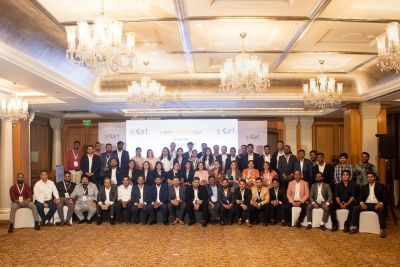
The Federation of Freight Forwarders’ Associations in India (FFFAI) held its 6th EC Meeting for the term 2021-23 on May 27 and 28 in Bengaluru. The meeting was attended by the Office Bearers and 28 Member Association representative of FFFAI from across the country, there were many issues discussed and updates provided concerning customs, CBLR, EDI, Service Tax/GST, logistics, air cargo, sea cargo, skill development,importance of social media which FFFAI has expanded recently, technology developments, etc. The special focus of the 6th EC meeting was the updates on forthcoming 24th Biennial Convention of FFFAI to be held from August 12 to 14, 2022 in Chennai with the theme LOGISTICS RESHAPE, EMBRACE AND SURGE IN THE DIGITAL ERA. At this EC meeting, FFFAI also implemented Digital Learning platform for members and next generation for e-learning. It has been decided that FFFAI would initiate FIATA eFBL here in India to benefit the trade, which empowers customs brokers, freight forwarders and logistics service providers. In addition, updates on the recently held FIATA HQ Meet was also provided by the concerned members of FFFAI. FFFAI members present at this EC meeting stressed upon enhancing productivity on ICEGATE for trade facilitation and Ease of Doing Business. The FFFAI members also urged for creating a dedicated portal for LSP integration. As regard to skill development initiatives, IIFF’s (training arm of FFFAI) past and forthcoming training programmes (both online and classroom/physical) for the entire logistics industry were presented at the EC meeting. In addition, FFFAI’s various initiatives on capacity building through technology/IT also discussed withadequate importance. Recent activities of FFFAI Women’s Wing including organising interactive meetings with Government of India officials and industry experts were highlighted at this meeting which drew huge appreciation from the members. The members committed to expand the activities of the Women’s Wing in all the 28 member association locations to empower/encourage the women logistics practitioners. At this EC meeting FFFAI has signed an MoU with the National Institute of Industrial Engineering (NITIE) with an objective of skilling the aspiring candidates looking for opportunities in the logistics sector. Notably, a special session was organised at this 6th EC Meeting where N Sivasailam, former Special Secretary (Logistics), Ministry of Commerce, Government of India was present to address the FFFAI members and highlight the recent initiatives of the government in strengthening the logistics infrastructure, thereby leading in increase of international trade through multimodal connectivity and faster cargo clearance. He projected the ambitious growth potential of the logistics industry in India with a strong collaboration between government and industry people. Also speaking on the occasion was Bani Bhattacharya, IRS, who interacted with members of FFFAI on various initiatives of CBIC for the trade facilitation without human intervention. FFFAI Chairman Shankar Shinde thanked all the 28 associations for their support and appreciated the contribution of CBIC/DG systems trade facilitation measures. FFFAI Member Associations are: 1. Ahmedabad Custom Brokers' Association2. Aurangabad Customs House Agents Association3. Association of Custom House Agents Thiruvanthapuram4. Bangalore Custom House Agents Association5. Brihnamumbai Custom Brokers Association6. Calcutta Customs House Agents Association7. Chennai Customs House Agents Association8. Cochin Customs Brokers' Association9. Coimbatore Customs House and Steamer Agents Association10. Custom Brokers Association Hyderabad11. Delhi Customs Brokers Association12. Goa Custom Brokers Association13.Indore Customs House Agents Association14. The Kakinada Customs Brokers Association15. Kandla Custom Brokers Association16. Kanpur Customs Brokers Association17. Ludhiana Customs House Agents Association18. Mangalore Customs House Agents Association19. Mundra Customs Brokers Association20. Nagpur Customs House Agents Association21. Nashik Customs House Agents Association22. Nadia Custom Brokers Association23. Pipavav Custom Brokers Association24. Pune Customs House Agents Association25. Rajasthan Customs House Agents Association26.Tuticorin Custom Brokers Association27.Visakhapatnam Cusotms Brokers' Association28.West Bengal Custom House Agents Society FFFAI welcomes Women in Logistics/Youth in Logistics to participate on FFFAI forums and also invites membership application form logistics service providers in industry as this is a big national and international forum to network.
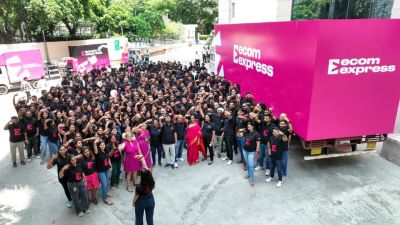
Ecom Express Limited, India’s sole pure-play B2C e-commerce logistics provider as of the Financial Year 2024, has introduced a new brand identity, underscoring its commitment to customer-centricity. This rebranding reflects a focus on addressing specific customer needs, prioritising customer-facing metrics, and integrating innovative technology across its nationwide express logistics network. The goal is to enhance speed, agility, and network reach, ensuring a customer-focused approach. The rebranding includes a dynamic logo and a refreshed visual identity, symbolising Ecom Express’s pursuit of excellence. The new logo features a forward-moving arrow within a square, representing the company’s dedication to delivery. The letter "E" in the logo stands for Expression, Innovation, and Progress, while the bold magenta colour signifies bravery, self-expression, and strength. This vibrant magenta reintroduction reflects Ecom Express's renewed commitment to customers, partners, and team members, as the company aims to simplify and democratise logistics for all. Ajay Chitkara, CEO and MD of Ecom Express, elaborated on the transformation, stating, “Our refreshed brand identity reaffirms our customer-first approach as we continue to integrate technology and innovation to provide reliable, high-speed services with the widest network reach. This transformation also underscores our commitment to our employees and delivery partners, who are essential to our business.” The new logo embodies Ecom Express’s dedication to its core values, focusing on customer welfare and fostering a diverse, inclusive environment. This rebranding signifies a promise to redefine logistics through advanced technology, making life easier for all types of customers.
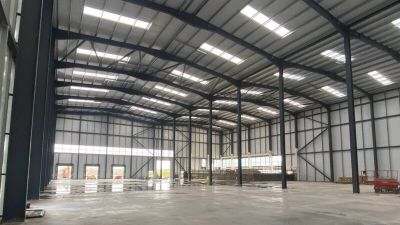
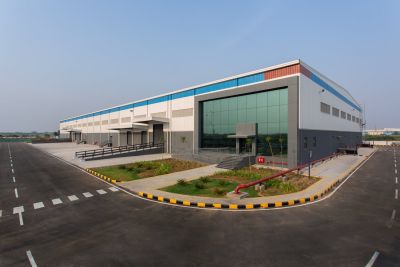
ESR India, the largest APAC focused industrial and logistics real estate platform, has inked a Memorandum of Understanding (MoU) with the Government of Tamil Nadu for a potential investment of INR 550 crores. The MOU is signed for the launch of two industrial parks in Kancheepuram and Krishnagiri districts of the state over the next five years. Once fully operational, the two projects have the potential to create over 4,400 jobs in the facility, that shall boost the overall socio-economic growth in the region. The MoU was signed at the Investment Conclave 2021 conference held today. It will facilitate ESR India’s proposed investment at Kancheepuram and Krishnagiri industrial parks by helping in streamlining land acquisition, approvals, clearances, and administrative processes as per existing policies, rules, and regulations of the Government of Tamil Nadu. The policy and regulatory reforms unveiled in recent times has accentuated the entry of international institutional players and has set new benchmarks for industrial developments in the country. Commenting on the development, Abhijit Malkani, CEO and Country Head, ESR India said, “We are delighted to announce our affiliation with the state government. The Government of Tamil Nadu has been very supportive in encouraging industrial developments in the state by creating a favourable business climate for industrial players. The MoU will see ESR invest INR 550 crores to develop industrial parks in Tamil Nadu, offering 1,800 direct and 2,600 indirect job opportunities in the facility.” “Our goals are aligned with the vision of the Tamil Nadu government, to create avenues to increase business and trade inclusion opportunities and employment towards garnering better economic growth in the region,” he further stated. ESR India is currently present across 9 cities and 15 locations with a total GFA of 18 mn sq ft. These state-of-the-art facilities will be developed upholding the best practices for ESG and sustainability.
Delmos Aviation has transported the second lot of 300 units of oxygen concentrators from Russia to New Delhi for the Rajasthan state government. The consignment was airborne on an Aeroflot A333 aircraft (SU 232) and reached at 10:10 AM in New Delhi. The shipments were shipped by road and sent back to Swasthya Bhawan, Jaipur, Rajasthan Medical Services Corporation (RMSCL). RMSCL obtained oxygen concentrators from Russian companies together with Delmos Aviation. Delmos Aviation is procuring, transporting and supplying COVID-relied materials to the Rajasthan Medical Services Corporation with the mandate signed with the Rajasthan Government. There will shortly be two consignments with the remaining 800 oxygen concentrators. "We are ready to assist governments in the provision and delivery of any type of essential medical supplies, oxygen concentration and equipment as quickly as possible," said Dr Naveen Rao, Director, Delmos Aviation. "At this juncture, time-based deliveries are paramount. We can handle the airlift and deliver the shipment to the last point." In four lots, 100, 300, 450 and 400 units, a total of 1250 oxygen concentrations are ordered and continue to reach New Delhi in batches of shipments. On 14 and 16 May 2021, the remaining lots will arrive. Oxygen concentrators of Single flowmeter (0.5-10LPM Adjustable) and double flowmeter (0-5LPM Adjustable) are included in the delivery. The models are JAY-10A & LFY-I-5A. "The government of Rajasthan is working hard in this raging second wave of the pandemic to provide basic medical equipment to head Minister Ashok Gehlot and Minister of Health, Raghu Sharma. The government plans to import 1250 oxygen concentrators from Moscow, Russia, in partnership with Delmos Aviation, as part of its efforts to enhance medical oxygen in the state," said a spokesperson.
Singapore’s Changi Airport is sharpening its focus on pharmaceuticals and e-commerce shipments to navigate constrained cargo capacity until planned expansion in the 2030s. According to Lim Ching Kiat, Executive Vice President of Air Hub and Cargo Development at Changi Airport Group, current facilities face mounting pressure due to growing regional demand, necessitating strategic tenant and cargo type management. E-commerce continues to be a key growth driver for air cargo globally, fueled by major players like Shein, Temu, and TikTok Shop. At the same time, Singapore is solidifying its position as Southeast Asia’s preferred pharmaceutical hub, attracting investments from global biopharma giants such as Thermo Fisher, Sanofi, BioNTech, and MSD. Looking ahead, Changi Airport plans to launch a second logistics park by the 2030s, aiming to increase its annual cargo capacity from 3 million tons to 5.4 million tons. The new free trade zone will further expedite cargo handling and redistribution. In 2024, Changi Airport reported handling 1.99 million tons of airfreight, a 14.6% rise from 2023, driven by robust cross-border e-commerce demand, improved trade routes with China and the U.S., and recovering electronics exports. Top air cargo markets included China, Australia, the U.S., Hong Kong, and India.


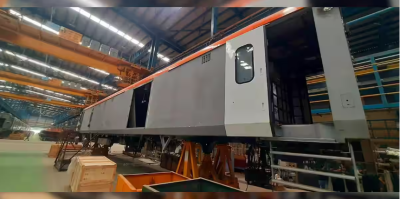
The Indian Railways has unveiled an innovative new look for the Vande Bharat goods carrier, designed to enhance efficiency in freight transport across the nation. This state-of-the-art freight train features advanced technology and modern design, aimed at reducing transit times and improving the overall supply chain network. Equipped with upgraded features, the Vande Bharat goods carrier can transport a wide variety of goods, ensuring a more reliable and faster delivery system. The initiative is part of a broader strategy to modernise India's logistics infrastructure and promote the use of railways for cargo movement, which is essential for sustainable economic growth. This new freight carrier will not only help in decongesting road transport but also contribute to reducing carbon emissions, aligning with the government's commitment to environmental sustainability. With its introduction, Indian Railways aims to enhance cargo capacity and operational efficiency, providing a significant boost to the logistics sector. As the demand for efficient logistics solutions continues to rise, the Vande Bharat goods carrier is poised to play a crucial role in shaping the future of freight transportation in India.
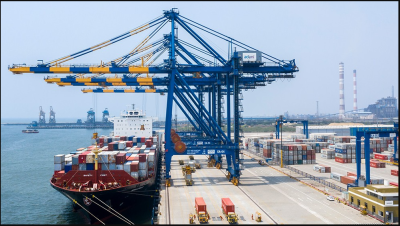

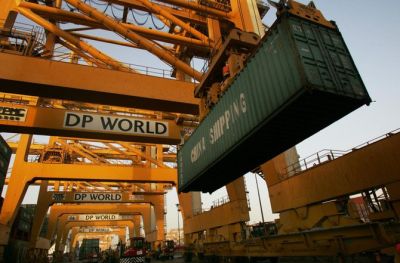
The Zero Emission Port Alliance (ZEPA) has recently announced the onboarding of 11 key organisations from the container port industry. Notable members include APM Terminals (APMT), CATL, DP World, Kempower, Patrick Terminals, Port of Aarhus, Port of Rotterdam, Rocsys, Sany, SSA Marine, and ZPMC. These members are united in their commitment to accelerate the adoption of Battery-Electric Container Handling Equipment (BE-CHE). ZEPA aims to significantly advance port decarbonisation efforts, making BE-CHE both affordable and accessible within the next decade. In recent months, ZEPA has conducted working sessions, initial analyses, and held its first formal Steering Committee during the TOC Europe conference on June 11. The Steering Committee, which met at TOC Europe in Rotterdam, emphasized the importance of their collective membership in reducing emissions and achieving Total Cost of Ownership parity for battery-electric equipment compared to diesel. Industry leaders underscored that rapid change is achievable through cross-value chain collaboration. ZEPA's initiatives are meticulously designed and implemented in compliance with anti-trust and competition laws, with oversight from external legal counsel to ensure transparency and legality. Sahar Rashidbeigi, Global Head of Decarbonisation at APMT, reflected on ZEPA’s progress: “Reflecting on our journey, it is incredible to see how far we have come since defining the problem at last year’s TOC Europe conference. From the ‘tipping point’ White Paper nine months ago to launching ZEPA with DP World in December during COP28, and now onboarding 11 key members across the value chain, our progress highlights that we are addressing a valuable problem that resonates across the industry, and it affirms our conviction that collaboration is essential to tackle it effectively.” ZEPA's collective effort marks a pivotal step in the pursuit of sustainable and zero-emission port operations, showcasing the power of industry-wide cooperation in combating climate change.
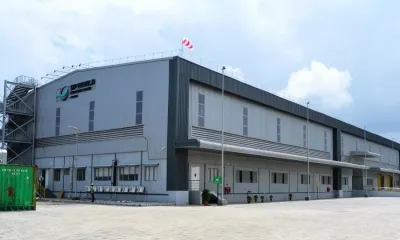
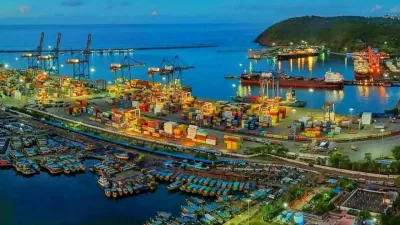

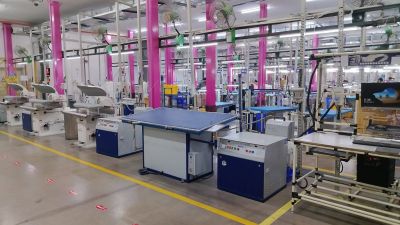
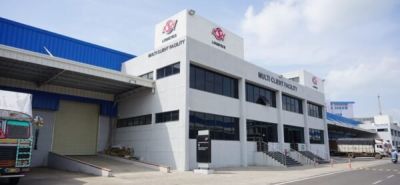
Ekart introduced a new ‘Refinish Service’ to tackle the challenges of returns management in the fashion and lifestyle sector. This innovative service enables retailers to refurbish over 90 percent of returned inventory, helping brands mitigate losses and maximise revenue potential. The Refinish Service is designed for direct-to-consumer (D2C), e-commerce, and retail players in the fashion and lifestyle segments. It also caters to other industries, including footwear, handbags, accessories, and home and decor products such as curtains, bed sheets, and blankets. With a combined processing capacity of 55,000 units daily, Ekart employs best-in-class machinery and energy-conserving technologies. The refinishing process at Ekart's facilities involves rigorous quality checks, stain removal, box replacement, ironing, stitching (if needed), and final quality control to ensure the finesse of refurbished products. Mani Bhushan, Chief Business Officer of Ekart, commented, “By harnessing cutting-edge technology and sustainable practices, the refinishing service empowers brands to optimise their supply chains and drive positive change on a broader scale. The service sets a new standard for returns management, demonstrating our commitment to innovation, efficiency, and sustainability.” Ekart operates Refinish centers across major demand clusters in India, including Gurgaon, Mumbai, Bangalore, and Kolkata. These strategically located centers facilitate swift return processing and reduce transport costs for brands. The facilities are equipped with advanced machinery, including up-steam tables, steam vacuum tables, and industry-leading foam finishers, ensuring thorough and efficient processing of returned inventory. Ekart's Refinish Service marks a significant step forward in returns management, offering a sustainable and efficient solution that benefits both retailers and the environment.