The global market for Material Handling Equipment (MHE) is projected to reach US$200 billion by 2027, driven by the strong emphasis on production and operational efficiency and worker safety, says a latest report from Global Market Insights Inc.
The market will witness growth with increasing number of industrial facilities modernising their infrastructure to boost productivity. Industries are employing sophisticated machines to increase throughput by speeding up the process of material movement.
The concept of 'last-mile' is widely popularised in supply chain management and transportation planning for its ability to increase customer satisfaction and profitability. Automation, optimisation and delivery route planning are therefore vital strategies adopted by companies to improve their last-mile performance. Of equal importance are the 'first-mile' operations involving indoor material handling on the plant floor. Raw material being the primary and most importance element in manufacturing needs to move through multiple stages of production and final packaging in a smooth and seamless manner to prevent logistical bottlenecks in production.
Not to question, timely handling of materials is important to ensure that right materials in right quantities are delivered to the right locations at the right time. Automation of material handling processes also has the benefit of making the workplace safer. Automation helps eliminate accidents and occupational safety issues associated with manual labor contributing towards better worker safety, health, wellness, and reduced company expenditure on employee insurance and compensation. The importance of the financial savings that can accrue from ensuring conformance to safety regulations cannot be undermined especially against the backdrop where legislations are becoming stringent and exceedingly punitive.
Trends, Drivers to Market Growth
Growing popularity of same day deliveries for e-commerce fulfillment as a service differentiator is also strengthening the business case for mechanised and automated handling of materials. One major trend in the market is recent and dramatic expansion in the development of robots for use in warehouses, predominantly those serving the rapidly growing e-commerce industry. At present, many companies in the USA, Europe and Asia stand strong to exploit this huge opportunity and now manufacture automated material handling equipment for use in warehouse and logistic operations across the globe.
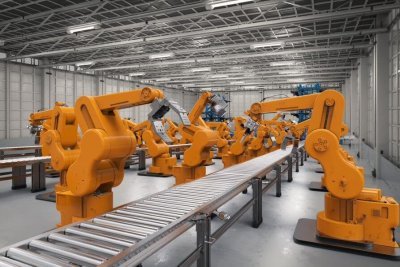
The increasing popularity of customised orders has propelled the manufacturers and warehouse operators to increase the efficiency and speed of their picking and sorting processes to achieve business success. Also, the manual processing of customised orders increases the probability of errors due to the added complexity. Automated material handling (AMH) systems such as robotic pickers, ASRS, AGV, automated sorters, and conveyor systems can help handle the customised orders at a faster rate, along with reducing the error rate to a great extent.
According to the report, major driver in global AMH equipment market is constantly growing demand for automated material handling equipment as companies derive more and more worth from cost-cutting and labour-reduction. As sensor technologies advance and the capability to harness and investigate big data becomes more feasible in real time, the limits of operational efficiency in manufacturing, processing, material handling and logistics industries will continue to be pushed.
Also driving growth in the market is continuous technology developments and the resulting launch of sophisticated equipment with high levels of safety and well-researched ergonomics; and automation features that improve throughput and efficiencies. There is an increasing demand for industrial trucks that enable to transfer heavy goods easily and efficiently. There is a high demand for automated guided vehicles (AGVs) as they carry loads along the facility floor without the need of a driver or an onboard operator. They are operated using an integrated system of hardware and software components. Advancements in the sensor industry will fuel the R&D associated with AGVs. As they do not require personnel for operation, they significantly reduce the labor costs. There will also be an increasing demand for side loaders that carry long loads in the wood and steel industries.
Other noteworthy trends include healthy demand for alternatives such as electric tugs and manual stackers given the high risk of employee accidents and fatalities related to manually operated forklifts; and rising investments in robotics research and development and launch of new equipment with smart capabilities.
Underlying challenges
In 2020, COVID-19 had a negative effect on the AMH equipment market, resulting in decreased shipments of AMH equipment and the revenues generated from them. As a result, a drop was witnessed in the growth trend of the market during the first half of 2020. This trend is expected to discontinue in the latter half of the year as the demand is expected to increase due to the growing concern for material handling.
The COVID-19 pandemic has substantially impacted the value chain of the AMH equipment market. The US, China, India, South Korea, and Japan, which have been adversely affected by the pandemic, account for a significant share of the global AMH equipment manufacturing. The automotive, aviation, and metal & heavy machinery industries are witnessing a low demand, which is expected to continue for the short term due to the global slowdown and declining purchasing power.
APAC to lead AMH equipment market
Asia Pacific is expected to be the fastest-growing market for AMH equipment. Rising awareness related to warehouse automation, increasing emphasis of leading economies such as China and Japan on robotics and automation, and the growing e-commerce industry are some of the primary factors contributing to the high growth rate of APAC. The rapid growth of automotive, ecommerce, food & beverages, and healthcare industries in emerging economies, such as China and Japan, has contributed to the growth of the AMH equipment market in APAC.
Moreover, governments in APAC countries are increasingly emphasising safety on production floors, which can be best achieved by the implementation of AMH equipment. The market is witnessing rapid growth in countries such as China and Japan, owing to increasing investments by manufacturers and suppliers in the installation of such equipment at warehouses and distribution centers.
In fact, China ranks as the fastest growing market with a CAGR of 7.3% over the analysis period supported by factors such as increase in new warehouse establishments against the backdrop of improving global trade and domestic consumption; developing internet infrastructure and the resulting increase in e-commerce and urban logistics; and the Made in China (MIC) 2025 initiative that aims to bring the country's massive manufacturing and production sector into the forefront of global technology competitiveness.
Geographically, APAC accounted for the largest market share of more than 35% revenue in global automated material handling equipment market. Growing manufacturing units in countries like China, Japan and also India will augment the application of such equipment over the next few years. The Asia Pacific region is projected to grow at a CAGR of around +10% during the forecast period. On the other hand, Europe is closely followed by the APAC, which occupied about 28% of the market share owing to presence of big automotive industry players and huge automobile production in the region.
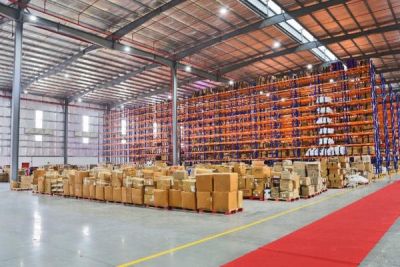
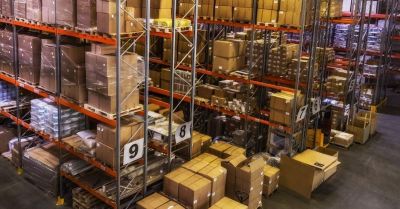
Going forward, the expanding 3PL industry globally will boost the adoption of material handling equipment in warehouses and distribution centers. As online retailing has gained traction, several companies are leveraging the benefits of third-party logistics (3PL) providers to cater to the increasing consumer demands. This will encourage 3PLs to modernise their warehouses and storage facilities to ensure on-time and fast delivery of shipments. AMH equipment enables them to efficiently load/unload products from transportation trucks, store products at large heights in racks, and move products easily throughout the facility through constrained spaces.
The Federation of Freight Forwarders’ Associations in India (FFFAI) held its 6th EC Meeting for the term 2021-23 on May 27 and 28 in Bengaluru. The meeting was attended by the Office Bearers and 28 Member Association representative of FFFAI from across the country, there were many issues discussed and updates provided concerning customs, CBLR, EDI, Service Tax/GST, logistics, air cargo, sea cargo, skill development,importance of social media which FFFAI has expanded recently, technology developments, etc. The special focus of the 6th EC meeting was the updates on forthcoming 24th Biennial Convention of FFFAI to be held from August 12 to 14, 2022 in Chennai with the theme LOGISTICS RESHAPE, EMBRACE AND SURGE IN THE DIGITAL ERA. At this EC meeting, FFFAI also implemented Digital Learning platform for members and next generation for e-learning. It has been decided that FFFAI would initiate FIATA eFBL here in India to benefit the trade, which empowers customs brokers, freight forwarders and logistics service providers. In addition, updates on the recently held FIATA HQ Meet was also provided by the concerned members of FFFAI. FFFAI members present at this EC meeting stressed upon enhancing productivity on ICEGATE for trade facilitation and Ease of Doing Business. The FFFAI members also urged for creating a dedicated portal for LSP integration. As regard to skill development initiatives, IIFF’s (training arm of FFFAI) past and forthcoming training programmes (both online and classroom/physical) for the entire logistics industry were presented at the EC meeting. In addition, FFFAI’s various initiatives on capacity building through technology/IT also discussed withadequate importance. Recent activities of FFFAI Women’s Wing including organising interactive meetings with Government of India officials and industry experts were highlighted at this meeting which drew huge appreciation from the members. The members committed to expand the activities of the Women’s Wing in all the 28 member association locations to empower/encourage the women logistics practitioners. At this EC meeting FFFAI has signed an MoU with the National Institute of Industrial Engineering (NITIE) with an objective of skilling the aspiring candidates looking for opportunities in the logistics sector. Notably, a special session was organised at this 6th EC Meeting where N Sivasailam, former Special Secretary (Logistics), Ministry of Commerce, Government of India was present to address the FFFAI members and highlight the recent initiatives of the government in strengthening the logistics infrastructure, thereby leading in increase of international trade through multimodal connectivity and faster cargo clearance. He projected the ambitious growth potential of the logistics industry in India with a strong collaboration between government and industry people. Also speaking on the occasion was Bani Bhattacharya, IRS, who interacted with members of FFFAI on various initiatives of CBIC for the trade facilitation without human intervention. FFFAI Chairman Shankar Shinde thanked all the 28 associations for their support and appreciated the contribution of CBIC/DG systems trade facilitation measures. FFFAI Member Associations are: 1. Ahmedabad Custom Brokers' Association2. Aurangabad Customs House Agents Association3. Association of Custom House Agents Thiruvanthapuram4. Bangalore Custom House Agents Association5. Brihnamumbai Custom Brokers Association6. Calcutta Customs House Agents Association7. Chennai Customs House Agents Association8. Cochin Customs Brokers' Association9. Coimbatore Customs House and Steamer Agents Association10. Custom Brokers Association Hyderabad11. Delhi Customs Brokers Association12. Goa Custom Brokers Association13.Indore Customs House Agents Association14. The Kakinada Customs Brokers Association15. Kandla Custom Brokers Association16. Kanpur Customs Brokers Association17. Ludhiana Customs House Agents Association18. Mangalore Customs House Agents Association19. Mundra Customs Brokers Association20. Nagpur Customs House Agents Association21. Nashik Customs House Agents Association22. Nadia Custom Brokers Association23. Pipavav Custom Brokers Association24. Pune Customs House Agents Association25. Rajasthan Customs House Agents Association26.Tuticorin Custom Brokers Association27.Visakhapatnam Cusotms Brokers' Association28.West Bengal Custom House Agents Society FFFAI welcomes Women in Logistics/Youth in Logistics to participate on FFFAI forums and also invites membership application form logistics service providers in industry as this is a big national and international forum to network.
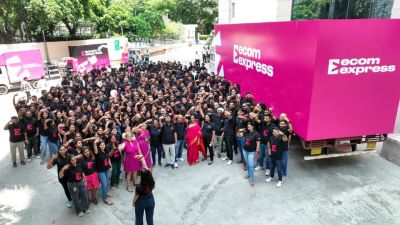
Ecom Express Limited, India’s sole pure-play B2C e-commerce logistics provider as of the Financial Year 2024, has introduced a new brand identity, underscoring its commitment to customer-centricity. This rebranding reflects a focus on addressing specific customer needs, prioritising customer-facing metrics, and integrating innovative technology across its nationwide express logistics network. The goal is to enhance speed, agility, and network reach, ensuring a customer-focused approach. The rebranding includes a dynamic logo and a refreshed visual identity, symbolising Ecom Express’s pursuit of excellence. The new logo features a forward-moving arrow within a square, representing the company’s dedication to delivery. The letter "E" in the logo stands for Expression, Innovation, and Progress, while the bold magenta colour signifies bravery, self-expression, and strength. This vibrant magenta reintroduction reflects Ecom Express's renewed commitment to customers, partners, and team members, as the company aims to simplify and democratise logistics for all. Ajay Chitkara, CEO and MD of Ecom Express, elaborated on the transformation, stating, “Our refreshed brand identity reaffirms our customer-first approach as we continue to integrate technology and innovation to provide reliable, high-speed services with the widest network reach. This transformation also underscores our commitment to our employees and delivery partners, who are essential to our business.” The new logo embodies Ecom Express’s dedication to its core values, focusing on customer welfare and fostering a diverse, inclusive environment. This rebranding signifies a promise to redefine logistics through advanced technology, making life easier for all types of customers.
ESR India, the largest APAC focused industrial and logistics real estate platform, has inked a Memorandum of Understanding (MoU) with the Government of Tamil Nadu for a potential investment of INR 550 crores. The MOU is signed for the launch of two industrial parks in Kancheepuram and Krishnagiri districts of the state over the next five years. Once fully operational, the two projects have the potential to create over 4,400 jobs in the facility, that shall boost the overall socio-economic growth in the region. The MoU was signed at the Investment Conclave 2021 conference held today. It will facilitate ESR India’s proposed investment at Kancheepuram and Krishnagiri industrial parks by helping in streamlining land acquisition, approvals, clearances, and administrative processes as per existing policies, rules, and regulations of the Government of Tamil Nadu. The policy and regulatory reforms unveiled in recent times has accentuated the entry of international institutional players and has set new benchmarks for industrial developments in the country. Commenting on the development, Abhijit Malkani, CEO and Country Head, ESR India said, “We are delighted to announce our affiliation with the state government. The Government of Tamil Nadu has been very supportive in encouraging industrial developments in the state by creating a favourable business climate for industrial players. The MoU will see ESR invest INR 550 crores to develop industrial parks in Tamil Nadu, offering 1,800 direct and 2,600 indirect job opportunities in the facility.” “Our goals are aligned with the vision of the Tamil Nadu government, to create avenues to increase business and trade inclusion opportunities and employment towards garnering better economic growth in the region,” he further stated. ESR India is currently present across 9 cities and 15 locations with a total GFA of 18 mn sq ft. These state-of-the-art facilities will be developed upholding the best practices for ESG and sustainability.
Delmos Aviation has transported the second lot of 300 units of oxygen concentrators from Russia to New Delhi for the Rajasthan state government. The consignment was airborne on an Aeroflot A333 aircraft (SU 232) and reached at 10:10 AM in New Delhi. The shipments were shipped by road and sent back to Swasthya Bhawan, Jaipur, Rajasthan Medical Services Corporation (RMSCL). RMSCL obtained oxygen concentrators from Russian companies together with Delmos Aviation. Delmos Aviation is procuring, transporting and supplying COVID-relied materials to the Rajasthan Medical Services Corporation with the mandate signed with the Rajasthan Government. There will shortly be two consignments with the remaining 800 oxygen concentrators. "We are ready to assist governments in the provision and delivery of any type of essential medical supplies, oxygen concentration and equipment as quickly as possible," said Dr Naveen Rao, Director, Delmos Aviation. "At this juncture, time-based deliveries are paramount. We can handle the airlift and deliver the shipment to the last point." In four lots, 100, 300, 450 and 400 units, a total of 1250 oxygen concentrations are ordered and continue to reach New Delhi in batches of shipments. On 14 and 16 May 2021, the remaining lots will arrive. Oxygen concentrators of Single flowmeter (0.5-10LPM Adjustable) and double flowmeter (0-5LPM Adjustable) are included in the delivery. The models are JAY-10A & LFY-I-5A. "The government of Rajasthan is working hard in this raging second wave of the pandemic to provide basic medical equipment to head Minister Ashok Gehlot and Minister of Health, Raghu Sharma. The government plans to import 1250 oxygen concentrators from Moscow, Russia, in partnership with Delmos Aviation, as part of its efforts to enhance medical oxygen in the state," said a spokesperson.
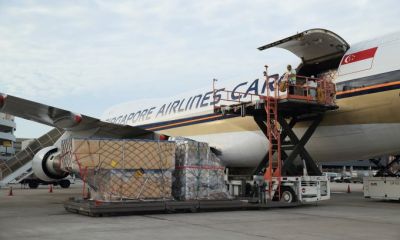
Singapore’s Changi Airport is sharpening its focus on pharmaceuticals and e-commerce shipments to navigate constrained cargo capacity until planned expansion in the 2030s. According to Lim Ching Kiat, Executive Vice President of Air Hub and Cargo Development at Changi Airport Group, current facilities face mounting pressure due to growing regional demand, necessitating strategic tenant and cargo type management. E-commerce continues to be a key growth driver for air cargo globally, fueled by major players like Shein, Temu, and TikTok Shop. At the same time, Singapore is solidifying its position as Southeast Asia’s preferred pharmaceutical hub, attracting investments from global biopharma giants such as Thermo Fisher, Sanofi, BioNTech, and MSD. Looking ahead, Changi Airport plans to launch a second logistics park by the 2030s, aiming to increase its annual cargo capacity from 3 million tons to 5.4 million tons. The new free trade zone will further expedite cargo handling and redistribution. In 2024, Changi Airport reported handling 1.99 million tons of airfreight, a 14.6% rise from 2023, driven by robust cross-border e-commerce demand, improved trade routes with China and the U.S., and recovering electronics exports. Top air cargo markets included China, Australia, the U.S., Hong Kong, and India.


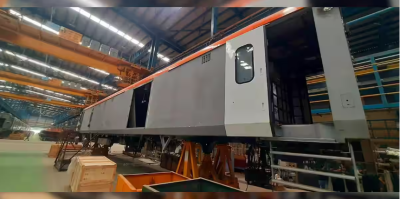
The Indian Railways has unveiled an innovative new look for the Vande Bharat goods carrier, designed to enhance efficiency in freight transport across the nation. This state-of-the-art freight train features advanced technology and modern design, aimed at reducing transit times and improving the overall supply chain network. Equipped with upgraded features, the Vande Bharat goods carrier can transport a wide variety of goods, ensuring a more reliable and faster delivery system. The initiative is part of a broader strategy to modernise India's logistics infrastructure and promote the use of railways for cargo movement, which is essential for sustainable economic growth. This new freight carrier will not only help in decongesting road transport but also contribute to reducing carbon emissions, aligning with the government's commitment to environmental sustainability. With its introduction, Indian Railways aims to enhance cargo capacity and operational efficiency, providing a significant boost to the logistics sector. As the demand for efficient logistics solutions continues to rise, the Vande Bharat goods carrier is poised to play a crucial role in shaping the future of freight transportation in India.
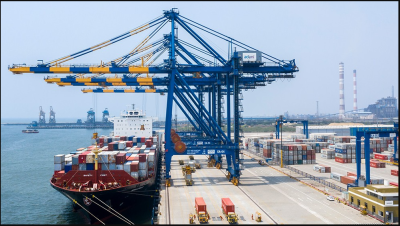

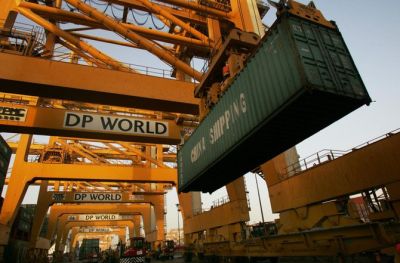
The Zero Emission Port Alliance (ZEPA) has recently announced the onboarding of 11 key organisations from the container port industry. Notable members include APM Terminals (APMT), CATL, DP World, Kempower, Patrick Terminals, Port of Aarhus, Port of Rotterdam, Rocsys, Sany, SSA Marine, and ZPMC. These members are united in their commitment to accelerate the adoption of Battery-Electric Container Handling Equipment (BE-CHE). ZEPA aims to significantly advance port decarbonisation efforts, making BE-CHE both affordable and accessible within the next decade. In recent months, ZEPA has conducted working sessions, initial analyses, and held its first formal Steering Committee during the TOC Europe conference on June 11. The Steering Committee, which met at TOC Europe in Rotterdam, emphasized the importance of their collective membership in reducing emissions and achieving Total Cost of Ownership parity for battery-electric equipment compared to diesel. Industry leaders underscored that rapid change is achievable through cross-value chain collaboration. ZEPA's initiatives are meticulously designed and implemented in compliance with anti-trust and competition laws, with oversight from external legal counsel to ensure transparency and legality. Sahar Rashidbeigi, Global Head of Decarbonisation at APMT, reflected on ZEPA’s progress: “Reflecting on our journey, it is incredible to see how far we have come since defining the problem at last year’s TOC Europe conference. From the ‘tipping point’ White Paper nine months ago to launching ZEPA with DP World in December during COP28, and now onboarding 11 key members across the value chain, our progress highlights that we are addressing a valuable problem that resonates across the industry, and it affirms our conviction that collaboration is essential to tackle it effectively.” ZEPA's collective effort marks a pivotal step in the pursuit of sustainable and zero-emission port operations, showcasing the power of industry-wide cooperation in combating climate change.
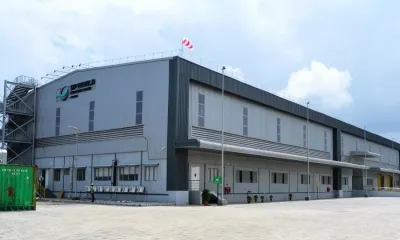

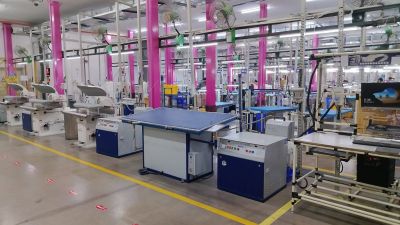
Ekart introduced a new ‘Refinish Service’ to tackle the challenges of returns management in the fashion and lifestyle sector. This innovative service enables retailers to refurbish over 90 percent of returned inventory, helping brands mitigate losses and maximise revenue potential. The Refinish Service is designed for direct-to-consumer (D2C), e-commerce, and retail players in the fashion and lifestyle segments. It also caters to other industries, including footwear, handbags, accessories, and home and decor products such as curtains, bed sheets, and blankets. With a combined processing capacity of 55,000 units daily, Ekart employs best-in-class machinery and energy-conserving technologies. The refinishing process at Ekart's facilities involves rigorous quality checks, stain removal, box replacement, ironing, stitching (if needed), and final quality control to ensure the finesse of refurbished products. Mani Bhushan, Chief Business Officer of Ekart, commented, “By harnessing cutting-edge technology and sustainable practices, the refinishing service empowers brands to optimise their supply chains and drive positive change on a broader scale. The service sets a new standard for returns management, demonstrating our commitment to innovation, efficiency, and sustainability.” Ekart operates Refinish centers across major demand clusters in India, including Gurgaon, Mumbai, Bangalore, and Kolkata. These strategically located centers facilitate swift return processing and reduce transport costs for brands. The facilities are equipped with advanced machinery, including up-steam tables, steam vacuum tables, and industry-leading foam finishers, ensuring thorough and efficient processing of returned inventory. Ekart's Refinish Service marks a significant step forward in returns management, offering a sustainable and efficient solution that benefits both retailers and the environment.