Loading...
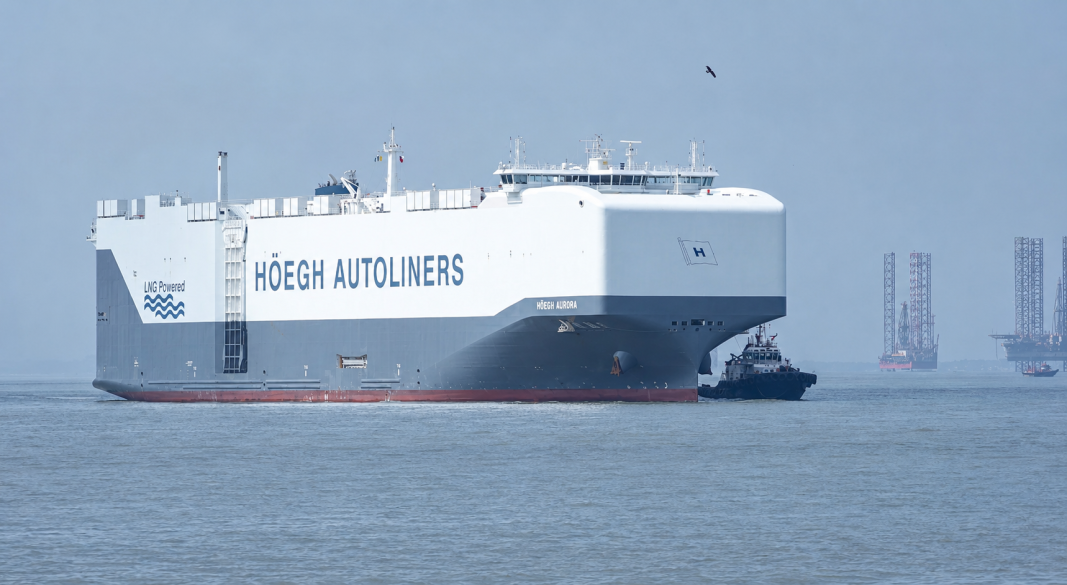
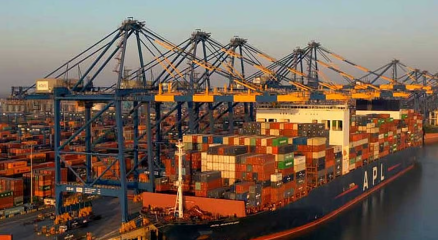
Höegh Aurora, the flagship of Höegh Autoliners' next-generation Aurora Class fleet, makes its historic maiden calls to the Indian ports of Ennore, Mumbai, and Pipavav, marking a significant milestone in the company's continued commitment to India and its growing export economy.
The maiden voyage of Höegh Aurora to India underscores Höegh Autoliners' long-standing partnership with the Indian industry and its commitment to supporting the country's rapidly expanding automotive, industrial, and project cargo sectors with sustainable and future-ready ocean transportation solutions.
For more than 15 years, Höegh Autoliners has been connecting Indian manufacturing to global markets, transporting millions of cubic metres of automobiles, project cargo, and industrial equipment from Indian ports to customers across four continents. From metro coaches and locomotives to construction, mining, and agricultural equipment, the company continues to play a key role in enabling India's growing industrial footprint worldwide.
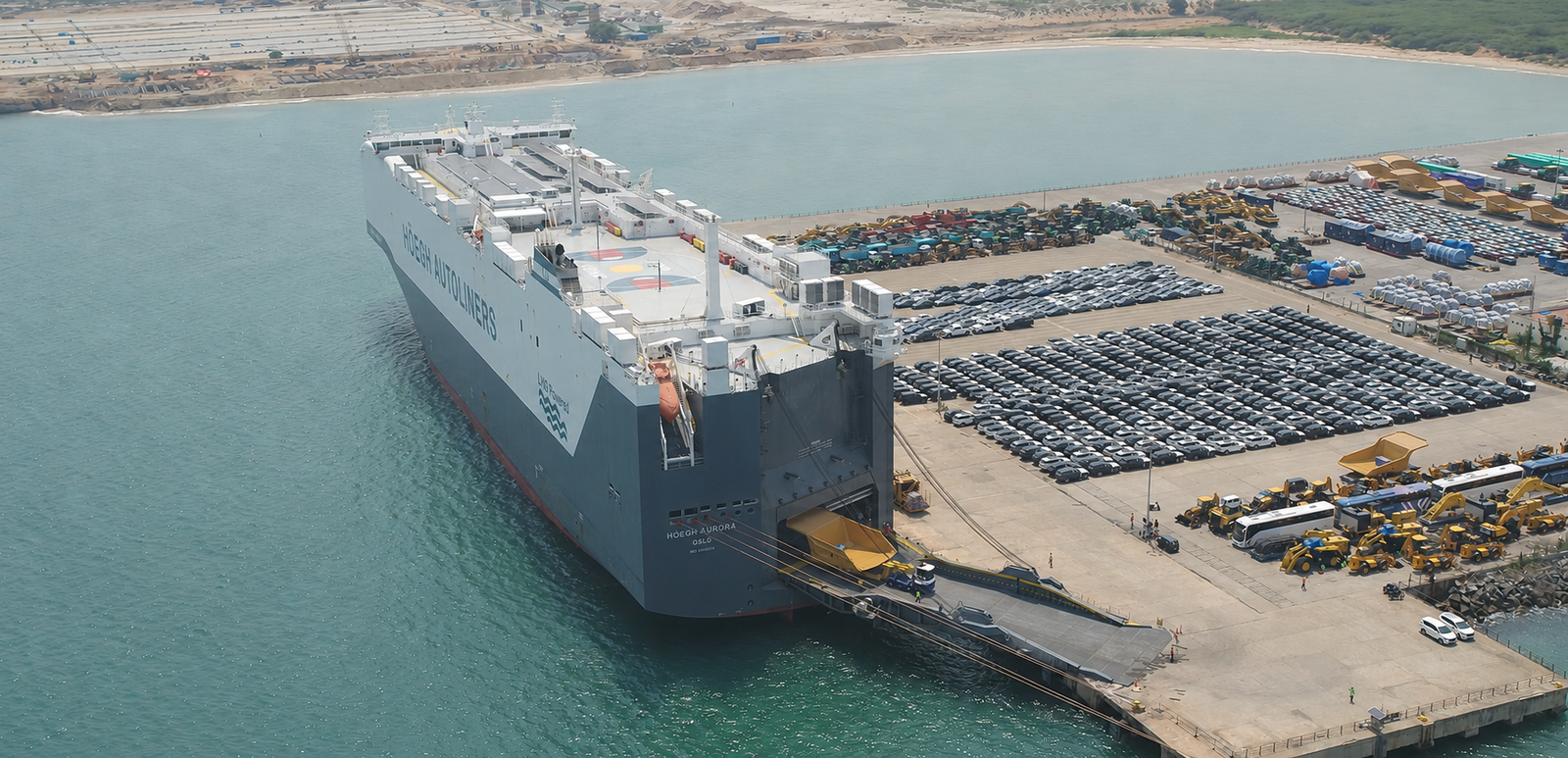
Commenting on the occasion, Mr. Andreas Enger, CEO of Höegh Autoliners, said: "The maiden call of Höegh Aurora marks an exciting new chapter in our 15-year commitment to Indian trade. As one of our most important and dynamic markets, India plays a key role in our global network, and with Höegh Aurora we can now offer our customers industry-leading capacity and the most sustainable deep-sea transportation in our segment."
Her arrival comes at a particularly fitting moment. Just two weeks ago, during the first visit by an Indian Prime Minister to Norway in more than 40 years, our two countries launched a Green Strategic Partnership, with green shipping identified as a key priority.
A Norwegian-flagged vessel at the forefront of maritime decarbonisation, carrying Indian cargo to global markets, is a tangible example of that ambition being put into practice.
Capt. Atuldutt Sharma, Head of Sales – Middle East, India & Sri Lanka, Höegh Autoliners, added: "The maiden call of Höegh Aurora to India is a significant milestone for our customers and partners across the region. India continues to be one of the fastest-growing manufacturing and export hubs globally, and the Aurora Class is purpose-built to support this growth. Combining industry-leading sustainability with unmatched cargo flexibility, these vessels enable us to offer safe, efficient, and future-ready transportation solutions for automobiles, High & Heavy, breakbulk, and project cargoes from India to global markets."
The Aurora Class represents a transformational leap in sustainable deep-sea transportation and reflects Höegh Autoliners' commitment towards decarbonisation and greener shipping solutions. Designed as the world's most environmentally friendly Pure Car and Truck Carrier (PCTC), the Aurora Class has sustainability at the core of its design and operations.
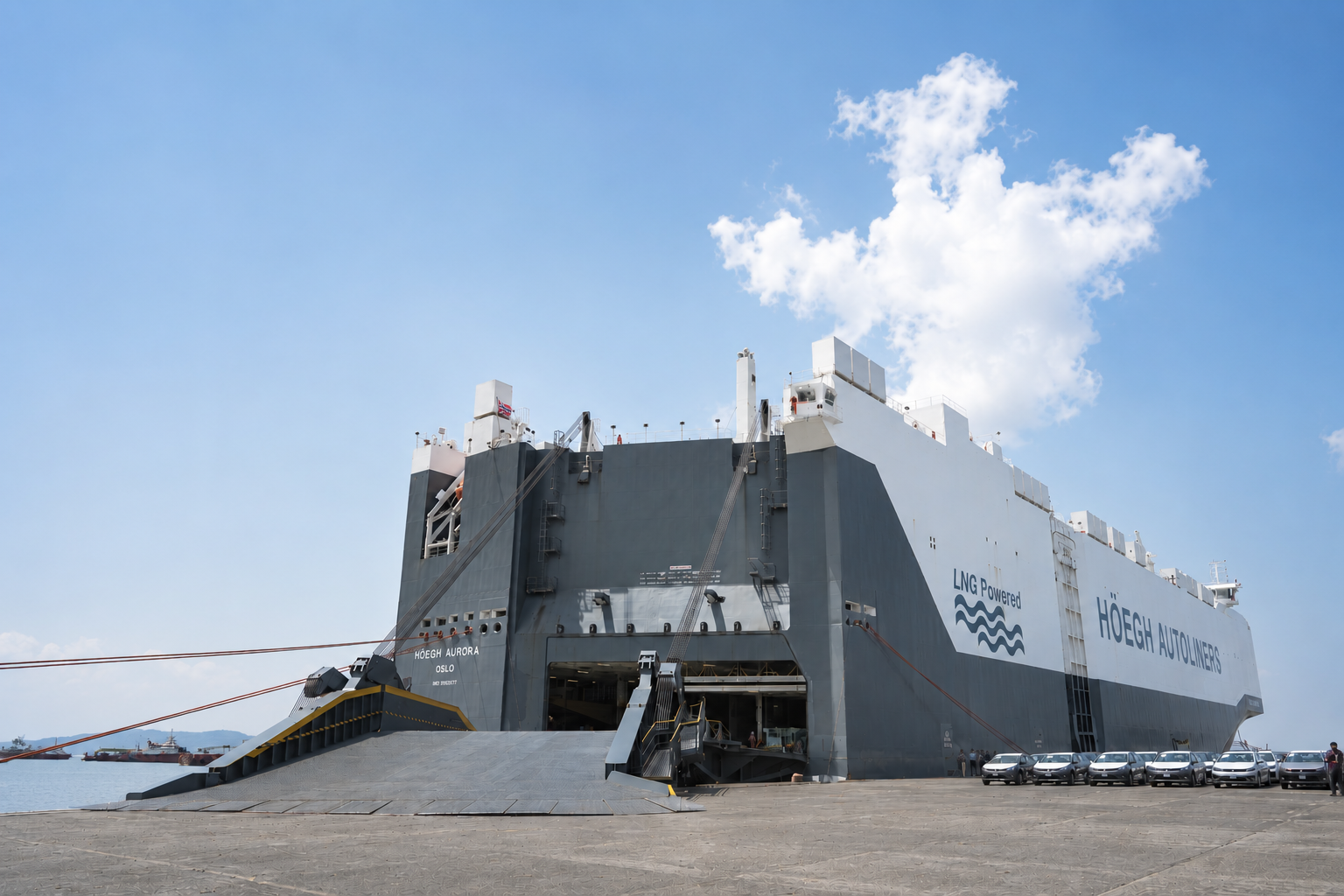
With a carrying capacity of 9,100 CEUs, the Aurora Class vessel “Höegh Aurora” is the largest PCTC to call India, a record previously held by Höegh Autoliners Horizon class vessels with a carrying capacity of 8,500 CEUs, which have been regularly calling Indian ports since “Höegh Tracer” made its maiden call in 2017. The Aurora Class vessels are multi-fuel ready and equipped with advanced MAN engines capable of operating on Marine Gas Oil (MGO) and LNG, while also being prepared for future conversion to carbon-neutral ammonia and methanol propulsion. The Aurora Class is the first vessel class in the PCTC segment to receive DNV's ammonia-ready and methanol-ready notations and is designed to reduce carbon emissions per car transported by up to 58% compared to the current industry standard.
The Aurora Class is a key enabler of Höegh Autoliners' ambition to achieve net-zero emissions by 2040 and provides customers with a significantly lower carbon footprint for their supply chains while maintaining the highest standards of safety, efficiency, and operational flexibility.
Beyond its environmental credentials, the Aurora Class has been purpose-built to carry a wide range of High & Heavy, breakbulk, and project cargoes in addition to automobiles. Key features include:
• Additionally strengthened decks for heavier cargo loads
• Wide internal ramps for seamless cargo movement
• Shore ramp with Safe Working Load (SWL) of up to 375 metric tonnes
• 12-metre-wide and 6.5-metre-high stern door opening
• Enhanced deck heights and cargo flexibility for future cargo requirements
These advanced cargo capabilities enable the safe transportation of oversized and complex cargoes, including mining and construction equipment, wind turbine components, transformers, locomotives, rolling stock, metro coaches, heavy machinery, and other project cargoes alongside automotive cargo.
The successful maiden call of Höegh Aurora to Indian ports further demonstrates Höegh Autoliners' confidence in India as a strategic manufacturing and export hub. As India continues to strengthen its position in global trade, Höegh Autoliners remains committed to supporting the country's growth ambitions through sustainable shipping solutions, innovative vessel technology, and reliable global ocean transportation services.
The arrival of Höegh Aurora represents not only the introduction of the most environmentally friendly PCTC ever built but also a clear demonstration of Höegh Autoliners' long-term commitment to India, its customers, and a more sustainable future for global shipping.
For more such news and updates, visit CARGOCONNECT.
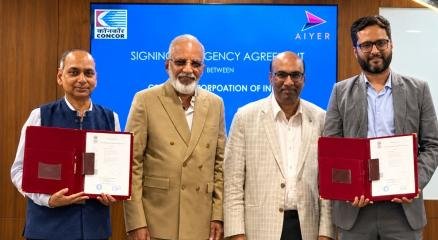
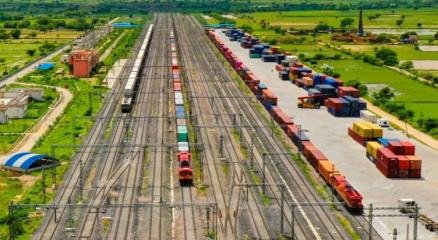
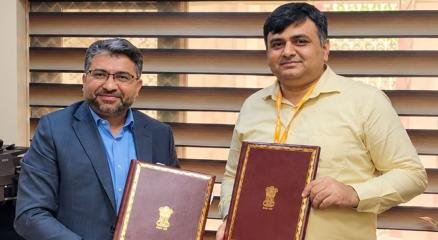
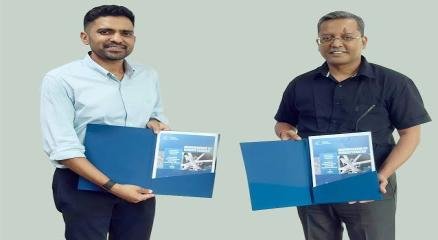
Container Corporation of India Limited (CONCOR) has collaborated with Aiyer Shipping to strengthen its overseas shipping services and expand integrated logistics solutions for export-import (EXIM) trade. Announced on 30 October 2026, the collaboration aims to improve international shipping connectivity and provide exporters and importers with more coordinated, efficient and reliable multimodal logistics services. The partnership brings together CONCOR’s established inland container transportation and terminal infrastructure with Aiyer Shipping’s broader shipping and freight forwarding capabilities. By strengthening the link between domestic cargo movement and international shipping, the initiative seeks to improve access to overseas markets and support the evolving logistics requirements of Indian businesses engaged in cross-border trade. Strengthening Multimodal Logistics Connectivity CONCOR operates an extensive network of container terminals and rail-based freight services that connect inland production and consumption centres with gateway ports. Its FY2025–26 annual report records 68 terminals as of 31 March 2026, supported by a fleet of 424 rakes and an inventory of 57,746 containers. This infrastructure provides a foundation for moving containerised cargo between inland locations and ports. Aiyer Shipping’s published service portfolio includes container-line agency services, sea freight, freight forwarding, Customs clearance, warehousing and multimodal transportation. Its capabilities also cover full-container-load (FCL) and less-than-container-load (LCL) shipments, as well as breakbulk, bulk and project cargo. These services offer relevant expertise for coordinating different stages of international cargo movement, although the specific services covered under the new collaboration have not been individually disclosed. For exporters and importers, closer coordination between inland transportation and maritime shipping can help streamline shipment planning, equipment positioning and documentation. Aligning inland cargo arrivals with vessel schedules and port cut-off times is particularly important for maintaining predictable transit times and avoiding unnecessary delays across the supply chain. Expanding Overseas Trade Opportunities The collaboration reflects CONCOR’s broader approach of working with maritime partners to extend the reach of its inland logistics network. In June 2024, the company signed a separate memorandum of understanding with Shipping Corporation of India to explore opportunities in integrated logistics, overseas shipping and coastal and inland-waterway transportation. The Aiyer Shipping arrangement adds to this wider effort to strengthen links between inland cargo infrastructure and international maritime services. However, the commercial impact of the latest collaboration will depend on its implementation, including the services made available, the international connections offered and the level of coordination achieved across the shipment cycle. Specific routes, sailing schedules, tariffs and projected cargo volumes have not been disclosed in the announcement. For India’s EXIM sector, stronger cooperation between inland logistics operators and shipping service providers can help create more connected supply chains. As the collaboration develops, its ability to offer reliable cargo movement, competitive overall logistics costs and smoother access to overseas markets will be key measures of its value to customers. 𝐒𝐭𝐚𝐲 𝐓𝐮𝐧𝐞𝐝 𝐭𝐨 CARGOCONNECT 𝐟𝐨𝐫 𝐥𝐚𝐭𝐞𝐬𝐭 𝐮𝐩𝐝𝐚𝐭𝐞𝐬!

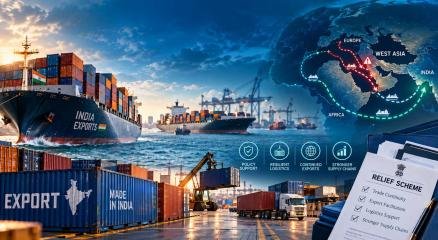
The Government of India has extended the Resilience & Logistics Intervention for Export Facilitation (RELIEF) scheme until March 31, 2027, to support exporters facing continued geopolitical disruptions in West Asia. The extension aims to provide greater insurance protection and cost certainty for eligible shipments as maritime logistics across the Gulf and neighbouring regions remain under pressure. The Department of Commerce announced the extension under Component II of RELIEF, an initiative operating within the government’s Export Promotion Mission (EPM). The revised timeline was notified through notification, in response to the continuing impact of regional instability on shipping operations and export trade. Enhanced Insurance Cover for Eligible Exporters Under Component II, the Export Credit Guarantee Corporation of India (ECGC) facilitates enhanced risk coverage of up to 95% for eligible losses arising from war-related and associated political risks, subject to policy conditions and verification. The scheme also protects eligible exporters against increases in insurance premiums beyond pre-disruption levels during the specified period. The benefit applies to qualifying standalone and whole-turnover insurance policies obtained on or after March 16, 2026. Eligible cargo categories include Full Container Load (FCL), Less than Container Load (LCL) and refrigerated container shipments, while energy shipments are excluded. Exporters must meet the prescribed policy and shipment requirements to access the benefits. Logistics Disruptions Continue to Challenge Trade The extension comes amid persistent challenges for exporters, including elevated freight rates, port congestion, uncertain transit schedules and higher operating costs. Disruptions to maritime routes have affected cargo movement through key West Asian trade corridors, complicating shipment planning and increasing financial pressure on businesses with limited margins. Exporters dealing in agricultural commodities and other price-sensitive products are particularly vulnerable, as additional freight and insurance expenses can erode profitability. Smaller exporters may also face difficulties managing delayed payments and maintaining reliable delivery schedules. By extending RELIEF, the government aims to strengthen exporters’ ability to manage eligible geopolitical risks and maintain trade continuity with designated markets. The measure is particularly relevant for businesses dependent on containerised maritime shipments to the Gulf and adjoining regions. However, the scheme does not guarantee lower freight charges or eliminate operational disruptions. Its effectiveness will depend on exporters securing eligible insurance cover and complying with documentation and claim requirements. The extension provides a longer window of risk protection as Indian exporters navigate an uncertain trade environment, while the stability of shipping routes and logistics costs will remain critical to export performance in the coming months. 𝐒𝐭𝐚𝐲 𝐓𝐮𝐧𝐞𝐝 𝐭𝐨 CARGOCONNECT 𝐟𝐨𝐫 𝐥𝐚𝐭𝐞𝐬𝐭 𝐮𝐩𝐝𝐚𝐭𝐞𝐬!
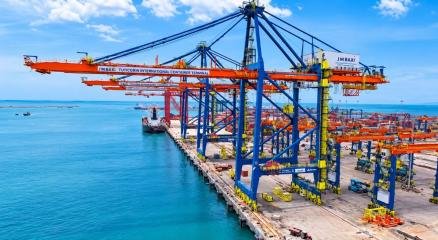
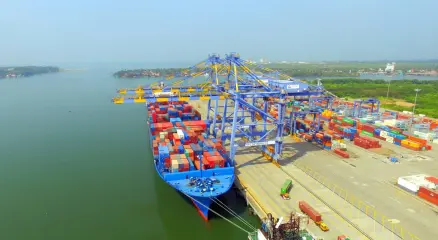
Tuticorin International Container Terminal (TICT) at V.O. Chidambaranar (VOC) Port has been declared a “Green Terminal” after achieving 100% electrification of its operational equipment, according to an official statement. Union Shipping Secretary Vijay Kumar made the declaration during a review of ongoing development projects at VOC Port, valued at approximately ₹18,000 crore. As part of the terminal’s green transition, the Secretary flagged off 13 electric Internal Transfer Vehicles (E-ITVs) to support cleaner and more sustainable container-handling operations. Advancing Green Port Operations The complete electrification of TICT’s operational equipment is expected to reduce diesel consumption and local emissions from container-yard and quay operations. The initiative marks a significant step towards cleaner port logistics, as the maritime sector increasingly focuses on reducing its environmental footprint. The green terminal designation relates to the electrification of operational equipment and does not imply that visiting vessels are powered by alternative fuels. VOC Port Expands Green Energy Initiatives During the review, the Shipping Secretary also assessed several green infrastructure initiatives at VOC Port, including a pilot methanol bunkering and refuelling facility, a green hydrogen pilot project, and wind energy infrastructure. VOC Port Chairman Sushanta Kumar Purohit highlighted the port’s annual cargo-handling capacity of 82 million tonnes and its long maritime history, with trade links dating back to 123 AD. The port is also pursuing employee welfare and social infrastructure projects, including a golf course and a Kendriya Vidyalaya. Outer Harbour Project to Boost Transshipment The review also covered the outer harbour project, which is expected to add 4 million tonnes per annum of cargo-handling capacity. The project aims to strengthen Tamil Nadu’s position as a major transshipment hub for southern India. With the electrification of terminal equipment and investments in alternative fuels and green energy, VOC Port is advancing its efforts to combine sustainable port operations with expanded cargo-handling and transshipment capacity. Follow CARGOCONNECT for more such updates