Loading...
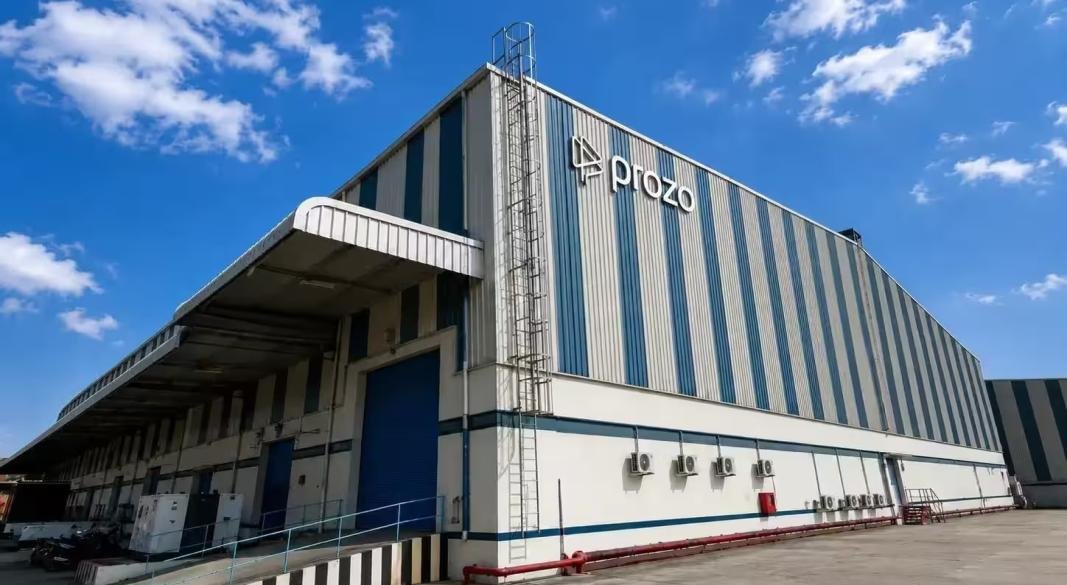
Prozo, recorded 50% Year-on-Year (YoY) growth in FY26 compared with FY25, extending its Compound Annual Growth Rate (CAGR) to 62% since 2022. The company’s logistics business has scaled to more than ₹125 crore in annual recurring revenue (ARR), while its multi-client fulfilment network has expanded to over 1.5 million sq ft across India.
The company also reported eight consecutive quarters of EBITDA positivity and four consecutive quarters of profit before tax (PBT) positivity, reflecting its continued focus on scaling operations alongside financial discipline.
Serving brands across FMCG, apparel, beauty and personal care, home and kitchen, industrial products and other consumer categories, Prozo addresses the growing complexity of omnichannel supply chains. As businesses expand across Direct-to-Consumer (D2C), marketplaces, general trade, modern trade and emerging commerce channels, managing distributed inventory, multiple fulfilment locations and varying service-level commitments has become increasingly demanding.
To address these requirements, Prozo operates through a combination of Third-Party Logistics (3PL) and Fourth-Party Logistics (4PL) models. Under its 3PL model, the company leases facilities, invests in infrastructure and directly manages warehouse operations. Its 4PL model works with regional warehouse and logistics operators, with Prozo providing technology, operational oversight and Control Tower capabilities. Depending on client requirements, the model can also accommodate existing technology systems.
The full-stack supply chain solutions provider serving omnichannel brands currently operates more than 10 4PL fulfilment centres covering over 2 lakh sq ft Brands including Traya, Plix and SolarSquare use the network to access fulfilment capabilities across markets. Over the next three years, the company aims to build a network of more than 1,000 warehouses by combining its 3PL and 4PL footprint, with a particular focus on extending coverage into tier II and III markets. The model is designed to give brands wider geographic reach without requiring them to independently establish and manage extensive warehouse networks.
Technology underpins the company’s distributed operating model. ProWMS supports warehouse and fulfilment execution, while ProShip manages transportation workflows across D2C, B2B and other freight movements. The platform integrates with leading marketplaces, order management system (OMS) platforms and enterprise applications, including Unicommerce, EasyEcom, Vinculum and SAP, consolidating operational information across channels and partners.
Above these execution systems, Prozo’s Control Tower provides end-to-end visibility, service-level agreement (SLA) governance, exception management and operational oversight across locations, sales channels and logistics partners. This layer becomes particularly important as demand patterns shift, inventory is spread across multiple locations and fulfilment commitments differ across marketplaces, D2C and traditional retail channels.
Dr Ashvini Jakhar, Founder and CEO of Prozo, said the company had evolved from a warehousing business into an integrated supply chain platform spanning fulfilment, logistics and technology. He highlighted the need for brands to combine access to distributed infrastructure with network-wide visibility and operational control as they expand across geographies and sales channels.
Prozo’s next phase of growth will focus on expanding its physical network, strengthening execution technology and deepening its Control Tower capabilities. By combining distributed fulfilment infrastructure with integrated digital oversight, the company aims to help brands enter new markets, manage increasing operational complexity and maintain greater flexibility and control as their businesses scale.

Achilles, a global provider of supply chain risk and performance management solutions, has announced the findings of an independent return-on-investment (ROI) analysis conducted in collaboration with research and advisory firm Verdantix. The study examines the financial and operational benefits energy and natural resources companies could achieve by modernising supplier risk and sustainability management. As global supply chains grow more complex and environmental, social and governance (ESG) requirements evolve, supplier management is becoming increasingly important for operational resilience, regulatory compliance and corporate reputation. However, many organisations continue to depend on spreadsheets and disconnected internal systems, limiting supplier visibility and creating administrative inefficiencies. Modelling the Financial Value of Supplier Management Drawing on data collected from 15 companies, Verdantix modelled a representative energy and natural resources business employing 9,000 people, generating £100 million in annual revenue and managing approximately 2,000 suppliers through the Achilles platform. The analysis projects a 286% return on investment over three years, with breakeven within six months and approximately £325,000 in total financial benefits. These modelled gains are attributed to improved operational efficiency, greater supplier transparency and more proactive risk management. By consolidating supplier information, automating due diligence and enabling continuous risk monitoring, the platform aims to reduce manual workloads while helping organisations make faster, better-informed supplier decisions. The study found that organisations implementing Achilles could achieve time savings of between 10% and 50% across supplier management processes. These efficiencies were associated with labour savings exceeding £340,000 over three years, allowing teams to redirect resources towards higher-value activities. Improving Risk Visibility across Energy Supply Chains Across oil and gas, renewable energy and wider energy infrastructure, supplier performance can affect operational safety, compliance and business continuity. Managing increasingly extensive contractor and supplier networks therefore requires reliable information and the ability to identify emerging risks. Customer interviews conducted for the study highlighted the potential reputational and financial consequences of poor supplier performance. One organisation described supplier management as a key operational risk and pointed to the role of Achilles in benchmarking suppliers and identifying potential issues across its supply chain. Sustainability performance is another consideration. As ESG reporting and disclosure requirements evolve, companies need accurate, verified supplier information to support reporting obligations and inform procurement decisions. According to the study, Achilles enables organisations to assess and benchmark suppliers’ sustainability performance, supporting more informed selection and oversight. Reducing Disruption and Compliance Costs Supplier failures and compliance breaches can trigger productivity losses and wider disruption across critical energy infrastructure. The Verdantix analysis assessed these costs and found that improved supplier visibility, ongoing monitoring and earlier identification of potential issues could reduce operational disruption costs by more than £72,000 over three years. The study also modelled compliance-related cost reductions of approximately £19,000 over the same period, alongside stronger governance across complex supplier networks. Together, the findings point to the potential value of moving from fragmented, manual processes towards integrated supplier management systems combining verified data, automated due diligence and continuous risk monitoring. For energy and natural resources companies, the business case extends beyond administrative efficiency. Better supplier oversight can support compliance, reduce operational uncertainty and strengthen supply chain resilience. While the ROI and savings figures are modelled estimates rather than guaranteed outcomes for individual organisations, the analysis highlights the potential financial value of modernising supplier risk and sustainability management.


Logistics and supply chain resilience have emerged as key economic themes at the BRICS Summit 2026 in New Delhi, with India using its chairship to push discussions around more resilient and predictable trade infrastructure among member countries. The two-day summit opened in New Delhi this weekend, bringing supply chains and trade logistics into sharper focus as part of the broader economic discussions among BRICS members. The emphasis reflects the growing importance of logistics infrastructure in supporting trade and maintaining the reliability of cross-border supply networks. The issue was already highlighted a day before the formal summit sessions began, at the BRICS Business Forum on Friday, where the push for stronger trade and logistics systems was laid out. Logistics gains strategic importance For BRICS economies, the ability to move goods efficiently across borders is closely linked to the expansion and reliability of trade. Supply chain disruptions can affect the movement of goods, increase uncertainty for businesses and make trade flows less predictable. Against this backdrop, the focus in New Delhi has been on creating conditions that can make trade infrastructure more resilient. India's approach under its BRICS chairship has placed predictability alongside resilience, signalling the importance of infrastructure and logistics networks that can support sustained trade between member economies. The emphasis also reflects the changing role of logistics in the global economy. Once viewed primarily as an operational component of trade, logistics infrastructure is increasingly becoming part of wider economic and strategic discussions, particularly as businesses and governments seek greater resilience in international supply chains. Trade infrastructure in focus The focus on trade logistics at the summit comes as BRICS economies continue to look at ways of strengthening economic cooperation. Efficient infrastructure, dependable trade corridors and predictable movement of goods are fundamental to making greater intra-BRICS trade possible. For India, the discussion is particularly relevant as it continues to position logistics infrastructure as an important element of its wider trade and economic agenda. The BRICS chairship provides a platform to bring these issues into discussions involving major emerging economies. The discussions in New Delhi therefore put logistics closer to the centre of the BRICS economic conversation. Rather than being treated simply as a supporting function for trade, supply chains are increasingly being considered an important part of economic resilience and international cooperation. As the summit proceedings continue, the focus on resilient and predictable trade infrastructure highlights the role that logistics can play in shaping the future of economic engagement among BRICS countries. Follow CARGOCONNECT for more such news


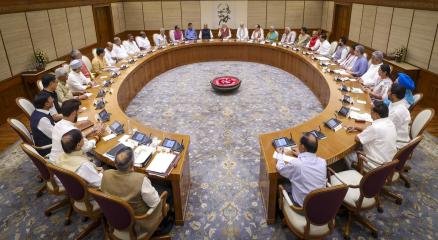
The Union Cabinet, chaired by Prime Minister Narendra Modi, has approved the Emergency Credit Line Guarantee Scheme (ECLGS) 5.0. The scheme aims to provide credit guarantee coverage of 100% for MSMEs and 90% for non-MSMEs, as well as the airline sector, to Member Lending Institutions (MLIs) by National Credit Guarantee Trustee Company Limited (NCGTC) for the amount in default under the additional credit facility extended to the eligible borrowers to tide over any short-term liquidity mismatches in view of the West Asia Crisis. The total outlay of the scheme is expected to be ₹18,100 crore, and it is expected to generate additional credit flows worth ₹2.25 lakh crore. The scheme is open to MSMEs, non-MSMEs with existing working capital limits, and scheduled passenger airlines that have outstanding credit facilities as of March 31, 2026, as long as their loan accounts are not overdue. Under the scheme, the government will provide 100% coverage to MSMEs and 90% to non-MSMEs and airlines for loans they take for additional credit up to 20% of the peak working capital utilised during the fourth quarter of 2025-26, capped at Rs. 100 crore. For airlines, the loans can be for up to 100% of their peak working capital, but this is capped at ₹1,500 crore per borrower, subject to satisfying certain specific conditions. However, the scheme would apply to all loans sanctioned during the period from the date of issue of these guidelines by NCGTC up to 31 March 2027, and the maximum period of guarantee cover shall be co-terminus with the tenor of the loan. The scheme aims to enable businesses to tide over the challenges arising from the West Asia conflict. Additionally, this is expected to help businesses maintain their operations, protect jobs, and sustain supply chains. Overall, the proposed credit guarantee scheme is a major step to help businesses, particularly MSMEs and the airline sector, to ensure their additional working capital needs are catered to by the banks & financial institutions. By providing timely liquidity, the scheme will sustain the businesses and prevent job losses. It will also promote uninterrupted domestic production and maintain the resilience of the ecosystem. Follow CARGOCONNECT for more news & updates!