Loading...
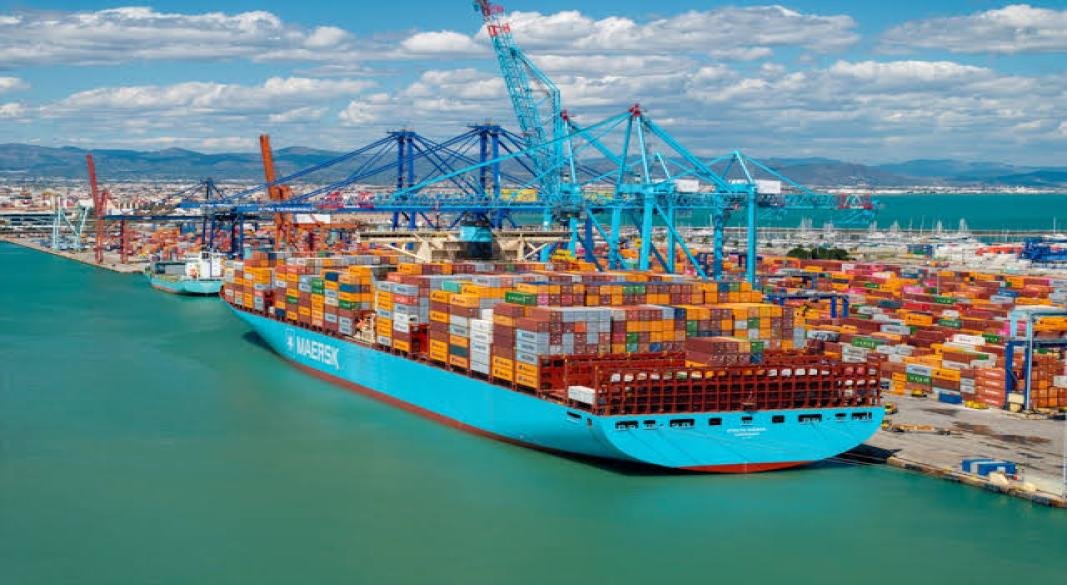
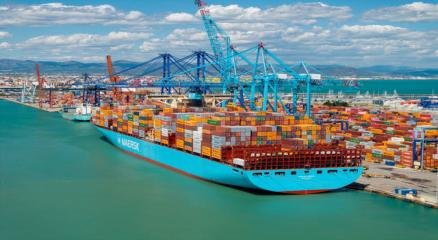
Maersk and Hapag-Lloyd are shifting their joint India-Europe container service back to the Suez Canal and Red Sea corridor, replacing the longer route around the Cape of Good Hope. Announced on November 2, 2026, the move is expected to reduce transit times for cargo moving between India and Europe, subject to regional security conditions.
Operating under the Gemini Cooperation, the service is designated ME1 by Maersk and Indian Ocean Service (IOS) by Hapag-Lloyd. The revised routing marks another step in the carriers’ gradual return to the Suez corridor following disruptions that prompted vessels to divert around southern Africa.
According to Maersk, the first westbound sailing on the revised route will be Atlanta Express, voyage 644W, departing Salalah, Oman, on November 4. The first eastbound sailing will be Savannah Express, voyage 644E, departing Tangier, Morocco, with Maersk listing November 13 as the scheduled date.
The updated port rotation is Mundra–Nhava Sheva–Salalah–Suez Canal–Tangier–Rotterdam–Wilhelmshaven–Hamburg–London–Algeciras–Tangier–Suez Canal–Salalah–Mundra.
The revised schedule retains Mundra and Nhava Sheva as the service’s Indian port calls, while maintaining connections to major European trade gateways, including Rotterdam, Hamburg, Wilhelmshaven, London and Algeciras. The route will use the Suez Canal in both directions, avoiding the extended voyage around the Cape of Good Hope.
The return to the Suez route is expected to improve transit efficiency for Indian exporters and importers shipping goods to European markets. A shorter maritime route can support better shipment planning, inventory management and supply chain coordination, particularly for businesses dependent on predictable international container schedules.
However, Maersk has not specified the number of days that will be saved or published revised port-to-port transit times. Shippers are advised to confirm updated schedules with their respective carriers before finalising shipment plans.
The carriers have emphasised that the routing decision remains dependent on the security situation in the Red Sea and surrounding waters. Both companies will continue monitoring regional developments, with the safety of crews, vessels and cargo remaining their priority.
However, the change applies specifically to the ME1/IOS service and does not mean that all Gemini Cooperation services have returned to the Suez Canal.
The move underscores the importance of the Suez Canal as a strategic maritime corridor connecting Asia and Europe. If security conditions remain stable, the revised routing could help improve transit efficiency and strengthen connectivity across the India-Europe container trade.
𝐒𝐭𝐚𝐲 𝐓𝐮𝐧𝐞𝐝 𝐭𝐨 CARGOCONNECT 𝐟𝐨𝐫 𝐥𝐚𝐭𝐞𝐬𝐭 𝐮𝐩𝐝𝐚𝐭𝐞𝐬!
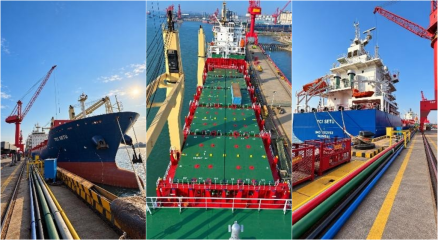
TCI Seaways, the shipping division of Transport Corporation of India Limited (TCI), has taken delivery of TCI SETU, a 500-TEU container vessel, on October 29, 2026, strengthening its fleet capacity to serve India's growing coastal freight requirements. With a deadweight capacity of approximately 7,300 metric tonnes, TCI SETU is the seventh vessel in the TCI Seaways fleet, joining six existing ships. The addition is expected to enhance the company's coastal shipping capabilities, particularly along India's East Coast, where its network connects Chennai, Visakhapatnam, the Andaman Islands and Myanmar. Built by Taizhou Sanfu Ship Engineering Co. Ltd. in China, the vessel has been designed for operational reliability, build quality and economic efficiency. Its low-carbon performance is also intended to support the shift towards cleaner maritime transportation. The vessel represents an investment of ₹178.8 crore, funded entirely through internal accruals. It is the first of two vessels contracted by TCI Seaways from the shipyard. Commenting on the delivery, Vineet Agarwal, Managing Director, TCI, said coastal shipping would be a critical pillar of India's future logistics infrastructure. He noted that the vessel reflects the company's continued investment in technology, operational excellence and sustainable transportation. By combining coastal shipping with its road and rail capabilities, TCI aims to strengthen multimodal connectivity and offer a more integrated and cost-effective logistics network. The addition comes as India places greater emphasis on logistics efficiency, infrastructure development and transport decarbonisation. TCI Seaways said it would continue to invest in modern vessel technology, expand its fleet and strengthen multimodal connectivity to support the evolving requirements of the country's freight ecosystem.
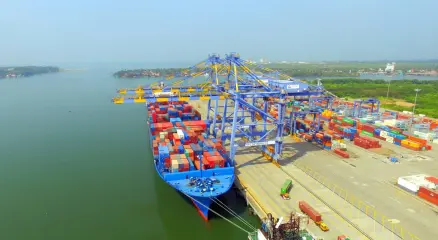

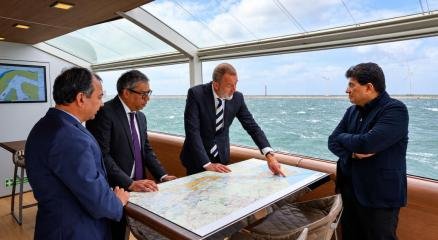
India’s proposed US$4 billion greenfield shipyard at Thoothukudi in Tamil Nadu has moved a step closer to detailed project planning, with the government targeting completion of the Detailed Project Report (DPR) within six months. The development follows discussions between Union Minister for Ports, Shipping and Waterways Sarbananda Sonowal and HD Hyundai Chairman Chung Ki-sun in Seoul, South Korea. The two sides will establish a Joint Working Group (JWG) to oversee project development, coordinate key activities and work towards finalising a suitable joint venture structure. HD Korea Shipbuilding & Offshore Engineering (HD KSOE), the shipbuilding arm of HD Hyundai, has reiterated its intention to participate as the project's primary strategic investor. However, the proposed investment structure, equity participation and implementation arrangements remain subject to due diligence and the requisite approvals. Planned Capacity and Project Scope The proposed shipyard is envisaged to have an annual shipbuilding capacity of approximately 2.5 million gross tonnages (GT), subject to validation through the DPR. Once operational, it is expected to become India's largest commercial shipyard, strengthening domestic shipbuilding capabilities and enhancing the country's competitiveness in the global maritime industry. The DPR will establish the project's technical and commercial framework, covering the proposed vessel mix, production capacity, infrastructure requirements, project costs and implementation schedule. Preparatory activities will include site assessments, infrastructure planning and preliminary dredging and reclamation studies. National Shipbuilding & Heavy Industries Park, Tamil Nadu Limited (NSHIP-TN) will facilitate waterfront land, utilities and supporting infrastructure, while coordinating with central and state authorities for statutory approvals. Meeting Domestic Demand and Strengthening Manufacturing The project is expected to support India's growing demand for commercial vessels. According to Sonowal, Indian public agencies are looking to acquire more than 400 vessels in the coming years. The proposed shipyard could cater to a portion of this requirement while pursuing export orders, creating opportunities to expand India's participation in international shipbuilding markets. Beyond infrastructure investment, the collaboration aims to promote technology transfer, localised manufacturing and workforce development. HD KSOE is expected to contribute expertise in shipyard design, construction, advanced manufacturing and operations. Cooperation with Indian companies, academic institutions and training organisations will also be explored to develop the skilled workforce and supplier ecosystem required for a competitive shipbuilding industry. India-South Korea Maritime Cooperation The Thoothukudi project builds on the memorandum of understanding signed on April 20, 2026, between HD KSOE and NSHIP-TN, alongside broader India–Republic of Korea cooperation in shipbuilding, shipping and maritime logistics. The initiative aligns with India's Shipbuilding Development Scheme and its wider ambition to strengthen domestic manufacturing, reduce dependence on overseas shipbuilding capabilities and establish globally competitive maritime infrastructure. The six-month DPR target marks an important planning milestone. The project's subsequent progress will depend on finalising the joint venture structure, validating technical and financial requirements, securing necessary approvals and advancing implementation arrangements. 𝐒𝐭𝐚𝐲 𝐓𝐮𝐧𝐞𝐝 𝐭𝐨 CARGOCONNECT 𝐟𝐨𝐫 𝐥𝐚𝐭𝐞𝐬𝐭 𝐮𝐩𝐝𝐚𝐭𝐞𝐬!
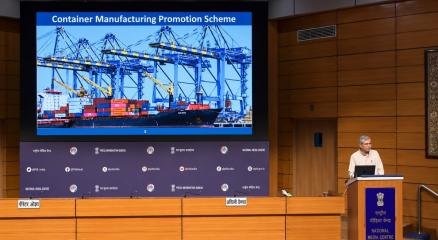
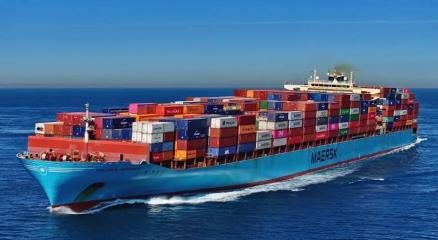
A.P. Moller-Maersk expects to restore all its shipping services through the Suez Canal by March 2027, according to the Suez Canal Authority (SCA). The outlook signals a potential step towards normalising global container shipping routes as the Danish shipping group continues to revise its vessel schedules and gradually increases its use of the strategic waterway. The timeline emerged during a video conference on 20 October between SCA Chairman and Managing Director Admiral Ossama Rabiee and senior Maersk executives, including Chief Operating Officer Rabab Boulos. The discussions focused on accelerating the return of the carrier’s services to the canal and strengthening cooperation between the two organisations. However, March 2027 remains an expected target rather than a confirmed deadline for individual services. According to the SCA, Maersk-affiliated vessels completed 276 transits through the Suez Canal between January and September 2026, compared with 146 during the corresponding period in 2025. The combined net tonnage increased to 23.3 million tonnes from seven million tonnes, indicating a significant rise in the group’s canal activity. Boulos acknowledged the progress made in restoring services through cooperation with the authority and expressed the expectation that all Maersk services would return by March 2027. She also identified the Suez Canal as the group’s preferred option, reflecting its strategic importance to international shipping networks. Maersk Vice President of Operations Ahmed Hassan said the company was continuing to update its sailing schedules to enable additional services to transit through the canal in the coming months. Hani El-Nady, the group’s representative for the Middle East and North Africa, added that Maersk was working to accelerate the return of its remaining services. The Suez Canal provides a direct maritime connection between the Red Sea and the Mediterranean, serving as a critical link for trade between Asia and Europe. Its use can reduce voyage distances and sailing times compared with routing vessels around the Cape of Good Hope at the southern tip of Africa. SCA Chairman Rabiee highlighted the canal’s economic advantages, particularly for large container ships, noting that geopolitical developments and their impact on fuel prices and freight rates have reinforced the importance of efficient shipping routes. A broader return by Maersk could help reduce voyage durations, improve vessel utilisation and release capacity currently tied up in longer voyages. These changes could also influence container shipping costs, although the eventual impact on freight rates will depend on market demand, available capacity and operating conditions. Despite the positive outlook, the pace of Maersk’s return will depend on conditions in the Red Sea region. The SCA has not announced confirmed return dates for every service, and Maersk continues to review its navigation plans. Both parties agreed to maintain discussions to strengthen cooperation and facilitate the restoration of services. The anticipated return by March 2027 will therefore be an important development to watch for global supply chains, particularly businesses relying on Asia-Europe trade routes. 𝐒𝐭𝐚𝐲 𝐓𝐮𝐧𝐞𝐝 𝐭𝐨 CARGOCONNECT 𝐟𝐨𝐫 𝐥𝐚𝐭𝐞𝐬𝐭 𝐮𝐩𝐝𝐚𝐭𝐞𝐬!