
Loading...
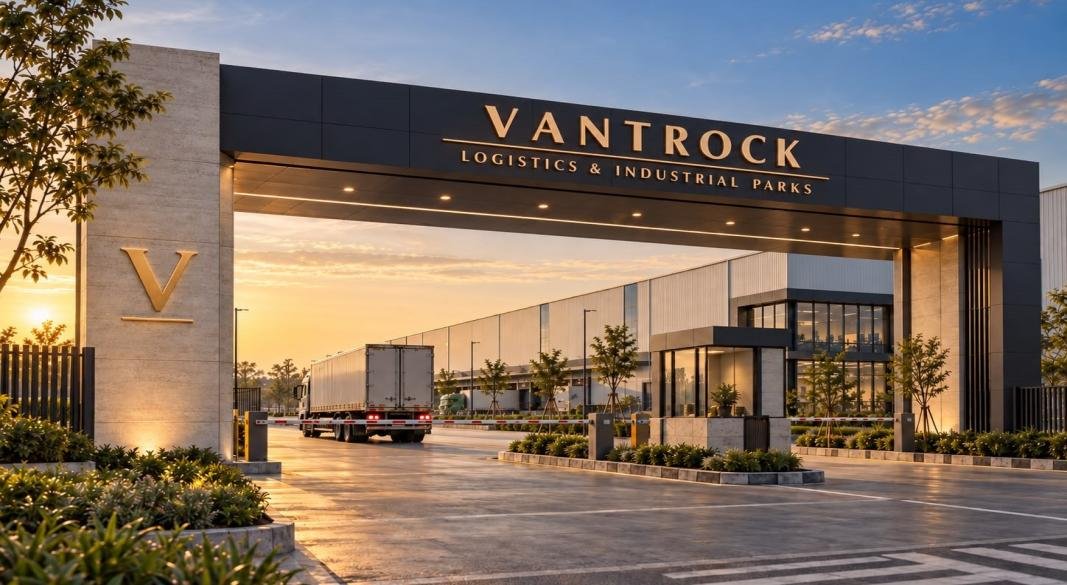
Anshul Singhal, a real estate veteran with over two decades of experience in building institutional platforms, has launched Vantrock Real Assets Pvt Ltd (VRAPL), an operator-led real assets platform initially focused on warehousing, industrial and logistics parks. Headquartered in Mumbai, the company plans to develop approximately 11.5 million sq ft of real-estate, representing an estimated gross development value (GDV) of ₹4,200 crore (approximately US$434 million) upon completion.
The first phase will cover around 3 million sq. ft., with an estimated GDV of ₹1,100 crore (approximately US$113 million) across the National Capital Region (NCR), Bengaluru and Pune. Construction is scheduled to begin in 2027, with the first rental income targeted from 2028 onwards. Land for these projects is at advanced stages of negotiation, documentation and/or regulatory approvals.
The remaining 8.5 million sq ft is planned across the same markets, alongside the Mumbai Metropolitan Region (MMR), with projects expected to be operationalised in phases over the next 12–18 months.
AN INFILL-FIRST APPROACH TO WAREHOUSING
Vantrock’s strategy centres on strategic infill locations within established industrial and logistics corridors, where demand for quality warehousing is strong but suitable supply is constrained. The company is targeting land parcels of approximately 15–60 acres, with development potential ranging from 0.4 million to 1.5 million sq. ft.
Its proposed portfolio spans big-box and build-to-suit facilities, multi-storey warehouses, last-mile distribution, dark stores, self-storage, cold chain, industrial plots, workforce accommodation and mixed-use developments where offices or retail complement warehousing.
“We are going the other way by acquiring the infill land that is left inside proven corridors, and the Grade-B sheds already standing there, refurbished to Grade-A standards,” said Singhal, Founder and CEO, Vantrock. He added that while assembling such locations can be slower and more challenging, they offer greater value to customers by keeping facilities closer to their business operations.
REFURBISHMENT AS AN ALTERNATIVE TO NEW CONSTRUCTION
A distinctive element of the platform is its plan to acquire existing Grade-B warehouses, either outright or through joint ventures, and upgrade them to Grade-A standards. Vantrock expects its in-house development team to complete these refurbishments within six to 12 months—less than half the time required for a new build and at a lower cost than developing from scratch.
The model is intended to provide occupiers with modern facilities closer to demand while increasing the supply of quality warehousing and logistics infrastructure within established urban markets, without requiring cities to invest in additional land.
The company expects individual projects to move from land to revenue within 18–24 months of construction commencement. Funding is envisaged through a combination of equity, construction debt and, where appropriate, forward funding from institutional buyers. Joint ventures, joint development arrangements and long-term leasehold structures with landowners and capital partners will also form part of its approach.
SAFETY, COMPLIANCE AND INSTITUTIONAL STANDARDS
Shailesh V Haribhakti, Chairman of the Board, Vantrock, highlighted the need to improve safety and compliance across India’s existing warehousing stock, particularly in areas such as fire protection, structural integrity, lighting and ventilation.
“Bringing that stock to standard is as much a governance task as a real estate one,” Haribhakti said, adding that maintaining global standards across both site operations and board-level oversight would be central to the platform’s growth.
ADDRESSING A WIDENING GRADE-A SUPPLY GAP
Vantrock’s market selection is informed by a market study and investment thesis prepared by CBRE, which identified high-value warehousing corridors near Tier-I cities. According to CBRE Research, India faces an estimated 117 million sq. ft. shortfall in Grade-A warehousing supply between 2026 and 2031, as demand from third-party logistics providers, e-commerce companies and manufacturing occupiers outpaces quality supply across key corridors.
Rami Kaushal, Managing Director – Consulting & Valuation, CBRE India, described the market as being at an inflection point, with the gap between demand and quality supply expected to widen through the end of the decade.
Beyond its initial warehousing and industrial focus, Vantrock plans to explore global capability centres (GCCs), suburban office campuses, strata offices, data centres and infrastructure assets as distinct strategies in subsequent phases.
The platform’s proposition rests on bringing institutional-grade development and operating standards into established logistics markets—combining new construction with refurbishment to address the shortage of quality space closer to India’s major demand centres.
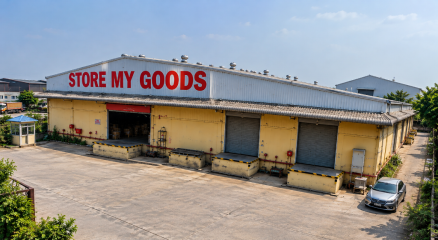
StoreMyGoods has added 1.5 lakh sq ft of warehouse space over the past two months, taking its total storage capacity to 4 lakh sq ft as it scales its organised storage network across India. The expansion includes new leased facilities in Mumbai, Bengaluru, Hyderabad, Gurugram and Noida, alongside its entry into Chennai. The additional capacity is aimed at meeting rising demand from individual and business customers while strengthening the company’s presence in key urban markets. Located in well-connected areas, the new facilities are designed to help customers manage inventory fluctuations, seasonal demand and changing storage requirements. Security and inventory visibility remain central to the company’s operating model. Most of the new warehouses are located within gated compounds and combine manual supervision with technology-enabled surveillance. StoreMyGoods also uses digital inventory tracking through its customer portal, enabling item-level visibility and greater control over stored goods. The company plans to further enhance the customer experience by developing warehouse environments with designated areas exclusively for customers, according to the announcement. Commenting on the expansion, Sudeep Gupta, Founder, StoreMyGoods, said demand in the company’s existing markets had grown faster than anticipated, prompting a revision of its expansion plans. He pointed to increasing mobility and shrinking urban spaces as factors driving the need for safe and reliable storage solutions. Gupta also highlighted the opportunity to serve businesses seeking flexible storage without the investment required to maintain their own warehouses. With the growth of small businesses, including those supported by initiatives such as Make in India, the company sees demand for storage solutions across business sizes as well as among individual customers. The expansion comes amid a shift towards more organised storage options in a market that Gupta described as largely unorganised. The company aims to make such facilities more accessible while combining physical infrastructure with digital tools for inventory tracking and customer visibility. Looking ahead, StoreMyGoods plans to expand its nationwide network to more than 10 lakh sq ft of storage space by FY29, building on its recent growth and evolving customer requirements.



Kuehne+Nagel has expanded its global Cool Corridor network by introducing four new temperature-controlled trade routes, reinforcing its capabilities in transporting sensitive pharmaceutical and healthcare products across key international markets. The latest expansion is aimed at meeting the growing demand for reliable cold chain logistics while ensuring product integrity throughout transit. The newly added Cool Corridors connect Belgium with Singapore, Belgium with Chicago, Belgium with Lima, and Singapore with Sydney, significantly enhancing the company's healthcare logistics network. These dedicated lanes are designed to maintain strict temperature conditions, minimise handling risks, and improve shipment visibility for life sciences and healthcare customers. With the addition of these routes, Kuehne+Nagel continues to strengthen its specialised HealthChain portfolio, which supports the transport of pharmaceuticals, vaccines, biologics and other temperature-sensitive medical products. The Cool Corridor programme combines validated processes, certified infrastructure and advanced monitoring technologies to safeguard cargo quality from origin to destination. The logistics provider noted that the expansion reflects increasing demand from pharmaceutical manufacturers seeking resilient and compliant supply chain solutions amid the continued growth of global healthcare trade. By creating dedicated cold chain lanes, the company aims to reduce transit variability, enhance operational consistency and ensure regulatory compliance across international shipments. The initiative also leverages strategic partnerships with airlines, ground handling agents and logistics facilities that meet stringent healthcare quality standards. These collaborations enable seamless end-to-end temperature management while providing customers with greater transparency through digital shipment monitoring and proactive risk management. “Healthcare customers are looking for ways to maintain product quality while improving efficiency and sustainability across their supply chains. Cool Corridors provide greater control across the shipment journey, helping protect temperature-sensitive products. With more confidence in shipment conditions, customers can use lighter passive packaging, creating opportunities to reduce logistics costs and transport emissions without compromising product integrity,” says Dorothee Becher, VP Global Air Logistics Healthcare at Kuehne+Nagel. The network expansion underscores the company's broader strategy of investing in healthcare logistics infrastructure globally. In recent months, Kuehne+Nagel has also expanded its healthcare footprint through temperature-controlled facilities in major pharmaceutical hubs, further strengthening its ability to support evolving customer requirements. As pharmaceutical supply chains become increasingly global and complex, demand for specialised cold chain logistics continues to rise. By extending its Cool Corridor network, Kuehne+Nagel is positioning itself to offer enhanced reliability, regulatory compliance and end-to-end visibility for temperature-sensitive healthcare shipments, supporting the industry's need for secure and efficient logistics solutions. 𝐒𝐭𝐚𝐲 𝐓𝐮𝐧𝐞𝐝 𝐭𝐨 CARGOCONNECT 𝐟𝐨𝐫 𝐥𝐚𝐭𝐞𝐬𝐭 𝐮𝐩𝐝𝐚𝐭𝐞𝐬!

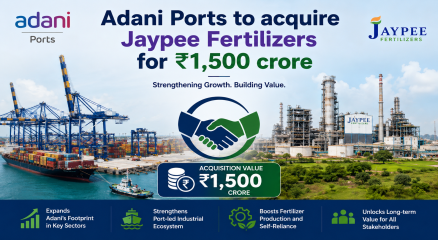
Adani Ports and Special Economic Zone Ltd (APSEZ) has agreed to acquire Jaypee Fertilizers & Industries Ltd (JFIL) from Jaiprakash Associates Ltd (JAL) for ₹1,500 crore, strengthening its presence in India’s logistics and industrial infrastructure sector. The transaction forms part of the insolvency resolution plan approved for JAL by the National Company Law Tribunal (NCLT). Through the acquisition, APSEZ will gain indirect control of Kanpur Fertilizers and Chemicals Ltd (KFCL), which owns nearly 243 acres of industrial and commercial land in Kanpur. The company plans to use the site for logistics and warehousing development as it expands its multimodal logistics network across the country. The move reflects APSEZ’s broader strategy of increasing its inland logistics capabilities beyond port operations. The company has been expanding its presence in warehousing, rail-linked freight infrastructure and cargo handling to create integrated supply chain services. Industry analysts note that private port operators are increasingly investing in logistics assets to secure cargo volumes and improve end-to-end transportation offerings. The acquisition will be completed through a cash transaction under the implementation framework of the approved JAL resolution plan. The NCLT approved the plan in March 2026, and the order was later upheld by the National Company Law Appellate Tribunal (NCLAT). The latest deal adds to APSEZ’s series of infrastructure acquisitions in recent years, including investments in ports, logistics parks and storage assets aimed at strengthening its integrated transport network across India. Follow CARGOCONNECT for more such updates