Loading...
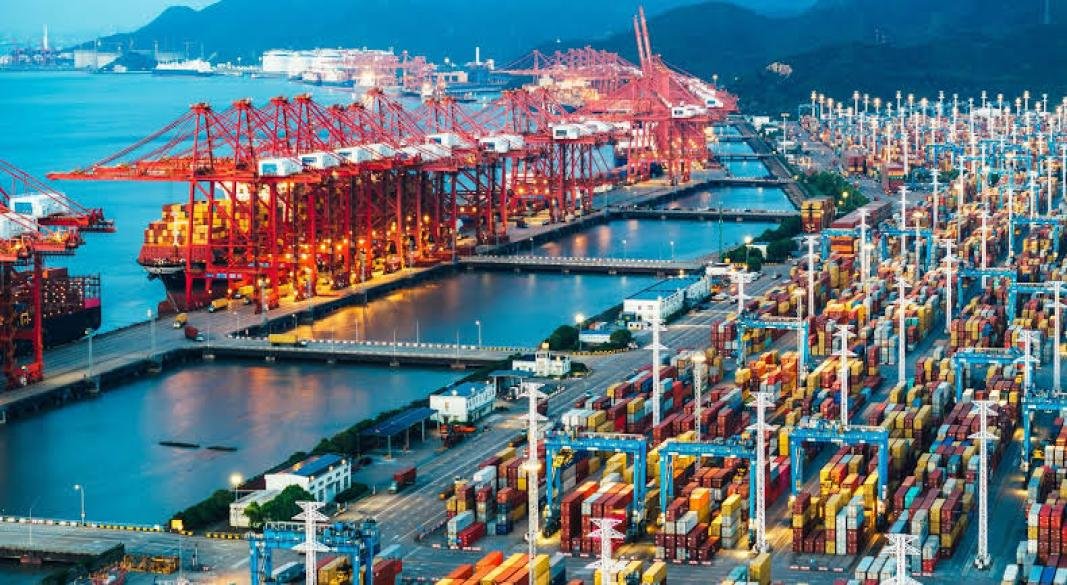
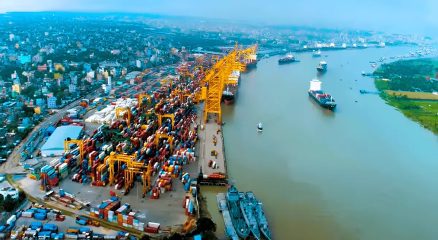
China’s Ningbo-Zhoushan Port has overtaken Singapore to become the world’s second-busiest container port during the first half of 2026, according to the latest container throughput rankings compiled by shipping analyst Alphaliner. The shift marks a notable change in the global port hierarchy, although the margin between the two gateways remains narrow.
Ningbo-Zhoushan handled 22.90 million twenty-foot equivalent units (TEUs) between January and June 2026, registering an 8.8% year-on-year increase. Singapore, meanwhile, processed 22.74 million TEUs, up 4.7% from the corresponding period last year. The difference of roughly 160,000 TEUs highlights the increasingly competitive race for the second position.
Shanghai retained its position as the world’s busiest container port, handling approximately 28.74 million TEUs in the first half of 2026, an increase of 6.2% year on year. The latest ranking therefore places two Chinese ports at the top, with Ningbo-Zhoushan moving ahead of Singapore for the first time over a complete six-month reporting period.
Jintang Expansion Strengthens Ningbo-Zhoushan
Ningbo-Zhoushan’s stronger growth has been supported by capacity expansion and improved international connectivity. The second phase of the Jintang container hub was completed in July 2026, bringing all five operational container berths within the expanded development.
During the first half of the year, Jintang added 17 international shipping routes, while its container volumes increased by 23.4%. The expansion is expected to strengthen the port complex’s ability to accommodate rising cargo demand and serve an expanding network of global trade lanes.
The port has experienced significant growth over the past two decades, crossing 20 million TEUs in 2015 and 30 million TEUs in 2021. In 2025, it exceeded 40 million TEUs for the first time, handling 43.87 million TEUs for the full year. Singapore remained ahead in the annual ranking, recording 44.66 million TEUs.
Competition Expected to Remain Close
Despite Ningbo-Zhoushan’s first-half lead, Singapore remains a formidable competitor. Alphaliner has indicated that Ningbo-Zhoushan’s growth could moderate during the second half of 2026, leaving open the possibility of Singapore reclaiming the second position.
For global supply chains, the development underscores how port investments, shipping connectivity, cargo generation and changing trade patterns are reshaping the competitive landscape. With only a small volume separating the two ports, the battle for the world’s second-busiest container gateway is likely to remain closely watched through the remainder of 2026.
𝐒𝐭𝐚𝐲 𝐓𝐮𝐧𝐞𝐝 𝐭𝐨 CARGOCONNECT 𝐟𝐨𝐫 𝐥𝐚𝐭𝐞𝐬𝐭 𝐮𝐩𝐝𝐚𝐭𝐞𝐬!
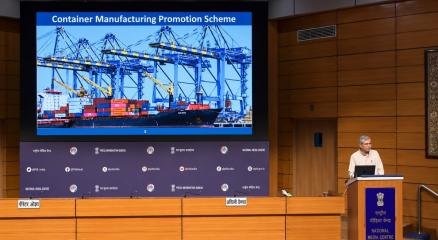
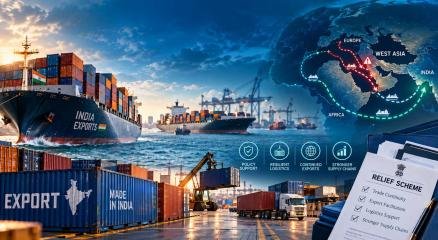
The Union Cabinet has approved the ₹10,000 crore Container Manufacturing Promotion Scheme (CMPS), aimed at establishing a globally competitive container manufacturing ecosystem in India, reducing import dependence and strengthening maritime and logistics supply chains. Announced in the Union Budget 2026–27, the scheme will run from FY 2027–28 to FY 2039–40. The initiative seeks to increase India's annual domestic container manufacturing capacity nearly tenfold, from approximately 70,000 twenty-foot equivalent units (TEUs) to 7.5 lakh TEUs. It will support both the establishment of new manufacturing facilities and the expansion of existing units, creating a stronger domestic base for shipping containers used in international trade. The scheme has four key components covering production costs, capital investment, testing infrastructure and land leasing support. The largest allocation, ₹8,891 crore, is earmarked for Operational Expenditure Assistance (OEA), which will provide financial support for eligible containers manufactured to global shipping standards and sold by approved manufacturers. The assistance is intended to bridge the cost gap between domestically produced containers and competing imports. Interest Subvention Assistance has been allocated ₹859 crore to provide a 3% annual interest subsidy on eligible term loans taken for setting up greenfield manufacturing facilities or expanding existing capacity. The scheme also provides ₹150 crore for testing and certification infrastructure, including specialised facilities for dynamic longitudinal impact testing. A further ₹100 crore has been earmarked for management, monitoring and capacity-building activities. Land-leasing support at major ports is another component. The scheme is expected to create around 3,000 direct jobs and more than 50,000 indirect employment opportunities. It could also stimulate demand across ancillary industries, including specialised steel, corner castings, wooden flooring and paints, supporting the development of a broader domestic manufacturing ecosystem. For India's logistics and export sectors, expanding local container production could diversify equipment sourcing and improve supply-chain resilience amid global shipping disruptions. A stronger domestic industry could also position India as a potential export hub for quality shipping containers. However, the long-term impact will depend on manufacturers' ability to meet international quality standards, achieve competitive production costs and secure sustained demand from shipping lines and other container users. Successful implementation could strengthen India's position in global maritime trade while supporting the government's broader Make in India ambitions. 𝐒𝐭𝐚𝐲 𝐓𝐮𝐧𝐞𝐝 𝐭𝐨 CARGOCONNECT 𝐟𝐨𝐫 𝐥𝐚𝐭𝐞𝐬𝐭 𝐮𝐩𝐝𝐚𝐭𝐞𝐬!
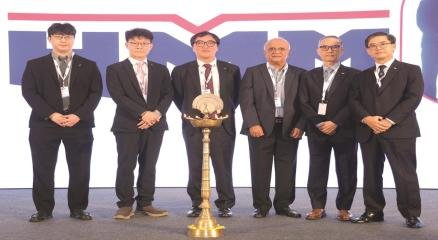

India and the Port of Rotterdam are exploring ways to digitalise cargo processes in India, with a focus on faster cargo evacuation, shorter vessel turnaround times and the adoption of modern port operating standards. Union Minister of Commerce and Industry Piyush Goyal outlined the engagement on 25 October after visiting the Port of Rotterdam in the Netherlands and meeting its chief executive, Boudewijn Siemons. Goyal said Indian customs authorities and Rotterdam port authorities were working to identify opportunities to improve cargo processes through digitalisation. The initiative comes as India seeks to expand port capacity and improve logistics efficiency to support rising economic activity and international trade. However, no detailed implementation timeline, list of participating Indian ports or specific technology procurement programme has been announced. Faster cargo movement is the priority The focus on digitalisation reflects the need to improve the movement of goods through ports, where delays in documentation, approvals, cargo handling and collection can affect the performance of the wider supply chain. Faster cargo evacuation and reduced vessel turnaround times could help ports use existing infrastructure more efficiently. Better information exchange between customs, terminals, shipping lines, freight forwarders and transport providers can also help coordinate cargo movements and reduce avoidable administrative delays. For importers and exporters, the potential gains extend beyond the port itself. More predictable processing can improve inland transport planning, inventory management and delivery scheduling. The extent of these benefits will depend on the processes selected for improvement, the agencies involved and the ability of different systems to exchange information reliably. Rotterdam offers a digital logistics reference Rotterdam, Europe's largest port, is an important gateway for international trade and a major connection point for goods entering European markets. Its logistics infrastructure and established digital information-sharing arrangements offer practical experience for India to examine. In the Netherlands, Portbase operates a Port Community System that supports information exchange among logistics companies, shipping agents, terminals, carriers and public authorities. Its services include digital handling of shipping and cargo information, import and export processes, and coordination of container transport. Such systems illustrate how connected information flows can support port operations. However, the current India–Rotterdam engagement does not establish that India will adopt Portbase or replicate its system. The specific processes and digital tools that could be applied in India remain to be determined. India already has a maritime digital platform India has been developing its own digital infrastructure for maritime logistics. In March 2023, the government launched Sagar Setu, the mobile application of the National Logistics Portal Marine. The platform was designed to improve access to vessel-related information, gate and container freight station updates, tracking functions, approvals and digital transactions linked to import and export clearance. Its development provides an existing foundation for India's maritime digitalisation efforts. Any further initiatives arising from the Rotterdam engagement would need to fit within the country's current systems, regulatory arrangements and operational practices. The broader challenge is not simply to introduce new technology, but to ensure that information can move efficiently between the organisations responsible for clearing, handling and transporting cargo. India–EU trade agreement adds urgency to logistics efficiency The discussions also come as India and the European Union prepare for the potential expansion of bilateral trade under their free trade agreement. Negotiations for the India–EU FTA concluded in January 2026, and the European Commission submitted proposals for the agreement's signature and conclusion to the Council in September. The agreement has not yet entered into force and remains subject to the required approval procedures. Goyal said on 22 October that the deal could become operational in early 2027, depending on its signing and subsequent processes. Its eventual implementation is expected to create further commercial opportunities for businesses on both sides. Efficient cargo processing will be an important part of converting greater market access into practical trade benefits. Exporters need not only favourable trading conditions but also reliable documentation, predictable transit times and coordinated port-to-port logistics. Rotterdam's role as a gateway to European markets makes operational cooperation relevant to businesses seeking to strengthen India–Europe supply chains. Port capacity expansion must be matched by efficiency Goyal said India had doubled its port capacity over the previous decade and expected capacity to double twice more by 2047 to support economic growth and international trade. While investment in physical infrastructure remains important, improved processes can help determine how effectively that capacity is used. Digital systems that reduce delays and provide better visibility across cargo movements could complement investment in terminals, equipment and transport links. For port operators and logistics providers, the commercial value will depend on whether digitalisation produces measurable improvements in clearance times, cargo evacuation, vessel turnaround and coordination between stakeholders. Implementation details will determine the outcome The engagement with Rotterdam represents an opportunity to examine international port practices and identify possible improvements to India's cargo processes. It is not yet a confirmed technology deployment or a published national implementation programme. The next developments to watch will be the identification of participating agencies and ports, the processes selected for digitalisation, the systems involved and the performance targets against which progress will be assessed. For India's maritime sector, the objective is clear: to combine expanding port capacity with more efficient cargo processing. Turning discussions into coordinated, measurable operational improvements will determine how much value the engagement delivers to shippers, exporters and the wider logistics industry. Follow CARGOCONNECT for more such updates
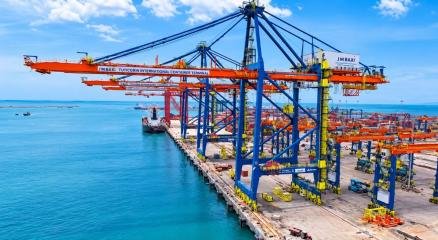

Syama Prasad Mookerjee Port, Kolkata, recorded 34.75 million tonnes of cargo traffic in the first half of FY2026–27, supported by mechanised operations, private terminal participation, digital initiatives and planned infrastructure upgrades. Syama Prasad Mookerjee Port (SMP), Kolkata, handled 34.75 million tonnes (MT) of cargo during the first half of the 2026–27 financial year, registering an increase of 1.34 MT compared with the corresponding period last year. The performance represents year-on-year growth of approximately 4 per cent. The port, which operates through the Kolkata Dock System (KDS) and Haldia Dock Complex (HDC), has set a cargo handling target of 74 MT for the full financial year. Infrastructure modernisation and measures to improve operational efficiency are expected to play an important role in achieving this goal. Mechanised Berths and PPP Operations Support Growth SMP Kolkata Chairman Rathindra Raman attributed the increase in cargo volumes to infrastructure improvements, the development of new berths and jetties, greater participation by public-private partnership (PPP) operators, digital technology adoption and enhanced marketing initiatives. The port has expanded the use of mechanised berths to accelerate cargo handling while reducing dependence on manual operations. It has also increased the utilisation of PPP-operated berths and introduced floating cranes at anchorages to facilitate cargo handling from larger vessels. These measures are intended to improve operational productivity, strengthen cargo-handling capacity and support the port's efforts to attract additional traffic. Digitalisation and Incentives to Attract Cargo Alongside infrastructure development, SMP Kolkata is focusing on digitalisation and commercial incentives to improve its competitiveness. Under its ‘One Port, One Process’ initiative, the port has digitised documentation procedures to simplify operational workflows and improve ease of doing business for port users. It has also introduced promotional rebates on vessel-related and cargo-related charges to encourage additional traffic and attract new business. In another initiative, the port is promoting the development of light industries under the PPP model. Potential activities include agricultural, marine, tea and apparel processing near port facilities. These industries could generate additional cargo volumes while strengthening connections between the port and its hinterland. Capital Dredging Study to Explore Greater Vessel Access Improving navigational access remains another priority for SMP Kolkata. The port has engaged the Indian Institute of Technology Madras (IIT Madras) to conduct a comprehensive feasibility study on capital dredging to assess options for increasing channel depth. Enhanced channel depth could improve access for vessels with greater draught requirements, subject to the findings of the study and the feasibility of implementing the proposed works. Better navigability could also help support future cargo growth and improve operational flexibility. The outcome of the feasibility assessment will be important in determining the scope and potential benefits of any subsequent dredging programme. Proposed Hooghly Twin Tunnel to Improve Connectivity SMP Kolkata is also planning a twin tunnel beneath the Hooghly River to connect port facilities with national highways. The proposed infrastructure is intended to provide an alternative route for cargo traffic, helping bypass urban traffic restrictions and congestion. Improved road connectivity could streamline cargo evacuation, reduce delays in inland transportation and strengthen links between the port and its hinterland. The project's eventual impact will depend on its planning, implementation and integration with the surrounding transport network. Focus on Sustainable Cargo Growth With cargo volumes rising by approximately 4 per cent in H1 FY27, SMP Kolkata is pursuing a combination of operational improvements, private-sector participation, digital processes and infrastructure planning to support its annual target of 74 MT. Mechanised cargo handling, improved terminal utilisation and simplified documentation could help strengthen productivity, while dredging assessments and proposed transport links may address longer-term navigational and connectivity constraints. As trade and logistics requirements continue to evolve, the port's ability to expand capacity, attract new cargo and improve cargo evacuation will be central to sustaining growth during FY2026–27 and beyond. Follow CARGOCONNECT for more such updates