
Loading...
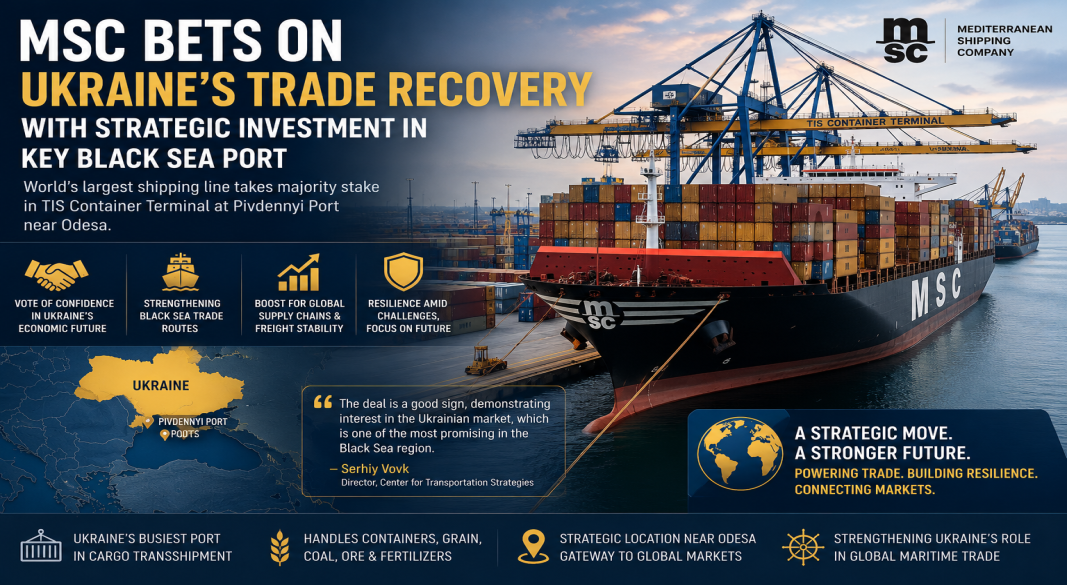
In a significant vote of confidence for Ukraine's maritime and logistics sector, Mediterranean Shipping Company (MSC), the world's largest container shipping line, has acquired a controlling stake in a major container terminal at Pivdennyi Port near Odesa. The move stands out as one of the most notable foreign investments in Ukraine's transport infrastructure since the onset of the Russia-Ukraine conflict and signals growing confidence in the country's long-term trade potential despite ongoing security risks.
The investment comes at a critical time for global supply chains. Ukraine remains an important exporter of agricultural commodities, minerals, fertilizers and industrial cargo, while its Black Sea ports serve as key gateways connecting Eastern Europe with international markets. Any enhancement in port capacity and operational stability has implications that extend far beyond Ukraine's borders, benefiting shipping lines, cargo owners, traders and logistics providers worldwide.
According to individuals familiar with the transaction, ownership of a majority stake in the TIS Container Terminal at Pivdennyi Port has been transferred to members of the Aponte family, owners of MSC. The deal gives the family a combined controlling interest of 51 per cent in the terminal, making MSC a key stakeholder in one of Ukraine's most strategically important maritime assets.
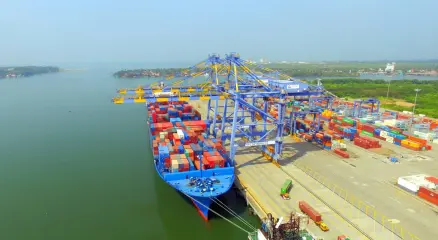
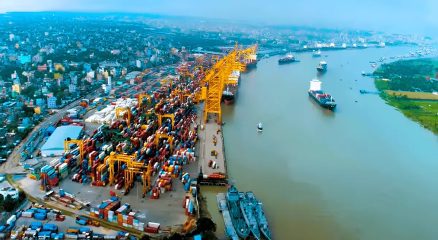
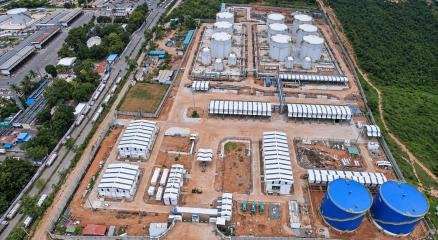
Located near Odesa on the Black Sea coast, Pivdennyi Port plays a crucial role in handling containerized cargo as well as bulk commodities including grain, ore, coal and fertilizers. As Ukraine's busiest port in terms of cargo transshipment, it remains a vital link in regional and international supply chains despite operating under the shadow of continued military tensions.
For the global shipping industry, MSC's decision is being viewed as more than a financial investment. It represents a long-term commitment to maintaining and strengthening trade corridors that have faced repeated disruptions since the conflict began. Black Sea logistics has experienced significant volatility over the past several years, creating challenges for freight rates, vessel scheduling, cargo availability and supply chain planning. Greater investment in port infrastructure could help improve operational resilience and support more predictable cargo flows in the future.
Industry observers believe the move could provide reassurance to exporters and shipping stakeholders that international logistics companies continue to see strategic value in Ukraine's trade infrastructure. The investment may also encourage additional foreign participation in the country's logistics, warehousing and transport sectors as reconstruction efforts gradually accelerate.
Serhiy Vovk, Director of the Center for Transportation Strategies, described the transaction as a positive signal for the Ukrainian market, highlighting the country's long-term potential within the Black Sea trade ecosystem.
The acquisition further expands MSC's footprint in Ukraine. In 2025, the company reportedly strengthened its presence in the country's logistics sector through investments in inland logistics assets, including a dry port facility and interests in a Ukrainian logistics company. The latest transaction reinforces MSC's broader strategy of integrating maritime services with inland logistics infrastructure to create more efficient cargo movement networks.
The terminal's previous majority stake had been held by global logistics operator DP World. Following ownership changes earlier this year, the controlling interest was subsequently transferred to the Aponte family, completing the transaction.
Beyond the immediate commercial implications, the development could eventually contribute to greater stability across regional supply chains. As cargo owners continue to diversify sourcing and transportation routes, reliable Black Sea infrastructure remains essential for the movement of agricultural products, industrial raw materials and containerized goods between Europe, Asia and the Middle East.
For shipping companies, freight forwarders and global traders, MSC's investment sends an important message: despite geopolitical uncertainty, Ukraine continues to be viewed as a strategically significant logistics market with long-term growth potential. If security conditions improve over time, investments of this nature could play a critical role in restoring trade volumes, strengthening maritime connectivity and supporting the recovery of regional and global supply chains.
For more such news and updates, visit CARGOCONNECT.
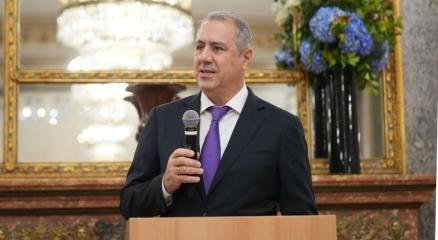
The International Association of Dry Cargo Shipowners (INTERCARGO) has re-elected John A. Xylas as its Chair for 2027-2028, alongside appointing two new Vice-Chairs, as the association's membership crossed the 500-member mark for the first time. The leadership appointments were confirmed at its Annual General Meeting (AGM), held in Rome, Italy. Xylas, President and Chief Executive Officer of Ariston Navigation Corp., will commence his second consecutive two-year term on 1 January 2027. Members also re-elected Metaxia Psalti, Chief Operating Officer of Neda Maritime Agency Co. Ltd., as Vice-Chair. Paolo Tonon, Technical Director of Berge Bulk, and Captain Ranvijay S. Rana, Product Director – Dry Cargo Operations at Fleet Management Ltd., were elected as the association's new Vice-Chairs. All three Vice-Chairs will serve two-year terms. The appointments come amid significant organisational growth, with INTERCARGO's membership exceeding 500 companies, representing operators of more than 5,100 dry cargo vessels worldwide. The three Vice-Chairs will be based in Piraeus, Hong Kong and Singapore, strengthening the association's international representation across major maritime centres. The AGM also approved amendments to INTERCARGO's Constitution, effective 1 January 2027, including the establishment of the new INTERCARGO Technical and Operations Committee (ITOC). The committee will consolidate technical, operational and vessel-vetting matters under a unified structure. Dimitris Monioudis of Rethymnis & Kulukundis will chair the committee, with Cesare d’Api of d’Amico leading the Technical Sub-Committee and Psalti heading the Operations Sub-Committee. Looking ahead, the association has approved two new working groups focusing on artificial intelligence (AI), digitalisation and crew welfare, scheduled to commence operations in early 2027. Other priorities for the 2027–2028 term include expanding member engagement, strengthening industry advocacy and promoting the Dry Bulk Management Standard (DryBMS) and Dry Bulk Centre of Excellence (DBCE) as important industry benchmarks. INTERCARGO's recent initiatives have also included expanding its technical and operational work, with its Ship-to-Ship (STS) Transfer Guidelines for Bulk Carriers recording sales of more than 1,000 copies. Meanwhile, Captain Uttam Kumar Jaiswal of Pacific Basin Shipping (HK) Ltd. will step down as Vice-Chair at the end of 2026 after completing the maximum three consecutive terms. The association's next meetings are scheduled to take place in Hong Kong from 19 to 21 April 2027, as it looks to build on its expanding membership and strengthen its contribution to the global dry bulk shipping industry. 𝐒𝐭𝐚𝐲 𝐭𝐮𝐧𝐞𝐝 𝐭𝐨 CARGOCONNECT 𝐟𝐨𝐫 𝐥𝐚𝐭𝐞𝐬𝐭 𝐮𝐩𝐝𝐚𝐭𝐞𝐬!

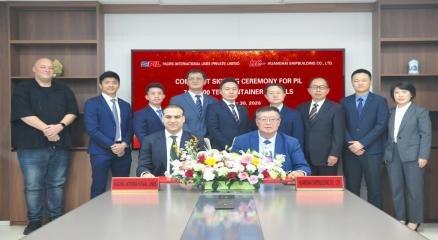
Pacific International Lines (PIL) has placed an order for seven 1,400-TEU container vessels with China’s Huanghai Shipbuilding, as part of its ongoing fleet renewal and expansion programme. The new vessels are expected to strengthen PIL’s network capabilities and operational efficiency, particularly across its Intra-Asia and Pacific Islands services. Designed to serve the requirements of these regional markets, the ships will measure 172 metres in length and 25 metres in width, with dimensions customised to maximise vessel size while retaining the flexibility to connect smaller ports with key transhipment hubs across PIL’s network. The methanol-ready vessels will also support the company’s decarbonisation strategy, enabling the potential adoption of lower-emission fuels as availability and supporting infrastructure develop. “Investing in these new feeder vessels will strengthen our capabilities and capacity across the Intra-Asia and Pacific Islands network. These ships, equipped with energy-saving technologies and designed to be methanol-ready, will further optimise our operations while supporting our goal of net zero emissions by 2050,” said Lars Kastrup, CEO of PIL. He added that the vessels will incorporate modern technological features and digital capabilities to support more efficient operations and performance monitoring, helping PIL provide customers with wider services and sustainable shipping solutions. The ships will feature energy-saving technologies, including pre-swirl vanes and propeller boss cap fins, designed to improve propulsion efficiency and reduce fuel consumption. Enhanced cargo safety systems will include fixed fire water monitors and cargo hold water spray systems to strengthen onboard firefighting capabilities. The vessels are scheduled for delivery between 2029 and 2030. PIL selected Huanghai Shipbuilding for its technical capabilities, experience and ability to meet the company’s requirements for quality, efficiency and delivery.

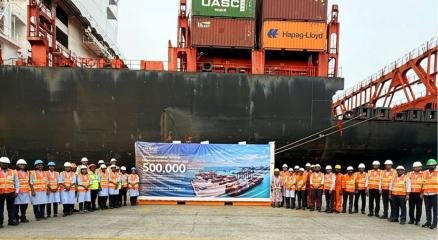
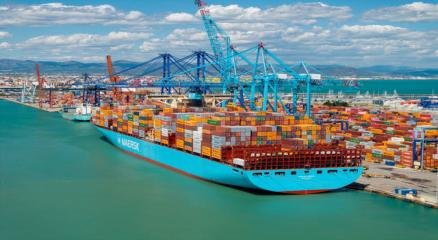
Maersk and Hapag-Lloyd are shifting their joint India-Europe container service back to the Suez Canal and Red Sea corridor, replacing the longer route around the Cape of Good Hope. Announced on November 2, 2026, the move is expected to reduce transit times for cargo moving between India and Europe, subject to regional security conditions. Operating under the Gemini Cooperation, the service is designated ME1 by Maersk and Indian Ocean Service (IOS) by Hapag-Lloyd. The revised routing marks another step in the carriers’ gradual return to the Suez corridor following disruptions that prompted vessels to divert around southern Africa. According to Maersk, the first westbound sailing on the revised route will be Atlanta Express, voyage 644W, departing Salalah, Oman, on November 4. The first eastbound sailing will be Savannah Express, voyage 644E, departing Tangier, Morocco, with Maersk listing November 13 as the scheduled date. The updated port rotation is Mundra–Nhava Sheva–Salalah–Suez Canal–Tangier–Rotterdam–Wilhelmshaven–Hamburg–London–Algeciras–Tangier–Suez Canal–Salalah–Mundra. The revised schedule retains Mundra and Nhava Sheva as the service’s Indian port calls, while maintaining connections to major European trade gateways, including Rotterdam, Hamburg, Wilhelmshaven, London and Algeciras. The route will use the Suez Canal in both directions, avoiding the extended voyage around the Cape of Good Hope. The return to the Suez route is expected to improve transit efficiency for Indian exporters and importers shipping goods to European markets. A shorter maritime route can support better shipment planning, inventory management and supply chain coordination, particularly for businesses dependent on predictable international container schedules. However, Maersk has not specified the number of days that will be saved or published revised port-to-port transit times. Shippers are advised to confirm updated schedules with their respective carriers before finalising shipment plans. The carriers have emphasised that the routing decision remains dependent on the security situation in the Red Sea and surrounding waters. Both companies will continue monitoring regional developments, with the safety of crews, vessels and cargo remaining their priority. However, the change applies specifically to the ME1/IOS service and does not mean that all Gemini Cooperation services have returned to the Suez Canal. The move underscores the importance of the Suez Canal as a strategic maritime corridor connecting Asia and Europe. If security conditions remain stable, the revised routing could help improve transit efficiency and strengthen connectivity across the India-Europe container trade. 𝐒𝐭𝐚𝐲 𝐓𝐮𝐧𝐞𝐝 𝐭𝐨 CARGOCONNECT 𝐟𝐨𝐫 𝐥𝐚𝐭𝐞𝐬𝐭 𝐮𝐩𝐝𝐚𝐭𝐞𝐬!