Loading...

DHL Supply Chain today announced a major expansion of its data centre logistics capabilities across Asia Pacific, reinforcing its role as a trusted logistics partner for hyperscalers and data centre operators as AI-driven infrastructure investment accelerates and large-scale projects move from planning into execution.
The expansion includes more than 30,000 square meters of dedicated warehouse space already operational across the region, alongside an additional 130,000 square meters of committed expansion and build-to-suit facilities in Malaysia and Thailand that are expected to become operational over the next two years. Once complete, DHL will support more than 160,000 square meters of specialized data centre logistics infrastructure across strategic Asia Pacific markets.
The investment comes as Asia Pacific emerges as one of the world's fastest-growing data centre regions, fueled by unprecedented demand for artificial intelligence, cloud computing, and digital connectivity. As operators race to bring new capacity online, they face mounting challenges, including compressed deployment timelines, increasingly complex international supply chains, and the secure handling of high-value technology assets in active construction environments.
DHL's latest expansion builds on the company's global data centre logistics strategy, following its March 2026 commitment to add 10 dedicated data centre warehouses across North America to support growing hyperscaler demand. With the global data centre logistics market projected to grow from USD 23 billion in 2025 to approximately USD 35 billion by 2030, organizations are seeking logistics partners capable of delivering the speed, security, precision, and specialized expertise required throughout the entire data centre lifecycle.
"Asia Pacific is rapidly becoming the world's next major data centre hub, with an estimated USD 800 billion (approximately EUR 730 billion) expected to be invested in data centre infrastructure across the region by 2030," said Javier Bilbao, CEO, Asia Pacific, DHL Supply Chain.
At the core of the expansion is a combination of high-security, purpose-built warehousing and specialized service logistics solutions designed to support complex, multi-phase deployment programs. DHL is also investing significantly in workforce development, equipping teams with advanced white glove handling expertise and technical capabilities that allow critical preparation and integration activities to be completed in controlled logistics environments rather than on active construction sites.
These white glove services ensure that servers, networking equipment, and mission-critical infrastructure are transported and installed under tightly controlled conditions, minimizing the risk of damage, delays, and operational disruption. Services span the entire deployment journey, including site surveys, route assessments, floor protection, cage management, equipment verification, rack installation, component validation, post-installation cleaning, and project completion reporting.
To further address the complexities of data centre deployments, DHL is expanding its specialized technical services portfolio. Dedicated teams provide server rack frame assembly, component mounting, intra-rack cabling, functional testing, and secure packaging solutions that protect sensitive equipment throughout transit and installation. By shifting these activities to purpose-built logistics hubs, customers can reduce on-site congestion, lower installation risks, and maintain critical construction schedules even as deployment scale and infrastructure density continue to increase.
The Asia Pacific expansion forms part of DHL Group's broader global strategy to strengthen its data centre logistics capabilities in response to growing digital infrastructure demand worldwide.
"Data centre logistics represents a significant strategic growth opportunity for DHL as global investment in AI and digital infrastructure continues to accelerate," said Amanda Rasmussen, Chief Commercial Officer, DHL Global Forwarding and Head of the Data Centre Logistics Taskforce at DHL Group.
Together, these investments underscore DHL's commitment to supporting the next generation of digital infrastructure. By expanding its specialised capabilities across key global markets, the company is strengthening its ability to deliver seamless, end-to-end logistics solutions that enable customers to build, scale, and operate data centres with greater speed, reliability, and confidence.
𝐒𝐭𝐚𝐲 𝐓𝐮𝐧𝐞𝐝 𝐭𝐨 CARGOCONNECT 𝐟𝐨𝐫 𝐥𝐚𝐭𝐞𝐬𝐭 𝐮𝐩𝐝𝐚𝐭𝐞𝐬!
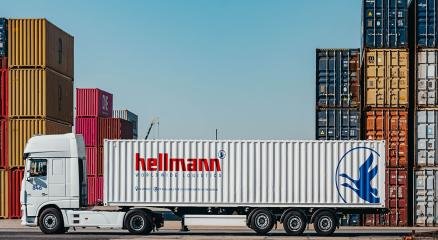
Hellmann Worldwide Logistics has expanded its presence in the United States with three new branches in Indianapolis, the Columbus metropolitan area and the San Francisco Bay Area, taking its nationwide network to 12 locations. The expansion aims to strengthen customer proximity, deepen industry-specific expertise and support the company's long-term growth strategy in one of the world's largest logistics markets. The move forms part of Hellmann's Forward2030 strategy, which focuses on high-potential markets and selected industries. Established in the US in 1988, the company is strengthening its capabilities across international air freight, sea freight and domestic road transport to meet the evolving requirements of businesses and supply chains. The new locations have been planned around the needs of specific industry segments. The Indianapolis branch, which is already operational, will cater to the automotive supply chain, particularly Tier 1 and Tier 2 suppliers. Its services will include international air and sea freight alongside domestic road transport, supporting the movement of components and other automotive shipments. The Columbus office in Ohio will focus on the fashion and retail sectors, while the new branch near San Francisco International Airport will serve customers in technology, semiconductors, electronics, cloud infrastructure and renewable energy. These locations are expected to strengthen Hellmann's ability to deliver integrated, industry-focused logistics solutions across key US growth markets. The expansion comes amid substantial demand for logistics services in the US. According to Hellmann, business logistics costs in the country reached approximately US$2.4 trillion in 2025, equivalent to around 7.8% of gross domestic product (GDP). Rising trade volumes are also increasing the need for dependable international transportation, customs expertise and integrated supply chain solutions. Commenting on the expansion, Mario Stecher, Managing Director, US, Hellmann Worldwide Logistics, said the new locations would bring the company closer to customers while strengthening its industry expertise. Peter Hüwel, Regional CEO, Americas, highlighted the company's US Accelerator Programme as a framework for translating market opportunities into regional growth by combining global network capabilities with local market knowledge. With the additional branches, Hellmann aims to reinforce its competitive position in the US and build a stronger foundation for long-term growth through specialised logistics services and closer customer engagement. 𝐒𝐭𝐚𝐲 𝐓𝐮𝐧𝐞𝐝 𝐭𝐨 CARGOCONNECT 𝐟𝐨𝐫 𝐥𝐚𝐭𝐞𝐬𝐭 𝐮𝐩𝐝𝐚𝐭𝐞𝐬!




The Food Safety and Standards Authority of India (FSSAI) has stepped up its focus on cold chain compliance, directing food business operators (FBOs) to maintain prescribed temperature conditions while handling, storing and transporting perishable food products, including khoa, paneer, meat and fish. The advisory, dated October 15, 2026, aims to strengthen food safety and protect public health by addressing gaps in temperature-controlled supply chains. The directive covers the entire supply chain, from procurement and sourcing to manufacturing, packing, storage, transportation, distribution and delivery to consumers. FSSAI has reiterated that maintaining appropriate temperatures throughout these stages is essential to prevent microbial growth, product deterioration and food contamination. Temperature Control and Hygiene Under Scrutiny According to the regulator, certain perishable food commodities are not consistently handled, stored or transported under suitable temperature conditions. Such lapses can accelerate spoilage and increase the risk of foodborne illness, making effective cold chain management a critical requirement for food businesses. Under the conditions of licence specified in Schedule 4 of the Food Safety and Standards (Licensing and Registration of Food Businesses) Regulations, 2011, operators must comply with prescribed temperature and hygiene requirements across the supply chain. The latest advisory reinforces these existing obligations rather than introducing an entirely new regulatory framework. FSSAI has also directed businesses to use clean, covered and hygienic vehicles suitable for transporting food products. Appropriate food-grade packaging and secondary packaging materials must be used, while products must be protected from dust, moisture, pests, physical damage and cross-contamination during storage, loading, unloading and transit. Gunny bags and unsuitable non-food-grade coverings must be avoided. Traceability and Enforcement Measures The advisory emphasises the importance of maintaining records and ensuring consignment traceability. Food business operators must keep relevant documentation, including invoices and other supporting records, and produce them before the competent authority whenever required. These measures are intended to improve accountability and help officials identify potential breaches in the handling and movement of perishable goods. FSSAI has called on food safety authorities across states and Union Territories to maintain strict vigilance through inspections and transportation checks. The regulator has warned that violations may invite appropriate enforcement action, including the seizure and destruction of non-compliant food products under applicable provisions of the Food Safety and Standards Act, 2006, and associated regulations. Implications for Food Supply Chains The advisory places renewed emphasis on reliable refrigeration, hygienic transport infrastructure and consistent temperature monitoring across India's food distribution network. Dairy processors, meat and fish suppliers, distributors, retailers, cold storage operators and logistics providers will need to ensure that their handling practices and transport arrangements meet the prescribed requirements. For the logistics sector, the directive reinforces the importance of strengthening refrigerated transport, improving storage practices and maintaining end-to-end visibility of temperature-sensitive consignments. These capabilities are particularly important during periods of heightened demand, when increased shipment volumes and multiple handling points can raise the risk of temperature deviations. By reinforcing existing compliance requirements, FSSAI aims to reduce spoilage risks and improve food safety from source to consumer. Effective implementation will depend on consistent monitoring, appropriate infrastructure and accountability among all participants in the perishable food supply chain. 𝐒𝐭𝐚𝐲 𝐓𝐮𝐧𝐞𝐝 𝐭𝐨 CARGOCONNECT 𝐟𝐨𝐫 𝐥𝐚𝐭𝐞𝐬𝐭 𝐮𝐩𝐝𝐚𝐭𝐞𝐬!



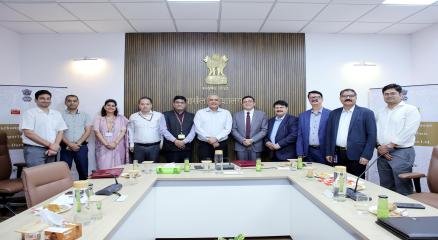
Blue Dart Express has signed a Memorandum of Understanding (MoU) with India Post to further extend its delivery reach. Building on Blue Dart’s extensive national network, the collaboration will strengthen last-mile connectivity for businesses and customers across Tier III and Tier IV towns and remote locations. The expanded coverage will be introduced in a phased manner. The collaboration brings together Blue Dart’s express logistics capabilities and India Post’s extensive postal network to provide customers with access to a wider range of markets. Shipments to these additional locations will be delivered through India Post’s network, complementing Blue Dart’s infrastructure. The partnership creates a scalable model for extending market coverage through the complementary strengths of both organisations and the efficient use of existing infrastructure. Commenting on the partnership, Sh. Harpreet Singh, Member (Operations), Department of Posts, “On World Post Day, this partnership bodes well for both organisations. The Department of Posts is committed to this partnership and looks forward to it. The Department has strong last-mile connectivity, and we will offer all possible support to make this partnership stronger. We look forward to a much broader and constantly evolving partnership ahead.” Highlighting the strategic significance of the collaboration, Balfour Manuel, Managing Director, Blue Dart, said: “With a legacy spanning over 42 years, Blue Dart has grown alongside Indian businesses, building a trusted national network that supports the country’s commerce. As the economy expands and customer expectations evolve, this strategic partnership has an important role to play in strengthening parcel delivery. Our collaboration with India Post builds on this foundation, combining the strengths of two established institutions to support businesses in reaching more customers across smaller towns and remote locations across the country.” Speaking on the opportunities for customers, Dipanjan Banerjee, Chief Commercial Officer, Blue Dart, said: “For SMEs, e-commerce sellers and enterprises, reaching customers beyond established markets is an increasingly important driver of growth. Across Bharat’s smaller towns, demand for greater product choice creates opportunities that businesses need dependable logistics to realise. Our collaboration with India Post strengthens our delivery reach across Tier III and Tier IV towns, enabling customers to enter new markets, deepen their presence and serve locations that were previously harder to reach.” Therefore, this MoU builds on the longstanding relationship between the two organisations and their shared focus on customer service. The expanded coverage will offer greater delivery accessibility and convenience, supporting the growing participation of smaller towns and remote communities in India’s commerce. 𝐒𝐭𝐚𝐲 𝐓𝐮𝐧𝐞𝐝 𝐭𝐨 CARGOCONNECT 𝐟𝐨𝐫 𝐥𝐚𝐭𝐞𝐬𝐭 𝐮𝐩𝐝𝐚𝐭𝐞𝐬!