
Loading...

Delhi’s Indira Gandhi International Airport has expanded its transshipment cargo network to four additional domestic origin stations and two international destinations, strengthening its role as a potential air cargo hub between eastern and western markets.
Civil Aviation Minister Ram Mohan Naidu on August 19 flagged off the scaled-up phase of India’s transshipment cargo reform at Delhi International Airport Limited’s (DIAL) Transshipment Excellence Centre (TEC) at Terminal 2. The expanded network will now connect Bengaluru, Ahmedabad, Mumbai and Hyderabad with London and Copenhagen, following the successful completion of a proof-of-concept project on the Chennai-Delhi-Frankfurt route.
The proof of concept for domestic-to-international transshipment began on June 20, 2026, with Air India operating the service end-to-end. Since its launch, around 280 metric tonnes of cargo have been transshipped through the Delhi facility, while aircraft capacity utilisation increased from 75 per cent to nearly 100 per cent.
According to the Civil Aviation Ministry, the expansion is expected to increase Air India’s monthly cargo carriage on the covered routes from 1,763 metric tonnes to 3,183 metric tonnes, representing an increase of nearly 80 per cent. Speaking at the Transshipment Excellence Centre at Terminal 2 of IGI Airport, Naidu said the reform was aimed at reducing turnaround time, handling costs and congestion at cargo terminals.
The proof-of-concept exercise demonstrated a significant reduction in average end-to-end transit time on the Chennai-Delhi-Frankfurt route, from around 60 hours to 20 hours. The government was working to expand the model further and eventually establish India as a global air cargo transshipment hub by leveraging the country’s geographical position between eastern and western markets, he said
“While our immediate focus is on Domestic-to-International transshipment, our larger ambition is to position India as a global cargo transshipment hub,” Naidu said, adding that the framework would subsequently be expanded to International-to-International and International-to-Domestic transshipment.
The reform follows a revised framework notified through Addendum-II to AVSEC Circular No. 6/2024 by the Bureau of Civil Aviation Security (BCAS) on July 21, 2025. Under the framework, secured transshipment cargo can be moved through dedicated Transfer Cargo Security Hold Areas (TCSHAs) without mandatory re-screening, subject to prescribed security safeguards.
Naidu said the removal of mandatory re-screening had addressed a long-standing industry concern and was helping improve the efficiency and competitiveness of India’s air cargo ecosystem. He also said the initiative was part of the government’s broader effort to develop major Indian airports as global transit hubs.
Following the strengthening of hub-and-spoke operations for passengers, similar measures are being undertaken to build India’s air cargo hub capabilities. The Minister congratulated Delhi International Airport Limited (DIAL), BCAS, CISF, airlines, Customs and other stakeholders for their coordination in implementing the reform.
The ministry said additional domestic origin stations and international destinations are expected to be brought under the framework in the coming months, further expanding India’s air cargo connectivity and strengthening its position as a competitive global aviation hub.
The event was attended by Civil Aviation Secretary Samir Kumar Sinha, Airports Authority of India Chairman Vipin Kumar, Joint Secretary in the Ministry of Civil Aviation Asangba Chuba Ao, BCAS Joint Director General Pratibha Ambedkar and senior officials from the ministry, AAI, BCAS, DIAL, Air India and other stakeholders.
𝐒𝐭𝐚𝐲 𝐓𝐮𝐧𝐞𝐝 𝐭𝐨 CARGOCONNECT 𝐟𝐨𝐫 𝐥𝐚𝐭𝐞𝐬𝐭 𝐮𝐩𝐝𝐚𝐭𝐞𝐬!

IATA data shows international air cargo demand growing 8.6% year-on-year, while jet fuel prices climb 103.4%, putting pressure on airline profitability despite stronger global trade. Global air cargo demand increased by 7.7% year-on-year in September 2026, supported by stronger international trade and manufacturing activity, according to the latest figures released by the International Air Transport Association (IATA). International air cargo demand recorded even stronger growth of 8.6% compared with September 2025. However, the industry continued to face significant cost pressures, with jet fuel prices more than doubling over the year. Global cargo capacity, measured in available cargo tonne-kilometres (ACTK), expanded by 2.7% during September, while international capacity increased by 3.3%. Demand therefore continued to outpace available capacity, lifting the global cargo load factor by 2.2 percentage points to 47.9%. Fuel prices put pressure on airline profitability Marie Owens Thomsen, IATA's Senior Vice President Sustainability and Chief Economist, said air cargo demand had grown across all regions, supported by stronger global trade and manufacturing. She also highlighted the contribution of artificial intelligence-related shipments, which helped drive another month of double-digit growth across the Pacific. However, rising fuel prices remain a major challenge for the industry. Jet fuel prices increased by 17.5% month-on-month in September and were 103.4% higher than a year earlier. IATA noted that cargo yields have not kept pace with the increase in fuel prices. Its September market analysis showed cargo yields rising by 25.9% year-on-year, compared with the 103.4% increase in jet fuel prices. The disparity highlights the growing difficulty airlines face in maintaining profitability despite stronger cargo volumes. Global trade and manufacturing support demand Several economic indicators provided a supportive backdrop for air freight activity. Global trade increased by 3.6% year-on-year in August, marking the 42nd consecutive month of annual expansion. Manufacturing activity also improved. The Global Manufacturing Output Purchasing Managers' Index (PMI) increased by 0.7 points to 53.8, while the New Export Orders Index rose by 0.5 points to 51.9. Both indicators reached their highest levels in five years, signalling improved manufacturing conditions and continued support for international cargo demand. North America leads regional growth Air cargo demand increased across all six major airline regions in September, although the pace of expansion varied. North American carriers recorded the strongest growth, with demand increasing by 11.8% year-on-year, while capacity expanded by just 0.8%. Asia-Pacific airlines reported 8.6% demand growth and a 4.9% increase in capacity, reflecting continued strength in regional and trans-Pacific cargo movements. Latin American and Caribbean carriers recorded demand growth of 6.7%, alongside a 7.6% capacity expansion. African airlines saw demand rise by 4.7%, while capacity contracted by 1.2%. European carriers recorded a 4.5% increase in demand despite a 1.6% decline in capacity. Middle Eastern airlines reported the slowest regional demand growth, at 3.8%, while capacity increased by 7%. Asia–North America remains the strongest trade lane Performance across major international trade lanes remained mixed in September. The Asia–North America corridor recorded the strongest growth, with cargo traffic increasing by 17% year-on-year. This marked eight consecutive months of expansion on the route. Traffic within Asia grew by 10.2%, while Europe–North America increased by 9.3%. Europe–Asia recorded growth of 6%, extending its expansion streak to 43 consecutive months. Africa–Asia traffic increased by 2.6%. In contrast, Middle East-connected trade lanes remained under pressure. Cargo traffic between Europe and the Middle East declined by 18%, while the Middle East–Asia corridor contracted by 10.2%. Both routes recorded seven consecutive months of decline. Demand growth faces a cost challenge The September figures underline the resilience of the global air cargo market, with demand expanding faster than capacity and manufacturing indicators remaining supportive. However, higher fuel prices and the gap between operating costs and cargo yields are creating challenges for airlines seeking to convert stronger volumes into improved financial performance. For carriers, forwarders and cargo owners, the balance between demand, available capacity and fuel expenditure will remain central to market conditions in the coming months. The latest IATA data points to a growing air cargo market, but sustaining profitable growth will depend on how effectively the industry manages rising operating costs. Follow CARGOCONNECT for more such updates




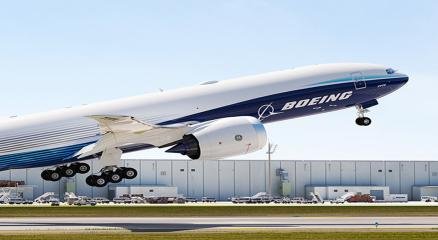
Chicago Rockford International Airport (RFD) is set to strengthen its international cargo network with the launch of a twice-weekly Boeing 777 freighter service by Challenge Group from 04 November 2026. The new route will originate at Navi Mumbai International Airport (NMI), connect through Liège Airport (LGG) in Belgium, and arrive at RFD in the United States. The service will also offer outbound connections from Rockford via Liège, leveraging Challenge Group’s network of approximately 1,500 truck movements per month to provide onward access across Europe, alongside connections to Navi Mumbai. The operation is expected to primarily handle pharmaceuticals, oversized and out-of-gauge cargo, with live animal (AVI) transportation being considered for a future phase. “Chicago is a strategically important market, serving a broad range of industries that depend on reliable international cargo connectivity,” said Or Zak, Group Chief Commercial Officer, Challenge Group. He added that the Rockford service would create additional opportunities for customers moving specialised cargo between India, Europe and the United States. For RFD, the launch supports its efforts to attract international freighter operators and develop the airport as a gateway for specialised cargo entering the US market, particularly temperature-sensitive shipments. “This new service is a direct result of our continued efforts to attract international freighter operators to Rockford, particularly the work we have undertaken to establish the airport as a leading cold chain corridor into the United States,” said Zack Oakley, Executive Director, RFD. He said the airport sees potential to expand the partnership beyond the initial twice-weekly operation through higher frequencies and support for AVI shipments. RFD is located approximately 40 miles from animal quarantine facilities, a distance comparable to that of Chicago O’Hare International Airport (ORD). The airport is also in the process of securing approval from the United States Department of Agriculture (USDA) to handle AVI shipments. According to Rene Espinet, Vice President – Cargo Business Development, RFD, the airport’s cargo-focused infrastructure and capacity to accommodate specialised freight offer operators access to the wider Chicago market, with the added benefits of operational flexibility and reduced congestion at a dedicated freighter airport. To support pharmaceutical cargo arriving on the new service, RFD will coordinate dedicated temperature-controlled trucking capacity for onward transportation to destinations in the Rockford area and warehousing facilities in Chicago. This arrangement is intended to extend cold-chain support beyond the airport and facilitate the movement of temperature-sensitive freight. Zak said Challenge Group requires airport partners that can accommodate its expanding operations and develop alongside its long-term requirements, adding that Rockford offers the capacity and flexibility to support the carrier’s growth. The announcement was made during the International Air Cargo Association (TIACA) Air Cargo Forum in Miami, held from 26 to 29 October 2026.

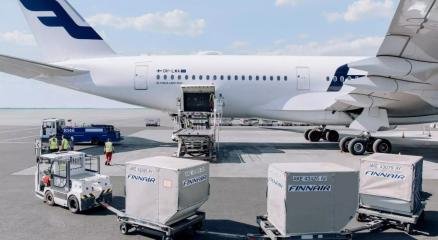
Finnair Cargo has launched its first Australian service on 25 October 2026, introducing a daily, year-round connection between Helsinki and Melbourne via Bangkok. The new route expands the airline’s international cargo network, creating additional opportunities for freight movements between Europe, Australia and North America. However, the airline has imposed initial restrictions on temperature-sensitive shipments travelling across the complete route. Daily Connectivity Via Bangkok The new service operates using an Airbus A350 passenger aircraft, with cargo carried in the aircraft’s belly hold. Flight AY145 departs Helsinki shortly after midnight and reaches Melbourne the following morning, with a technical stop in Bangkok. The return service, AY146, departs Melbourne in the afternoon and travels via Bangkok before arriving in Helsinki the next morning. The aircraft offers approximately 23 tonnes of belly-hold cargo capacity, equivalent to around 95 cubic metres, although the actual capacity available on individual flights depends on operational requirements. The schedule is designed to facilitate connections with Finnair’s wider European network through Helsinki, including onward air and road freight services. Anna-Maria Kirchner, Head of Global Sales at Finnair Cargo, said the airline had received strong interest in the new connection. She highlighted its potential to strengthen trade between Australia and Europe while supporting businesses dependent on reliable, time-sensitive logistics. Temperature-Sensitive Cargo Restrictions At launch, Finnair Cargo will not accept pharmaceuticals, perishables and other temperature-sensitive shipments as through cargo between Helsinki and Melbourne in either direction. Such consignments may be accepted separately on the Helsinki–Bangkok and Bangkok–Melbourne sectors, subject to applicable handling requirements and acceptance conditions. The restrictions are part of the airline’s initial operational approach while it conducts temperature mapping across the new route. The assessment is intended to establish the temperature conditions experienced throughout the journey, including during the Bangkok stopover. Finnair Cargo will review the restrictions after completing the exercise. The limitations are particularly relevant to pharmaceutical logistics, temperature-controlled supply chains and Australian seasonal exports, including cherries, which the airline has identified as potential cargo opportunities. Broader Cargo Market Opportunities Beyond temperature-sensitive shipments, the service is expected to support a range of commodities, including general cargo, high-tech products, industrial components, automotive parts, fashion and design goods. Seafood and other perishables may also be considered, subject to the airline’s applicable acceptance conditions and handling requirements. The Melbourne route forms part of Finnair Cargo’s winter 2026–27 network expansion, connecting the Australian market with the carrier’s Helsinki hub and its established European destinations. The addition also provides freight forwarders and logistics providers with another routing option for shipments moving between the two regions. As the service develops, the outcome of the temperature-mapping exercise will be important in determining whether the airline can expand its acceptance of sensitive cargo across the entire journey. For now, the daily connection establishes a new air freight link between Europe and Australia, with cargo capacity and commodity acceptance governed by operational requirements and the restrictions in place at launch. 𝐒𝐭𝐚𝐲 𝐓𝐮𝐧𝐞𝐝 𝐭𝐨 CARGOCONNECT 𝐟𝐨𝐫 𝐥𝐚𝐭𝐞𝐬𝐭 𝐮𝐩𝐝𝐚𝐭𝐞𝐬!