
Loading...
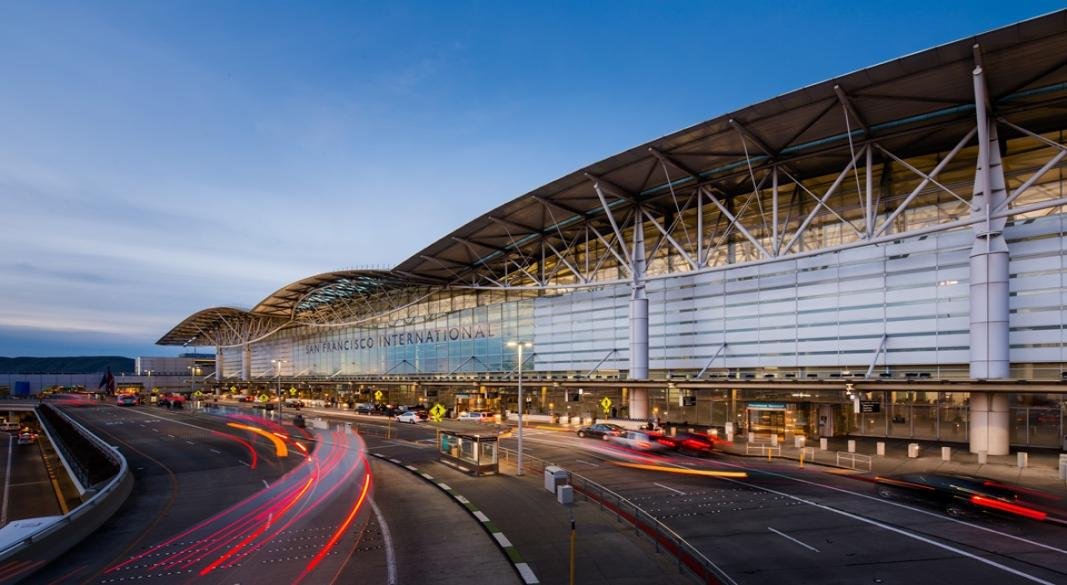
San Francisco International Airport (SFO) is set to significantly strengthen its air cargo capabilities through a major infrastructure expansion project that will feature advanced automation technology from Lödige Industries. The airport is investing more than $300 million in a new cargo terminal designed to enhance handling capacity, improve operational efficiency, and support future growth in air freight volumes.
The new facility forms part of SFO’s long-term strategy to modernize its cargo infrastructure and reinforce its position as one of the leading air cargo gateways on the U.S. West Coast. With global air freight demand expected to continue growing, the airport is focusing on automation-driven solutions that can streamline cargo flows while maximizing available space and resources.
Under the project, Lödige Industries has been selected to provide customized automated cargo handling systems for the terminal. The company will deploy technologies that enable automated storage and retrieval, high-throughput cargo processing, and optimized cargo movement across the facility. The systems are expected to reduce manual handling requirements, improve turnaround times, and increase overall terminal productivity.
According to industry reports, the terminal has been designed to accommodate rising cargo volumes while supporting the operational needs of airlines, freight forwarders, and logistics service providers operating through SFO. The integration of advanced automation is also expected to improve cargo visibility and handling accuracy, helping stakeholders manage increasingly complex supply chains more efficiently.
The investment reflects a broader trend across global airports, where digitalization and automation are becoming critical to addressing capacity constraints, labor challenges, and growing e-commerce demand. By incorporating automated technologies into its cargo operations, SFO aims to create a future-ready facility capable of supporting both current and emerging logistics requirements.
Construction and implementation activities are expected to progress over the coming years, with the expanded cargo terminal anticipated to be operational by 2028. Once completed, the project is expected to deliver a substantial increase in cargo handling capacity while enhancing service reliability and operational resilience.
For Lödige Industries, the contract further strengthens its footprint in the global air cargo sector, where automated storage, transport, and terminal management solutions are increasingly being adopted by airports seeking greater efficiency and scalability. The SFO project represents another milestone in the industry’s transition toward smart, technology-enabled cargo operations.
As international trade and e-commerce continue to drive air freight demand, investments such as SFO’s automated cargo terminal are likely to play a crucial role in ensuring airports can meet future logistics and supply chain requirements efficiently and sustainably.
𝐒𝐭𝐚𝐲 𝐓𝐮𝐧𝐞𝐝 𝐭𝐨 CARGOCONNECT 𝐟𝐨𝐫 𝐥𝐚𝐭𝐞𝐬𝐭 𝐮𝐩𝐝𝐚𝐭𝐞𝐬!
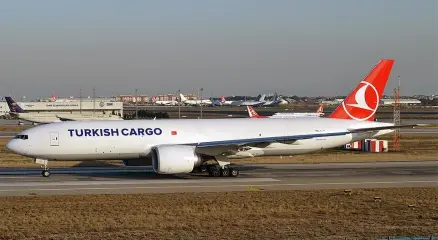
Turkish Cargo has operated its first scheduled cargo flight between Istanbul, Türkiye, and Yerevan, Armenia, establishing a new direct air freight connection between the neighbouring countries. The inaugural Istanbul–Yerevan–Istanbul operation was completed on 15 November 2026, marking a landmark development in regional air cargo connectivity and bilateral trade relations. The development adds Armenia to Turkish Cargo's expanding network and creates another air logistics link between the two markets. According to the company, the inaugural operation was undertaken through coordination between its regional management and operations teams. The new connection is intended to facilitate efficient and reliable cargo transportation while strengthening the airline's international logistics network. Strengthening Regional Air Cargo Connectivity The launch is particularly significant given the historical challenges affecting trade and transportation between Türkiye and Armenia. The two countries have not established formal diplomatic relations, while their shared land border has remained closed since 1993. Consequently, the movement of goods between the neighbouring markets has largely depended on alternative transportation arrangements, including transit through third countries. The introduction of the Istanbul–Yerevan cargo connection provides businesses with an additional air freight option. Istanbul's position as a major international aviation and logistics hub could also offer Armenian businesses improved access to Turkish and international cargo networks, supporting the movement of goods across regional and global markets. However, Turkish Cargo has not yet disclosed details regarding the aircraft deployed, cargo volumes handled, shipment categories or the frequency of future operations. The extent of the service's contribution to bilateral freight movement will depend on its operational schedule and subsequent capacity deployment. Türkiye-Armenia Economic Engagement Milestone The development also builds on earlier efforts to restore transportation and trade links between the two countries. In July 2022, Turkish and Armenian special representatives agreed to initiate direct air cargo transportation and facilitate land-border crossings for citizens of third countries. Türkiye formally lifted its restrictions on direct air cargo transportation with Armenia in January 2023. Passenger connectivity has also improved. Turkish Airlines commenced scheduled passenger flights between Istanbul and Yerevan on 11 March 2026, establishing a regular air link ahead of the latest cargo development. Meanwhile, both governments have continued discussions aimed at normalising bilateral relations and facilitating economic cooperation. In May 2026, Türkiye announced the completion of administrative preparations allowing goods transported through third countries to identify Türkiye or Armenia as their origin or final destination. However, the land-border reopening process remains pending. Against this backdrop, Turkish Cargo's first scheduled Istanbul–Yerevan cargo operation represents a meaningful step towards improving regional logistics connectivity. The development could create additional opportunities for businesses, strengthen commercial engagement and support wider efforts to establish more accessible trade and transportation corridors across the South Caucasus. 𝐒𝐭𝐚𝐲 𝐭𝐮𝐧𝐞𝐝 𝐭𝐨 CARGOCONNECT 𝐟𝐨𝐫 𝐥𝐚𝐭𝐞𝐬𝐭 𝐮𝐩𝐝𝐚𝐭𝐞𝐬!


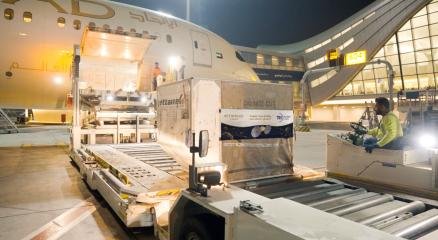
Etihad Cargo has successfully transported a UAE-built space mission probe from Abu Dhabi to the United States, supporting preparations for the Emirates Mission to the Asteroid Belt (EMA). The specialised shipment marks a significant milestone in the UAE's growing space exploration ambitions and highlights the airline's capabilities in handling highly specialised and sensitive cargo. The probe arrived in Colorado on 5 November 2026 after being transported from Abu Dhabi to Chicago on 2 November. The operation followed eight months of close coordination between Etihad Cargo, the UAE Space Agency, the Technology Innovation Institute (TII) and other mission partners to ensure the safe transportation of the specialised equipment. The shipment was undertaken after the probe successfully completed its design, development, assembly and testing in the UAE. It has now been delivered to the Laboratory for Atmospheric and Space Physics (LASP) at the University of Colorado, where it will undergo final integration with the MBR Explorer spacecraft. The next phase will also involve verifying the compatibility of their hardware, software and communication systems ahead of the mission's planned launch from Japan in the first quarter of 2028. The UAE Space Agency is leading and funding the Emirates Mission to the Asteroid Belt, overseeing its execution in collaboration with national and international partners. TII, through its Propulsion and Space Research Centre, led the probe's development in partnership with HEX20, Khalifa University and the National Space Science and Technology Centre at United Arab Emirates University. Commenting on the achievement, Stanislas Brun, Chief Cargo Officer at Etihad Airways, highlighted the airline's role in supporting the UAE's scientific and technological ambitions. He noted that transporting the probe demonstrated Etihad Cargo's ability to deliver safe and reliable solutions for highly specialised shipments while supporting the country's growing presence in advanced technology and space exploration. Eng Mohsen Al Awadhi, Mission Director of EMA, described the transfer as an important transition from the probe's development and testing phase in the UAE to its final integration with the spacecraft. He also highlighted the technical capabilities of the mission team, which achieved flight readiness in less than two years. The Emirates Mission to the Asteroid Belt is expected to cover approximately five billion kilometres, exploring seven asteroids before reaching its ultimate destination, asteroid 269 Justitia. During the final phase, the probe will separate from MBR Explorer and operate autonomously as it approaches the asteroid's surface, capturing detailed images to help scientists examine its characteristics. The successful transportation underscores the growing importance of specialised air cargo solutions in supporting complex scientific, technological and aerospace projects, while reinforcing the UAE's expanding capabilities across the global space ecosystem. 𝐒𝐭𝐚𝐲 𝐭𝐮𝐧𝐞𝐝 𝐭𝐨 CARGOCONNECT 𝐟𝐨𝐫 𝐥𝐚𝐭𝐞𝐬𝐭 𝐮𝐩𝐝𝐚𝐭𝐞𝐬

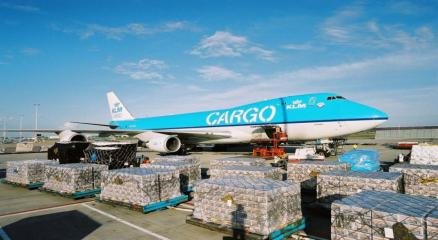
Air France-KLM Martinair Cargo (AFKLMP Cargo) is witnessing strong growth in its air freight business as global supply chain disruptions and rising demand for artificial intelligence (AI) infrastructure shipments encourage shippers to move time-sensitive cargo from sea to air. The trend has strengthened the group's cargo performance in the third quarter of 2026, with demand continuing to outpace available capacity. The cargo division reported a 25.2% year-on-year increase in third-quarter revenue to €677 million, while cargo traffic revenue climbed 24.9% to €566 million. Total cargo volumes increased 5% to 236,000 tonnes, while traffic, measured in revenue tonne-kilometres (RTK), grew 8%. Capacity expanded by a comparatively modest 2.3%, taking the cargo load factor up 2.4 percentage points to 46%. The airline attributed the improved performance to disruptions along key maritime trade routes, particularly around the Suez Canal and Strait of Hormuz, which prompted shippers to shift urgent and high-value consignments to air freight. Additionally, growing demand from AI-related supply chains, including infrastructure and technology shipments, has tightened global air cargo capacity. These developments have enabled the group to secure additional volumes and full-freighter charter opportunities, supporting yields across its network. Alongside the demand-led growth, KLM is restructuring its cargo handling operations at Amsterdam Schiphol Airport. The airline plans to consolidate freight carried on both passenger aircraft and freighters within its own warehouse. The move is aimed at simplifying processes, increasing automation and improving workforce productivity, allowing higher cargo volumes to be managed without additional recruitment. The consolidation will also prepare KLM Cargo for a new cargo terminal planned for completion in 2035, while strengthening Schiphol's potential to attract transfer cargo. KLM intends to expand support services for customers as part of the operational changes. The developments underline how changing global trade patterns, technology-driven demand and operational automation are reshaping the air cargo sector. For AFKLMP Cargo, the ability to respond to shifting freight flows while improving handling efficiency will remain central to sustaining growth. 𝐒𝐭𝐚𝐲 𝐓𝐮𝐧𝐞𝐝 𝐭𝐨 CARGOCONNECT 𝐟𝐨𝐫 𝐥𝐚𝐭𝐞𝐬𝐭 𝐮𝐩𝐝𝐚𝐭𝐞𝐬!