
Loading...

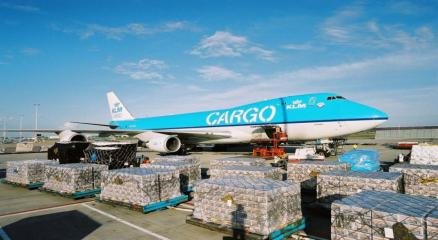
Air cargo demand increased by 4% in April 2026 compared to last year, as trade by air kept supply chains moving amid disruptions. Total demand, measured in cargo tonne-kilometers (CTK), rose by 4.0% compared to April 2025 levels for international operations. However, capacity, measured in available cargo tonne-kilometers (ACTK), fell by 0.4% compared to April 2025 and by 0.9% for international operations.
“Air cargo demand grew 4% year-on-year in April, driven by strong Asia-linked trade flows. But this positive news masks a more complex operating environment. Severe disruption at major Gulf hubs due to the war in the Middle East continued to reshape trade routes and constrain capacity on key corridors. With dedicated freighters carrying much of the growth, air cargo is once again keeping supply chains moving amid trade disruptions. The coming months will test how well the sector can absorb continued geopolitical uncertainty and elevated operating costs,” said Willie Walsh, IATA’s Director General.
He added that dedicated freighters are carrying much of the growth, helping air cargo keep supply chains moving amid trade disruptions. "The coming months will test how well the sector can absorb ongoing geopolitical uncertainty and high operating costs," he noted.
Global trade fell by 2.1% month-on-month in March, following four consecutive months of growth, showing the vulnerability of trade to geopolitical shocks. Jet fuel prices spiked in April, rising 121.1% year-on-year, alongside a 77.7% increase in crude oil prices. Regionally, Asia-Pacific airlines experienced a 10.5% year-on-year growth in air cargo demand in April, the highest rise among all regions. Capacity increased by 5.3% year-on-year. Middle Eastern carriers were the hardest hit, facing an 18.2% year-on-year drop in air cargo demand in April, the weakest performance among all regions. Capacity declined by 22.9% year-on-year.
For more such news and updates, visit CARGOCONNECT.
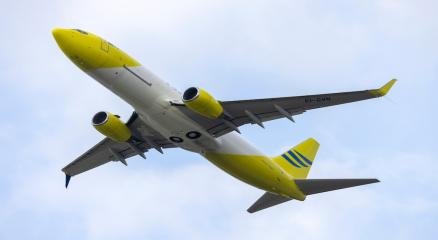
Lufthansa Cargo has partnered with Italy's Poste Air Cargo to introduce additional freighter capacity between Rome Fiumicino and Tel Aviv, marking its return to narrowbody freighter operations. The twice-weekly charter flights will be operated by Poste Air Cargo using Boeing 737-800 Converted Freighters (BCFs), with a cargo capacity of approximately 22 tonnes per flight. Services will operate every Monday and Thursday. The move comes amid persistently high demand for air cargo capacity to and from Tel Aviv. Previously, Lufthansa Cargo offered capacity on the route through sister airline ITA Airways, utilising the bellyhold space of its A321neo passenger aircraft, which can typically accommodate around 2.8 tonnes of cargo. The partnership represents a significant increase in available capacity on the route and a return to narrowbody freighter services for Lufthansa Cargo. The airline had previously offered narrowbody freighter capacity through four Airbus A321 freighters operated by Lufthansa CityLine. However, the aircraft were grounded in mid-April as part of the group's cost-cutting measures. Lufthansa Cargo has since been exploring options to find a new operator for the fleet. Lufthansa Cargo launched its A321 freighter network in 2022 to serve intra-European markets and routes between Europe and North Africa, with Rome and Tel Aviv among the destinations covered. The latest partnership also strengthens Rome's position as a Southern European cargo hub. ITA Airways, headquartered in Rome, officially became part of the Lufthansa Group in January 2025, with Lufthansa Cargo subsequently beginning to market cargo capacity across ITA Airways' network in June 2025. Commenting on the development, Ashwin Bhat, chief executive of Lufthansa Cargo, said the additional services would provide customers with more capacity and flexibility on a high-demand route. “With the additional cargo routes from Poste Air Cargo out of Rome, we are creating more capacity on a highly sought-after route and greater flexibility for shipment planning,” Bhat said. He added that the freighter services would strategically complement ITA Airways' existing cargo capacity and further develop Rome as a hub in Southern Europe. The enhanced offering is currently planned to operate for at least the remainder of the winter flight schedule. Follow CARGOCONNECT for more such updates
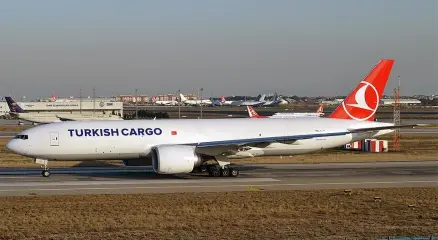


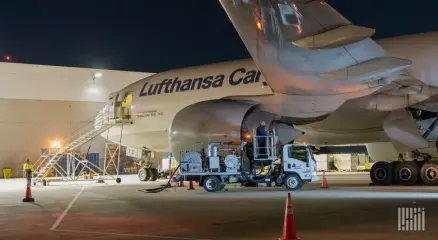
Lufthansa Cargo is reinforcing its focus on Asia as the region's manufacturing activity and export demand continue to underpin global air freight growth, with the Asia–Europe trade lane remaining a key component of its network strategy. Speaking about the carrier's regional priorities, Ashwin Bhat, Chief Executive Officer of Lufthansa Cargo, identified Asia as a major driver of air cargo demand, citing its strong production base and expanding trade flows. "Asia was and is and will be the powerhouse of air cargo in terms of production," Bhat said, underlining the airline's intention to align its network with emerging business opportunities across the region. The strategy is reflected in Lufthansa Cargo's expanded winter 2026/27 flight schedule, effective October 25. The carrier is offering up to 46 weekly freighter rotations to 17 destinations across Asia-Pacific, strengthening connections within the region as well as links to Europe and North America. Its network expansion includes additional intra-Asian and transpacific connections, with Singapore incorporated into an existing Frankfurt–Taipei freighter rotation. Additional services to Taipei and Chengdu, alongside the continuation of the Frankfurt–Ho Chi Minh City–Shanghai–Los Angeles route, are also supporting capacity across key trade corridors. India remains an important market in this expansion. Bhat confirmed that Lufthansa Cargo has increased capacity to the country in recent months, alongside its established presence in China, Japan and South Korea. The carrier has also shifted its Mumbai freighter operations to Navi Mumbai International Airport from October 12, citing infrastructure upgrades at the existing airport. The move is intended to maintain connectivity for industrial and manufacturing centres in the region. The airline is also strengthening its international partnerships. In November, Lufthansa Cargo, SWISS WorldCargo, All Nippon Airways and Nippon Cargo Airlines signed a Memorandum of Understanding to enhance cooperation in the Japan–Europe air cargo market, reflecting the importance of coordinated networks in serving major trading economies. The wider Lufthansa logistics division, which includes Lufthansa Cargo, time:matters, Jettainer, HeyWorld and a 50% stake in AeroLogic, recorded an 11% increase in volumes in the third quarter of 2026. The company attributed part of the growth to continued strong business in Asia-Pacific and the Americas. Disruptions to Middle Eastern airspace and airport operations earlier in the year also benefited direct Asia–Europe freighter services. With passenger belly capacity affected by cancellations and airspace restrictions, freighter operators were able to capture shipments that would otherwise have moved through Middle Eastern hubs. However, the resulting shift in cargo flows also highlighted the importance of network flexibility and alternative routing options. Meanwhile, regulatory changes in Europe are creating uncertainty for e-commerce shipments originating in China and Hong Kong. Following the introduction of a €3 charge on low-value imports from July 1, and an EU-wide handling fee on small parcels from November 1, Lufthansa Cargo is closely monitoring the implications for e-commerce volumes and conventional air freight flows. To support future demand, the carrier is also preparing to expand its freighter fleet. Its existing order book includes seven Boeing 777Fs, which will supplement the 18 aircraft already in its fleet, as well as seven next-generation Boeing 777-8 freighters, with the model's rollout to customers expected to begin in 2028. With Asia continuing to anchor global manufacturing and export activity, Lufthansa Cargo's strategy points to sustained investment in regional capacity, partnerships and long-haul freighter operations, even as shifting trade regulations and geopolitical disruptions reshape established air cargo corridors. Follow CARGOCONNECT for more such updates
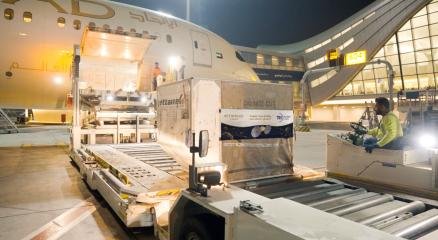


Newcastle Airport has strengthened its air cargo infrastructure with the opening of a new government-approved Border Control Post (BCP), enhancing its ability to handle regulated imports and expand its role as an international trade gateway in North East England. Worldwide Flight Services (WFS), a global air cargo logistics and ground handling provider, has opened the facility at its operational hub within the airport’s freight village. The new Border Control Post will enable regulated goods, including flowers, plants and plant products, fruits and vegetables, to undergo mandatory inspections and clearance directly at the airport. The facility is expected to improve the movement of time-sensitive and perishable consignments by allowing goods to be cleared closer to their final destinations. This will help importers and businesses reduce transit times, minimise logistics costs and improve supply chain efficiency. It also broadens the range of products that can enter the UK directly through Newcastle Airport, offering businesses across the region an additional route for international imports. The development forms part of Newcastle Airport’s wider strategy to strengthen its cargo handling capabilities. The airport currently handles more than 5,000 tonnes of freight annually and continues to invest in infrastructure and operational capacity to support growing demand. Earlier in 2026, Samson Aviation, the airport’s executive jet centre and handling partner, expanded its equipment fleet with the addition of a main deck loader and supporting ground service equipment. The investment has enhanced the airport’s ability to accommodate a wider range of narrowbody and widebody passenger, charter and cargo aircraft, while supporting specialised and oversized shipments, including heavy machinery and luxury vehicles. With 24-hour operations, on-site refuelling facilities, professional cargo handling services and direct access to the region’s strategic road network, Newcastle Airport is strengthening its proposition for cargo operators and freight forwarders. Commenting on the development, Leon McQuaid, Director of Aviation Development at Newcastle Airport, said: "The new Border Control Post marks another important milestone in the growth of Newcastle Airport's cargo services, strengthening our position as a gateway for international trade." He added that the investment by WFS would help businesses move goods more efficiently, provide faster market access and support economic growth across North East England and beyond. The latest development reinforces Newcastle Airport’s ambition to expand its cargo operations and attract further aviation and logistics businesses, positioning it as an increasingly important gateway for regional and international trade. 𝐒𝐭𝐚𝐲 𝐓𝐮𝐧𝐞𝐝 𝐭𝐨 CARGOCONNECT 𝐟𝐨𝐫 𝐥𝐚𝐭𝐞𝐬𝐭 𝐮𝐩𝐝𝐚𝐭𝐞𝐬!