
Loading...
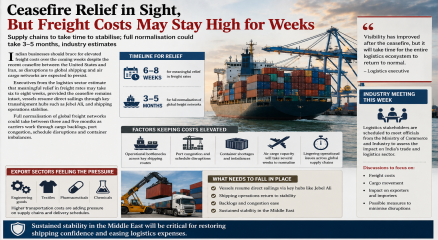
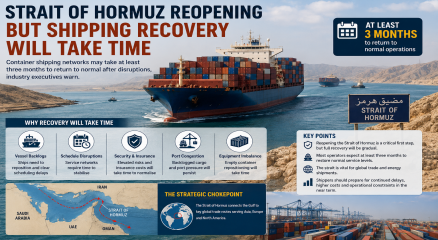
Indian businesses should brace for elevated freight costs over the coming weeks despite the recent ceasefire between the United States and Iran, as disruptions to global shipping and air cargo networks are expected to persist. Industry stakeholders say supply chains will require time to recover even after the reopening of the Strait of Hormuz. Executives from the logistics sector estimate that meaningful relief in freight rates may take six to eight weeks, provided the ceasefire remains intact, vessels resume direct sailings through key transshipment hubs such as Jebel Ali, and shipping operations stabilise. Full normalisation of global freight networks could take between three and five months as carriers work through cargo backlogs, port congestion, schedule disruptions and container imbalances. Industry representatives are scheduled to meet officials from the Ministry of Commerce and Industry this week to assess the impact of the recent geopolitical tensions on India's trade and logistics sector. The discussions are expected to focus on freight costs, cargo movement and possible measures to minimise disruptions for exporters and importers. Although the ceasefire has improved visibility for shippers and logistics providers, companies say pricing pressures remain due to lingering operational bottlenecks across international shipping routes. Air cargo services are also expected to take several weeks to return to normal capacity as airlines gradually restore schedules affected by the regional conflict. Export-oriented sectors, including engineering goods, textiles, pharmaceuticals and chemicals, continue to monitor freight developments closely, with higher transportation costs adding pressure to supply chains and delivery schedules. Industry executives noted that sustained stability in the Middle East will be critical for restoring shipping confidence and easing logistics expenses over the coming months. Follow CARGOCONNECT for more such updates.
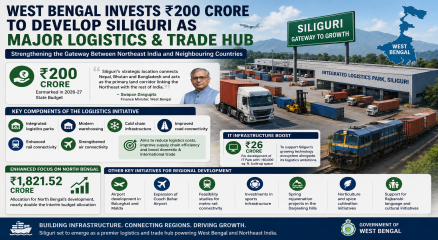
The West Bengal government has earmarked ₹200 crore in its 2026-27 state budget to develop Siliguri into a major logistics and trade hub, strengthening the city's role as a strategic gateway connecting Northeast India with neighbouring countries. The investment forms part of a broader infrastructure push aimed at improving regional supply chains and boosting cross-border commerce. Presenting the state budget, Finance Minister Swapan Dasgupta said Siliguri's geographical position offers significant advantages due to its connectivity with Nepal, Bhutan and Bangladesh, alongside its role as the primary land corridor linking the Northeast with the rest of India. The government plans to leverage this location by expanding logistics infrastructure and multimodal transport facilities. The proposed development includes integrated logistics parks, modern warehousing, cold chain infrastructure, and improvements to road, rail and air connectivity. The government expects these investments to reduce logistics costs, improve supply chain efficiency and support both domestic and international trade. In addition to the logistics initiative, the budget allocates ₹26 crore for the expansion of Siliguri's IT infrastructure through the development of an IT park with approximately 50,000 square feet of built-up space. The project is intended to support the city's growing technology ecosystem alongside its logistics ambitions. The state has also increased overall funding for North Bengal's development to ₹1,821.52 crore, nearly doubling the allocation made in the interim budget earlier this year. Other regional initiatives announced include airport development in Balurghat and Malda, expansion of Cooch Behar Airport, feasibility studies for metro rail connectivity, investments in sports infrastructure, spring rejuvenation projects in the Darjeeling hills, horticulture and spice cultivation, and support for the Rajbanshi language and cultural initiatives. Industry representatives welcomed the logistics-focused allocation, noting that improved multimodal infrastructure and warehousing capacity could strengthen Siliguri's position as a key distribution centre for eastern and northeastern India while facilitating greater regional trade. Follow CARGOCONNECT for more such updates.
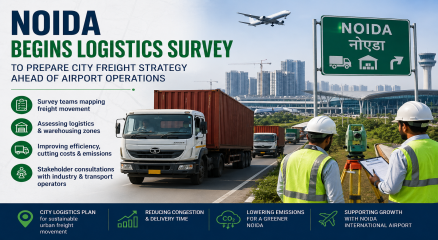
With the upcoming expansion of cargo and aviation activity linked to the Noida International Airport, the Noida Authority has initiated a citywide survey exercise aimed at developing a comprehensive City Logistics Plan (CLP) for the region. Officials said survey teams have begun collecting data from industrial corridors, transportation routes, logistics facilities and warehousing zones across the city. The findings will form the basis of a long-term strategy intended to improve freight movement, reduce congestion, and support sustainable urban logistics growth. The City Logistics Plan is being prepared under the framework of the National Logistics Policy (NLP), a flagship initiative of the central government focused on improving supply chain efficiency and reducing logistics costs across India. Noida is among the selected cities identified for implementing the programme. According to officials, the survey exercise is expected to continue for about a week. Once completed, the collected data will be analysed and compiled into a report that will help shape future logistics infrastructure planning. Vaibhav Gupta, Senior Manager in the Noida Authority’s Planning Department, said the study will assess existing freight movement patterns and identify opportunities to improve delivery efficiency while lowering transportation-related emissions. He added that the initiative is expected to support smoother cargo operations as economic activity around the upcoming airport gathers momentum. The project is being coordinated by the Department for Promotion of Industry and Internal Trade (DPIIT) under the Ministry of Commerce and Industry. Consulting firm Ernst & Young (EY) has been appointed to assist with the planning and execution of the study. As part of the assessment, officials will examine truck traffic volumes, freight corridors, warehousing infrastructure, logistics hubs and parking facilities. The study will also evaluate measures aimed at reducing bottlenecks, improving vehicle movement and encouraging environmentally sustainable freight practices. Feedback from industry representatives, transport operators and other stakeholders will be incorporated into the planning process. Noida remains one of northern India’s most significant industrial and manufacturing centres, hosting more than 10,000 industrial units across multiple sectors. The city has developed strong clusters in electronics, mobile phone manufacturing, engineering products, electrical equipment, automotive components, garments, packaging materials and IT hardware. Industry leaders have welcomed the move, saying the city’s logistics ecosystem requires a more coordinated approach. Business representatives believe a structured logistics framework can help improve operational efficiency, lower transportation costs and strengthen industrial competitiveness. Entrepreneurs have also highlighted persistent challenges related to truck parking. The absence of dedicated parking zones often forces commercial vehicles carrying raw materials to stop along roadsides, contributing to traffic congestion and operational delays. Another issue raised by industry groups concerns restrictions on truck entry into Delhi during peak hours. These regulations frequently lead to vehicle queues near the Delhi-Noida border, affecting cargo movement toward neighbouring states such as Haryana and Rajasthan. Stakeholders have suggested that authorities explore dedicated freight routes or alternative traffic-management measures to facilitate smoother movement of goods. The proposed City Logistics Plan is expected to provide a roadmap for addressing these challenges while preparing Noida for future growth as a major logistics and cargo hub in the National Capital Region.
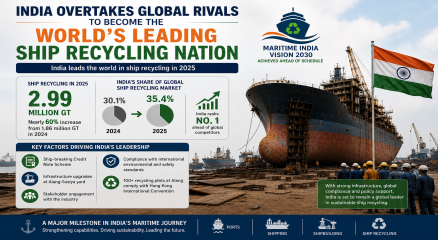
India has emerged as the world's largest ship recycling nation in 2025, achieving a milestone originally targeted under the Maritime India Vision 2030 well ahead of schedule. According to the latest data from the United Nations Conference on Trade and Development (UNCTAD), the country recycled 2.99 million gross tonnes (GT) of ships during the year, a nearly 60% increase from 1.86 million GT recorded in 2024. The increase has elevated India's share of the global ship recycling market to 35.4%, up from 30.1% a year earlier, placing the country ahead of traditional market leaders in the sector. Government officials attributed the growth to a combination of regulatory reforms, infrastructure upgrades and policy measures aimed at strengthening the domestic ship recycling ecosystem. Key initiatives include the Ship-breaking Credit Note Scheme, improvements at the Alang-Sosiya ship recycling yard, stakeholder engagement with the industry, and compliance with international environmental and safety standards. The Alang-Sosiya recycling cluster in Gujarat remains the centre of India's ship dismantling industry, accounting for the overwhelming majority of the country's recycling activity. More than 100 recycling plots at the facility now comply with the Hong Kong International Convention for the Safe and Environmentally Sound Recycling of Ships, reflecting India's focus on sustainable recycling practices. The achievement represents an important benchmark for India's broader maritime strategy, which seeks to expand the country's capabilities across ports, shipping, shipbuilding and recycling while increasing its role in global maritime trade. Earlier government policy documents had identified leadership in ship recycling as a key objective to be achieved by 2030. Industry observers expect global ship recycling demand to remain strong over the coming years as ageing fleets are retired and environmental regulations encourage vessel replacement. India's established infrastructure, growing compliance with international standards and policy support are expected to strengthen its competitive position in the global recycling market. Follow CARGOCONNECT for more such updates.
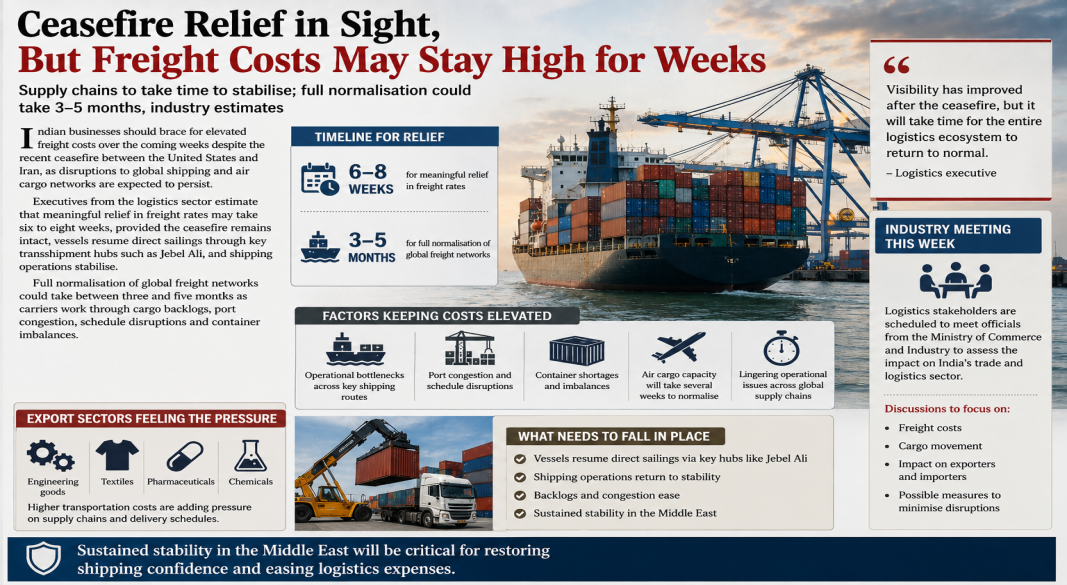
Indian businesses should brace for elevated freight costs over the coming weeks despite the recent ceasefire between the United States and Iran, as disruptions to global shipping and air cargo networks are expected to persist. Industry stakeholders say supply chains will require time to recover even after the reopening of the Strait of Hormuz. Executives from the logistics sector estimate that meaningful relief in freight rates may take six to eight weeks, provided the ceasefire remains intact, vessels resume direct sailings through key transshipment hubs such as Jebel Ali, and shipping operations stabilise. Full normalisation of global freight networks could take between three and five months as carriers work through cargo backlogs, port congestion, schedule disruptions and container imbalances. Industry representatives are scheduled to meet officials from the Ministry of Commerce and Industry this week to assess the impact of the recent geopolitical tensions on India's trade and logistics sector. The discussions are expected to focus on freight costs, cargo movement and possible measures to minimise disruptions for exporters and importers. Although the ceasefire has improved visibility for shippers and logistics providers, companies say pricing pressures remain due to lingering operational bottlenecks across international shipping routes. Air cargo services are also expected to take several weeks to return to normal capacity as airlines gradually restore schedules affected by the regional conflict. Export-oriented sectors, including engineering goods, textiles, pharmaceuticals and chemicals, continue to monitor freight developments closely, with higher transportation costs adding pressure to supply chains and delivery schedules. Industry executives noted that sustained stability in the Middle East will be critical for restoring shipping confidence and easing logistics expenses over the coming months. Follow CARGOCONNECT for more such updates.
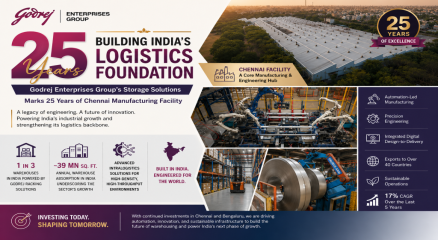
India’s warehousing and intralogistics sector is entering a new phase of growth, driven by the rapid expansion of e-commerce, quick commerce, manufacturing, and third-party logistics. Against this backdrop, Godrej Enterprises Group (GEG) has marked the 25th anniversary of its Chennai manufacturing facility, reaffirming its commitment to advancing India’s logistics infrastructure through continued investments in automation, engineering excellence, and next-generation warehousing solutions. A cornerstone of the company’s Storage Solutions business, the Chennai facility has evolved into one of the region’s largest and most advanced intralogistics manufacturing hubs. Backed by over seven decades of expertise in intralogistics, the business has announced further investments across its Chennai and Bengaluru operations to strengthen production capabilities, accelerate innovation, and support the growing demand for intelligent warehousing infrastructure. The milestone comes at a time when warehousing is becoming increasingly critical to supply chain resilience and operational efficiency. With annual warehousing absorption in India crossing approximately 39 million sq. ft., demand for automated, high-density storage systems continues to rise as businesses seek greater speed, scalability, and cost efficiency across their supply chains. Over the past 25 years, the Chennai facility has expanded its manufacturing and engineering capabilities to deliver complex intralogistics projects with greater precision and faster execution. Today, it produces advanced systems that support automated warehouses, high-density storage environments, and large-scale distribution operations, reinforcing its role as a strategic enabler of India’s industrial growth. Commenting on the milestone, Vikas Choudaha, Business Head – Storage Solutions, Godrej Enterprises Group stated, “As we mark 25 years of our Chennai manufacturing facility, it reflects how we have steadily scaled our capabilities to support India’s rapidly evolving logistics and warehousing ecosystem. As supply chains become faster and more complex, the need for intelligent, technology-led and future-ready infrastructure is intensifying, and at Godrej Enterprises Group, we are actively shaping this transformation through investments in advanced engineering, innovation, and automation-led capabilities.” The company has strengthened its market position through automation-led manufacturing, precision engineering, and integrated digital design-to-delivery systems. Its portfolio includes automated racking solutions and rack-clad warehouses designed to maximise storage density, improve throughput, and optimise land utilisation. Notably, the company states that one in every three warehouses in India is powered by Godrej racking solutions. Sustainability remains a key focus area, with manufacturing operations incorporating real-time monitoring and optimisation of energy and water consumption. These initiatives align with the company’s broader vision of delivering environmentally responsible infrastructure while enhancing operational efficiency. Beyond India, Godrej Enterprises Group has established a strong global footprint, exporting engineering-led intralogistics solutions to more than 40 countries across the Americas, Europe, the Middle East, ASEAN, and Australia. As India advances towards becoming a globally competitive manufacturing and logistics hub, Godrej Enterprises Group’s continued investments in automation, digital transformation, and sustainable infrastructure position it to play an increasingly important role in shaping the future of warehousing and supply chain excellence.
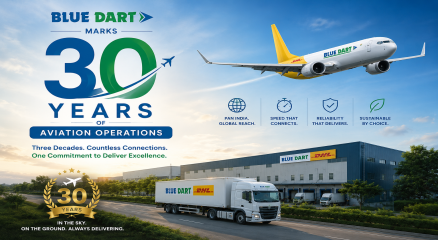
Blue Dart has completed 30 years of aviation operations, marking a significant milestone for the express logistics company as it continues to expand its air cargo network across India. Since 1996, the company has operated more than 2.15 lakh flights and transported over 20.5 lakh tonnes of air cargo, underscoring the scale of its dedicated air express network. The aviation division forms a key part of Blue Dart’s integrated logistics infrastructure, supporting time-definite deliveries and enabling nationwide connectivity for businesses and consumers. Over the past three decades, Blue Dart’s air network has played an important role in serving a broad range of industries, including life sciences, banking and financial services, manufacturing, automotive, e-commerce and small and medium-sized enterprises. The company said its aviation capabilities have contributed to improved supply chain efficiency and strengthened logistics connectivity across the country. The network also supported the movement of critical supplies during the COVID-19 pandemic, including vaccines, personal protective equipment (PPE) and other essential goods, helping maintain the flow of healthcare and emergency shipments during a period of severe disruption. Commenting on the milestone, Balfour Manuel, Managing Director of Blue Dart Express Limited, said the company’s aviation infrastructure has been instrumental in supporting next-day and under-24-hour delivery services across India. “Blue Dart’s aviation capability has strengthened the speed, reliability and certainty that customers associate with the brand, while connecting businesses, markets and communities,” Manuel said. Today, Blue Dart operates a dedicated fleet of eight Boeing 737 and 757 freighter aircraft. The fleet serves as a critical component of the company’s logistics network, facilitating the movement of shipments between major metropolitan centres and emerging economic hubs. Capt. Nikhil B. Ved, Managing Director of Blue Dart Aviation Limited, said the milestone reflects the company’s long-standing role in supporting India’s air express logistics network. “The journey has been defined by operational excellence, safety and a relentless focus on customer needs. As we enter the next decade, our focus remains on strengthening capabilities and building a future-ready aviation network,” Ved said. Looking ahead, the company said it will focus on strengthening network resilience, improving operational efficiency and expanding the use of technology and automation across its aviation operations. These efforts are expected to support growing cargo demand and the evolving requirements of India’s logistics sector as the country continues to expand its economic footprint. As Blue Dart enters the fourth decade of its aviation business, the company remains focused on enhancing air cargo capabilities and supporting faster, more reliable movement of goods across domestic markets. Follow CARGOCONNECT for more such updates.


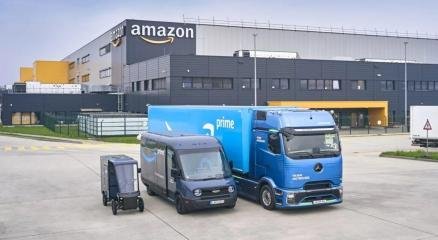
Amazon India has expanded health and insurance benefits for nearly 90,000 delivery associates across its India operations network, while also expanding its “Ashray” rest centres for gig and logistics workers. The company said the enhanced coverage includes mediclaim support of up to ₹1.5 lakh, outpatient department (OPD) benefits of up to ₹10,000, and accident insurance coverage reaching ₹10 lakh. The programme also extends wellness services to delivery workers and up to three family members, including teleconsultations, free OPD consultations, and access to international second medical opinions. Amazon stated that the benefits will be implemented across all of its last-mile delivery programmes in India. The company is also organising health camps nationwide offering eye, dental and general health check-ups for delivery personnel. Alongside the insurance expansion, Amazon is scaling up “Project Ashray,” its network of rest centres designed for delivery workers across the e-commerce and logistics ecosystem. The company recently announced plans to increase the number of Ashray centres to 250 across India by the end of 2026. It currently operates around 100 centres in cities including Delhi-NCR, Mumbai, Bengaluru and Chennai, with an additional 50 facilities scheduled to become operational in the near term. Amazon has also introduced mobile Ashray units, which are air-conditioned vans positioned along high-density delivery routes to provide hydration and rest support without requiring workers to travel to fixed facilities. These units offer amenities such as seating, Wi-Fi, water, electrolytes and mobile charging stations. The expansion comes as logistics and e-commerce companies face increasing scrutiny over working conditions, health support and welfare standards for gig economy workers, particularly during extreme summer conditions and peak festive demand periods. Follow CARGOCONNECT for more such updates.
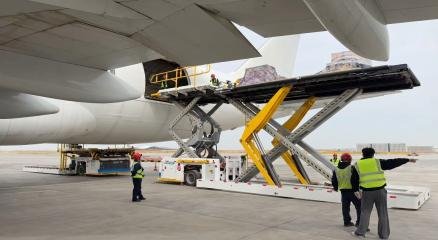
Chapman Freeborn has successfully completed a time-sensitive cargo charter operation transporting oversized oilfield equipment from China to Saudi Arabia, supporting urgent replenishment requirements for a client in the oil and gas sector amid ongoing global shipping disruptions and airfreight congestion. The operation involved the movement of nearly 90 tonnes of cargo, including industrial pumps, precision spare parts and oversized equipment measuring up to eight metres in length. The shipment was transported aboard a Boeing 747 Freighter, selected for its main-deck capacity and ability to handle heavy and outsized freight. The project required complex logistical coordination after fuelling constraints at the original departure airport necessitated the cargo’s relocation inland to an alternative airport. Chapman Freeborn’s China team arranged overnight trucking and managed the freight forwarding process to maintain delivery timelines. The charter operation was further challenged by limited aircraft availability, routing restrictions and slot coordination requirements at destination. Despite the operational complexities, the cargo arrived on schedule, enabling uninterrupted onward movement and preventing disruptions to the client’s ongoing field operations. The project highlights the growing role of specialised air charter solutions in supporting critical industrial supply chains where speed, flexibility and operational coordination remain essential.

India is preparing to operationalise its trade agreement with Oman from June 1, as New Delhi accelerates efforts to secure alternative trade corridors and strengthen supply chain resilience amid continuing geopolitical and energy market uncertainty. Commerce and Industry Minister Piyush Goyal said discussions with Omani officials have progressed positively, with both sides moving toward implementation of the Comprehensive Economic Partnership Agreement (CEPA). The agreement, signed in December 2025, is expected to provide duty-free access for a large share of Indian exports to Oman, including engineering goods, textiles, food products and chemicals. In return, India will lower tariffs on several Omani exports, including petrochemical products and minerals. Trade and logistics stakeholders view the pact as strategically important for India’s westbound cargo movement and regional connectivity ambitions. Oman’s geographic position along major maritime routes in the Arabian Sea and Gulf region gives Indian exporters an additional gateway into West Asia and parts of Africa. The agreement is also expected to support warehousing, port-led trade and multimodal logistics integration between the two countries. Government officials indicated that the CEPA would cover more than 98% of Indian export tariff lines entering Oman, while India would gradually liberalise access across a significant portion of imports from Oman. Certain sectors, particularly petrochemicals, may see phased tariff reductions rather than immediate elimination. The push to activate the Oman pact comes as India expands its broader trade strategy through multiple bilateral agreements aimed at reducing dependence on concentrated supply chains and improving market access for domestic manufacturers. Recent discussions involving trade arrangements with the UK, EU and other partners have reinforced New Delhi’s emphasis on export diversification and trade-led industrial growth. Industry analysts expect the Oman agreement to particularly benefit Indian sectors linked to containerised exports, chemicals, automotive components, processed foods and MSME manufacturing clusters. Shipping and logistics companies are also likely to see increased cargo flows through western Indian ports as bilateral trade volumes rise under preferential tariff treatment. Follow CARGOCONNECT for more such updates.

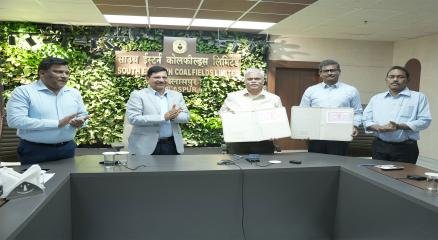

In a strategic warehousing move, the South Eastern Coalfields Limited (SECL), the second largest coal-producing subsidiary of Coal India Limited, has signed a Memorandum of Understanding (MoU) with Central Warehousing Corporation (CWC) for collaboration in coal logistics, railway rake provisioning under GPWIS and similar schemes, and integrated transportation services. Guided by the Union Ministry of Coal, SECL is rapidly working to improve India’s energy security and coal logistics infrastructure. The company is taking steps to boost coal evacuation efficiency and ensure a steady fuel supply to essential sectors. This partnership with CWC is a significant move in that direction. The goal of the partnership with CWC is to strengthen SECL’s coal evacuation capabilities by providing reliable and efficient rail logistics solutions to meet the rising demand from the power, steel, cement, and other sectors. The MoU outlines collaboration in various areas, including dedicated railway rake operations, integrated coal transportation solutions, multimodal logistics, first-mile and last-mile connectivity, and the deployment of digital systems for logistics monitoring and operational efficiency. Under the agreed framework, both organizations will explore provisioning and operation of GPWIS and equivalent racks, integrated rail logistics services, and long-term transportation solutions aimed at improving dispatch efficiency and reducing logistical obstacles. The MoU was signed in the presence of Harish Duhan, Chairman-cum-Managing Director of SECL, and Santosh Sinha, Managing Director of CWC. Functional Directors and senior officials from SECL, as well as representatives from CWC, attended the signing ceremony. SECL plays a vital role in meeting the country's growing coal demand. In the current financial year 2026-27, Coal India Limited has already surpassed the 100 million tonne production mark, with SECL contributing more than 26.8 million tonnes. Central Warehousing Corporation (CWC), a Navaratna Central Public Sector Enterprise under the Government of India, is a leader in integrated logistics and warehousing services. It has extensive experience in rail-linked cargo movement and multimodal transportation solutions. For more such news and updates, visit CARGOCONNECT.
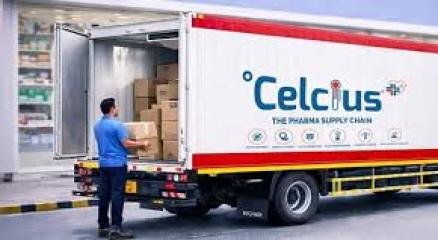
In a major step toward improving India’s medical device supply chain, Celcius Logistics has partnered with Ottobock India to launch a dedicated prosthetics and assistive-device warehouse facility in Thane, Maharashtra. The newly launched facility, located at Wagle Estate, spans approximately 3,000 sq ft and has been developed to support the storage and nationwide distribution of advanced prosthetic limbs, orthotic devices and other specialized healthcare products. The warehouse features 110 slotted racks, more than 700 bin locations, and a temperature- controlled section for storing sensitive medical materials. Under a five- year agreement, Celcius Logistics, an Indian healthcare and cold-chain logistics company will manage the end-to-end warehouse operations and transportation for Ottobock India, the Indian arm of Germany-based prosthetics manufacturer Ottobock. Both firms have already indicated plans to expand the facility’s operational capacity by nearly 25 percent within the next year as demand increases. Commenting on the partnership, Swarup Bose, Founder and CEO, Celcius Logistics, said, “This partnership reflects how healthcare supply chains in India are evolving towards greater precision, reliability, and accountability. At Celcius, we are focused on building infrastructure that can consistently support the movement of high-value, sensitive medical products at scale. By combining our technology-led logistics capabilities with Ottobock’s global expertise, we are enabling a more robust and responsive distribution ecosystem.” The launch of the Thane facility is therefore being seen by industry experts not only as a warehousing expansion, but also as a broader move toward building a specialized healthcare logistics in India. Follow CARGOCONNECT for more such updates.
As we all know, supply chain management encompasses a multifaceted approach to streamline operations, optimise resources, and meet customer demands efficiently. Integrating the entire supply chain involves aligning and synchronising all components, processes, and stakeholders involved—from suppliers to end consumers. Most importantly, an integrated supply chain leverages technology and standardised processes to achieve seamless coordination, visibility, and data sharing across the entire value chain. As businesses navigate the complexities of today’s global marketplace, harnessing the power of an innovative supply chain through enabling technological advancements and process improvements is crucial for establishing resilient, responsive, and future-ready supply chain ecosystems. These aspects are brought together by three crucial elements: technology as the backbone of innovative supply chains, continuous improvement throughout the entire supply chain, and network structures driven by transparent communication and end-to-end visibility. Harish Singh, Head – Supply Chain, Burgerama talks about the amalgamation of these key elements that enable organisations like Burgerama to stay ahead in a rapidly evolving business landscape, fostering innovation and sustainable growth in the realm of supply chain management features. Excerpts by UPAMANYU BORAH from a recent interaction. Genesis and Operations Founded in 2018 by Kabir, Viraaj, and Vivek, Burgerama is a flavour-packed tale of the juiciest cheeseburgers in India. Starting strong in Sushant Lok in October 2018, not even a global pandemic could halt this culinary sensation. What sets Burgerama apart? It's the explosion of taste in every bite, achieved through meticulous ingredient selection and an unwavering commitment to authenticity. Beyond just a food joint, Burgerama is a narrative of enduring friendship and an unyielding quest to craft the perfect burger experience. Now operating 14 delivery outlets across Delhi NCR, Chandigarh, and Bangalore, Burgerama has come to be known for its passionate team, true-to-form flavours and genuinely delicious products, creating a truly unique burger experience for all. Adapting to Macro Challenges In recent times, our burger brand has experienced both positive and negative impacts from the macro environment. A shift towards healthier eating habits has inspired us to innovate our menu, offering diverse options with high-quality, nutritious ingredients, expanding our appeal. Embracing sustainability, we've adopted eco-friendly packaging and responsible sourcing, aligning with evolving consumer values. However, challenges persist. Fluctuating commodity prices and supply chain disruptions occasionally affect our quality and pricing consistency. To address this, we've prioritised supply chain flexibility. Technological investments and strategic partnerships enable swift responses to unforeseen circumstances. Building relationships with multiple suppliers and agile inventory management mitigate localised disruptions. Our logistics infrastructure, designed for agility, includes contingency plans and alternative routes, ensuring seamless operations. Despite macro challenges, our commitment to a flexible supply chain empowers us to navigate obstacles effectively, ensuring consistent delivery of quality burgers to our customers under any circumstances. Global Benchmarks, Local Adaptations Our burger brand prioritises a consistent supply through tech-driven forecasting, strategic partnerships, and global benchmarking. Leveraging predictive analytics, we adjust production to minimise shortages or overstocking. Long-term relationships with suppliers ensure transparent operations, from sourcing to delivery. We adapt successful global practices through benchmarking and continually improve through audits, adopting new technologies or optimising routes. Our commitment to agility and learning from global benchmarks ensures a reliable supply chain, meeting dynamic customer demands. Cost Management Methods In the face of escalating input costs, especially in a landscape where our primary business operates through Zomato and Swiggy, our commitment remains to shield end consumers from additional financial burdens. Our strategy is multi-faceted, emphasising cost management without compromising quality or transferring extra expenses to the customer. Internally, we relentlessly optimise operations, streamlining processes from sourcing to distribution to enhance efficiency and minimise wastage throughout the supply chain. Furthermore, we are resolute in absorbing a certain degree of these cost increases within our operations, ensuring that the quality, value, and experience associated with our brand remain uncompromised. Collaborating closely with our suppliers and distributors, we navigate peak input costs by absorbing some of the financial pressures internally, ultimately ensuring that the end consumer is spared from additional financial strains. Automation advancements in Operations Harnessing advanced information technology has been transformative for our supply chain. Integration of cutting-edge solutions has significantly boosted efficiency, agility, and responsiveness. A key initiative involves implementing robust inventory management systems driven by machine learning algorithms. These systems enhance demand forecasting, optimise inventory levels, and predict supply chain disruptions. This proactive approach ensures balanced stock levels at both outlet and warehouse, preventing excesses or shortages. Automation further streamlines operations, with an indent planning tool seamlessly integrated into our inventory management for more precise order fulfillment planning. Strong Partnerships: Key to minimising disruptions In India's supply chain landscape, seamless coordination among suppliers, distributors, and logistics partners is crucial. Our approach emphasises robust communication channels, fostering transparency, strategy alignment, and quick problem-solving. During crises, like recent disruptions, our coordination becomes even more vital. Swift adaptations, such as diversifying supply channels and optimising stock, help us navigate challenges. Strong partner relationships minimise disruptions. Despite widespread implications, our focus stays on fostering collaborations and open communication to navigate challenges effectively and deliver quality service in alignment with the dynamic Indian market. Logistics: Enabling Our Burger Success In our burger brand's success story in India, logistics plays a vital role, serving as the backbone of our operations. Entrusting specific functions to external partners, such as transportation and warehousing, ensures efficient delivery routes and streamlined distribution. While external partners handle certain tasks, the majority of logistics operations, including inventory management and strategic planning, are internally controlled. This internal control is crucial for optimising inventory, anticipating market demands, and maintaining a smooth product flow. With approximately 90 per cent of logistics operations managed internally, we strike a balance, leveraging external expertise while retaining control over core functions. This collaborative strategy ensures the benefits of specialised skills from partners, coupled with the agility needed to adapt to India's unique market demands. Win-Win Partnerships In selecting logistics partners for our Indian operations, we prioritise reliability, scalability, and technological proficiency. Timely and consistent deliveries are crucial, requiring partners adaptable to India's dynamic landscape. We emphasise technology-driven solutions, favoring partners with advanced tracking systems and route optimisation. Cost-effectiveness is key, seeking competitive pricing without compromising service quality. Transparency, compliance with regulations, and a customer-centric approach are foundational criteria. Thorough evaluations and trial periods ensure compatibility and strong partnerships, ensuring a smooth and efficient logistics operation for our burger brand in India. Efficient Transportation Strategies In response to the evolving logistics landscape in India, our policies and strategies pivot towards embracing alternative transport modes and optimising routes for efficient outsourcing of logistics services. We advocate for multimodal transport, acknowledging the strengths of various modes like road and rail to optimise cost, time, and environmental impact. Prioritising route optimisation through advanced technologies enables us to minimise transit times and costs, leveraging data-driven analytics to assess traffic patterns and road conditions. Collaboration with specialised 3PL service providers in alternative transport modes enhances our network efficiency. Recognising the last-mile delivery challenge in India, our policies explore innovative solutions, including partnerships with local services and micro-warehousing strategies. The emphasis on adaptability and agility allows us to respond dynamically to market dynamics, embracing new transport modes for enhanced efficiency or reduced environmental impact. Continuous evaluation and improvement are ingrained in our policies, fostering a diversified and adaptable logistics framework that ensures efficient supply chain operations for our business. Warehousing strategies that alleviates the bottom-line To optimise our operations, we strategically position warehouses for proximity to major consumption centers, minimising transportation costs and reducing delivery times across India. Leveraging technology, we implement warehouse management systems and plan to introduce barcode systems for enhanced accuracy. Embracing lean principles, we focus on continuous improvement, eliminating non-value-added activities, and maintaining efficient layouts. Anticipating seasonal or peak demand, we implement inventory strategies for optimal preparation without excess costs during quieter periods. Collaboration with 3PLs allows scalability and access to specialised facilities. Utilising data analytics, we continuously analyse warehouse efficiency, facilitating data-driven decisions for ongoing process improvements. Through these strategies, we aim for efficient, agile, and customer-centric operations, ensuring timely product delivery across India while optimising costs and resources. Distinct capabilities with a strategic Innovation Approach Maximising the efficiency of our logistics and backend operations involves a multifaceted approach focussed on continuous improvement and innovation. Leveraging advanced analytics, we prioritise accurate demand forecasting for optimised inventory levels, balancing meeting customer demands with minimising excess stock. Building strong relationships with suppliers and implementing lean supply chain principles help in reducing lead times, cutting costs, and maintaining a responsive supply chain. Constantly exploring and integrating emerging technologies such as AI and Bar Coding enhances visibility and transparency across the supply chain. Sustainability initiatives, including eco-friendly packaging and optimised delivery routes, align with our commitment to environmental responsibility. Regular assessments and adaptation to market changes, whether regulatory shifts or consumer preferences, ensure operational agility. Our ultimate goal is to create a responsive, cost-effective, and sustainable supply chain that meets customer demands across diverse cities. Megatrends changing the face of Supply Chain Executives In the dynamic landscape of India's supply chain and logistics, several pivotal megatrends are set to reshape the roles of managers in these domains. Technology integration, including AI and machine learning, will revolutionise operations, requiring managers to harness these tools for enhanced visibility and data-driven decision-making. Building resilience against disruptions and diversifying sourcing channels will be imperative. Leveraging data analytics for predictive insights will be essential for optimising inventory and enhancing overall efficiency. Collaborative partnerships across the supply chain ecosystem will strengthen, necessitating closer ties with suppliers, distributors, and technology providers. Adapting to evolving regulations, upskilling the workforce for increased automation, and prioritising customer-centric logistics experiences are paramount. Striking the right balance between globalisation benefits and localised strategies will be a key challenge. Managers who adeptly navigate and capitalise on these megatrends will build agile, sustainable, and technologically advanced operations, meeting the evolving demands of the market. Advice for budding professionals To young supply chain professionals entering the industry in India, here's some invaluable advices for navigating the evolving landscape. Embrace continuous learning by staying updated on technological advancements and industry trends, and seek certifications and mentorship. Develop a holistic understanding of the supply chain spectrum, acknowledging the interconnections between procurement, logistics, operations, and customer relations. Cultivate adaptability and flexibility to navigate the fast-paced and disruptive nature of the industry. Focus on data literacy, particularly proficiency in analytics tools like Excel, for making informed decisions. Hone communication and collaboration skills to effectively coordinate with diverse teams and stakeholders. Embrace ethical and sustainable practices, recognising their growing importance in supply chains. Lastly, foster a problem-solving mindset, as the ability to address challenges efficiently is highly valued in the dynamic field of supply chain management.
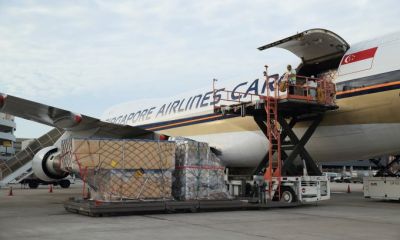
Singapore’s Changi Airport is sharpening its focus on pharmaceuticals and e-commerce shipments to navigate constrained cargo capacity until planned expansion in the 2030s. According to Lim Ching Kiat, Executive Vice President of Air Hub and Cargo Development at Changi Airport Group, current facilities face mounting pressure due to growing regional demand, necessitating strategic tenant and cargo type management. E-commerce continues to be a key growth driver for air cargo globally, fueled by major players like Shein, Temu, and TikTok Shop. At the same time, Singapore is solidifying its position as Southeast Asia’s preferred pharmaceutical hub, attracting investments from global biopharma giants such as Thermo Fisher, Sanofi, BioNTech, and MSD. Looking ahead, Changi Airport plans to launch a second logistics park by the 2030s, aiming to increase its annual cargo capacity from 3 million tons to 5.4 million tons. The new free trade zone will further expedite cargo handling and redistribution. In 2024, Changi Airport reported handling 1.99 million tons of airfreight, a 14.6% rise from 2023, driven by robust cross-border e-commerce demand, improved trade routes with China and the U.S., and recovering electronics exports. Top air cargo markets included China, Australia, the U.S., Hong Kong, and India.
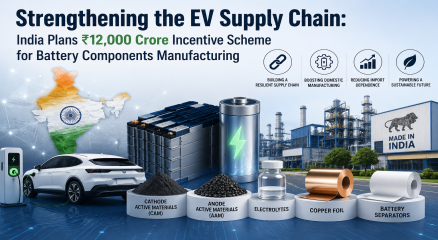
India is preparing to take a significant step towards building a stronger and more self-reliant electric vehicle (EV) supply chain with a proposed incentive scheme worth nearly ₹12,000 crore for the domestic manufacturing of battery components and materials. The initiative is expected to complement the existing ₹18,100 crore Production Linked Incentive (PLI) scheme for Advanced Chemistry Cell (ACC) battery manufacturing and help address a critical gap in India's EV ecosystem. Over the past few years, India has made considerable progress in attracting investments for battery cell production. However, industry stakeholders have consistently pointed out that a large portion of the battery value chain continues to rely on imported materials. While cell manufacturing capacity is being created domestically, many of the essential inputs required for battery production are still sourced from overseas markets, limiting overall localisation. The proposed scheme aims to change this dynamic by encouraging local production of critical battery materials and components. Reports indicate that the incentive framework may cover Cathode Active Materials (CAM), Anode Active Materials (AAM), electrolytes, copper foil, battery separators and other advanced battery materials that form the backbone of modern EV batteries. For India's rapidly expanding EV sector, these components are far more than just manufacturing inputs. They represent a strategic part of the supply chain, influencing production costs, availability, quality and long-term competitiveness. Industry estimates suggest that battery materials account for a substantial share of overall battery costs, making localisation an important lever for improving economics across the EV value chain. The initiative comes at a crucial time as automakers continue to accelerate their electrification plans. Demand for batteries is expected to rise sharply, driven by passenger electric vehicles, electric two-wheelers, commercial EV fleets, energy storage systems and renewable energy integration projects. To support this growth, India will require a robust and dependable supply network capable of serving domestic manufacturers at scale. According to industry projections, India could require more than 400,000 tonnes of Cathode Active Material and over 200,000 tonnes of Anode Active Material by 2030 to support the battery manufacturing capacities that have already been announced. Such figures highlight the enormous opportunity for companies willing to invest in upstream battery manufacturing and supply chain infrastructure. A key objective of the proposed scheme is to reduce India's dependence on global battery supply chains, many of which remain heavily concentrated in China. At present, China dominates several critical segments of the battery ecosystem, including cathode processing, anode materials, battery chemicals and copper foil production. This concentration exposes manufacturers worldwide to supply disruptions, geopolitical uncertainties and price volatility. By supporting local manufacturing, India hopes to create a more resilient and diversified supply chain while attracting global battery material producers to establish operations within the country. Such investments could strengthen domestic capabilities, improve supply security and increase value addition within India. The proposed incentive programme is also expected to complement the ACC PLI scheme, which was launched to establish large-scale battery cell manufacturing capacity. While the PLI scheme has succeeded in attracting investments from major players, the development of upstream battery materials has progressed at a slower pace. Industry experts believe the new initiative could bridge this gap and help create a more integrated battery ecosystem. Nevertheless, several challenges remain. Building a globally competitive battery supply chain will require access to critical minerals such as lithium, cobalt, nickel and graphite, along with significant capital investments, advanced manufacturing technologies and a skilled workforce. Industry observers have repeatedly emphasised that long-term success will depend on developing capabilities across mining, refining, recycling, component manufacturing and battery production. For automotive manufacturers such as Tata Motors, Mahindra & Mahindra, Maruti Suzuki and Hyundai Motor India, stronger domestic sourcing could eventually translate into lower battery costs, improved supply reliability and enhanced competitiveness. Since batteries account for nearly 35-45 per cent of an EV's total cost, supply chain localisation could play a pivotal role in making electric vehicles more affordable and accelerating their adoption across the country. As India pursues its ambitious EV targets, building battery cell factories alone may not be enough. Creating a comprehensive supply chain for battery materials and components will be equally important. If implemented effectively, the proposed ₹12,000 crore scheme could become a key milestone in India's journey towards establishing a globally competitive EV supply chain and emerging as a major hub for advanced battery manufacturing.

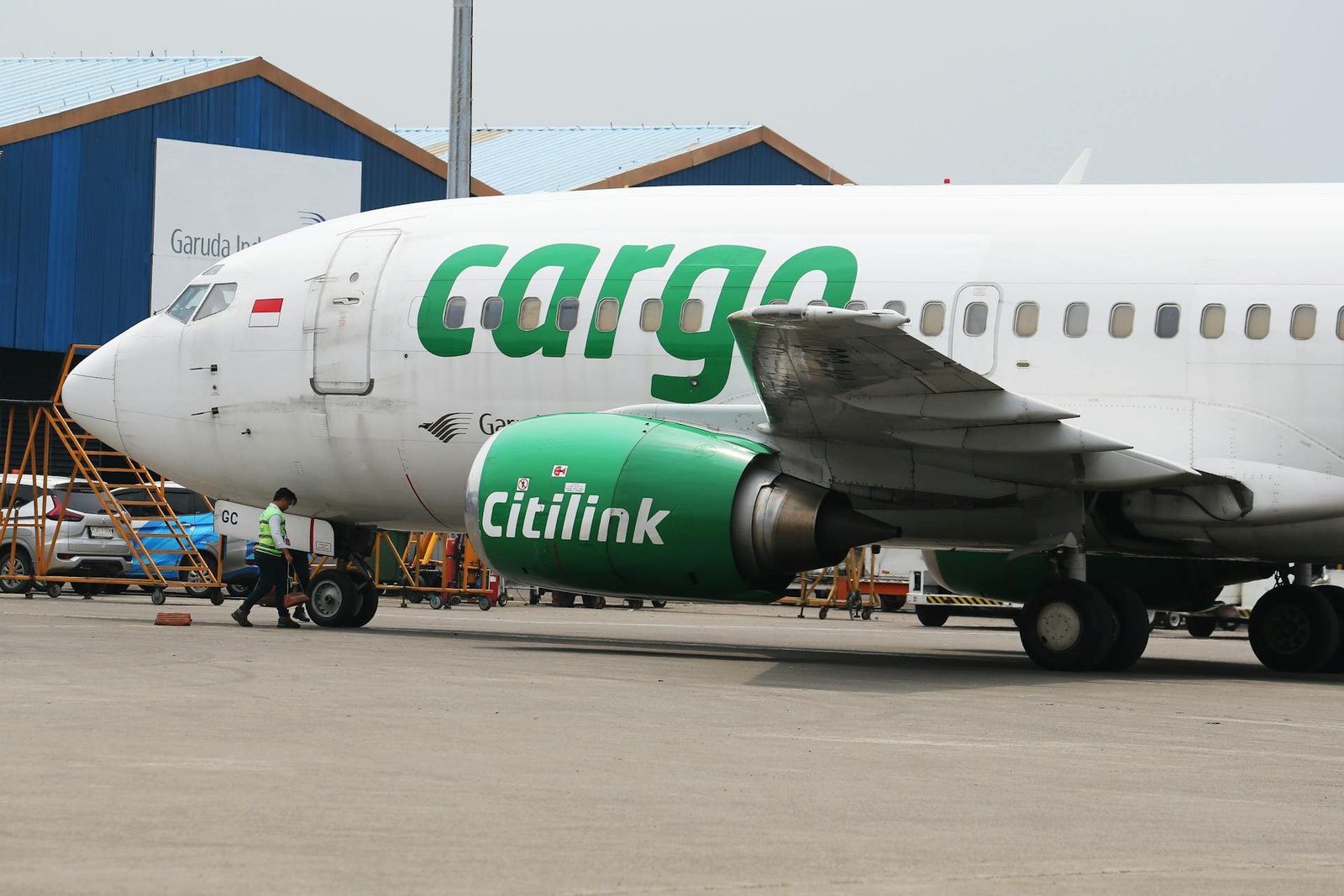
Air Cargo
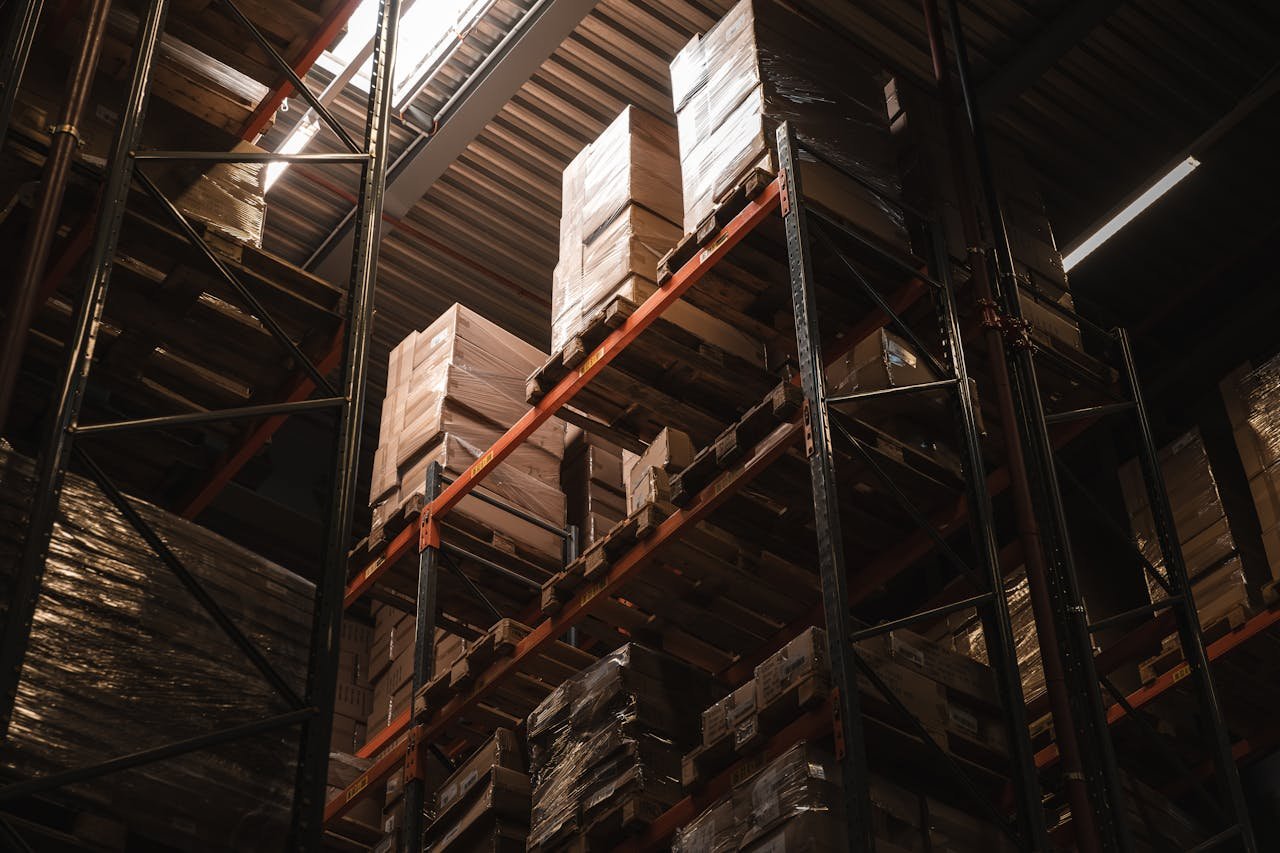
Warehousing
Buzz

Events

E-Commerce
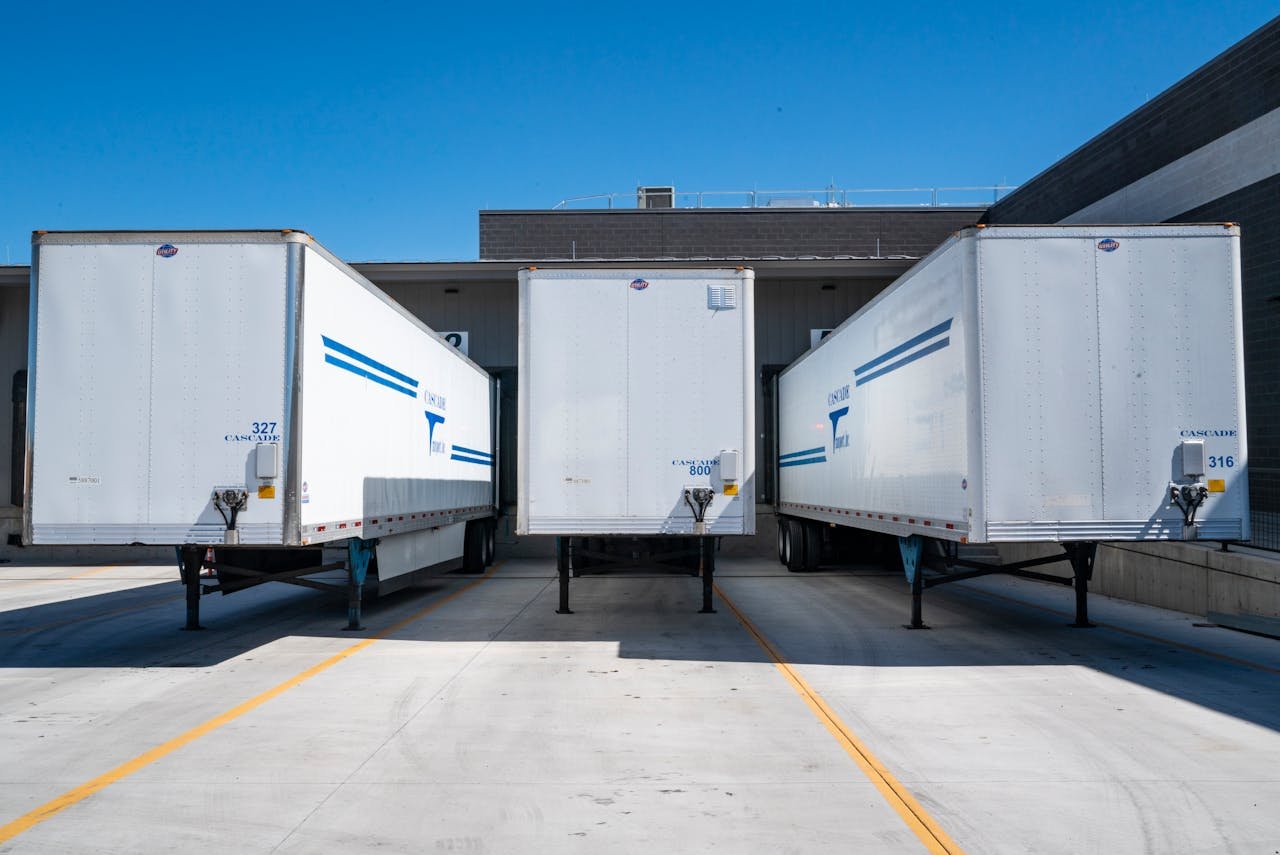
Logistics
In a strategic warehousing move, the South Eastern Coalfields Limited (SECL), the second largest coal-producing subsidiary of Coal India Limited, has signed a Memorandum of Understanding (MoU) with Central Warehousing Corporation (CWC) for collaboration in coal logistics, railway rake provisioning under GPWIS and similar schemes, and integrated transportation services. Guided by the Union Ministry of Coal, SECL is rapidly working to improve India’s energy security and coal logistics infrastructure. The company is taking steps to boost coal evacuation efficiency and ensure a steady fuel supply to essential sectors. This partnership with CWC is a significant move in that direction. The goal of the partnership with CWC is to strengthen SECL’s coal evacuation capabilities by providing reliable and efficient rail logistics solutions to meet the rising demand from the power, steel, cement, and other sectors. The MoU outlines collaboration in various areas, including dedicated railway rake operations, integrated coal transportation solutions, multimodal logistics, first-mile and last-mile connectivity, and the deployment of digital systems for logistics monitoring and operational efficiency. Under the agreed framework, both organizations will explore provisioning and operation of GPWIS and equivalent racks, integrated rail logistics services, and long-term transportation solutions aimed at improving dispatch efficiency and reducing logistical obstacles. The MoU was signed in the presence of Harish Duhan, Chairman-cum-Managing Director of SECL, and Santosh Sinha, Managing Director of CWC. Functional Directors and senior officials from SECL, as well as representatives from CWC, attended the signing ceremony. SECL plays a vital role in meeting the country's growing coal demand. In the current financial year 2026-27, Coal India Limited has already surpassed the 100 million tonne production mark, with SECL contributing more than 26.8 million tonnes. Central Warehousing Corporation (CWC), a Navaratna Central Public Sector Enterprise under the Government of India, is a leader in integrated logistics and warehousing services. It has extensive experience in rail-linked cargo movement and multimodal transportation solutions. For more such news and updates, visit CARGOCONNECT.
In a major step toward improving India’s medical device supply chain, Celcius Logistics has partnered with Ottobock India to launch a dedicated prosthetics and assistive-device warehouse facility in Thane, Maharashtra. The newly launched facility, located at Wagle Estate, spans approximately 3,000 sq ft and has been developed to support the storage and nationwide distribution of advanced prosthetic limbs, orthotic devices and other specialized healthcare products. The warehouse features 110 slotted racks, more than 700 bin locations, and a temperature- controlled section for storing sensitive medical materials. Under a five- year agreement, Celcius Logistics, an Indian healthcare and cold-chain logistics company will manage the end-to-end warehouse operations and transportation for Ottobock India, the Indian arm of Germany-based prosthetics manufacturer Ottobock. Both firms have already indicated plans to expand the facility’s operational capacity by nearly 25 percent within the next year as demand increases. Commenting on the partnership, Swarup Bose, Founder and CEO, Celcius Logistics, said, “This partnership reflects how healthcare supply chains in India are evolving towards greater precision, reliability, and accountability. At Celcius, we are focused on building infrastructure that can consistently support the movement of high-value, sensitive medical products at scale. By combining our technology-led logistics capabilities with Ottobock’s global expertise, we are enabling a more robust and responsive distribution ecosystem.” The launch of the Thane facility is therefore being seen by industry experts not only as a warehousing expansion, but also as a broader move toward building a specialized healthcare logistics in India. Follow CARGOCONNECT for more such updates.
As we all know, supply chain management encompasses a multifaceted approach to streamline operations, optimise resources, and meet customer demands efficiently. Integrating the entire supply chain involves aligning and synchronising all components, processes, and stakeholders involved—from suppliers to end consumers. Most importantly, an integrated supply chain leverages technology and standardised processes to achieve seamless coordination, visibility, and data sharing across the entire value chain. As businesses navigate the complexities of today’s global marketplace, harnessing the power of an innovative supply chain through enabling technological advancements and process improvements is crucial for establishing resilient, responsive, and future-ready supply chain ecosystems. These aspects are brought together by three crucial elements: technology as the backbone of innovative supply chains, continuous improvement throughout the entire supply chain, and network structures driven by transparent communication and end-to-end visibility. Harish Singh, Head – Supply Chain, Burgerama talks about the amalgamation of these key elements that enable organisations like Burgerama to stay ahead in a rapidly evolving business landscape, fostering innovation and sustainable growth in the realm of supply chain management features. Excerpts by UPAMANYU BORAH from a recent interaction. Genesis and Operations Founded in 2018 by Kabir, Viraaj, and Vivek, Burgerama is a flavour-packed tale of the juiciest cheeseburgers in India. Starting strong in Sushant Lok in October 2018, not even a global pandemic could halt this culinary sensation. What sets Burgerama apart? It's the explosion of taste in every bite, achieved through meticulous ingredient selection and an unwavering commitment to authenticity. Beyond just a food joint, Burgerama is a narrative of enduring friendship and an unyielding quest to craft the perfect burger experience. Now operating 14 delivery outlets across Delhi NCR, Chandigarh, and Bangalore, Burgerama has come to be known for its passionate team, true-to-form flavours and genuinely delicious products, creating a truly unique burger experience for all. Adapting to Macro Challenges In recent times, our burger brand has experienced both positive and negative impacts from the macro environment. A shift towards healthier eating habits has inspired us to innovate our menu, offering diverse options with high-quality, nutritious ingredients, expanding our appeal. Embracing sustainability, we've adopted eco-friendly packaging and responsible sourcing, aligning with evolving consumer values. However, challenges persist. Fluctuating commodity prices and supply chain disruptions occasionally affect our quality and pricing consistency. To address this, we've prioritised supply chain flexibility. Technological investments and strategic partnerships enable swift responses to unforeseen circumstances. Building relationships with multiple suppliers and agile inventory management mitigate localised disruptions. Our logistics infrastructure, designed for agility, includes contingency plans and alternative routes, ensuring seamless operations. Despite macro challenges, our commitment to a flexible supply chain empowers us to navigate obstacles effectively, ensuring consistent delivery of quality burgers to our customers under any circumstances. Global Benchmarks, Local Adaptations Our burger brand prioritises a consistent supply through tech-driven forecasting, strategic partnerships, and global benchmarking. Leveraging predictive analytics, we adjust production to minimise shortages or overstocking. Long-term relationships with suppliers ensure transparent operations, from sourcing to delivery. We adapt successful global practices through benchmarking and continually improve through audits, adopting new technologies or optimising routes. Our commitment to agility and learning from global benchmarks ensures a reliable supply chain, meeting dynamic customer demands. Cost Management Methods In the face of escalating input costs, especially in a landscape where our primary business operates through Zomato and Swiggy, our commitment remains to shield end consumers from additional financial burdens. Our strategy is multi-faceted, emphasising cost management without compromising quality or transferring extra expenses to the customer. Internally, we relentlessly optimise operations, streamlining processes from sourcing to distribution to enhance efficiency and minimise wastage throughout the supply chain. Furthermore, we are resolute in absorbing a certain degree of these cost increases within our operations, ensuring that the quality, value, and experience associated with our brand remain uncompromised. Collaborating closely with our suppliers and distributors, we navigate peak input costs by absorbing some of the financial pressures internally, ultimately ensuring that the end consumer is spared from additional financial strains. Automation advancements in Operations Harnessing advanced information technology has been transformative for our supply chain. Integration of cutting-edge solutions has significantly boosted efficiency, agility, and responsiveness. A key initiative involves implementing robust inventory management systems driven by machine learning algorithms. These systems enhance demand forecasting, optimise inventory levels, and predict supply chain disruptions. This proactive approach ensures balanced stock levels at both outlet and warehouse, preventing excesses or shortages. Automation further streamlines operations, with an indent planning tool seamlessly integrated into our inventory management for more precise order fulfillment planning. Strong Partnerships: Key to minimising disruptions In India's supply chain landscape, seamless coordination among suppliers, distributors, and logistics partners is crucial. Our approach emphasises robust communication channels, fostering transparency, strategy alignment, and quick problem-solving. During crises, like recent disruptions, our coordination becomes even more vital. Swift adaptations, such as diversifying supply channels and optimising stock, help us navigate challenges. Strong partner relationships minimise disruptions. Despite widespread implications, our focus stays on fostering collaborations and open communication to navigate challenges effectively and deliver quality service in alignment with the dynamic Indian market. Logistics: Enabling Our Burger Success In our burger brand's success story in India, logistics plays a vital role, serving as the backbone of our operations. Entrusting specific functions to external partners, such as transportation and warehousing, ensures efficient delivery routes and streamlined distribution. While external partners handle certain tasks, the majority of logistics operations, including inventory management and strategic planning, are internally controlled. This internal control is crucial for optimising inventory, anticipating market demands, and maintaining a smooth product flow. With approximately 90 per cent of logistics operations managed internally, we strike a balance, leveraging external expertise while retaining control over core functions. This collaborative strategy ensures the benefits of specialised skills from partners, coupled with the agility needed to adapt to India's unique market demands. Win-Win Partnerships In selecting logistics partners for our Indian operations, we prioritise reliability, scalability, and technological proficiency. Timely and consistent deliveries are crucial, requiring partners adaptable to India's dynamic landscape. We emphasise technology-driven solutions, favoring partners with advanced tracking systems and route optimisation. Cost-effectiveness is key, seeking competitive pricing without compromising service quality. Transparency, compliance with regulations, and a customer-centric approach are foundational criteria. Thorough evaluations and trial periods ensure compatibility and strong partnerships, ensuring a smooth and efficient logistics operation for our burger brand in India. Efficient Transportation Strategies In response to the evolving logistics landscape in India, our policies and strategies pivot towards embracing alternative transport modes and optimising routes for efficient outsourcing of logistics services. We advocate for multimodal transport, acknowledging the strengths of various modes like road and rail to optimise cost, time, and environmental impact. Prioritising route optimisation through advanced technologies enables us to minimise transit times and costs, leveraging data-driven analytics to assess traffic patterns and road conditions. Collaboration with specialised 3PL service providers in alternative transport modes enhances our network efficiency. Recognising the last-mile delivery challenge in India, our policies explore innovative solutions, including partnerships with local services and micro-warehousing strategies. The emphasis on adaptability and agility allows us to respond dynamically to market dynamics, embracing new transport modes for enhanced efficiency or reduced environmental impact. Continuous evaluation and improvement are ingrained in our policies, fostering a diversified and adaptable logistics framework that ensures efficient supply chain operations for our business. Warehousing strategies that alleviates the bottom-line To optimise our operations, we strategically position warehouses for proximity to major consumption centers, minimising transportation costs and reducing delivery times across India. Leveraging technology, we implement warehouse management systems and plan to introduce barcode systems for enhanced accuracy. Embracing lean principles, we focus on continuous improvement, eliminating non-value-added activities, and maintaining efficient layouts. Anticipating seasonal or peak demand, we implement inventory strategies for optimal preparation without excess costs during quieter periods. Collaboration with 3PLs allows scalability and access to specialised facilities. Utilising data analytics, we continuously analyse warehouse efficiency, facilitating data-driven decisions for ongoing process improvements. Through these strategies, we aim for efficient, agile, and customer-centric operations, ensuring timely product delivery across India while optimising costs and resources. Distinct capabilities with a strategic Innovation Approach Maximising the efficiency of our logistics and backend operations involves a multifaceted approach focussed on continuous improvement and innovation. Leveraging advanced analytics, we prioritise accurate demand forecasting for optimised inventory levels, balancing meeting customer demands with minimising excess stock. Building strong relationships with suppliers and implementing lean supply chain principles help in reducing lead times, cutting costs, and maintaining a responsive supply chain. Constantly exploring and integrating emerging technologies such as AI and Bar Coding enhances visibility and transparency across the supply chain. Sustainability initiatives, including eco-friendly packaging and optimised delivery routes, align with our commitment to environmental responsibility. Regular assessments and adaptation to market changes, whether regulatory shifts or consumer preferences, ensure operational agility. Our ultimate goal is to create a responsive, cost-effective, and sustainable supply chain that meets customer demands across diverse cities. Megatrends changing the face of Supply Chain Executives In the dynamic landscape of India's supply chain and logistics, several pivotal megatrends are set to reshape the roles of managers in these domains. Technology integration, including AI and machine learning, will revolutionise operations, requiring managers to harness these tools for enhanced visibility and data-driven decision-making. Building resilience against disruptions and diversifying sourcing channels will be imperative. Leveraging data analytics for predictive insights will be essential for optimising inventory and enhancing overall efficiency. Collaborative partnerships across the supply chain ecosystem will strengthen, necessitating closer ties with suppliers, distributors, and technology providers. Adapting to evolving regulations, upskilling the workforce for increased automation, and prioritising customer-centric logistics experiences are paramount. Striking the right balance between globalisation benefits and localised strategies will be a key challenge. Managers who adeptly navigate and capitalise on these megatrends will build agile, sustainable, and technologically advanced operations, meeting the evolving demands of the market. Advice for budding professionals To young supply chain professionals entering the industry in India, here's some invaluable advices for navigating the evolving landscape. Embrace continuous learning by staying updated on technological advancements and industry trends, and seek certifications and mentorship. Develop a holistic understanding of the supply chain spectrum, acknowledging the interconnections between procurement, logistics, operations, and customer relations. Cultivate adaptability and flexibility to navigate the fast-paced and disruptive nature of the industry. Focus on data literacy, particularly proficiency in analytics tools like Excel, for making informed decisions. Hone communication and collaboration skills to effectively coordinate with diverse teams and stakeholders. Embrace ethical and sustainable practices, recognising their growing importance in supply chains. Lastly, foster a problem-solving mindset, as the ability to address challenges efficiently is highly valued in the dynamic field of supply chain management.
Singapore’s Changi Airport is sharpening its focus on pharmaceuticals and e-commerce shipments to navigate constrained cargo capacity until planned expansion in the 2030s. According to Lim Ching Kiat, Executive Vice President of Air Hub and Cargo Development at Changi Airport Group, current facilities face mounting pressure due to growing regional demand, necessitating strategic tenant and cargo type management. E-commerce continues to be a key growth driver for air cargo globally, fueled by major players like Shein, Temu, and TikTok Shop. At the same time, Singapore is solidifying its position as Southeast Asia’s preferred pharmaceutical hub, attracting investments from global biopharma giants such as Thermo Fisher, Sanofi, BioNTech, and MSD. Looking ahead, Changi Airport plans to launch a second logistics park by the 2030s, aiming to increase its annual cargo capacity from 3 million tons to 5.4 million tons. The new free trade zone will further expedite cargo handling and redistribution. In 2024, Changi Airport reported handling 1.99 million tons of airfreight, a 14.6% rise from 2023, driven by robust cross-border e-commerce demand, improved trade routes with China and the U.S., and recovering electronics exports. Top air cargo markets included China, Australia, the U.S., Hong Kong, and India.
India is preparing to take a significant step towards building a stronger and more self-reliant electric vehicle (EV) supply chain with a proposed incentive scheme worth nearly ₹12,000 crore for the domestic manufacturing of battery components and materials. The initiative is expected to complement the existing ₹18,100 crore Production Linked Incentive (PLI) scheme for Advanced Chemistry Cell (ACC) battery manufacturing and help address a critical gap in India's EV ecosystem. Over the past few years, India has made considerable progress in attracting investments for battery cell production. However, industry stakeholders have consistently pointed out that a large portion of the battery value chain continues to rely on imported materials. While cell manufacturing capacity is being created domestically, many of the essential inputs required for battery production are still sourced from overseas markets, limiting overall localisation. The proposed scheme aims to change this dynamic by encouraging local production of critical battery materials and components. Reports indicate that the incentive framework may cover Cathode Active Materials (CAM), Anode Active Materials (AAM), electrolytes, copper foil, battery separators and other advanced battery materials that form the backbone of modern EV batteries. For India's rapidly expanding EV sector, these components are far more than just manufacturing inputs. They represent a strategic part of the supply chain, influencing production costs, availability, quality and long-term competitiveness. Industry estimates suggest that battery materials account for a substantial share of overall battery costs, making localisation an important lever for improving economics across the EV value chain. The initiative comes at a crucial time as automakers continue to accelerate their electrification plans. Demand for batteries is expected to rise sharply, driven by passenger electric vehicles, electric two-wheelers, commercial EV fleets, energy storage systems and renewable energy integration projects. To support this growth, India will require a robust and dependable supply network capable of serving domestic manufacturers at scale. According to industry projections, India could require more than 400,000 tonnes of Cathode Active Material and over 200,000 tonnes of Anode Active Material by 2030 to support the battery manufacturing capacities that have already been announced. Such figures highlight the enormous opportunity for companies willing to invest in upstream battery manufacturing and supply chain infrastructure. A key objective of the proposed scheme is to reduce India's dependence on global battery supply chains, many of which remain heavily concentrated in China. At present, China dominates several critical segments of the battery ecosystem, including cathode processing, anode materials, battery chemicals and copper foil production. This concentration exposes manufacturers worldwide to supply disruptions, geopolitical uncertainties and price volatility. By supporting local manufacturing, India hopes to create a more resilient and diversified supply chain while attracting global battery material producers to establish operations within the country. Such investments could strengthen domestic capabilities, improve supply security and increase value addition within India. The proposed incentive programme is also expected to complement the ACC PLI scheme, which was launched to establish large-scale battery cell manufacturing capacity. While the PLI scheme has succeeded in attracting investments from major players, the development of upstream battery materials has progressed at a slower pace. Industry experts believe the new initiative could bridge this gap and help create a more integrated battery ecosystem. Nevertheless, several challenges remain. Building a globally competitive battery supply chain will require access to critical minerals such as lithium, cobalt, nickel and graphite, along with significant capital investments, advanced manufacturing technologies and a skilled workforce. Industry observers have repeatedly emphasised that long-term success will depend on developing capabilities across mining, refining, recycling, component manufacturing and battery production. For automotive manufacturers such as Tata Motors, Mahindra & Mahindra, Maruti Suzuki and Hyundai Motor India, stronger domestic sourcing could eventually translate into lower battery costs, improved supply reliability and enhanced competitiveness. Since batteries account for nearly 35-45 per cent of an EV's total cost, supply chain localisation could play a pivotal role in making electric vehicles more affordable and accelerating their adoption across the country. As India pursues its ambitious EV targets, building battery cell factories alone may not be enough. Creating a comprehensive supply chain for battery materials and components will be equally important. If implemented effectively, the proposed ₹12,000 crore scheme could become a key milestone in India's journey towards establishing a globally competitive EV supply chain and emerging as a major hub for advanced battery manufacturing.

Admin • May 25, 2026
Admin 703 March 10, 2026
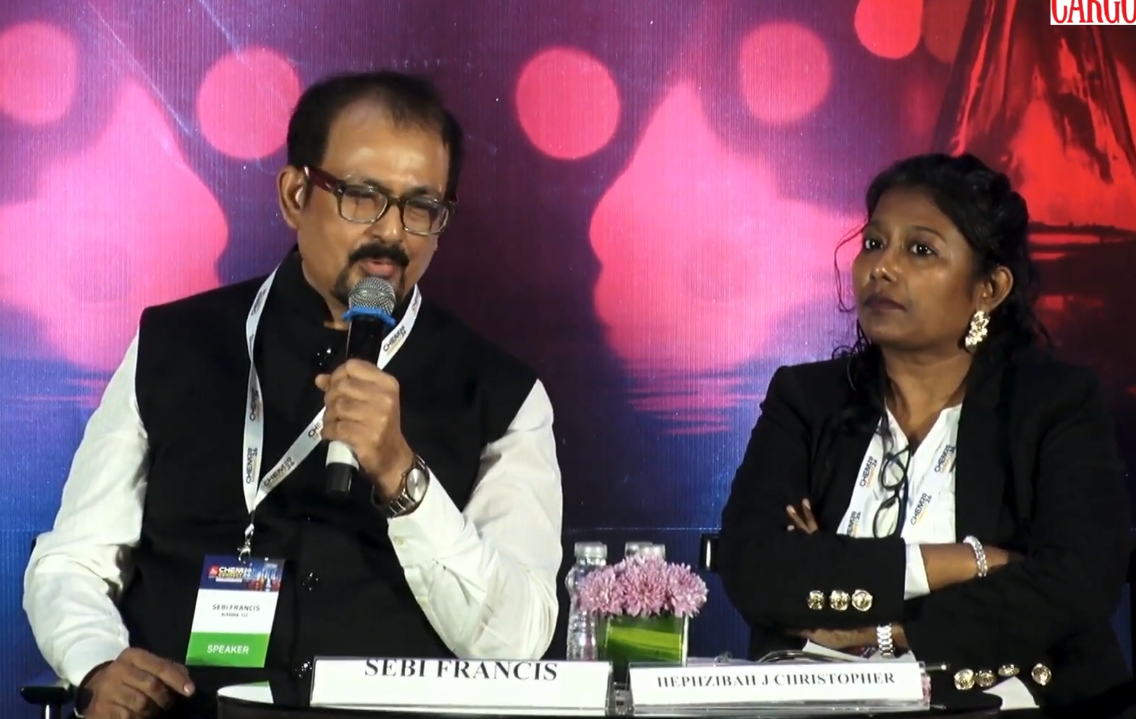
Admin 682 March 12, 2026
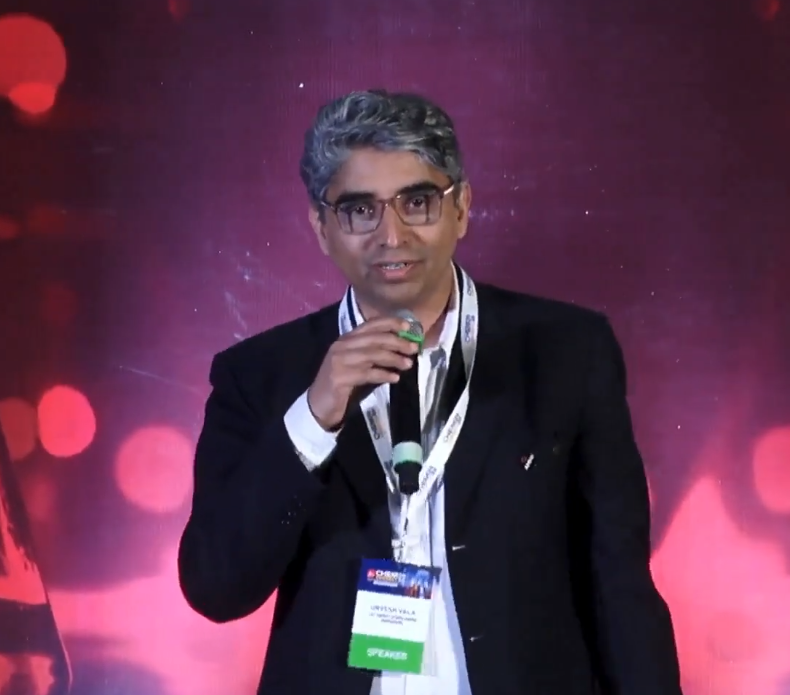
Admin 699 February 23, 2026
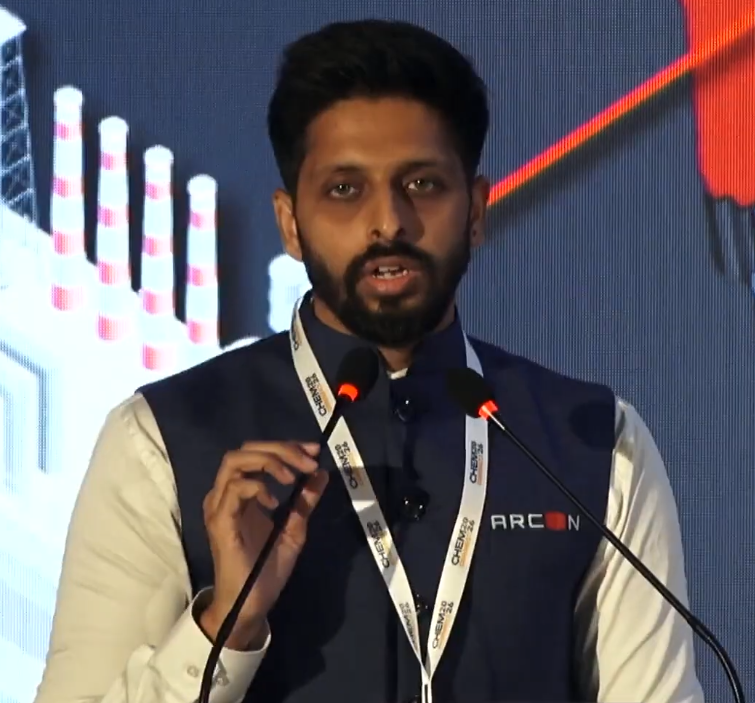
Admin 744 February 23, 2026

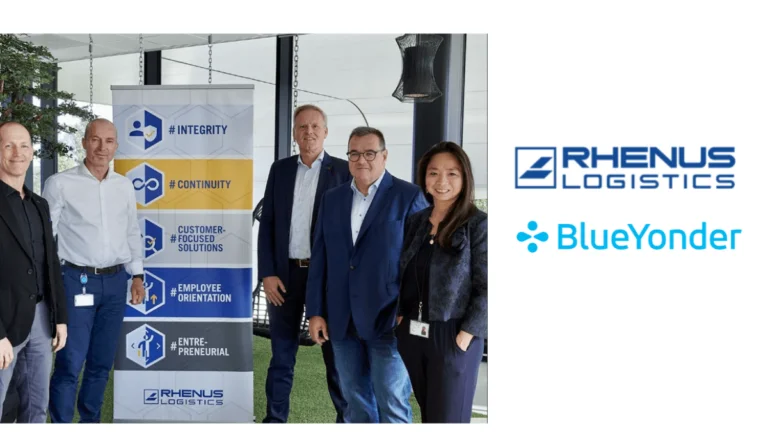
Poonawalla Group invests in woman-led trackNOW to boost R&D, expand operations in Indian logistics market

Poonawalla Group invests in woman-led trackNOW to boost R&D, expand operations in Indian logistics market
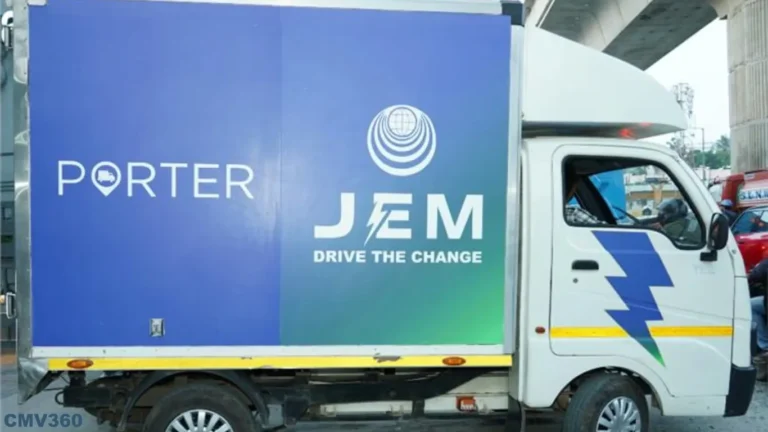
Poonawalla Group invests in woman-led trackNOW to boost R&D, expand operations in Indian logistics market
Poonawalla Group invests in woman-led trackNOW to boost R&D, expand operations in Indian logistics market
Admin 703 March 10, 2026
Admin 682 March 12, 2026
Admin 699 February 23, 2026
Admin 744 February 23, 2026

Admin • May 14, 2026

Admin • May 15, 2026
Admin • June 2, 2026
Admin • May 29, 2026
Admin • May 26, 2026

Admin • May 15, 2026
Admin • June 23, 2026
Admin • June 23, 2026
Admin • June 22, 2026
Admin • June 22, 2026
Admin • June 20, 2026
Admin • May 15, 2026
Admin • May 15, 2026
Admin • June 22, 2026
Admin • June 22, 2026
Admin • June 12, 2026
Admin • June 11, 2026

Admin • May 25, 2026


Admin • June 20, 2026
Admin • June 20, 2026
Admin • June 18, 2026
Admin • June 12, 2026
Admin • May 30, 2026
Admin • May 27, 2026

Admin • June 20, 2026

Admin • June 20, 2026

Admin • June 16, 2026